Pentagon Report Details Scale of Munitions Demand
Operation Epic Fury created strategic munitions shortfalls in U.S. inventories and exposed constraints across the American defense industrial base, according to a September 14 report from the Department of War Office of Inspector General. The Lead Inspector General report covers U.S. government activity related to the operation through June 30, 2026.
- Pentagon Report Details Scale of Munitions Demand
- Takeaways
- Four Industrial Bottlenecks Are Central to Replenishment
- Why Solid Rocket Motors Matter
- U.S. Production Efforts Face a Long Lead Time
- The U.S. Had Already Been Facing Munitions Production Constraints
- Advanced Weapons Create a Different Industrial Challenge
- Implications for U.S. Global Commitments
- Air Defense Adds Another Layer of Demand
- What the Report Means for Defense Industrial Policy
- What Happens Next
Takeaways
A Pentagon Inspector General assessment says Operation Epic Fury created strategic U.S. munitions shortfalls and exposed production constraints that could take significant time to overcome.
The report estimated that Operation Epic Fury had cost the Department of War approximately $33.4 billion as of June 29. Expended munitions represented about $22.3 billion, while $3.7 billion was associated with equipment losses and another $7.4 billion with other incremental obligations.
The figures illustrate the financial and industrial scale of a campaign that placed sustained demands on U.S. aircraft, naval forces, air-defense systems, logistics networks and precision weapons.
The report says U.S. forces conducted approximately 36,000 combat sorties, more than 1,800 fire missions and struck about 13,500 targets during the major combat phase from February 28 through April 7. More than 50,000 U.S. personnel were deployed across the U.S. Central Command area of responsibility.
| Metric | Reported figure |
|---|---|
| Operation start | February 28, 2026 |
| Report coverage | Through June 30, 2026 |
| Estimated cost through June 29 | $33.4 billion |
| Expended munitions | $22.3 billion |
| Equipment losses | $3.7 billion |
| Other incremental obligations | $7.4 billion |
| Major combat sorties | About 36,000 |
| Targets struck | About 13,500 |
| Fire missions | More than 1,800 |
| U.S. personnel deployed | More than 50,000 |
Four Industrial Bottlenecks Are Central to Replenishment
The most significant finding concerns what happens after weapons leave the inventory.
The Office of the Under Secretary of War for Acquisition and Sustainment told Inspector General investigators that munitions expenditure had produced strategic inventory shortfalls and revealed industrial-base bottlenecks affecting resupply.
The officials identified four persistent constraints:
- Solid rocket motor production
- High-grade explosives
- Propellant availability
- Skilled manufacturing labor
These limitations matter because advanced missiles are not assembled from easily replaceable commercial components. Their production depends on specialized chemical materials, energetic compounds, propulsion systems, precision manufacturing, testing infrastructure and highly trained workers.
Increasing final assembly capacity therefore does not automatically produce an equivalent increase in missile deliveries. If a critical upstream component remains constrained, additional assembly capacity can simply move the bottleneck further down the production chain.
The Inspector General report specifically warned that the defense industrial base requires significant lead time to expand production capacity.
Why Solid Rocket Motors Matter
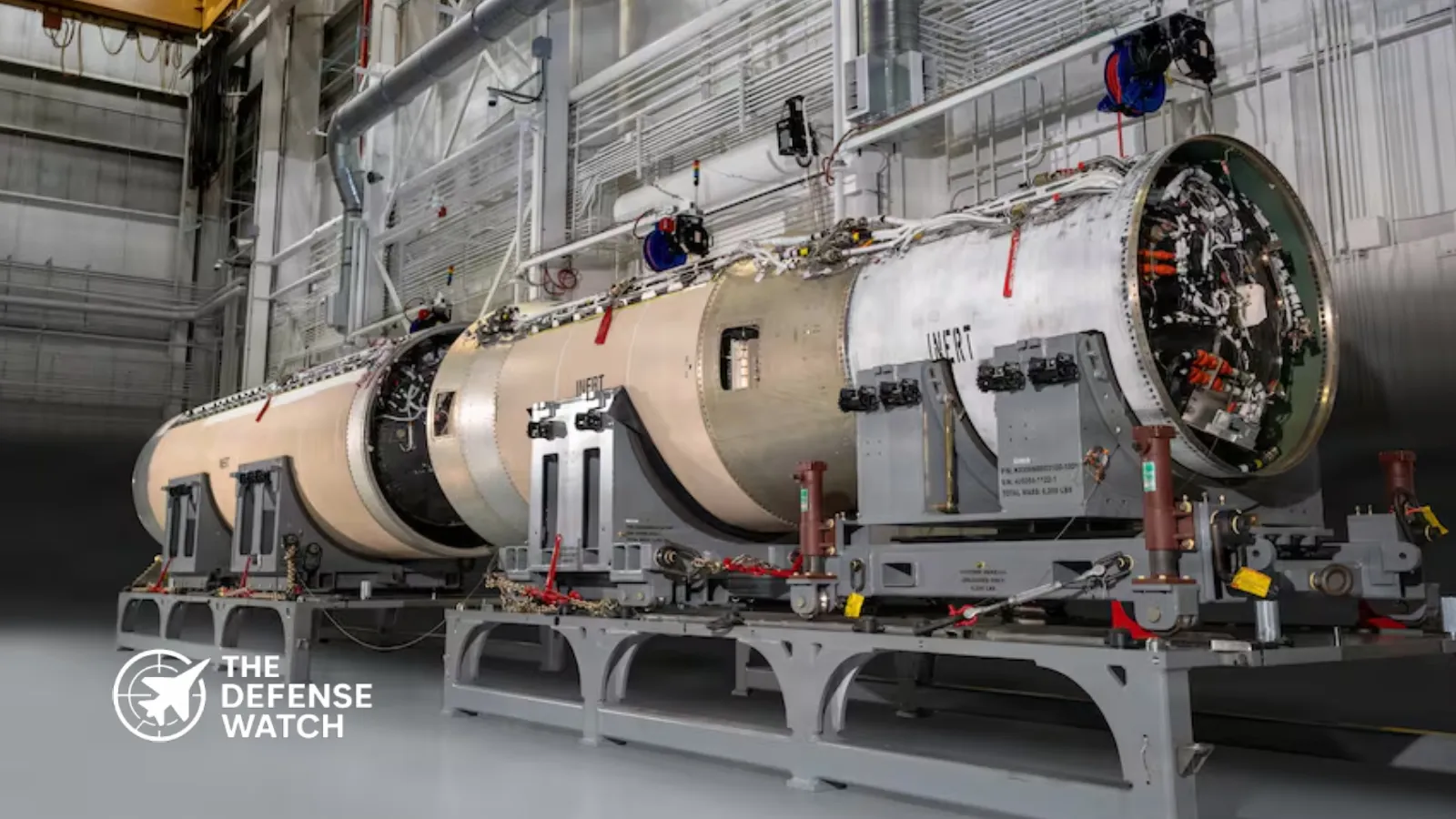
Solid rocket motors are particularly important to the U.S. precision-weapons inventory because they provide propulsion for numerous missile and interceptor families.
The constraint is therefore broader than the availability of a single missile model. A shortage in propulsion capacity can affect multiple programs that rely on related industrial processes, specialized facilities, energetic materials and qualified suppliers.
This creates an important distinction between munition inventory and munition production capacity.
A large stockpile can support a short-duration operation. Sustaining that operation, or preparing for another major conflict, requires a production system capable of replacing weapons at a rate comparable to or greater than their expenditure.
Operation Epic Fury exposed the gap between those two requirements.
U.S. Production Efforts Face a Long Lead Time
The Pentagon has already been working to increase munitions production.
According to reporting on the Inspector General assessment, the department is pursuing faster procurement and production processes, expanding industrial facilities, securing critical supply chains and increasing production on existing lines. The department is also working with allies to help offset inventory pressure.
The challenge is that these measures cannot immediately transform industrial capacity.
New production facilities require construction, equipment installation, qualification, workforce recruitment and testing. Existing factories may also need additional machinery, shifts, suppliers and long-term contracts before they can sustain significantly higher output.
That makes replenishment a multi-stage industrial problem rather than simply a question of allocating additional defense funding.
The U.S. Had Already Been Facing Munitions Production Constraints
The difficulties identified after Operation Epic Fury did not emerge in isolation.
The Government Accountability Office has previously identified management and production issues involving the Army ammunition industrial base, including the need to improve the management of lessons learned from ammunition procurement and production at government-owned, contractor-operated facilities.
The war in Ukraine also pushed U.S. planners to examine how quickly American industry could replace weapons consumed during sustained high-intensity operations.
CSIS has separately examined the effect of Operation Epic Fury on major U.S. munitions, including Tomahawk cruise missiles and air-defense interceptors. Its April assessment concluded that the United States retained enough of the seven key munitions it examined to continue the Iran campaign under the scenarios it considered, while warning that the longer-term risk concerned future conflicts and replenishment.
That distinction is important when interpreting the new Inspector General findings.
A strategic inventory shortfall does not necessarily mean the United States has exhausted a particular weapon or lacks the ability to conduct current military operations. It means inventory levels have fallen sufficiently relative to strategic requirements that replenishment has become a significant readiness issue.
Advanced Weapons Create a Different Industrial Challenge
The U.S. military relies heavily on weapons that combine sophisticated seekers, guidance systems, propulsion, specialized materials and precision manufacturing.
These capabilities provide important operational advantages, but their production chains can be difficult to scale quickly.
For example, a missile production increase may require additional seeker components, electronics, propulsion systems, energetic materials and testing capacity at the same time. If one supplier or component cannot increase output, the final missile production rate can remain constrained despite investment elsewhere in the production chain.
This is why the Inspector General’s identification of materials, propulsion and skilled labor is significant.
The issue is not simply how many missile assembly lines exist. It is how quickly the entire network supporting those lines can produce qualified weapons.
Implications for U.S. Global Commitments
The industrial challenge also has implications beyond the Middle East.
The United States maintains munitions requirements for forces deployed in Europe and the Indo-Pacific while also supporting allies and partners. A major contingency involving China, Russia or another heavily armed state could generate substantially different ammunition demands from a campaign against Iran.
CSIS has previously noted that several munitions heavily used in the Iran conflict would also be relevant to a potential high-intensity conflict in the Indo-Pacific.
This creates a planning problem for the Pentagon: replenishing weapons consumed in one theater must occur while preserving sufficient inventory for other commitments.
The April CSIS analysis made a similar point by distinguishing between the ability to continue an existing campaign and the longer-term requirement to rebuild stockpiles for future conflicts.
Air Defense Adds Another Layer of Demand
The munitions challenge is not limited to offensive strike weapons.
Operation Epic Fury also generated substantial demand for defensive interceptors as U.S. and partner forces defended against Iranian ballistic missiles, cruise missiles and one-way attack drones.
CSIS identified Patriot and THAAD interceptors among the systems receiving significant attention during the conflict. The Pentagon’s broader production push has also included air-defense weapons, alongside systems such as Tomahawk and AMRAAM.
This creates a two-sided ammunition requirement.
The United States must replace offensive weapons used to attack enemy targets while simultaneously replenishing defensive interceptors used to protect bases, ships, aircraft and personnel.
That combination can place greater pressure on the industrial base than a campaign dominated by one class of weapon.
What the Report Means for Defense Industrial Policy
The central lesson from Operation Epic Fury is that inventory depth and industrial capacity must be treated as separate but connected measures of military readiness.
Stockpiles provide immediate combat capacity. Production capacity determines how long that capacity can be sustained and how quickly inventories can be restored.
The Inspector General report indicates that the United States can accelerate production and procurement, but it cannot remove every industrial constraint immediately. Solid rocket motors, energetic materials and skilled labor require long-term investment, supplier development and manufacturing capacity.
The Pentagon’s response will therefore involve more than purchasing additional missiles.
It will require strengthening the industrial network behind those missiles, including suppliers of critical materials, propulsion components, manufacturing equipment and specialized labor.
What Happens Next
The immediate requirement is replenishment of weapons consumed during Operation Epic Fury.
The longer-term challenge is building enough production depth to support sustained operations while maintaining inventories for other theaters and strategic contingencies.
That means future U.S. munitions policy is likely to focus heavily on production throughput, supplier diversification, critical-material stockpiles, manufacturing workforce development and the expansion of existing production facilities.
The Pentagon’s own assessment makes clear that these measures require time.
Operation Epic Fury therefore provides a concrete test of an issue U.S. defense planners have been examining for years: whether the American defense industrial base can replace advanced munitions quickly enough after a sustained high-intensity conflict.
The September Inspector General report does not establish that the United States lacks the weapons needed for every current mission. It does establish that the campaign generated strategic inventory shortfalls and exposed industrial constraints that complicate the process of rebuilding those inventories.
For U.S. defense planning, that distinction is central. The question is not simply how many weapons are available today, but how quickly the industrial base can replace them tomorrow.