Executive Summary:
Dassault Aviation is reportedly seeking compensation from Airbus over changes to industrial work allocation within the Eurodrone program following France’s decision to suspend planned acquisitions of the aircraft. The dispute emerges only days after the collapse of the Future Combat Air System (FCAS) fighter project, highlighting broader challenges facing European multinational defense programs.
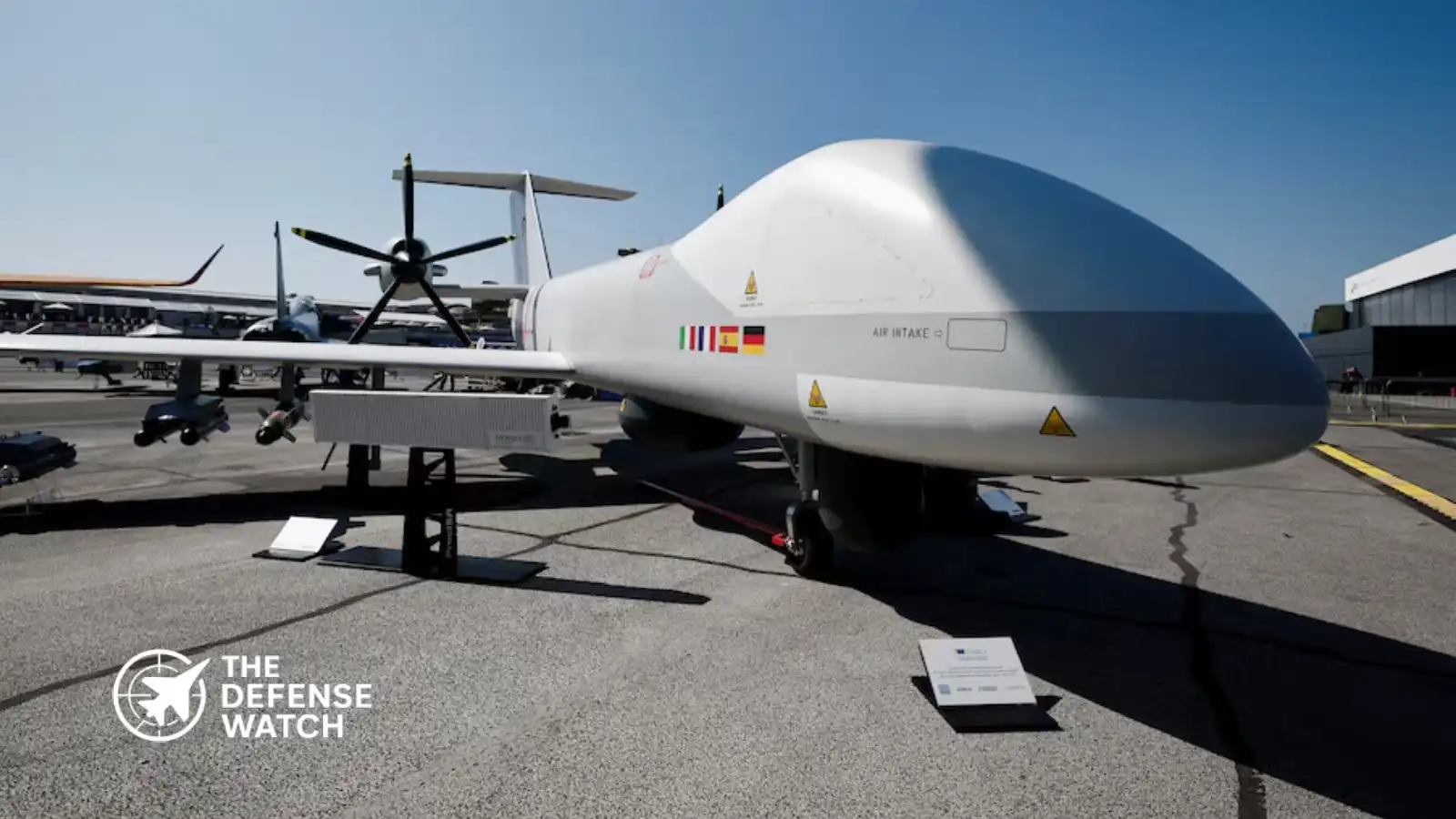
Eurodrone Program Draws New Attention Amid Airbus-Dassault Dispute
The Eurodrone program has become the latest source of friction between European aerospace giants Dassault Aviation and Airbus following the breakdown of their cooperation on the Future Combat Air System (FCAS).
Dassault is seeking compensation from Airbus after a French decision to suspend planned Eurodrone purchases significantly reduced the company’s expected industrial workshare on the multinational program. Three sources familiar with the matter told Reuters that the disagreement has intensified existing tensions between the two companies.
The dispute centers on Europe’s long-running “geo return” principle, under which industrial participation is broadly linked to procurement commitments from participating nations. As France reduces its acquisition plans, Dassault’s share of future work is expected to decline.
French Procurement Shift Reshapes Program Dynamics
France has not formally withdrawn from the approximately €7 billion Eurodrone initiative, which is jointly pursued by France, Germany, Italy, and Spain.
However, France’s latest defense spending plans reportedly remove funding for Eurodrone acquisitions through 2035. French officials have increasingly questioned whether the platform remains the most effective solution for future operational requirements, particularly as lower-cost and more flexible unmanned systems emerge.
- Fix – Box
The French Air and Space Force has also shown interest in alternative domestic platforms such as the Aarok drone, developed by French manufacturer Turgis & Gaillard. Reuters noted that concerns regarding the Eurodrone’s weight, cost, and development delays have existed for years.
Eurodrone Program Overview
Category Details Program Type Medium Altitude Long Endurance (MALE) UAV Participating Nations France, Germany, Italy, Spain Lead Industrial Partner Airbus Dassault Role Flight control and mission communication systems Estimated Program Value Approximately €7 billion Planned Fleet 60 aircraft ordered by partner nations Original Service Entry Target 2025 Current First Flight Target 2027 Mission Focus Intelligence, surveillance, reconnaissance, and long-endurance operations FCAS Collapse Intensifies Existing Frictions
The timing of the Eurodrone disagreement is particularly significant.
Only days earlier, France and Germany effectively abandoned development of the Next Generation Fighter component of the FCAS program after years of disputes between Airbus and Dassault regarding governance, leadership authority, intellectual property rights, and technology-sharing arrangements.
FCAS was intended to serve as Europe’s premier sixth-generation combat aviation program, with an estimated value exceeding €100 billion. The project aimed to replace France’s Rafale fleet and Germany’s Eurofighter Typhoon aircraft beginning around 2040.
Reuters reported that while the Eurodrone disagreement and FCAS collapse are formally separate issues, individuals familiar with the situation described them as being closely connected politically and psychologically.
Why Eurodrone Matters to European Defense Strategy
The Eurodrone initiative was originally conceived as a strategic effort to reduce European dependence on foreign unmanned aircraft systems, particularly U.S.-built systems such as the MQ-9 Reaper and Israeli surveillance platforms.
For more than a decade, European armed forces have relied heavily on imported MALE drones for intelligence gathering, surveillance, reconnaissance, and strike missions.
The Eurodrone program sought to address that dependence through a sovereign European solution offering:
- Independent operational control
- European-developed mission systems
- Reduced reliance on non-European suppliers
- Greater interoperability among European armed forces
- Strengthened European defense industrial capacity
However, the program has faced repeated delays, changing requirements, and escalating costs. Those challenges have increasingly raised questions among participating governments regarding affordability and operational relevance.
Broader Implications for European Defense Cooperation
The dispute highlights a recurring challenge within multinational European defense programs.
Several major Franco-German initiatives launched during the past decade have encountered significant difficulties, including FCAS, the Main Ground Combat System (MGCS) tank project, and now Eurodrone.
From a strategic perspective, these setbacks arrive at a critical moment for Europe. Many European governments are increasing defense spending amid heightened security concerns and growing uncertainty regarding long-term transatlantic defense commitments.
The collapse of FCAS and emerging tensions surrounding Eurodrone raise important questions about Europe’s ability to execute large-scale collaborative defense programs involving multiple governments and industrial champions.
For the United States, these developments are significant because European delays in indigenous combat aircraft and UAV programs could extend reliance on American defense technologies, including advanced fighter aircraft, drones, and networked combat systems.
Airbus Says Program Can Continue
Despite the dispute, Airbus has signaled that the Eurodrone program remains viable.
Reuters reported that Airbus Chief Executive Guillaume Faury previously stated the project is likely to move forward under a modified structure following changes in French defense priorities. Airbus has not publicly addressed the compensation request beyond those earlier remarks.
Unlike FCAS, which was still facing fundamental governance disputes during development, Eurodrone is already well advanced in engineering and production planning. That reality may limit the immediate impact of industrial disagreements and improve the chances of program continuation.
Outlook
The emerging Eurodrone dispute demonstrates that the fallout from the FCAS collapse extends beyond Europe’s next-generation fighter ambitions.
As France reassesses its UAV procurement priorities and Dassault seeks compensation for a reduced industrial role, European policymakers face renewed pressure to preserve one of the continent’s largest cooperative defense programs.
Whether Eurodrone can avoid the fate of FCAS may become an important test of Europe’s broader effort to strengthen defense industrial autonomy while balancing national interests within multinational programs.
Executive Summary:
For thirteen days in October 1962, the United States and the Soviet Union stood at the edge of nuclear annihilation — not as an abstraction, but as a live military situation with armed missiles, combat-ready bombers, and a Soviet submarine that nearly launched a nuclear torpedo without Moscow’s authorization. The Cuban Missile Crisis was the only moment in Cold War history when both superpowers simultaneously placed their strategic nuclear forces on maximum alert. Its resolution depended less on formal diplomacy than on a chain of individual decisions — some brilliant, some terrifyingly close to catastrophic — made under near-total uncertainty.
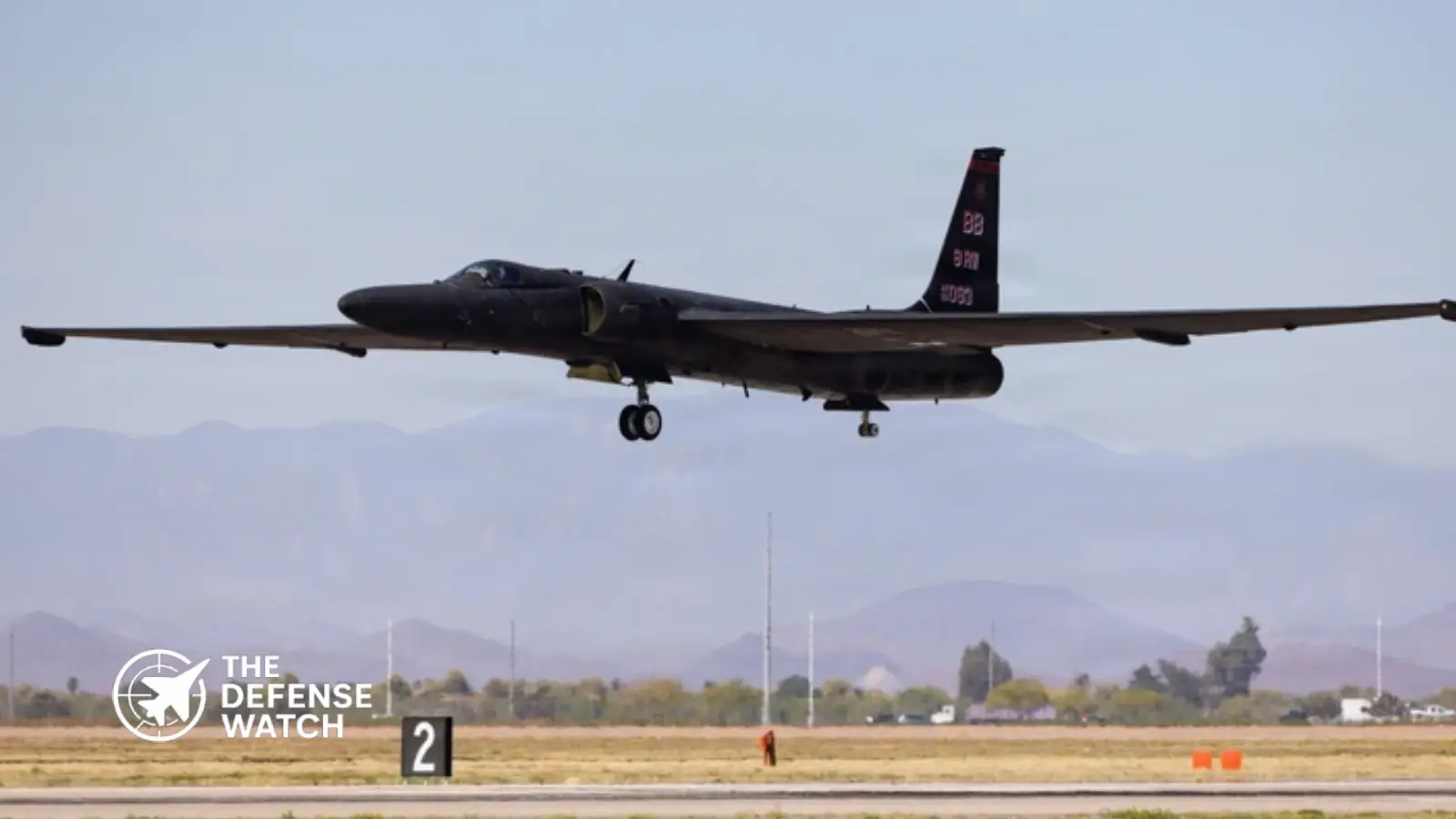
October 14, 1962. A U-2 reconnaissance aircraft flying at 72,000 feet over western Cuba points its cameras at a stretch of cleared jungle near the village of San Cristóbal. The images it captures will reach the White House the following morning — and trigger the most dangerous thirteen days in recorded history.
The crisis was not born that morning. It had been assembling quietly since July, when Soviet freighters began delivering crated R-12 Dvina medium-range ballistic missiles under the cover of agricultural equipment manifests. By the time American analysts annotated the San Cristóbal photographs, Soviet engineers were already grading launch pads for 24 R-12 launchers capable of placing a one-megaton warhead on Washington, D.C. in under ten minutes.
What followed was not a diplomatic dance. It was a live nuclear confrontation — with armed missiles, DEFCON 2 bombers circling fail-safe points, and a Soviet submarine commander who nearly fired a 10-kiloton torpedo at a U.S. Navy carrier group without Moscow’s knowledge.
The Hardware: What Khrushchev Actually Sent to Cuba
Understanding the crisis requires understanding the weapons at its center. Operation Anadyr — the Soviet codename for the deployment — was not improvised. It was a calculated strategic move to close a missile gap that ran decisively in America’s favor.
In 1962, the United States held approximately 27,000 nuclear warheads against the Soviet Union’s 3,600. Washington also enjoyed a decisive advantage in delivery systems — Minuteman ICBMs in hardened silos, Polaris submarines, and NATO forward-basing across Western Europe. Khrushchev’s response was to collapse the geographic buffer. Missiles in Cuba would put every major American city within a five-to-ten minute flight time, effectively negating U.S. early warning systems.
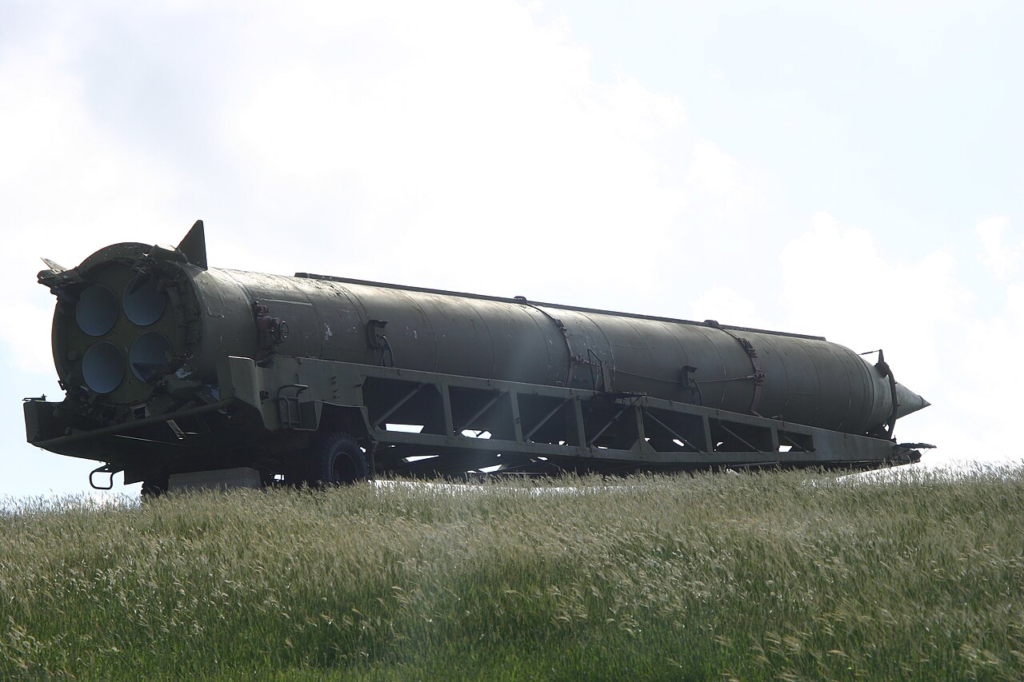
The primary weapon was the R-12 Dvina (NATO designation: SS-4 Sandal). The first truly mass-produced Soviet ballistic missile, the R-12 carried a 2.3-megaton thermonuclear warhead — roughly 150 times the yield of the Hiroshima bomb — to a range of 2,000 kilometers. Three regiments with 24 launchers were deployed. Alongside them, two regiments were preparing to receive the longer-legged R-14 Chusovaya (SS-5 Skean), an 86-metric-ton intermediate-range missile with a 4,500-kilometer reach that would have put Seattle and Los Angeles in its targeting envelope.
The R-14s never made it. The crisis broke before their launchers were assembled. But 36 nuclear warheads for the R-12 were already on the island when Kennedy went on television on October 22.

What U.S. intelligence did not know — and would not learn for decades — was that Soviet General Issa Pilyev also had authority to employ nine Luna tactical nuclear missiles against any American invasion force, and that 98 additional tactical nuclear warheads were dispersed across the island. A U.S. amphibious assault on Cuba would have been walking into a nuclear kill zone.
The Missiles: A Technical Comparison
| System | NATO Code | Range | Warhead Yield | Launch Prep Time | Deployed to Cuba |
|---|---|---|---|---|---|
| R-12 Dvina | SS-4 Sandal | 2,000 km | 2.3 Mt | 3–4 hours (cold) | 24 launchers |
| R-14 Chusovaya | SS-5 Skean | 4,500 km | 1–2.3 Mt | ~4 hours (cold) | 0 (warheads arrived; missiles cancelled) |
| Luna (FROG-3) | FROG | 65 km | 10 kt tactical | ~1 hour | 9 launchers |
| Jupiter IRBM (U.S., Turkey) | — | 2,400 km | 1.44 Mt | 15 min (pre-fueled) | 15 (Cigli AB, Turkey) |
| Thor IRBM (U.S., UK) | — | 2,400 km | 1.44 Mt | 15 min (pre-fueled) | 60 (UK bases) |
The symmetry is notable: Khrushchev’s deployment of R-12s in Cuba mirrored, almost precisely, the American deployment of Jupiter IRBMs at Cigli Air Base in Turkey — a fact that would quietly determine the crisis’s endgame.
The Timeline: Day by Day
Pre-Crisis: July – October 13, 1962
Operation Anadyr moves in plain sight — hidden by audacity. Soviet cargo ships unload military equipment at Cuban ports, officially described as agricultural and industrial goods. U.S. intelligence tracks a general Soviet arms buildup, including IL-28 jet bombers, but the missile sites remain undetected. On September 4, Kennedy issues a public warning against offensive weapons in Cuba. The Soviets continue construction.
By early October, the first R-12 site at San Cristóbal is nearly complete. Warheads are stored at three separate facilities — some as far as 300 miles from their assigned launchers. In the event of a launch order, Soviet troops would require 14 to 24 hours simply to transport warheads across Cuban roads to the missiles.
Day 1 — October 16
Kennedy is briefed at 8:45 a.m. on the U-2 photographs. The images are unambiguous: MRBM launch sites under active construction, with missile erectors, fuel tankers, and blast deflectors visible. Two options immediately surface within the Executive Committee (ExComm): an air strike to destroy the sites before they become operational, or a naval quarantine.
The Joint Chiefs unanimously recommend airstrikes followed by invasion. Kennedy is skeptical. An air strike, he notes, cannot guarantee 100% destruction — and any surviving missile could still hit an American city.
Days 2–5 — October 17–20
ExComm deliberates in secret while Kennedy maintains his public schedule to avoid tipping off Moscow. The hawks, led by Air Force Chief of Staff General Curtis LeMay, push hard for military action. LeMay tells Kennedy that a blockade “would be seen as a greater defeat than the Bay of Pigs.” Kennedy holds the line.
By October 20, the first R-12 site reaches operational status — eight launchers ready. Kennedy formally decides on a naval quarantine, framed as a “quarantine” rather than a “blockade” to sidestep the legal definition of an act of war under international law.
Day 7 — October 22
Kennedy addresses the nation in a televised broadcast at 7 p.m. He reveals the existence of the missile sites, announces a naval quarantine of Cuba effective at 10 a.m. the following morning, and demands the removal of all Soviet offensive weapons. He explicitly warns that any nuclear missile fired from Cuba against any nation in the Western Hemisphere will be treated as an attack by the Soviet Union on the United States — requiring “a full retaliatory response.
The Strategic Air Command immediately elevates to DEFCON 2. It is the only time in history SAC reaches that alert level. Over 1,400 bombers and 145 ICBMs are placed on maximum readiness. B-52s begin continuous airborne alert patrols.
Khrushchev’s initial response is defiant. Soviet ships — 25 of them, some likely carrying additional military equipment — continue toward Cuba.
Day 8 — October 23
The Organization of American States unanimously endorses the quarantine. Kennedy signs Proclamation 3504, formally establishing the naval exclusion zone at a radius of 500 nautical miles from Cape MaisÃ, Cuba.
Simultaneously, CIA Director John McCone informs Kennedy that four Soviet Foxtrot-class submarines have left their Kola Bay base and are tracking toward Cuba. Each carries one nuclear-armed torpedo. Kennedy does not know this. Neither does he know that the B-59, one of those submarines, is already positioned near the quarantine line with a 10-kiloton torpedo ready for launch.
Day 9 — October 24: “Eyeball to Eyeball”
At 10 a.m., the quarantine takes effect. Soviet ships approach the line. The world watches in real time. Then — one by one — Soviet vessels stop or reverse course. Secretary of State Dean Rusk turns to McGeorge Bundy and says: “We’re eyeball to eyeball, and I think the other fellow just blinked.”
It is not the whole story. Khrushchev orders the ships to halt because he needs time — not because he is backing down. Construction on the missile sites in Cuba continues around the clock. By October 25, two additional R-12 sites reach operational status. All 24 R-12 launchers are functional by the evening of October 27.
Days 10–11 — October 25–26
U.S. Ambassador Adlai Stevenson confronts Soviet Ambassador Valerian Zorin at the UN Security Council, demanding he deny the missiles exist. Zorin stonewalls. Stevenson presents the U-2 photographs live on the Security Council floor. It is one of the most dramatic intelligence disclosures in diplomatic history.
On the night of October 26, Khrushchev sends Kennedy a long, uncharacteristically personal letter — drafted without the input of the Politburo — proposing a deal: the Soviets will remove the missiles if the United States pledges not to invade Cuba. Kennedy sees an opening. Then, the following morning, a second, harsher letter arrives from Moscow — this one almost certainly written by hardliners — adding a new condition: the United States must also remove its Jupiter missiles from Turkey.
Day 12 — October 27: Black Saturday
The most dangerous day of the crisis — arguably the most dangerous day of the 20th century — begins before dawn.
At 9:12 a.m., a U-2 reconnaissance aircraft piloted by Major Rudolf Anderson is shot down over Cuba by a Soviet SA-2 surface-to-air missile. Anderson becomes the only combat fatality of the crisis. The Joint Chiefs immediately recommend retaliatory strikes. Kennedy refuses.
Simultaneously, another U-2 conducting an unrelated Arctic sampling mission strays into Soviet airspace over Chukotka. Soviet MiGs scramble; American F-102 interceptors armed with nuclear-tipped Falcon air-to-air missiles launch to escort the errant U-2 home. A midair miscalculation could have triggered war without either head of state’s knowledge.
That evening, beneath the Atlantic, the situation aboard B-59 reaches its breaking point. The Foxtrot-class submarine has been submerged for days, evading U.S. Navy ASW forces. Internal temperatures have reached 45°C (113°F). The batteries are nearly depleted. Cut off from communications with Moscow, Captain Valentin Savitsky concludes that war has already begun.
Savitsky orders the nuclear torpedo armed and prepared for launch.
Under Soviet Navy procedures aboard B-59, launch required the consent of three officers: the captain, the political officer, and the brigade commander. The first two agreed. The third — Flotilla Commander Vasili Arkhipov — refused.
Arkhipov argued, calmly, that the depth charges dropping around them were signaling devices, not attack weapons. He persuaded Savitsky to surface. B-59 breached the water surrounded by eleven U.S. destroyers and the carrier USS Randolph. The torpedo was never fired. The Americans had no idea the submarine was nuclear-armed. They would not find out for forty years, when the Soviet archives were opened.
That same night, Robert Kennedy meets secretly with Soviet Ambassador Anatoly Dobrynin. The terms are conveyed: the Soviets withdraw their missiles from Cuba; the United States publicly pledges not to invade, and privately commits to removing its Jupiter missiles from Turkey within several months. The Turkey component is to remain secret.
Day 13 — October 28: Resolution
At 9 a.m. Moscow time, Radio Moscow broadcasts Khrushchev’s announcement: the Soviet Union will dismantle and remove all offensive weapons from Cuba. Soviet technicians begin tearing down the launch sites within hours. The world steps back from the edge.
The public resolution looks clean. The private one is more complicated. The secret Jupiter deal — a genuine concession that gave Khrushchev political cover to stand down without appearing to capitulate — would remain classified for over 25 years. When it was finally disclosed in the late 1980s, the clean narrative of American resolve forcing Soviet retreat required significant revision.
Aftermath: November–December 1962
The quarantine is not lifted immediately. Kennedy addresses the nation on November 2, confirming the dismantling of Soviet missile sites. Soviet ships depart Cuba between November 5–9, each visually inspected as it crosses the blockade line. The removal of IL-28 bombers requires additional negotiations, finally resolved by December 6.
The U.S. officially ends the quarantine at 6:45 p.m. on November 20, 1962. The Jupiter missiles in Turkey are removed the following April, framed publicly as a routine “modernization” of NATO forces.
One lasting institutional legacy: on June 20, 1963, the United States and Soviet Union establish the Moscow–Washington hotline — the direct teletype link between the Kremlin and the White House — specifically to prevent a future crisis from being resolved via broadcast radio and back-channel intermediaries.
The Structural Lesson: What the Crisis Actually Proved
“The nuclear age requires a new way of thinking. It is not enough to be strong; you must also be able to communicate that strength without triggering the very war you are trying to prevent.” — Derived from Kennedy’s post-crisis address, November 1962
The Cuban Missile Crisis is typically framed as a triumph of American resolve. That framing is incomplete. Kennedy did not simply outface Khrushchev — he gave him something real in return, and kept it secret precisely because public acknowledgment would have collapsed the narrative of victory for both sides.
The crisis also demonstrated that the greatest danger in nuclear confrontation is not deliberate first strikes. It is autonomous decision-making at the tactical level, severed from strategic command. B-59’s near-launch was not authorized by Moscow. The SA-2 that downed Major Anderson’s U-2 was fired on Cuban initiative, not Soviet orders. The straying U-2 over Chukotka was a navigational error. Any of these incidents, in isolation, could have been the tripwire.
The architecture of modern crisis management — hotlines, deconfliction channels, formalized command-and-control protocols — was built on the wreckage of Black Saturday. So was the doctrine of ensuring no single tactical commander can initiate a strategic nuclear exchange. Those lessons remain entirely current.
Conclusion: Why October 1962 Still Defines the Nuclear Age
The Cuban Missile Crisis did not end the arms race. Khrushchev’s political humiliation accelerated Soviet military investment; by the late 1960s, the USSR had achieved rough strategic parity. The crisis did not make the world safe. It made the world conscious — for the first time — of how close the logic of deterrence can bring two rational actors to mutual annihilation.
Sixty years later, the structural conditions that produced the crisis — geographic proximity, second-strike anxiety, miscommunication under stress, and the terrifying autonomy of tactical commanders — have not been engineered out of nuclear strategy. They have been replicated in new theaters.
The thirteen days of October 1962 are not history. They are the template.
Executive Summary:
North Korean leader Kim Jong Un has reaffirmed full support for Russia and President Vladimir Putin in a message marking Russia Day. The statement highlights the continued strengthening of the North Korea-Russia strategic partnership as both countries expand political, economic, and security cooperation amid ongoing international tensions.
North Korea-Russia Alliance Strengthens As Kim Backs Putin
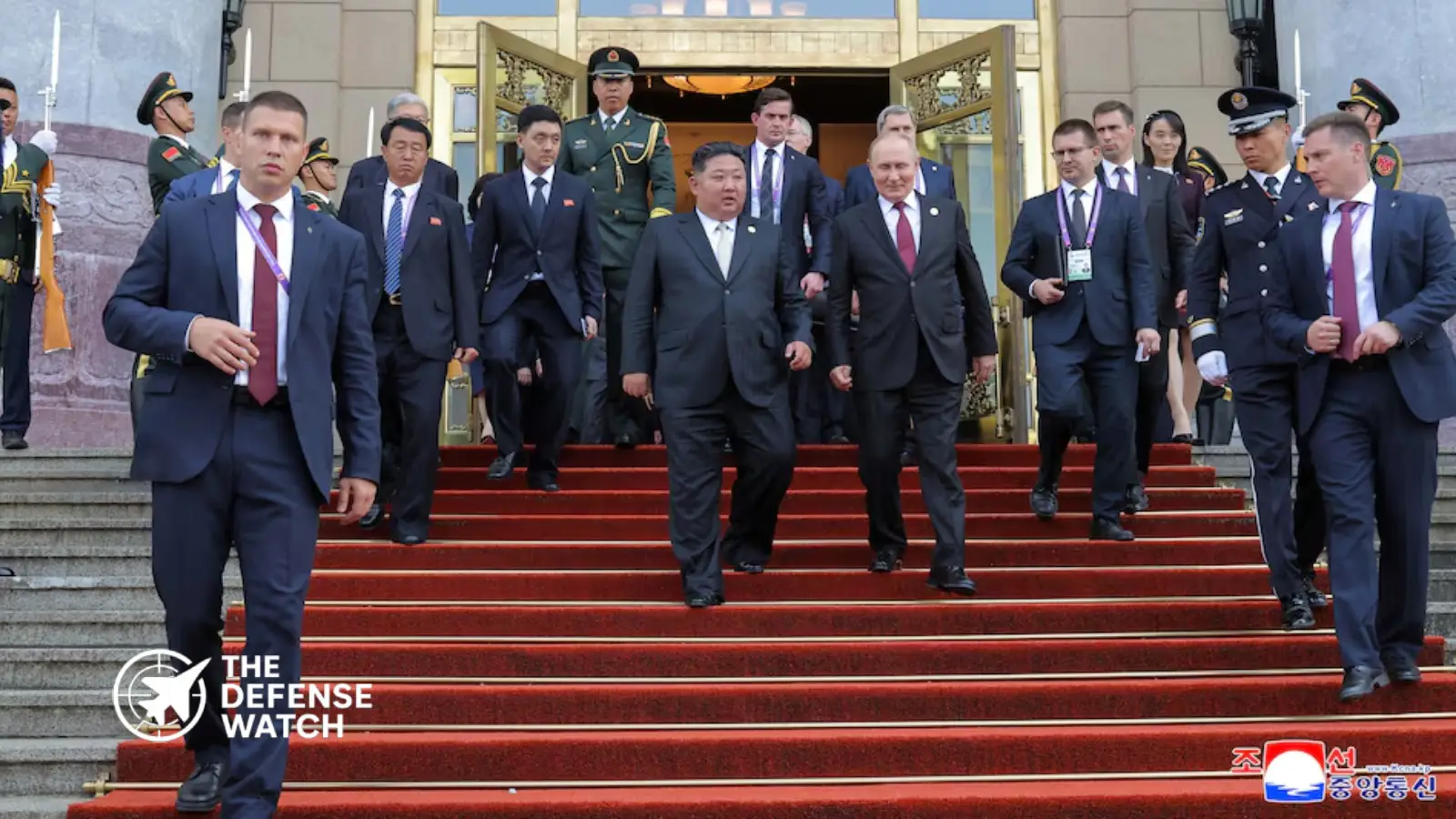
North Korea-Russia alliance dynamics took center stage this week after North Korean leader Kim Jong Un sent a congratulatory message to Russian President Vladimir Putin for Russia’s National Day, reaffirming Pyongyang’s support for Moscow’s domestic and foreign policies. According to North Korea’s state-run Korean Central News Agency (KCNA), Kim described bilateral ties as an increasingly strong alliance built on a comprehensive strategic partnership treaty.
Kim reportedly pledged that North Korea would continue to stand alongside Russia, reflecting the increasingly close relationship that has emerged between the two nations over the past several years.
The message comes at a time when North Korea and Russia are expanding cooperation across diplomatic, economic, and security sectors, raising concerns among Western governments and regional allies.
Strategic Partnership Continues To Expand
The foundation of the current relationship was established during Putin’s visit to Pyongyang in June 2024, when both countries signed a comprehensive strategic partnership treaty. Since then, officials in both capitals have repeatedly highlighted the agreement as a cornerstone of their growing cooperation.
KCNA stated that Kim views the relationship as evolving into a genuine alliance based on mutual trust and shared strategic interests. Russian and North Korean officials also participated in commemorative events marking Russia Day, including visits to Soviet war memorials and diplomatic receptions hosted by the Russian Embassy in Pyongyang.
One significant infrastructure project supporting closer ties is a new land bridge connecting the two countries. The project is expected to facilitate trade and transportation links between Russia’s Far East and North Korea. According to reports, the bridge is scheduled for completion in June 2026.
Defense And Security Implications
The deepening North Korea-Russia partnership has attracted significant attention from defense analysts and policymakers.
Washington and Seoul have repeatedly accused Pyongyang of supplying artillery ammunition, missiles, and other military equipment to support Russian operations in Ukraine. North Korea and Russia have denied allegations of weapons transfers.
Separately, intelligence assessments from South Korea and Western governments have alleged that North Korean personnel have been deployed in support roles linked to Russia’s war effort. These reports have intensified scrutiny of the evolving security relationship between the two countries.
For defense planners across the Indo-Pacific and Europe, the partnership represents more than symbolic diplomacy. It demonstrates the emergence of a more coordinated relationship between two states facing extensive Western sanctions and international pressure.
Growing Regional Geopolitical Significance
Kim’s message to Putin arrives only days after a high-profile visit by Chinese President Xi Jinping to Pyongyang, where both leaders pledged to strengthen bilateral cooperation. The sequence of events highlights North Korea’s increasingly active diplomatic engagement with both Russia and China.
From a strategic perspective, Pyongyang appears to be leveraging closer ties with Moscow while maintaining its traditional relationship with Beijing. This approach provides North Korea with greater diplomatic flexibility and potentially broader economic opportunities.
The growing Russia-North Korea relationship also reflects broader geopolitical shifts occurring across Eurasia. As Moscow seeks partners outside Western-led institutions and sanctions frameworks, North Korea has emerged as a willing strategic partner.
Why The Latest Statement Matters
While Kim’s message does not announce any new agreement or military initiative, it reinforces a consistent pattern of closer political alignment between Pyongyang and Moscow.
For Russia, continued support from North Korea demonstrates that it retains strategic partners despite international isolation efforts. For North Korea, the relationship offers economic opportunities, diplomatic backing, and potential access to technology and infrastructure cooperation.
The latest exchange also signals that the comprehensive strategic partnership signed in 2024 remains a central element of both countries’ foreign policy agendas. As infrastructure projects advance and diplomatic engagement continues, observers are likely to monitor whether political cooperation evolves into deeper economic and security integration.
Defense Analysis
The significance of Kim’s latest message lies less in the statement itself and more in what it reveals about long-term strategic trends. The North Korea-Russia alliance is increasingly institutionalized through treaties, infrastructure projects, and recurring high-level political engagement.
For the United States, South Korea, Japan, and NATO partners, the development represents an evolving geopolitical challenge that links European security concerns with Indo-Pacific stability. Continued coordination between Moscow and Pyongyang could influence future assessments of regional deterrence, sanctions enforcement, and military planning.
Although no immediate policy changes were announced, Kim’s public endorsement of Russia underscores that the partnership remains on an upward trajectory and is likely to remain a significant factor in regional security calculations throughout 2026.
Executive Summary:
EDGE Group has launched a new European defense enterprise in Paris, marking a significant expansion of its presence in Europe. The move aims to strengthen sovereign defense capabilities, deepen industrial cooperation, and support local production partnerships as European governments increase investment in defense modernization and strategic autonomy.
EDGE Group Expands European Defense Presence With New Paris Enterprise
EDGE European defense enterprise is at the center of the company’s latest expansion strategy, as the UAE-based defense conglomerate announced the establishment of a new European entity headquartered in Paris, France.
The new organization is designed to serve as a platform for industrial cooperation, technology partnerships, and localized defense production across European markets. The announcement reflects growing demand among European nations for stronger domestic defense manufacturing capabilities and diversified supply chains amid a rapidly evolving security environment.
According to EDGE Group, the Paris-based enterprise will focus on developing long-term partnerships with governments, defense industries, research institutions, and technology companies throughout Europe.
Strategic Expansion Into Europe’s Defense Market
The launch comes at a time when European governments are significantly increasing defense spending while seeking greater control over critical defense technologies and industrial capacity.
Across the continent, policymakers have emphasized the importance of sovereign defense capabilities, particularly following ongoing geopolitical tensions, supply chain vulnerabilities, and lessons learned from recent conflicts. As a result, defense manufacturers are increasingly investing in local production, technology transfer, and regional partnerships.
For EDGE Group, establishing a permanent European presence provides direct access to one of the world’s largest and fastest-growing defense markets.
The company stated that the new enterprise will act as a bridge between European customers and EDGE’s portfolio of defense, aerospace, cybersecurity, electronic warfare, autonomous systems, and advanced technology solutions.
Why Paris Was Selected
Paris has emerged as one of Europe’s most influential defense and aerospace centers.
France hosts major defense contractors, research institutions, and government agencies involved in military modernization programs. The country also plays a leading role in European defense cooperation initiatives and multinational capability development projects.
By selecting Paris as its European headquarters, EDGE positions itself closer to decision-makers, industrial partners, and procurement authorities involved in shaping the future of European defense programs.
The location also provides access to a mature defense ecosystem that supports collaboration in areas such as advanced manufacturing, artificial intelligence, autonomous systems, electronic warfare, and secure communications.
Focus On Sovereign Defense Capability
A key theme behind the launch is the growing emphasis on sovereign defense capability across Europe.
Many European governments are increasingly prioritizing domestic industrial participation when evaluating defense acquisitions. This approach seeks to ensure national control over critical technologies, maintenance infrastructure, and supply chains.
The new EDGE European defense enterprise appears aligned with this trend by emphasizing industrial partnerships and localized capability development rather than simple export relationships.
This strategy may improve opportunities for collaborative production, joint development programs, and technology-sharing arrangements that meet European requirements for industrial participation.
Strengthening Industrial Partnerships
EDGE Group has steadily expanded its international presence through partnerships and acquisitions in recent years.
The company has developed a broad portfolio covering missiles, guided weapons, unmanned systems, naval platforms, cyber technologies, electronic warfare systems, and advanced aerospace solutions.
The Paris-based enterprise is expected to help identify new opportunities for cooperation with European defense firms seeking additional manufacturing capacity, technology collaboration, or access to emerging markets.
Industry analysts increasingly view international industrial partnerships as essential for managing rising defense demand while reducing supply chain risks. European governments have similarly encouraged collaborative approaches that strengthen industrial resilience and increase production capacity.
Implications For Europe’s Defense Industry
The establishment of the new European enterprise highlights broader changes occurring throughout the global defense sector.
Defense companies are no longer competing solely through product offerings. Increasingly, success depends on the ability to provide local industrial participation, technology transfer, workforce development, and long-term support arrangements.
For Europe, the arrival of additional defense investors and industrial partners could contribute to greater manufacturing capacity and competition within the sector.
For EDGE Group, the expansion enhances its ability to participate in future European procurement programs while building relationships with regional stakeholders.
As European defense budgets continue to grow and governments prioritize strategic autonomy, companies capable of supporting sovereign capability objectives are likely to find increasing opportunities across the continent.
Broader Geopolitical Significance
The launch also reflects the growing internationalization of the defense industry.
Defense cooperation is increasingly crossing regional boundaries as governments seek access to advanced technologies, diversified suppliers, and resilient industrial networks.
The establishment of a dedicated European enterprise demonstrates how defense firms are adapting to evolving procurement priorities that emphasize local presence, industrial collaboration, and long-term strategic partnerships.
While the full scope of future projects has not yet been disclosed, the move positions EDGE Group to play a larger role in Europe’s defense modernization efforts over the coming years.
Conclusion
The creation of the EDGE European defense enterprise in Paris represents a strategic step in the company’s international expansion strategy. By focusing on sovereign defense capability, industrial cooperation, and local partnerships, EDGE aims to strengthen its position within Europe’s evolving defense landscape.
As European nations continue investing in defense modernization and industrial resilience, the new Paris-based enterprise provides a platform for deeper collaboration between EDGE Group and European defense stakeholders.
Executive Summary:
Russia has renewed its proposal to India for the Su-57 fifth-generation fighter aircraft, with President Vladimir Putin offering unrestricted technology transfer and joint development opportunities. The move comes as India evaluates options to strengthen its future combat aviation capabilities while advancing indigenous aerospace programs.
Russia Renews Su-57 Offer To India
Russia has revived its long-running proposal to bring India into the Su-57 fifth-generation fighter program, with President Vladimir Putin publicly offering New Delhi access to advanced fighter technologies, joint production opportunities, and future development cooperation. According to statements made during interactions with international media at the St. Petersburg International Economic Forum, Moscow is prepared to pursue the partnership without restrictions on technology sharing.
The offer marks one of the most expansive defense cooperation proposals Russia has made to India in recent years. Putin stated that Russia remains willing to jointly develop and further improve the Su-57 platform alongside India, reviving elements of a partnership that was once envisioned under the Fifth Generation Fighter Aircraft (FGFA) program.
Background: The FGFA Program
India and Russia originally launched the FGFA initiative in 2007 to jointly develop a fighter aircraft based on the Su-57 platform. However, New Delhi eventually withdrew from the program amid concerns regarding development timelines, technology access, costs, and aircraft performance requirements.
Despite India’s exit, Russia continued development independently, eventually bringing the Su-57 into operational service. Putin referenced the earlier collaboration during his remarks, noting that the aircraft could have become a joint Indo-Russian project before Moscow proceeded alone.
The latest proposal appears designed to reopen that discussion under significantly different terms, including broader technology transfer and local manufacturing opportunities.
What Russia Is Offering
According to Russian statements, the package extends beyond aircraft procurement. Moscow has indicated readiness to provide:
- Unrestricted technology transfer related to the Su-57 program
- Joint production within India
- Local manufacturing of aircraft components
- Continued co-development and modernization of the platform
- Broader cooperation in advanced air defense technologies
For India, technology transfer remains a critical factor in major defense acquisitions. Unlike traditional export deals, access to design knowledge, manufacturing processes, and future upgrade pathways can significantly affect long-term operational independence and domestic industrial growth.
Why The Timing Matters
The renewed Russian offer arrives at a critical point for India’s airpower modernization plans.
India continues to pursue its indigenous Advanced Medium Combat Aircraft (AMCA) program, which is intended to deliver a domestically developed fifth-generation fighter in the coming decade. At the same time, the Indian Air Force faces challenges related to squadron strength and the need to maintain technological parity in an increasingly competitive regional environment.
Regional developments are also shaping the conversation. China’s growing inventory of advanced combat aircraft and reports regarding Pakistan’s interest in next-generation fighter capabilities have increased attention on India’s future air combat requirements.
Russia’s proposal appears aimed at positioning the Su-57 as an available near-term option while India continues developing its indigenous programs.
Assessing The Strategic Implications
The significance of the latest offer lies less in the aircraft itself and more in the level of industrial access being proposed.
Historically, defense technology transfers involving advanced combat aircraft have been limited by export controls, intellectual property restrictions, and geopolitical considerations. Russia’s willingness to discuss unrestricted cooperation signals an effort to preserve its long-standing defense relationship with India amid increasing competition from Western suppliers.
-
For India, any decision involving the Su-57 would likely be evaluated against multiple factors, including operational requirements, industrial benefits, lifecycle costs, interoperability concerns, and the long-term objectives of the AMCA program.
The proposal also highlights a broader trend in global defense markets, where technology access and domestic manufacturing rights increasingly influence procurement decisions as much as platform performance.
The Su-57’s Place In India’s Future Fighter Plans
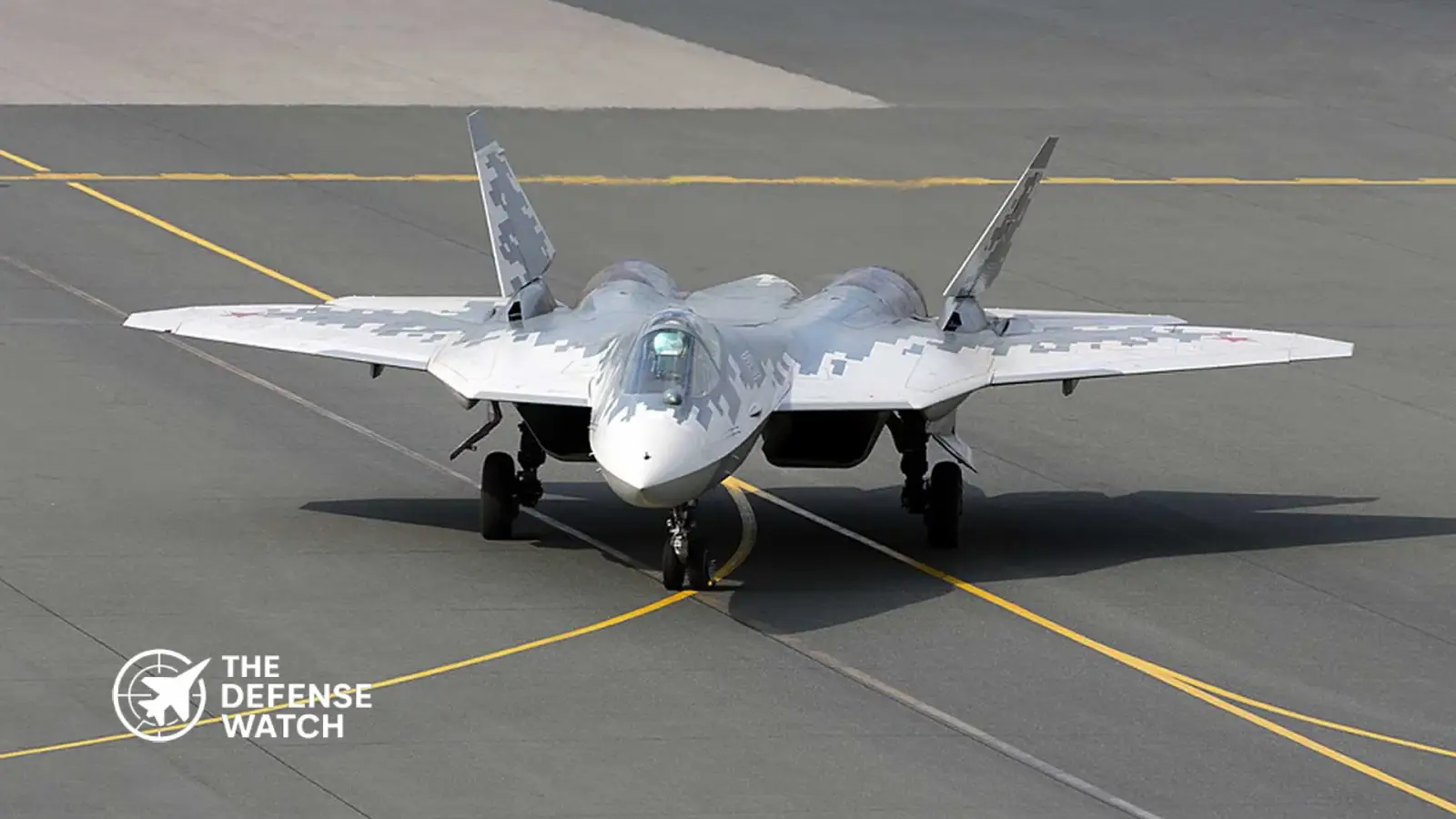
The Su-57 remains Russia’s premier fifth-generation fighter aircraft, featuring low-observable characteristics, advanced avionics, networked warfare capabilities, and multirole mission flexibility. While the aircraft has attracted international interest, India has yet to signal any formal commitment regarding the renewed proposal.
Whether the offer evolves into formal negotiations remains uncertain. However, Putin’s public comments demonstrate Moscow’s determination to keep the Su-57 at the center of discussions about India’s future combat aviation requirements.
Conclusion
Russia’s latest Su-57 proposal represents one of its most ambitious defense cooperation offers to India in years. By combining fighter aircraft access with unrestricted technology transfer, joint production, and future development participation, Moscow is seeking to strengthen a strategic partnership that has historically been a cornerstone of India’s military modernization.
For New Delhi, the decision will ultimately depend on how the offer aligns with its long-term objectives for airpower, defense self-reliance, and indigenous aerospace development.
Executive Summary:
Nuclear armed states continue expanding and modernizing their arsenals, according to a new assessment from the Stockholm International Peace Research Institute. The report highlights parallel modernization programs across major powers, alongside weakening arms control mechanisms. Analysts warn this trajectory increases long term escalation risk and reduces strategic predictability.
Nuclear arsenal modernization has entered a sustained global phase of expansion, according to findings released by the Stockholm International Peace Research Institute Stockholm International Peace Research Institute. The report assesses that multiple nuclear armed states are simultaneously upgrading warheads, delivery systems, and command structures while formal arms control agreements continue to erode.
The update underscores a shift in strategic stability. Instead of measured reductions seen in previous decades, nuclear forces are now being reshaped for extended deterrence competition, regional crises, and technological modernization cycles. This evolution is occurring across all recognized nuclear powers, with no clear slowdown in procurement or development programs.
Global Modernization Trends Across Nuclear Powers
SIPRI data indicates that nearly all nuclear armed states are engaged in modernization efforts, ranging from incremental upgrades to full system replacements. These programs include next generation submarine launched missiles, advanced air delivered systems, and improved land based intercontinental missiles.
Key modernization patterns include:
- Replacement of aging warheads with lower yield, higher precision designs
- Expansion of sea based deterrent patrol capabilities
- Integration of digital command and control networks
- Development of hypersonic or maneuverable reentry vehicles in select states
The result is not just numerical stability, but qualitative acceleration. Even when total stockpiles remain relatively stable, deployed systems are becoming faster, more survivable, and harder to track.
Arms Control Framework Under Pressure
A central finding from the SIPRI assessment is the continued weakening of arms control structures. Several long standing bilateral and multilateral agreements have either expired, been suspended, or lack verification mechanisms.
The erosion of these frameworks has created a strategic gap. Without consistent inspection regimes or binding numerical caps, modernization programs proceed with limited transparency. This reduces confidence among nuclear states and increases worst case planning assumptions.
From a policy perspective, the absence of structured limits creates a cycle:
- One state modernizes for deterrence credibility
- Adversaries interpret upgrades as escalation
- Additional counter modernization programs follow
This feedback loop is now shaping global nuclear planning cycles.
Regional Competition and Strategic Balance
Modernization is not evenly distributed. It is concentrated in several key strategic theaters:
- North America and Russia remain focused on triad modernization
- Asia sees expanding diversification of delivery systems
- Europe is reinforcing dual key deterrence arrangements
- South Asia continues steady warhead and missile development cycles
These regional dynamics are reshaping deterrence stability. The introduction of new missile classes and dual capable platforms increases ambiguity in crisis conditions, particularly where conventional and nuclear systems share delivery infrastructure.
Technical Drivers Behind Modernization
Several technical factors are accelerating current programs:
Improved missile accuracy
Advances in guidance systems allow smaller warheads to achieve strategic effects. This shifts design priorities toward survivability and precision rather than yield alone.
Submarine survivability emphasis
Ballistic missile submarines remain the most survivable nuclear platforms. Investment in quieter propulsion systems and longer endurance patrols is expanding across multiple fleets.
Integrated command networks
Modern nuclear forces increasingly rely on secure, networked command systems. These systems aim to reduce decision time while maintaining launch control integrity under cyber pressure scenarios.
Hypersonic development
While still limited in deployment, maneuverable high speed glide vehicles are being tested to challenge existing missile defense architectures.
Analytical Perspective: What This Means for Strategic Stability
The SIPRI findings point to a shift away from predictable deterrence structures toward more fluid competition. The key change is not simply the number of weapons, but the diversity of delivery systems and the speed of technological iteration.
Three strategic implications stand out:
First, crisis stability is weakening. Faster missile systems reduce decision time for early warning systems, increasing the risk of misinterpretation during conflicts.
Second, deterrence is becoming more regionalized. Instead of a single global balance, multiple overlapping deterrence relationships are forming, each with different thresholds and escalation risks.
Third, transparency is declining. Without robust treaty verification, intelligence assessments are becoming more central to strategic planning, increasing uncertainty between nuclear powers.
Taken together, these trends suggest a more fragmented nuclear environment where escalation control depends less on formal agreements and more on real time signaling and survivability assumptions.
Outlook for Arms Control and Future Modernization Cycles
The future trajectory outlined by SIPRI suggests continued modernization through the late 2020s. Replacement cycles for aging Cold War era systems will overlap with new technology integration, creating sustained procurement pressure across nuclear states.
Without renewed arms control mechanisms, modernization is likely to proceed in parallel rather than converging toward reduction. This does not necessarily indicate immediate expansion of stockpiles, but it does indicate persistent qualitative improvement and platform diversification.
Executive Summary:
North Korea has unveiled a newly operational nuclear material production facility, with Kim Jong Un directing officials to accelerate both the qualitative and quantitative growth of the country’s nuclear arsenal. The move signals Pyongyang’s continued commitment to expanding its strategic deterrent amid ongoing regional security tensions and stalled denuclearization efforts.
North Korea Nuclear Facility Signals New Phase In Weapons Expansion
North Korea’s nuclear facility expansion entered a new phase this week after leader Kim Jong Un inspected a newly inaugurated nuclear material production plant and called for the country’s nuclear forces to be strengthened at an “exponential” rate.
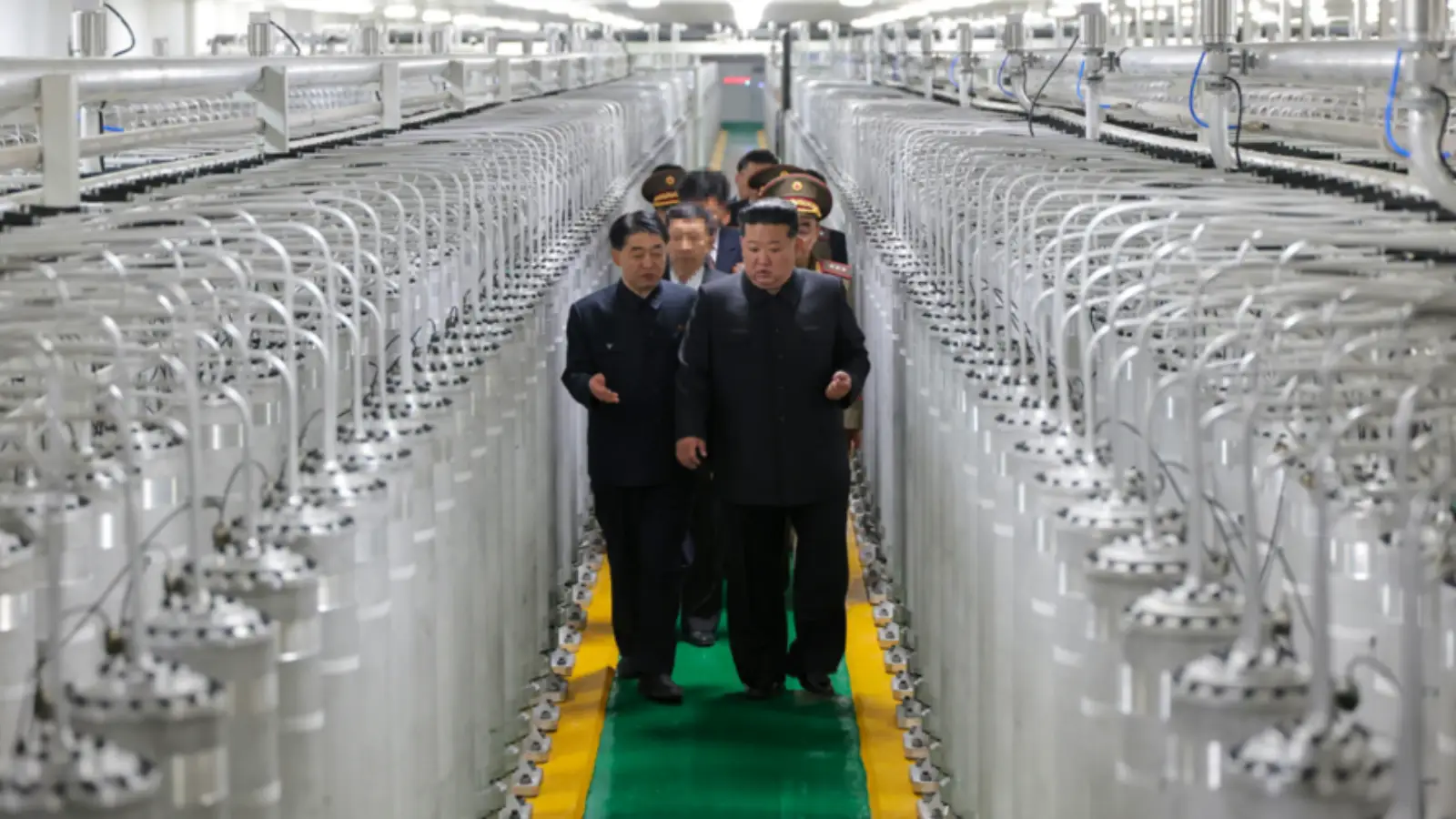
According to North Korean state media, Kim toured the facility alongside senior officials from the country’s munitions sector and nuclear weapons research establishment. During the visit, he reviewed production operations, future output plans, and technological upgrades designed to increase the production of weapons-grade nuclear material.
While Pyongyang did not disclose the facility’s location, South Korean defense officials assessed it as a uranium enrichment site, potentially adding to North Korea’s existing network of nuclear infrastructure.
Kim Jong Un Orders Rapid Nuclear Growth
State media reported that Kim said North Korea’s capacity to produce weapons-grade nuclear material has more than doubled over the past five years. He directed officials to further expand production to support long-term strategic objectives and increase the country’s nuclear deterrent.
Kim also presided over a high-level consultative meeting focused on nuclear force development. According to official reports, North Korean leadership established guidelines aimed at accelerating both the size and sophistication of the country’s nuclear arsenal.
Images released by state media showed what analysts believe to be a large centrifuge facility used for uranium enrichment, a critical process in producing fuel for nuclear weapons.
Why The Development Matters
The announcement comes as North Korea continues to prioritize strategic weapons development despite years of international sanctions and diplomatic pressure.
Analysts view the disclosure as significant because North Korea rarely reveals details about its nuclear production infrastructure. By publicly showcasing a new facility, Pyongyang appears to be signaling confidence in its expanding nuclear capabilities while reinforcing its position as a de facto nuclear weapons state.
The move also follows growing concerns from the International Atomic Energy Agency (IAEA), which has reported increased activity at North Korean nuclear sites, including expansion work at the Yongbyon complex and additional uranium enrichment facilities.
Strategic Implications For The Region
The latest North Korea nuclear facility announcement is likely to heighten security concerns across Northeast Asia.
South Korea, Japan, and the United States have closely monitored North Korea’s continued missile and nuclear development programs. While no new nuclear test has been conducted since 2017, Pyongyang has steadily expanded both its missile inventory and nuclear infrastructure.
The timing of the announcement also reflects North Korea’s broader strategy of strengthening deterrence capabilities while maintaining leverage in any future negotiations with Washington. Several analysts believe Pyongyang seeks recognition as a nuclear power before considering future arms control discussions.
From a defense and strategic standpoint, expanded uranium enrichment capacity provides North Korea with greater flexibility to increase warhead production, modernize existing weapons, and support future missile programs. Although independent estimates vary, experts generally believe the country possesses dozens of nuclear warheads and continues to produce additional fissile material.
Outlook
The unveiling of the new North Korea nuclear facility underscores the country’s ongoing commitment to expanding its nuclear deterrent despite international efforts aimed at limiting its weapons program.
For regional security planners, the development represents another indicator that Pyongyang remains focused on long-term nuclear force growth rather than returning to denuclearization negotiations. As North Korea continues investing in enrichment technology and weapons production capacity, the issue is expected to remain a central challenge for U.S. allies and policymakers across the Indo-Pacific.
Executive Summary:
A Chinese university student has admitted to unlawfully photographing sensitive U.S. military aircraft near Offutt Air Force Base in Nebraska. The case has drawn attention because the aircraft included strategic command and reconnaissance platforms tied to U.S. national security. The incident underscores increasing vigilance around military installations amid broader concerns over intelligence collection and infrastructure security.
A Chinese student has pleaded guilty to illegally photographing U.S. military aircraft near Offutt Air Force Base in Nebraska, a key installation that hosts some of America’s most sensitive airborne command and reconnaissance assets.
The case centers on 21 year old Tianrui Liang, a Chinese national studying in Scotland, who admitted taking photographs of military aircraft without authorization during a road trip across the United States, according to U.S. court documents and federal investigators.
Federal authorities arrested Liang at New York’s John F. Kennedy International Airport in April while he was preparing to leave the United States. Investigators said he had traveled to several military locations before arriving near Offutt Air Force Base, home to the headquarters of U.S. Strategic Command.
Aircraft Included Strategic National Assets
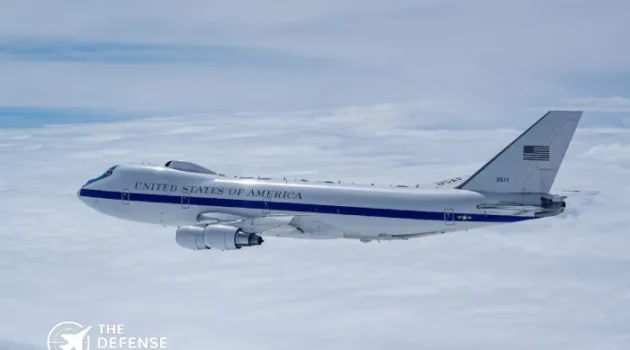
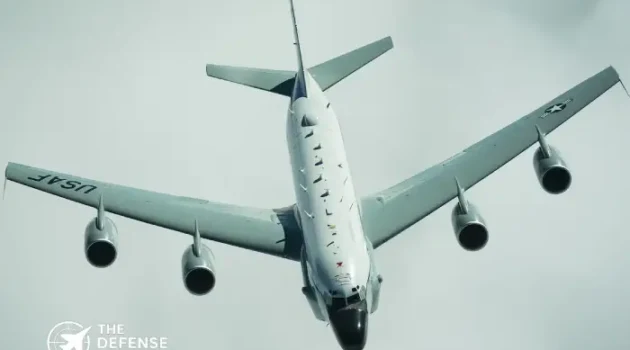
According to court filings, Liang photographed several military aircraft, including the Boeing RC-135 reconnaissance aircraft and the Boeing E-4B Nightwatch airborne command post.
The RC-135 family of aircraft plays a critical role in intelligence, surveillance, and reconnaissance operations for the U.S. military. Meanwhile, the E-4B Nightwatch, often referred to as the “Doomsday Plane,” serves as the National Airborne Operations Center and can function as a mobile command post during national emergencies.
Both aircraft are among the most strategically important airborne assets operated by the United States.
Federal investigators stated that Liang acknowledged taking the photographs and told authorities the images were intended for his personal collection. Court documents indicate he used publicly available aircraft spotting information to identify locations where military aircraft could be observed.
Why The Case Matters
While photographs of many military aircraft can be found online, U.S. law places restrictions on photographing certain defense installations and military equipment without authorization.
Authorities charged Liang under federal statutes governing unauthorized photography of military facilities and equipment. The law is designed to protect installations considered vital to national defense.
The case has attracted attention because it involves a strategic military installation associated with America’s nuclear command and control architecture. Offutt Air Force Base is one of the most important command centers within the U.S. defense establishment and serves as the headquarters of U.S. Strategic Command, which oversees the nation’s strategic deterrent forces.
Broader Security Concerns
The incident comes amid heightened scrutiny of foreign nationals accessing or documenting military facilities across the United States and allied countries.
In recent years, U.S. authorities have investigated several cases involving unauthorized photography, drone operations, or surveillance activities near military installations. Similar incidents have also been reported in allied nations, including South Korea, where authorities have prosecuted individuals accused of photographing military sites and aircraft.
Defense and security officials increasingly view seemingly routine data collection activities, including photography, drone footage, and geolocation mapping, through the lens of broader intelligence and security risks.
However, in Liang’s case, publicly available court filings do not allege espionage or direct links to a foreign intelligence service. Prosecutors focused instead on the unauthorized photography offense itself.
Analysis: Security Around Military Installations Remains A Growing Priority
The significance of this case extends beyond a single photography violation.
Modern military facilities generate enormous amounts of publicly accessible information through commercial satellite imagery, social media, aircraft tracking platforms, and enthusiast communities. Nevertheless, governments continue to enforce restrictions around direct observation and documentation of sensitive installations because seemingly minor details can contribute to broader intelligence assessments.
For U.S. defense planners, protecting strategic assets such as the E-4B Nightwatch and RC-135 reconnaissance fleet remains a critical security priority. Even when aircraft are visible from public areas, authorities often maintain legal restrictions intended to limit systematic collection of imagery and operational details.
The case also reflects a wider trend in which military and intelligence agencies are paying closer attention to activities occurring near strategic infrastructure, particularly amid increasing geopolitical competition between Washington and Beijing.
As military modernization accelerates and great power competition intensifies, security measures surrounding high value defense installations are likely to remain under close scrutiny.
Conclusion
The guilty plea by a Chinese student who photographed U.S. military aircraft near Offutt Air Force Base highlights the continuing importance American authorities place on safeguarding sensitive military facilities and strategic assets.
Although the case does not currently involve espionage allegations, it demonstrates how unauthorized photography around key defense installations can trigger federal investigations and criminal charges. As geopolitical competition sharpens, similar incidents are expected to receive increased attention from military and law enforcement agencies.
The latest CRS assessment highlights ongoing proliferation concerns at a time of rising geopolitical competition between Washington, Beijing, Tehran, and Pyongyang.
Executive Summary:
A new Congressional Research Service report warns that Chinese entities continue supporting weapons and missile programs tied to Iran, North Korea, and Pakistan. The findings underscore persistent proliferation concerns as the United States expands pressure on strategic competitors and sanctions enforcement networks.
CRS Report Highlights Ongoing Chinese Weapons Proliferation Concerns
A new report from the Congressional Research Service (CRS) has renewed attention on Chinese entities allegedly linked to weapons proliferation activities involving Iran, North Korea, and Pakistan. The assessment, cited by lawmakers and defense analysts, argues that despite years of sanctions and export controls, networks connected to the People’s Republic of China continue to play a role in supporting sensitive military and dual-use programs.
The CRS report comes amid growing strategic rivalry between the United States and China, alongside increasing concerns over missile development, nuclear modernization, and sanctions evasion by states viewed by Washington as major security challenges.
According to the report, Chinese companies and individuals have repeatedly appeared in U.S. sanctions actions and proliferation-related investigations tied to missile technologies, dual-use materials, and defense-related transfers.
The findings add to broader debates in Washington over how effectively current sanctions frameworks can deter international weapons proliferation networks.
Chinese Entities Remain Under Scrutiny
The CRS report reportedly references long-standing U.S. concerns regarding Chinese commercial and industrial entities linked to proliferation-sensitive exports. These concerns are not new. Successive U.S. administrations have imposed restrictions and sanctions on companies accused of transferring missile technology, chemical precursors, or dual-use systems to sanctioned states.
Iran and North Korea remain at the center of those concerns because of their continued missile development programs and ongoing tensions with the United States and its allies.
Pakistan’s inclusion in the discussion is strategically significant. Unlike Iran and North Korea, Pakistan maintains formal defense relations with both China and the United States, though Beijing has become Islamabad’s dominant strategic defense partner over the last two decades. China has supported several major Pakistani defense modernization programs, including combat aircraft, naval vessels, missile cooperation, and air defense systems.
While much of that cooperation occurs through state-to-state agreements considered legal under international frameworks, Western policymakers continue examining whether dual-use transfers could contribute to sensitive weapons development.
The CRS report does not appear to accuse the Chinese government directly of authorizing illicit proliferation. Instead, it highlights continuing concerns surrounding commercial entities, export enforcement gaps, and opaque procurement networks.
Why The Report Matters Now
The timing of the CRS report is notable given current geopolitical conditions.
The United States is simultaneously managing heightened tensions with China in the Indo-Pacific, monitoring North Korean missile testing activity, and confronting expanding Iranian regional influence. In that environment, proliferation concerns increasingly intersect with broader strategic competition.
Washington has also intensified export control measures targeting advanced semiconductors, aerospace systems, artificial intelligence technologies, and military-use components linked to China.
The report may strengthen arguments inside Congress for tighter enforcement actions against entities accused of facilitating sanctions evasion or proliferation activity. It could also increase scrutiny on financial networks, logistics firms, and intermediary suppliers operating across Asia and the Middle East.
From a defense planning perspective, missile proliferation remains a central concern for U.S. military strategists. Iranian ballistic missile developments, North Korean long-range missile testing, and Pakistan’s expanding missile inventory all influence regional deterrence calculations.
Chinese defense exports and industrial capacity have grown substantially over the last decade, making Beijing one of the world’s leading arms suppliers. That expansion has increased international attention on how Chinese technologies and manufacturing networks intersect with sensitive military programs abroad.
Strategic Implications For Regional Security
The report’s broader implications extend beyond sanctions policy.
In the Middle East, concerns over Iranian missile capabilities continue shaping U.S. and allied investments in integrated air and missile defense systems. Gulf states, Israel, and NATO partners closely monitor any technological support that could accelerate Iranian weapons development.
In East Asia, North Korea’s advancing missile programs remain one of the most immediate security threats facing South Korea, Japan, and U.S. regional forces. Any indication of continued external procurement support attracts significant intelligence and diplomatic attention.
Pakistan’s strategic position is more complex. Islamabad’s military relationship with Beijing has deepened through programs such as the JF-17 fighter, naval modernization projects, and air defense cooperation. China also remains a major investor through the China-Pakistan Economic Corridor (CPEC).
However, Pakistan also seeks balanced relations with Western states and Gulf partners. As a result, any renewed international debate surrounding proliferation risks could create additional diplomatic sensitivity.
The CRS report may therefore contribute to wider policy discussions about export control enforcement, strategic competition, and global nonproliferation mechanisms.
U.S. Pressure Campaigns Likely To Continue
The Biden administration and Congress have continued emphasizing nonproliferation enforcement as part of broader national security policy. Treasury Department sanctions, export restrictions, and entity listings remain central tools for disrupting procurement networks tied to missile and weapons programs.
Analysts expect future enforcement actions to focus increasingly on intermediary firms, transshipment hubs, and financial channels used to bypass restrictions.
The CRS findings also reinforce growing bipartisan concern in Washington regarding China’s global strategic influence. Defense officials increasingly view economic competition, technology control, and proliferation enforcement as interconnected national security challenges.
For allies and partner nations, the report serves as another reminder that defense supply chains and dual-use technologies remain critical areas of geopolitical competition.
Executive Summary:
Air Force Global Strike Command conducted an operational test launch of an unarmed Minuteman III intercontinental ballistic missile from Vandenberg Space Force Base, California. The launch demonstrated the continued readiness, reliability, and effectiveness of the United States’ nuclear deterrent as the Pentagon advances modernization efforts under the Sentinel ICBM program.
Air Force Global Strike Command Conducts Minuteman III ICBM Test Launch
The Minuteman III ICBM remains a central pillar of the United States’ nuclear deterrence strategy, and the latest test launch by the U.S. Air Force highlighted the system’s continuing operational readiness.
Air Force Global Strike Command, working alongside Space Launch Delta 30, launched an unarmed Minuteman III intercontinental ballistic missile from Vandenberg Space Force Base in California. The missile traveled approximately 4,200 miles to the Ronald Reagan Ballistic Missile Defense Test Site at Kwajalein Atoll in the Marshall Islands.
According to the U.S. Air Force, the test was not conducted in response to current world events. Officials stated the launch was part of routine and periodic activities designed to validate the reliability, accuracy, and effectiveness of the nation’s strategic deterrent force.
The launch involved missile crews, maintainers, helicopter operators, security personnel, and technical teams across multiple commands, demonstrating the operational coordination required to sustain the U.S. nuclear enterprise.
Strategic Deterrence Remains A Core U.S. Defense Priority
The Minuteman III ICBM force forms one leg of the U.S. nuclear triad alongside ballistic missile submarines and strategic bombers. Operated by Air Force Global Strike Command, the land-based missile force provides rapid-response nuclear capability intended to deter large-scale conflict and strategic aggression.
The latest launch comes as Washington continues to emphasize nuclear modernization amid growing geopolitical competition involving Russia and China. U.S. defense officials have repeatedly warned that aging strategic systems must remain credible and survivable while replacement programs are developed and fielded.
Although the Minuteman III first entered service in the early 1970s, the missile has undergone continuous upgrades involving propulsion, guidance, command-and-control systems, and reentry vehicle modernization. These efforts have extended the missile’s operational life far beyond its original design timeline.
Military officials argue that recurring test launches are essential for validating the aging system’s performance and ensuring confidence in the strategic deterrence mission.
Minuteman III Supports U.S. Nuclear Readiness Until Sentinel Arrives
However, the Sentinel program has faced cost growth and schedule pressures, increasing the importance of sustaining the current Minuteman III force over the coming years.
This operational reality places additional focus on test launches such as the one conducted from Vandenberg Space Force Base. These missions provide engineers and military planners with valuable performance data while also signaling continued strategic readiness to allies and adversaries alike.
The Air Force plans to eventually replace the Minuteman III fleet with the LGM-35A Sentinel, formerly known as the Ground Based Strategic Deterrent program. Sentinel is expected to deliver improved survivability, cybersecurity protection, command-and-control integration, and long-term sustainment capability.
The United States currently maintains approximately 400 deployed Minuteman III missiles across bases in Montana, North Dakota, and Wyoming. The missiles are maintained on constant alert status under U.S. Strategic Command oversight.
Vandenberg Continues To Play Key Role In Strategic Missile Testing
Air Force Global Strike Command and Vandenberg Space Force Base have long played critical roles in America’s strategic weapons testing infrastructure.
Vandenberg’s location along the Pacific coast allows the U.S. military to safely conduct long-range missile tests over open ocean corridors toward the Marshall Islands. The range architecture supports ballistic missile testing, missile defense evaluations, and space launch operations.
The latest Minuteman III launch also reflects the broader integration of Air Force and Space Force operations in strategic deterrence and missile tracking missions.
Defense analysts note that regular test launches provide both technical assurance and strategic messaging. By publicly announcing such operations, the Pentagon reinforces transparency regarding routine nuclear readiness activities while demonstrating that the U.S. deterrent remains operational and credible.
Growing Nuclear Competition Shapes Modernization Efforts
The test launch occurred amid accelerating nuclear modernization programs worldwide. Russia continues fielding updated strategic missile systems, while China is rapidly expanding its nuclear arsenal and missile infrastructure.
In response, the Pentagon has prioritized modernization across all three components of the nuclear triad. Alongside Sentinel development, the United States is also advancing the Columbia-class ballistic missile submarine program and the B-21 Raider stealth bomber initiative.
Senior defense leaders have repeatedly argued that maintaining a safe, secure, and effective nuclear deterrent remains essential to preventing large-scale war between nuclear-armed powers.
The Minuteman III test therefore represents more than a technical exercise. It reflects the broader strategic posture of the United States as it balances current deterrence requirements with long-term modernization goals.