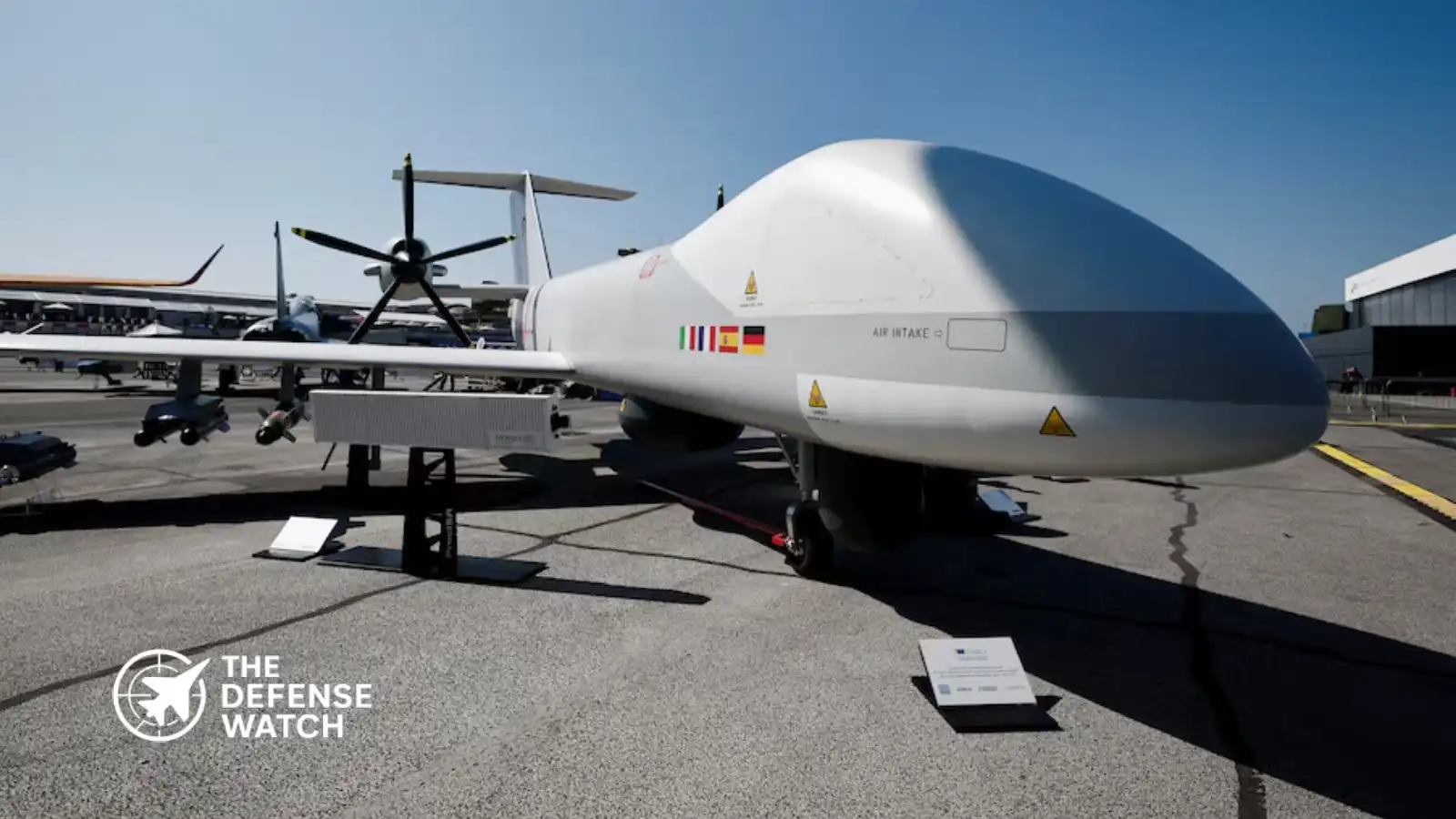
(adsbygoogle = window.adsbygoogle || []).push({});Executive Summary:
Dassault Aviation is reportedly seeking compensation from Airbus over changes to industrial work allocation within the Eurodrone program following France’s decision to suspend planned acquisitions of the aircraft. The dispute emerges only days after the collapse of the Future Combat Air System (FCAS) fighter project, highlighting broader challenges facing European multinational defense programs.
Eurodrone Program Draws New Attention Amid Airbus-Dassault Dispute
The Eurodrone program has become the latest source of friction between European aerospace giants Dassault Aviation and Airbus following the breakdown of their cooperation on the Future Combat Air System (FCAS).
Dassault is seeking compensation from Airbus after a French decision to suspend planned Eurodrone purchases significantly reduced the company’s expected industrial workshare on the multinational program. Three sources familiar with the matter told Reuters that the disagreement has intensified existing tensions between the two companies.
The dispute centers on Europe’s long-running “geo return” principle, under which industrial participation is broadly linked to procurement commitments from participating nations. As France reduces its acquisition plans, Dassault’s share of future work is expected to decline.
French Procurement Shift Reshapes Program Dynamics
France has not formally withdrawn from the approximately €7 billion Eurodrone initiative, which is jointly pursued by France, Germany, Italy, and Spain.
However, France’s latest defense spending plans reportedly remove funding for Eurodrone acquisitions through 2035. French officials have increasingly questioned whether the platform remains the most effective solution for future operational requirements, particularly as lower-cost and more flexible unmanned systems emerge.
- Fix – Box(adsbygoogle = window.adsbygoogle || []).push({});
The French Air and Space Force has also shown interest in alternative domestic platforms such as the Aarok drone, developed by French manufacturer Turgis & Gaillard. Reuters noted that concerns regarding the Eurodrone’s weight, cost, and development delays have existed for years.
Eurodrone Program Overview
Category Details Program Type Medium Altitude Long Endurance (MALE) UAV Participating Nations France, Germany, Italy, Spain Lead Industrial Partner Airbus Dassault Role Flight control and mission communication systems Estimated Program Value Approximately €7 billion Planned Fleet 60 aircraft ordered by partner nations Original Service Entry Target 2025 Current First Flight Target 2027 Mission Focus Intelligence, surveillance, reconnaissance, and long-endurance operations (adsbygoogle = window.adsbygoogle || []).push({});FCAS Collapse Intensifies Existing Frictions
The timing of the Eurodrone disagreement is particularly significant.
Only days earlier, France and Germany effectively abandoned development of the Next Generation Fighter component of the FCAS program after years of disputes between Airbus and Dassault regarding governance, leadership authority, intellectual property rights, and technology-sharing arrangements.
FCAS was intended to serve as Europe’s premier sixth-generation combat aviation program, with an estimated value exceeding €100 billion. The project aimed to replace France’s Rafale fleet and Germany’s Eurofighter Typhoon aircraft beginning around 2040.
Reuters reported that while the Eurodrone disagreement and FCAS collapse are formally separate issues, individuals familiar with the situation described them as being closely connected politically and psychologically.
Why Eurodrone Matters to European Defense Strategy
The Eurodrone initiative was originally conceived as a strategic effort to reduce European dependence on foreign unmanned aircraft systems, particularly U.S.-built systems such as the MQ-9 Reaper and Israeli surveillance platforms.
For more than a decade, European armed forces have relied heavily on imported MALE drones for intelligence gathering, surveillance, reconnaissance, and strike missions.
The Eurodrone program sought to address that dependence through a sovereign European solution offering:
- Independent operational control
- European-developed mission systems
- Reduced reliance on non-European suppliers
- Greater interoperability among European armed forces
- Strengthened European defense industrial capacity
However, the program has faced repeated delays, changing requirements, and escalating costs. Those challenges have increasingly raised questions among participating governments regarding affordability and operational relevance.
(adsbygoogle = window.adsbygoogle || []).push({});Broader Implications for European Defense Cooperation
The dispute highlights a recurring challenge within multinational European defense programs.
Several major Franco-German initiatives launched during the past decade have encountered significant difficulties, including FCAS, the Main Ground Combat System (MGCS) tank project, and now Eurodrone.
From a strategic perspective, these setbacks arrive at a critical moment for Europe. Many European governments are increasing defense spending amid heightened security concerns and growing uncertainty regarding long-term transatlantic defense commitments.
The collapse of FCAS and emerging tensions surrounding Eurodrone raise important questions about Europe’s ability to execute large-scale collaborative defense programs involving multiple governments and industrial champions.
For the United States, these developments are significant because European delays in indigenous combat aircraft and UAV programs could extend reliance on American defense technologies, including advanced fighter aircraft, drones, and networked combat systems.
Airbus Says Program Can Continue
Despite the dispute, Airbus has signaled that the Eurodrone program remains viable.
(adsbygoogle = window.adsbygoogle || []).push({});Reuters reported that Airbus Chief Executive Guillaume Faury previously stated the project is likely to move forward under a modified structure following changes in French defense priorities. Airbus has not publicly addressed the compensation request beyond those earlier remarks.
Unlike FCAS, which was still facing fundamental governance disputes during development, Eurodrone is already well advanced in engineering and production planning. That reality may limit the immediate impact of industrial disagreements and improve the chances of program continuation.
Outlook
The emerging Eurodrone dispute demonstrates that the fallout from the FCAS collapse extends beyond Europe’s next-generation fighter ambitions.
As France reassesses its UAV procurement priorities and Dassault seeks compensation for a reduced industrial role, European policymakers face renewed pressure to preserve one of the continent’s largest cooperative defense programs.
Whether Eurodrone can avoid the fate of FCAS may become an important test of Europe’s broader effort to strengthen defense industrial autonomy while balancing national interests within multinational programs.