
Executive Summary:
U.S. Army paratroopers recently integrated drone systems into nighttime live-fire operations during a historic company-level exercise. The training highlighted the Army’s growing focus on combining unmanned systems, reconnaissance, and airborne infantry tactics to improve battlefield awareness and combat coordination.
Army Paratroopers Integrate Drones Into Night Operations
The U.S. Army is continuing to expand its use of unmanned systems across frontline combat formations, with Army paratroopers integrating drones into complex nighttime live-fire operations during a recent large-scale exercise.
According to the official report published by the U.S. Army, the exercise marked a significant milestone for airborne infantry forces as troops combined small unmanned aerial systems, reconnaissance capabilities, and coordinated live-fire maneuvers under low-visibility conditions.
The event involved paratroopers conducting synchronized assaults while using drones to improve battlefield awareness, identify targets, and support command decision-making during the exercise. Army leaders said the training reflects the service’s broader modernization effort focused on integrating emerging battlefield technologies into conventional combat units.
Expanding Drone Integration Across Infantry Units
The Army has increasingly emphasized drone integration at the tactical level following lessons observed from modern conflicts in Eastern Europe and the Middle East. Small drones are now viewed as essential battlefield tools for reconnaissance, surveillance, targeting support, and force protection.
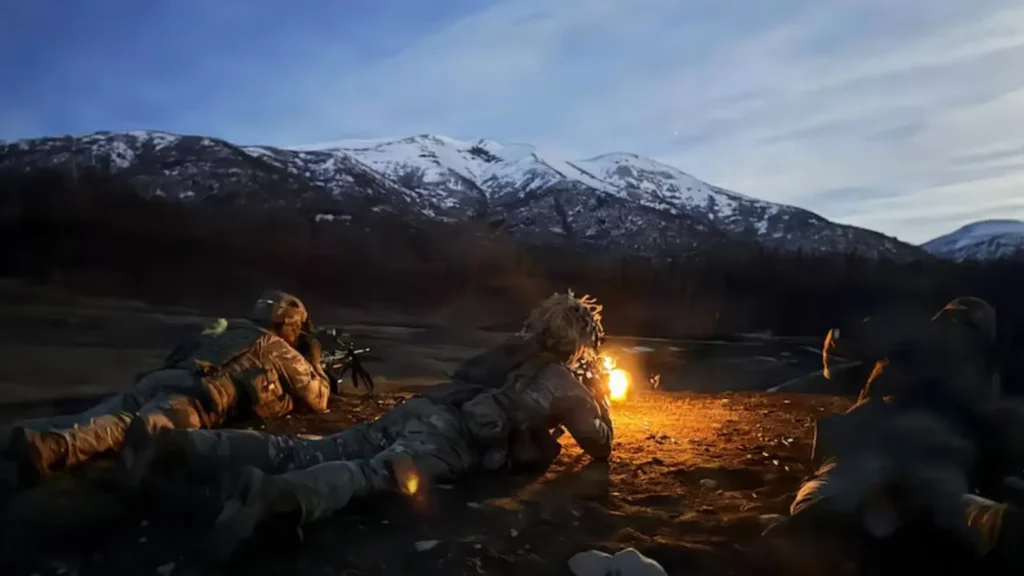
Army paratroopers assigned to the 2nd Infantry Brigade Combat Team, 11th Airborne Division, engage targets during a nighttime company live-fire exercise at Joint Base Elmendorf-Richardson, Alaska, May 7, 2026. The exercise integrated live fires, trench clearing and small unmanned aerial systems to strengthen battlefield coordination and lethality in arctic conditions. (Image Source : DoW)
During the exercise, drone operators worked directly alongside infantry formations, helping commanders monitor troop movements and identify simulated enemy positions during nighttime operations. Integrating drones into live-fire events allows soldiers to train in conditions that more closely resemble modern combat environments.
The Army has accelerated efforts to push unmanned systems down to smaller units, including platoons and companies, rather than limiting drone operations to specialized reconnaissance elements. This shift reflects a growing recognition that battlefield awareness and rapid intelligence collection are increasingly critical during dispersed operations.
Army officials involved in the exercise noted that night operations remain one of the most demanding environments for airborne and infantry forces. Combining drones with thermal imaging, night vision equipment, and coordinated fires improves operational effectiveness while reducing uncertainty during fast-moving engagements.
Why Night Operations Matter
Night combat remains a core advantage for U.S. military forces, particularly airborne and special operations units. Training exercises that integrate drones into low-light engagements help refine communication procedures, command coordination, and target acquisition.
The recent live-fire event demonstrated how drone feeds can support real-time battlefield decisions during high-pressure operations. In modern warfare, even small commercial-style unmanned systems can significantly influence tactical awareness and operational tempo.
The Army’s emphasis on drone-enabled night warfare also reflects broader Pentagon concerns regarding future conflicts involving technologically capable adversaries. Military planners increasingly expect future combat environments to involve electronic warfare threats, contested communications, and persistent aerial surveillance.
As a result, training exercises are evolving beyond traditional infantry tactics and now incorporate networked sensors, unmanned systems, and distributed battlefield intelligence.
Historic Company-Level Live-Fire Exercise
Army officials described the training event as a historic company live-fire exercise because of the scale and integration of multiple battlefield systems operating simultaneously at night.
Paratroopers conducted coordinated maneuvers supported by reconnaissance drones while executing live-fire engagements in a realistic combat environment. The exercise also reinforced interoperability between drone operators, infantry squads, and command elements.
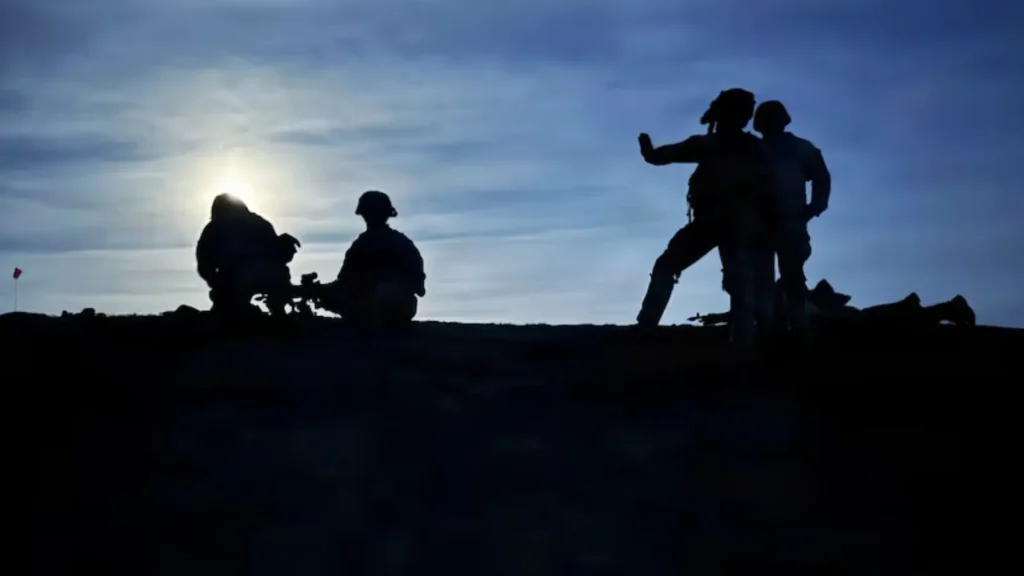
An Army paratrooper assigned to the 2nd Infantry Brigade Combat Team, 11th Airborne Division, provides security while soldiers engage targets during a company live-fire exercise at Joint Base Elmendorf-Richardson, Alaska, May 7, 2026. The training tested the unit’s ability to conduct coordinated live-fire operations in a realistic combat environment. ((Image Source : DoW)
The Army has spent the past several years redesigning training programs to better prepare soldiers for multi-domain operations. These efforts include combining infantry maneuver, electronic warfare awareness, unmanned aerial reconnaissance, and rapid targeting procedures into single operational scenarios.
Military analysts note that integrating drones directly into airborne formations could provide significant operational advantages during expeditionary deployments or rapid-response missions. Airborne units often operate with limited support immediately after insertion, making organic reconnaissance assets especially valuable.
Drone Warfare Lessons Continue To Shape U.S. Strategy
The rapid evolution of drone warfare globally has accelerated military modernization programs across NATO and allied nations. Conflicts in Ukraine and the Middle East have demonstrated how relatively inexpensive drones can provide tactical intelligence, direct artillery fire, and disrupt troop movements.
The U.S. Army has responded by increasing investment in counter-drone systems, tactical reconnaissance drones, and autonomous battlefield technologies. Exercises like this allow operational units to test how unmanned systems perform under realistic battlefield conditions.
In addition to reconnaissance roles, future Army drone integration efforts may include electronic warfare support, autonomous resupply missions, and enhanced targeting coordination.
The Army has repeatedly stated that adaptability and rapid technology integration will remain essential for maintaining battlefield overmatch against near-peer competitors.
Operational Analysis
The integration of drones into company-level airborne exercises signals a broader doctrinal transition within the U.S. Army. Rather than treating drones as specialized support assets, the service is increasingly embedding unmanned systems directly into frontline combat formations.
This shift has operational implications beyond reconnaissance. Real-time drone surveillance improves unit survivability, shortens targeting cycles, and enhances command flexibility during complex engagements, especially at night.
The exercise also reflects how the Army is adapting to lessons from contemporary conflicts where inexpensive drones have changed tactical decision-making at every level of warfare. Units that can rapidly process aerial reconnaissance data and coordinate fires possess a measurable battlefield advantage.
For airborne formations, which traditionally operate in isolated and fast-moving environments, organic drone support may become as critical as communications and night vision equipment in future deployments.