

Table of Contents
Russian Drone Production Reaches Industrial Scale
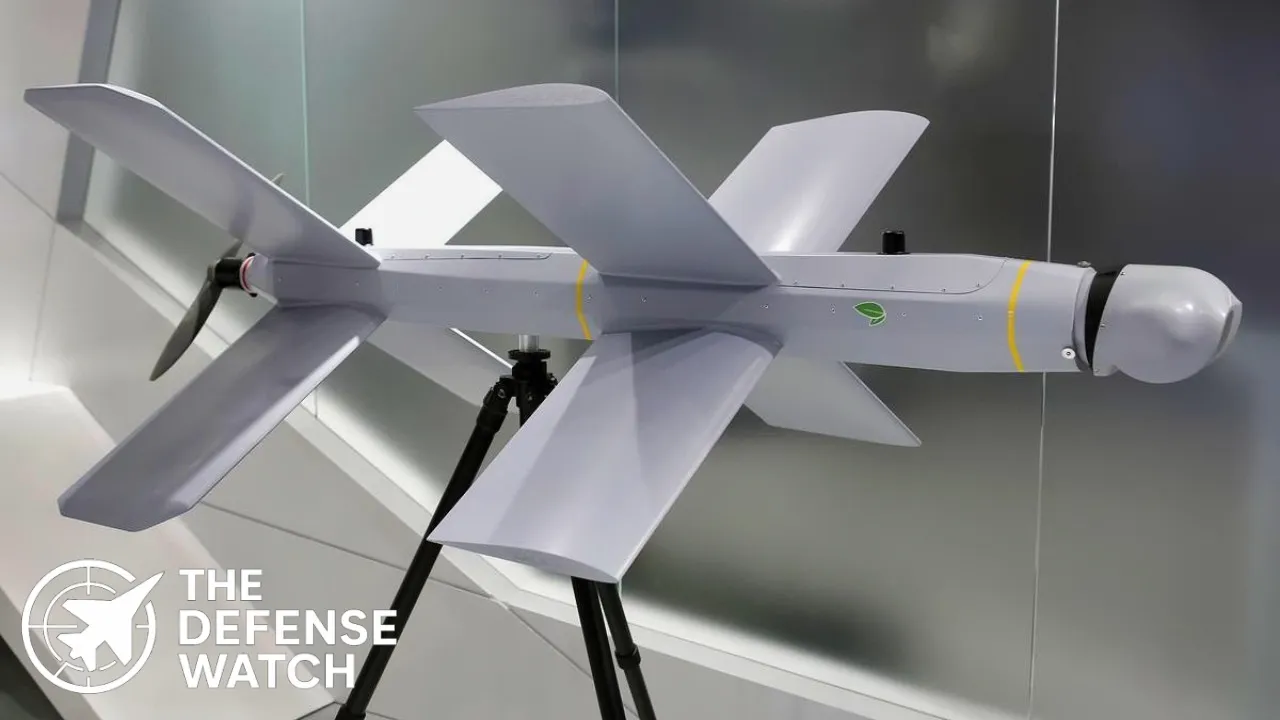
Russia has dramatically expanded its unmanned aerial vehicle manufacturing capacity, with intelligence assessments indicating production of approximately 170 Shahed-type drones daily as of mid-2025. According to Ukrainian military intelligence, Russian facilities are capable of producing up to 2,700 Shahed-variant drones monthly, with projections suggesting total output could reach 79,000 units by year-end. The Alabuga Special Economic Zone in Tatarstan has emerged as the primary production hub for the Geran-2, Russia’s licensed version of the Iranian Shahed-136 design.
Recent revelations show Russia’s defense industry operating ahead of schedule on its contracted deliverables. The Institute for Science and International Security reported that JSC Alabuga fulfilled its initial contract with Iran for 6,000 drones approximately one year ahead of the September 2025 deadline. The facility has since continued production with plans to increase daily output to 190 drones by year-end, supported by substantial government investment estimated between $8.2 billion and $12.4 billion through 2030.
The upgraded drone models feature significant technical improvements over earlier variants. Ukrainian Defense Intelligence notes that explosive payloads have increased from 50 kilograms to 90 kilograms, while new versions incorporate combined shaped-charge high-explosive fragmentation warheads selected based on target profiles. Perhaps most concerning, Russian forces have begun equipping drones with controlled reception pattern antenna systems that resist electronic warfare countermeasures, and some units reportedly carry Starlink terminals enabling real-time remote control.
European Airspace Violations Trigger Alliance Response
The scale of Russia’s drone threat became undeniable during September 2025, when multiple incursions into NATO airspace prompted emergency responses across the alliance. On September 10, approximately 20 Russian drones violated Polish airspace, forcing Warsaw to scramble multimillion-dollar F-35 and F-16 fighter jets. NATO jets successfully intercepted seven drones during a seven-hour aerial engagement, marking the first time alliance forces opened fire on Russian aircraft since the conflict in Ukraine began.
Polish Foreign Minister Radek Sikorski acknowledged the operation exposed a fundamental asymmetry in defense economics. Recovery operations revealed the downed drones were unarmed decoys constructed from polystyrene and plywood, with estimated production costs around $10,000 each. Meanwhile, the NATO response involved $80 million F-35s launching interceptor missiles costing hundreds of thousands of dollars per unit.
Romania and Estonia reported similar violations throughout September. Romanian authorities scrambled combat aircraft after a Russian drone penetrated approximately 10 kilometers into their territory, remaining in NATO airspace for roughly 50 minutes. Estonia’s Foreign Ministry reported three Russian fighter aircraft entered its airspace on September 19, with Foreign Minister Margus Tsahkna describing the incursion as “unprecedentedly brazen.
Denmark experienced particularly disruptive incidents, with unidentified drone activity forcing the closure of Aalborg Airport and causing near-total shutdown of Copenhagen Airport operations for approximately four hours. The incidents prompted Denmark to temporarily ban civilian drone flights across its airspace ahead of critical European Council meetings.
NATO Launches Eastern Sentry Operation
In response to the escalating threat, NATO Secretary-General Mark Rutte announced Operation Eastern Sentry, a coordinated air defense initiative focused on deterring further Russian incursions along the alliance’s eastern flank. The operation integrates multiple NATO capabilities, including Dutch F-35s, Italian AWACS aircraft, NATO’s Multi Role Tanker Transport Capability, and German Patriot defense systems.
General Ingo Gerhartz, commander of NATO Allied Joint Force Command Brunssum, emphasized the urgent need for accelerated counter-drone technology deployment. Speaking at the Warsaw Security Forum, Gerhartz stated that counter-drone systems must be fielded within months rather than years. He stressed that shooting down drones costing $2,000 to $3,000 with million-dollar missiles represents neither an effective nor sustainable defensive posture.
Britain and Denmark have pledged significant support for Eastern Sentry, with Germany doubling its combat aircraft allocation for Polish air defense from two to four units. France has deployed Rafale fighter jets to the region. However, defense experts question whether conventional air defense architecture can sustainably counter mass drone attacks without prohibitive economic costs.
European Drone Wall Concept Takes Shape
European leaders have endorsed development of a continental “drone wall” designed to detect, track, and neutralize unmanned aerial vehicles along NATO’s eastern borders. European Commission President Ursula von der Leyen publicly backed the initiative during her 2025 State of the Union address, positioning it as a flagship defense project requiring expedited implementation.
EU Defense and Space Commissioner Andrius Kubilius outlined the concept as a layered network combining mobile radars, sensors, and rapid-fire air defense batteries. Speaking in Vilnius, Kubilius acknowledged European nations remain unprepared to effectively counter Russian drone attacks using cost-effective methods. He emphasized the critical importance of integrating Ukraine’s battle-tested counter-drone capabilities into European defense architecture.
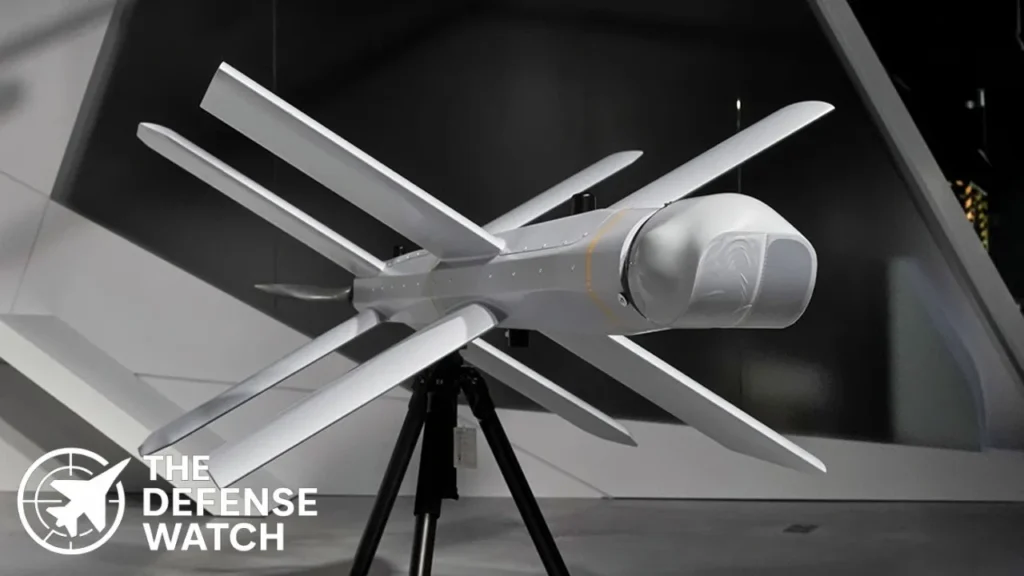
The European Drone Defense Initiative targets initial operational capability by late 2026, with full functionality expected by end-2027. Implementation will involve procurement coordination through EU programs including SAFE and the European Defense Industry Programme. However, officials acknowledge significant challenges remain regarding political coordination, industrial capacity, and cost-effectiveness.
EU officials stress the initiative will complement NATO frameworks rather than duplicate them. Member states retain sovereignty over national defense systems while the EU facilitates common standards, shared funding, and operational oversight. The informal European Council meeting in Copenhagen produced broad endorsement of the concept, though frontline states including Poland, the Baltic nations, and Finland view the project with greater urgency than countries further from Russia’s borders.
Cost Asymmetry Challenges Traditional Defense Models
The economic implications of drone warfare have fundamentally altered air defense calculations. Defense analysts emphasize that traditional surface-to-air missile systems face unsustainable cost disadvantages when engaging low-cost unmanned threats. A single Patriot interceptor missile costs approximately $5 million, while Russian Shahed-type drones cost between $30,000 and $50,000 to manufacture.
Chris Kremidas-Courtney of the European Policy Centre characterized current NATO responses as “using a sledgehammer on a thumbtack.” He warned that European nations risk depleting expensive missile inventories against mass drone attacks unless they rapidly adopt more economical countermeasures. Admiral Pierre Vandier, NATO’s Supreme Allied Commander Transformation, stated bluntly that defenders will eventually lose if they continue firing million-dollar missiles at ten-thousand-dollar targets.
Ukraine has pioneered cost-effective counter-drone solutions that NATO is rapidly studying. Ukrainian forces deploy interceptor drones costing between $2,500 and $6,000 to engage Russian Shaheds, preserving expensive missiles for faster cruise and ballistic threats. The economics favor defenders for the first time in modern air defense, with Ukrainian manufacturers targeting production of 1,000 interceptor drones daily.
NATO conducted demonstrations of Ukrainian-developed interceptor technology in Denmark and Estonia, with systems like Wild Hornets’ Sting successfully downing training targets. Latvia-based Origin is developing reusable interceptor drones with titanium frames designed to slice through attacking UAVs at speed. Company officials expressed confidence they can produce interceptors economically viable for countering large volumes of Russian drones.
AI-Enabled Defense Systems Deploy to Eastern Flank
NATO has begun deploying advanced counter-drone systems to Poland and Romania, including the US-developed Merops platform. The artificial intelligence-driven system, compact enough to transport in pickup trucks, can identify and engage drones while maintaining functionality when satellite and electronic communications are jammed. Former Google CEO Eric Schmidt has provided private investment for the technology’s development.
Colonel Mark McLellan, assistant chief of staff for operations at NATO Allied Land Command, emphasized that Merops delivers accurate detection and cost-effective interception compared to fighter jet responses. Brigadier General Thomas Lowin noted the system provides commanders critical time to assess threats before deciding whether to engage.
However, experts caution that current counter-drone technology faces emerging challenges. Russia has reportedly begun deploying Geran-3 variants powered by Chinese turbojet engines, capable of speeds between 230 and 310 miles per hour. These jet-propelled drones incorporate 12-element adaptive antenna arrays for jamming-resistant satellite navigation, rendering them immune to electronic warfare tactics effective against slower Shaheds.
Additionally, Russian forces increasingly employ fiber-optic cable-tethered first-person-view drones that cannot be electronically jammed. NATO and Ukrainian officials conducted trials in Tallinn during June 2025 to evaluate countermeasures against these systems, requiring detection ranges exceeding 500 meters and costs under $100,000 per unit.
Intelligence Warnings and Strategic Implications
European intelligence agencies have issued warnings that Russian President Vladimir Putin may be considering potential attacks on NATO countries in coming years. The drone incursions represent what officials characterize as deliberate testing of alliance defenses and political resolve. Behind closed doors, Russian officials reportedly told British, French, and German diplomats that the incursions constituted retaliation for Ukrainian strikes on Crimea enabled by NATO support.
Danish Prime Minister Mette Frederiksen characterized the situation as Europe facing its “most difficult and dangerous situation since the end of the Second World War.” She stated unequivocally that only one country threatens European security: Russia. The assessment reflects growing consensus among European leaders that Moscow is conducting hybrid warfare operations designed to probe NATO’s vulnerabilities and test alliance cohesion.
Some analysts question whether all drone incursions result from deliberate Russian strategy. Marina Miron of King’s College London suggested that drones operating on autopilot can lose GPS signals and become disoriented. However, German Defense Minister Boris Pistorius dismissed technical malfunction theories, noting that Russian drones would not need to traverse NATO airspace to reach Ukrainian targets.
The Institute for the Study of War projects that Russia could deploy up to 2,000 unmanned aerial vehicles in a single night by November 2025 if current production trends continue. Such capability would enable sustained saturation attacks designed to overwhelm even the most advanced air defense systems through sheer volume rather than technological sophistication.
Deterrence Debate and Offensive Capabilities
Defense strategists increasingly argue that purely defensive measures prove insufficient to deter Russian aggression. The RAND Corporation published analysis contending that Europe’s true problem involves erosion of conventional deterrence rather than drone technology gaps. Analysts emphasize that cost-effective “drone wall” technology does not currently exist anywhere globally, particularly when defending countries operating under peacetime rules of engagement against adversaries actively at war.
Experts advocate that NATO should demonstrate willingness to strike back rather than solely investing in defensive systems. This rationale supports Ukraine’s requests for long-range strike capabilities, including Tomahawk cruise missiles, to damage Russian drone production and launch facilities rather than attempting to intercept every projectile. Several NATO members, including Lithuania, have authorized peacetime shoot-downs of unauthorized drones over their territory.
The debate reflects fundamental questions about NATO’s political will and strategic posture. Russia appears emboldened to test alliance responses precisely because Moscow questions whether NATO members will use their defensive capabilities decisively. Brigadier General Zacarias Hernandez, NATO’s deputy chief of staff for plans, acknowledged the alliance must prepare for threats demonstrated daily in Ukraine’s skies.
Ukrainian Integration and Lessons Learned
Commissioner Kubilius strongly advocated for incorporating Ukrainian military expertise into European defense planning. He warned that failure to integrate Ukraine’s battle-tested capabilities would constitute a “historical mistake” leaving both Europe and Ukraine weaker. Ukrainian forces have achieved relatively high success rates against Russian drones through tactical innovation and cost-effective countermeasures developed under combat conditions.
The Center for Strategic and International Studies documented Ukraine’s urgent requirement for layered, economically sustainable air defenses. Russia’s persistent nightly drone attacks have subjected Ukrainian civilians to conditions exceeding the duration of World War II’s Blitz bombing campaign against London. The punishment strategy aims to force negotiations that would compromise Ukrainian sovereignty for generations.
Western governments face pressure to disrupt China’s supply of critical electronics and components flowing to Russian drone manufacturers. Despite sanctions, Russian industry continues accessing Western semiconductors and Chinese engines essential for Shahed production. Targeted long-range strikes against production facilities and launch sites represent necessary complements to defensive systems, according to multiple strategic assessments.
Implementation Challenges and Timeline Concerns
Despite broad political support for enhanced drone defense, significant obstacles impede rapid implementation. Many EU members maintain independent procurement policies that slow collaborative projects. Technical feasibility questions persist regarding sensor integration, interoperability standards, and operational coordination across multiple national systems.
Michael Bociurkiw of the Atlantic Council characterized the drone wall as currently remaining a “fantasy” requiring months or years to accomplish. He emphasized that implementation will consume enormous percentages of military budgets, necessitating sustained public support for defense spending increases. NATO officials must convince populations of the importance and urgency of such investments.
The procurement challenge extends beyond funding. Defense industry experts note that NATO acquisition processes remain rooted in 1980s-era specifications-based contracting. Companies with operational counter-drone technology struggle to navigate bureaucratic evaluation procedures while threats evolve daily. Ukraine’s streamlined procurement pathway has enabled rapid technology deployment absent in traditional NATO channels.
Andreas Graae of the Royal Danish Defense College confirmed a “huge drive” exists to rapidly deploy counter-drone systems across Europe amid Russian aggression. However, coordination between military requirements, industrial capacity, and political decision-making remains imperfect. The gap between available technology and fielded capabilities continues widening as Russia accelerates production and tactical innovation.
Looking Ahead
The escalating Russian drone threat has forced NATO to confront uncomfortable realities about modern warfare’s economics and the limitations of conventional air defense architectures. Alliance responses will require sustained investment in cost-effective counter-drone technologies, deeper integration of Ukrainian combat lessons, and potentially more aggressive postures toward disrupting Russian production capabilities.
The coming months will prove critical as Europe attempts to translate political commitments into operational capabilities. Initial deployments of systems like Merops represent important first steps, but comprehensive drone defense networks will require years to fully implement. Meanwhile, Russia continues expanding production capacity and refining tactics based on daily combat experience in Ukraine.
Success will depend on NATO’s ability to innovate faster than adversaries while maintaining alliance cohesion under pressure. The fundamental question remains whether European nations possess sufficient political will to make necessary investments and accept risks inherent in more assertive defensive postures. Russia’s drone campaign has delivered an unmistakable message: the time for Europe’s defenses to awaken has arrived.

19 comments
[…] Unmanned Systems Forces, has warned that NATO militaries are not yet prepared for the scope of drone warfare, urging allies to invest in AI-enabled targeting, ground drones, and other […]
[…] “Hongqi” (Red Banner) missile family, is a medium- to upper-medium-range SAM designed to fill a critical gap between older systems like the HQ-16 and longer-range interceptors such as the HQ-22A and […]
[…] Leonardo, Sweden’s Saab, and Spain’s Indra have seen strong gains on expectations of sustained military modernization and security […]
[…] modernized perimeter system will support its operations, featuring upgraded cameras, sensors, and physical […]
[…] Caribbean exercise this month underscores a broader tactical shift: adapting rotary-wing assets for hybrid threat scenarios, including potential aerial threats such as hostile aircraft or armed smuggling […]
[…] manufacturer SpektreWorks, specifically its “FLM 136” family originally designed to emulate Shahed drones for threat […]
[…] RWS is a stabilized, remotely operated system featuring integrated sensors and fire control. It supports multiple weapon types and offers […]
[…] the REMUS family of UUVs, which are in use with more than 30 countries, including 14 NATO members. European operators include Germany, the Netherlands, Belgium, Norway, Sweden, Lithuania, and […]
[…] energy system is under heavy strain, operating well below normal demand capacity due to repeated Russian drone and missile attacks since late 2025. Authorities have warned that this has created the most […]
[…] jet-powered aircraft built around Shield AI’s Hivemind artificial intelligence software. The system is designed to operate with reduced human intervention in contested or communications-denied […]
[…] drones marks a notable evolution in Russian unmanned aerial vehicle operations. Traditionally, Shahed drones rely on pre-programmed GPS navigation and limited line-of-sight communications. Satellite internet […]
[…] multi-day exercise will evaluate several operational capabilities essential for modern air warfare in contested […]
[…] Additional Marine Corps investments include a $20 million Miniaturized Gyroscope for Resilient Navigation and a $10 million Tactical High-Bandwidth, Low-Latency data network project, addressing critical gaps in denied-environment operations. […]
[…] key goal of the flight was to confirm that the propulsion system operates as expected in real flight and that it works reliably with the Albatroz Vortex airframe. This […]
[…] platforms. For a densely populated city-state like Singapore, early detection of low-altitude threats is a critical security […]
[…] and machine learning algorithms, video and imagery processing software, and the transition of these technologies into operational systems. The work also includes maintenance and support for already deployed AI enabled […]
[…] White Sands Missile Range activities. Its local workforce and institutional knowledge are viewed as critical to sustaining range operations, safety, and technical […]
[…] Ministry of the Armed Forces stated the scenario aims to recreate all forms of modern combat, from hybrid threats to high-intensity warfare, testing forces under realistic combat […]
[…] more effective engagement in complex combat environments. The program reflects a broader push to modernize battlefield networks and close capability gaps against peer […]