Executive Summary:
Poland has become the first European Union member to sign a defense loan agreement under the bloc’s new military financing initiative. The move highlights Europe’s growing focus on rearmament, defense industrial expansion, and long-term deterrence amid continued security pressures across the region.
Poland Becomes First State To Access EU Defense Loan Mechanism
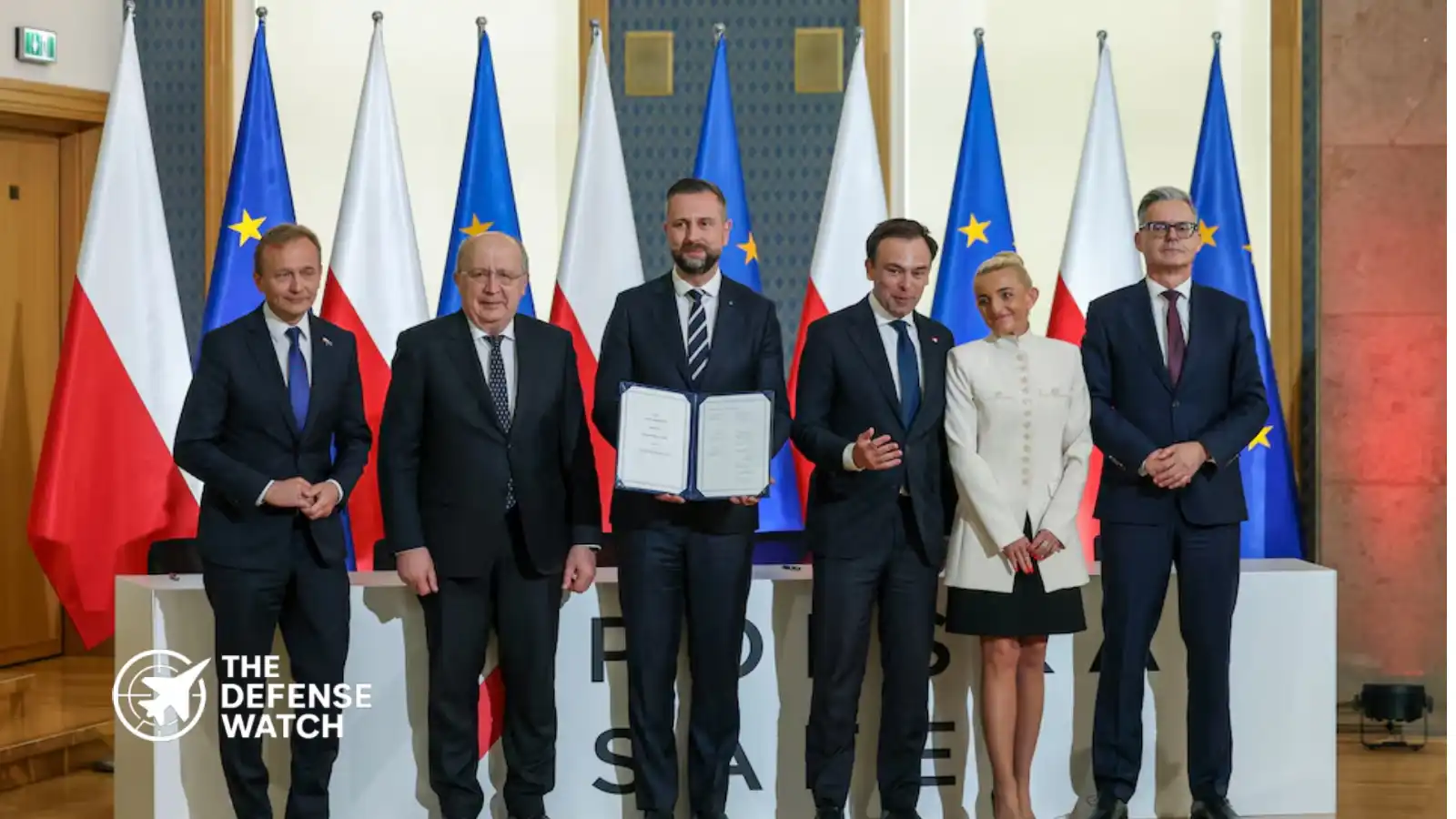
Poland has signed the first loan agreement linked to the European Union’s expanding defense spending framework, marking a significant step in Europe’s broader military modernization drive.
Tthe agreement was finalized on May 8 as Brussels continues efforts to strengthen European defense readiness and reduce long-term dependence on external military support structures.
The financing arrangement forms part of the European Union’s wider strategy to increase defense investment following years of rising regional instability, pressure on ammunition stockpiles, and concerns over industrial production capacity. European governments have accelerated procurement programs since the outbreak of the war in Ukraine, with many NATO members now pursuing sustained increases in military expenditure.
Poland has emerged as one of Europe’s fastest-growing defense spenders. Warsaw has launched extensive procurement programs covering air defense systems, armored vehicles, artillery, combat aircraft, and missile capabilities. The country has consistently positioned itself as a frontline NATO state focused on deterrence along the alliance’s eastern flank.
EU Defense Financing Gains Momentum
The new loan structure is designed to support defense procurement and industrial expansion among EU member states. European officials have increasingly argued that fragmented procurement practices and insufficient manufacturing capacity weaken the continent’s long-term military readiness.
The financing initiative aligns with broader European efforts to strengthen the regional defense industrial base. EU policymakers have emphasized the need for faster weapons production, improved ammunition output, and greater interoperability between member states.
For Poland, access to additional financing mechanisms could help sustain one of Europe’s most ambitious rearmament programs. The country has already committed substantial resources to modernizing its armed forces through major acquisitions from the United States and South Korea.
Recent Polish procurement efforts include:
- M1A2 Abrams tanks
- K2 Black Panther tanks
- K9 Thunder artillery systems
- F-35 Lightning II fighter aircraft
- Patriot air defense systems
- HIMARS rocket artillery systems
Warsaw has repeatedly stated that rapid modernization is necessary to counter evolving security risks in Eastern Europe.
Strategic Importance For European Defense
The agreement carries political and strategic significance beyond Poland alone. European governments are increasingly debating how to finance large-scale military modernization while balancing economic pressures and budget constraints.
The EU’s evolving defense financing mechanisms are also intended to encourage joint procurement and coordinated industrial planning. Analysts note that Europe’s fragmented defense market has historically limited economies of scale and slowed production timelines during crises.
Poland’s participation could encourage additional EU members to pursue similar financing arrangements. Several European governments are currently reviewing long-term defense procurement plans tied to NATO capability targets and regional deterrence requirements.
The timing is notable as NATO allies continue expanding defense spending commitments. Multiple European states now exceed or are approaching the alliance’s benchmark of spending 2% of GDP on defense.
Poland’s Expanding Role In NATO’s Eastern Flank
Poland has steadily increased its influence within European security discussions due to its geographic position and defense investments. The country has become a major logistics and operational hub supporting NATO activities in Eastern Europe.
Warsaw has also prioritized expanding domestic defense manufacturing alongside foreign acquisitions. Polish officials have argued that strengthening local industrial capacity is essential for sustaining long-term military readiness and reducing supply chain vulnerabilities.
The EU financing agreement may further support industrial cooperation between European defense firms and national governments seeking to scale production capacity.
While the full financial scope of future defense loan activity remains under development, the initiative reflects a broader European shift toward sustained rearmament planning rather than temporary emergency spending.
Broader Implications For Europe’s Defense Strategy
The loan agreement underscores how European security policy continues to evolve following years of geopolitical tension and shifting alliance dynamics.
European leaders increasingly view defense industrial resilience as a strategic requirement rather than solely an economic issue. That shift is driving renewed interest in coordinated procurement, stockpile replenishment, and long-term manufacturing investment.
Poland’s decision to move first under the EU framework signals confidence in the bloc’s emerging defense financing tools and may accelerate broader participation across Europe.
As military modernization programs expand across NATO and the EU, financing mechanisms such as these are likely to play a growing role in shaping Europe’s future defense posture.