Executive Summary:
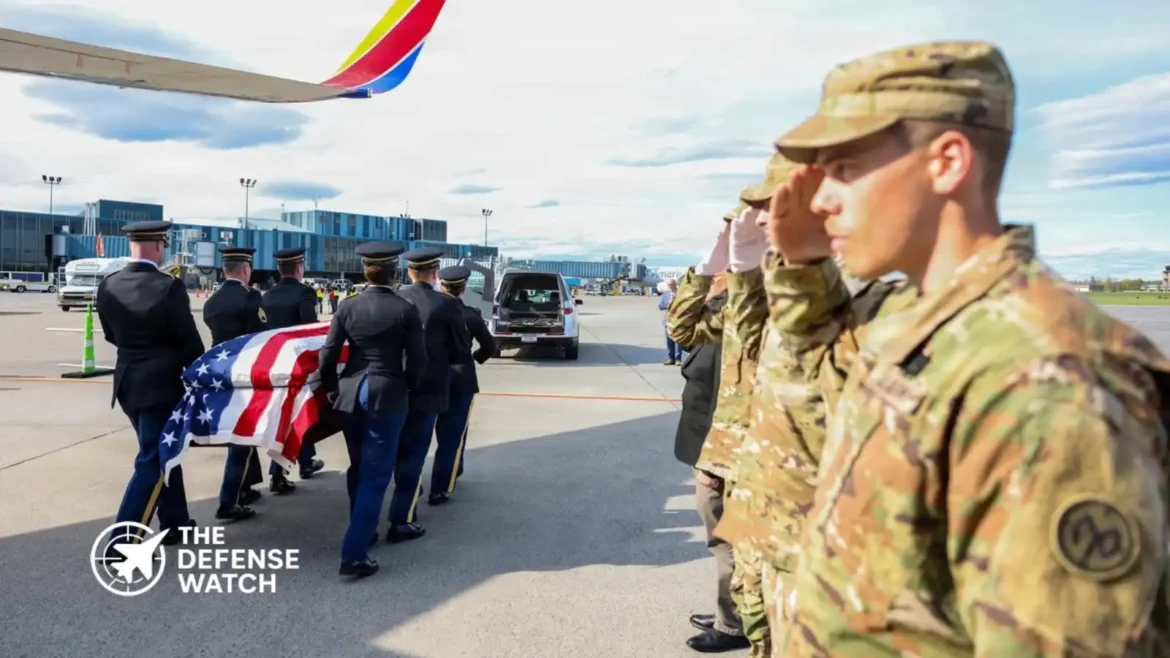
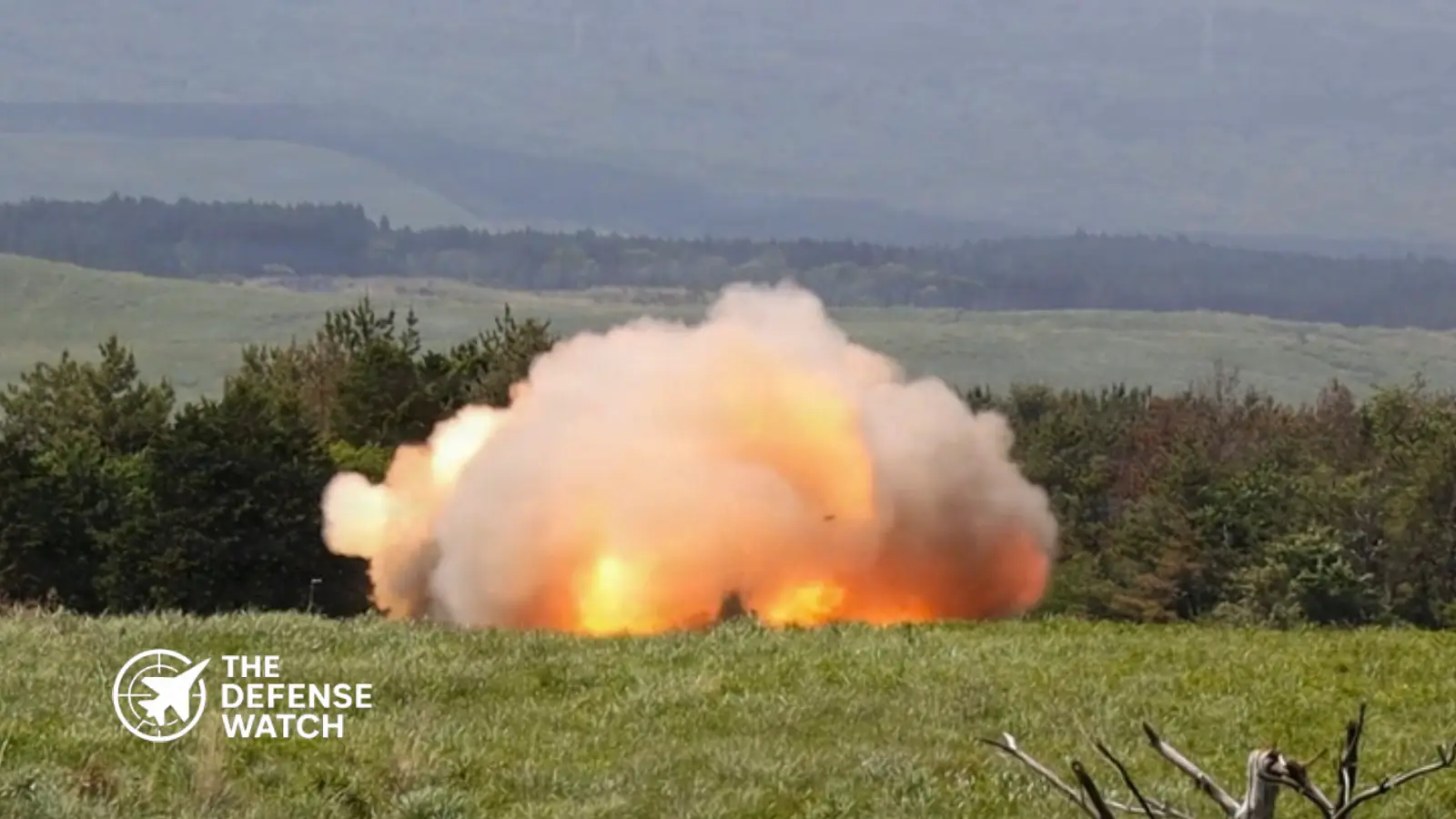
Air Force Global Strike Command conducted an operational test launch of an unarmed Minuteman III intercontinental ballistic missile from Vandenberg Space Force Base, California. The launch demonstrated the continued readiness, reliability, and effectiveness of the United States’ nuclear deterrent as the Pentagon advances modernization efforts under the Sentinel ICBM program.
Air Force Global Strike Command Conducts Minuteman III ICBM Test Launch
The Minuteman III ICBM remains a central pillar of the United States’ nuclear deterrence strategy, and the latest test launch by the U.S. Air Force highlighted the system’s continuing operational readiness.
Air Force Global Strike Command, working alongside Space Launch Delta 30, launched an unarmed Minuteman III intercontinental ballistic missile from Vandenberg Space Force Base in California. The missile traveled approximately 4,200 miles to the Ronald Reagan Ballistic Missile Defense Test Site at Kwajalein Atoll in the Marshall Islands.
According to the U.S. Air Force, the test was not conducted in response to current world events. Officials stated the launch was part of routine and periodic activities designed to validate the reliability, accuracy, and effectiveness of the nation’s strategic deterrent force.
The launch involved missile crews, maintainers, helicopter operators, security personnel, and technical teams across multiple commands, demonstrating the operational coordination required to sustain the U.S. nuclear enterprise.
Strategic Deterrence Remains A Core U.S. Defense Priority
The Minuteman III ICBM force forms one leg of the U.S. nuclear triad alongside ballistic missile submarines and strategic bombers. Operated by Air Force Global Strike Command, the land-based missile force provides rapid-response nuclear capability intended to deter large-scale conflict and strategic aggression.
The latest launch comes as Washington continues to emphasize nuclear modernization amid growing geopolitical competition involving Russia and China. U.S. defense officials have repeatedly warned that aging strategic systems must remain credible and survivable while replacement programs are developed and fielded.
Although the Minuteman III first entered service in the early 1970s, the missile has undergone continuous upgrades involving propulsion, guidance, command-and-control systems, and reentry vehicle modernization. These efforts have extended the missile’s operational life far beyond its original design timeline.
Military officials argue that recurring test launches are essential for validating the aging system’s performance and ensuring confidence in the strategic deterrence mission.
Minuteman III Supports U.S. Nuclear Readiness Until Sentinel Arrives
However, the Sentinel program has faced cost growth and schedule pressures, increasing the importance of sustaining the current Minuteman III force over the coming years.
This operational reality places additional focus on test launches such as the one conducted from Vandenberg Space Force Base. These missions provide engineers and military planners with valuable performance data while also signaling continued strategic readiness to allies and adversaries alike.
The Air Force plans to eventually replace the Minuteman III fleet with the LGM-35A Sentinel, formerly known as the Ground Based Strategic Deterrent program. Sentinel is expected to deliver improved survivability, cybersecurity protection, command-and-control integration, and long-term sustainment capability.
The United States currently maintains approximately 400 deployed Minuteman III missiles across bases in Montana, North Dakota, and Wyoming. The missiles are maintained on constant alert status under U.S. Strategic Command oversight.
Vandenberg Continues To Play Key Role In Strategic Missile Testing
Air Force Global Strike Command and Vandenberg Space Force Base have long played critical roles in America’s strategic weapons testing infrastructure.
Vandenberg’s location along the Pacific coast allows the U.S. military to safely conduct long-range missile tests over open ocean corridors toward the Marshall Islands. The range architecture supports ballistic missile testing, missile defense evaluations, and space launch operations.
The latest Minuteman III launch also reflects the broader integration of Air Force and Space Force operations in strategic deterrence and missile tracking missions.
Defense analysts note that regular test launches provide both technical assurance and strategic messaging. By publicly announcing such operations, the Pentagon reinforces transparency regarding routine nuclear readiness activities while demonstrating that the U.S. deterrent remains operational and credible.
Growing Nuclear Competition Shapes Modernization Efforts
The test launch occurred amid accelerating nuclear modernization programs worldwide. Russia continues fielding updated strategic missile systems, while China is rapidly expanding its nuclear arsenal and missile infrastructure.
In response, the Pentagon has prioritized modernization across all three components of the nuclear triad. Alongside Sentinel development, the United States is also advancing the Columbia-class ballistic missile submarine program and the B-21 Raider stealth bomber initiative.
Senior defense leaders have repeatedly argued that maintaining a safe, secure, and effective nuclear deterrent remains essential to preventing large-scale war between nuclear-armed powers.
The Minuteman III test therefore represents more than a technical exercise. It reflects the broader strategic posture of the United States as it balances current deterrence requirements with long-term modernization goals.


Belarus has intensified military readiness activities tied to tactical nuclear weapons, signaling deeper integration with Russia’s regional deterrence strategy.
Executive Summary:
Belarus announced new nuclear weapons readiness drills involving its armed forces, according to the country’s defense ministry. The exercises reflect growing military coordination between Minsk and Moscow as regional security tensions with NATO continue to intensify across Eastern Europe.
Belarus Nuclear Weapons Drills Highlight Expanding Regional Deterrence Posture
Belarus nuclear weapons drills entered a new phase on Monday after the Belarusian defense ministry confirmed that military units had conducted exercises linked to tactical nuclear weapons readiness.
The announcement comes amid continued geopolitical friction between Russia and NATO following prolonged instability across Eastern Europe and ongoing military competition near NATO’s eastern flank.
Belarus has increasingly aligned its defense posture with Moscow since Russia began deploying tactical nuclear weapons to Belarusian territory in 2023. The latest drills appear intended to reinforce operational coordination, command readiness, and strategic signaling to Western governments monitoring regional force movements.
According to the Belarusian defense ministry, the exercises involved military personnel responsible for handling systems associated with tactical nuclear operations. Specific details regarding force composition, weapons platforms, or deployment locations were not publicly disclosed.
Tactical Nuclear Integration Between Belarus And Russia Continues
The Belarus nuclear weapons drills underscore how Minsk has become more integrated into Russia’s broader nuclear deterrence architecture.
Russian President Vladimir Putin previously confirmed that Moscow had transferred tactical nuclear weapons to Belarus under a bilateral security arrangement. The move marked the first deployment of Russian nuclear weapons outside Russian territory since the collapse of the Soviet Union.
Belarusian President Alexander Lukashenko has repeatedly framed the deployments as necessary for national defense and deterrence against what Minsk describes as growing Western military pressure.
Military analysts view the continued exercises as part of a broader effort to normalize nuclear readiness operations within Belarusian force structures. While tactical nuclear weapons are generally designed for battlefield use rather than long range strategic deterrence, their deployment can significantly alter regional security calculations.
The drills also reinforce Belarus’ role as a forward operating area for Russian military planning in Eastern Europe.
NATO Monitoring Regional Military Activity Closely
NATO officials have consistently monitored Russian and Belarusian military exercises for signs of escalation or changes in nuclear posture.
Although Western governments have not indicated evidence of imminent nuclear use, defense planners continue to track tactical nuclear deployments because of their potential impact on crisis stability and rapid escalation scenarios.
The latest Belarus nuclear weapons drills are likely to increase concerns among neighboring NATO member states including Poland, Lithuania, and Latvia, all of which border either Belarus or Russia’s Kaliningrad enclave.
Since 2022, NATO has expanded force rotations, air policing missions, and forward troop deployments across Eastern Europe. Several alliance members have also accelerated investments in missile defense systems, long range fires, and rapid response capabilities.
The renewed exercises in Belarus may further reinforce arguments within NATO for maintaining elevated readiness levels along the alliance’s eastern frontier.
Tactical Nuclear Weapons Remain Central To Russian Military Doctrine
Russia continues to emphasize tactical nuclear capabilities within its military doctrine as part of its broader deterrence strategy.
Unlike strategic nuclear weapons, which are designed for large scale intercontinental warfare, tactical nuclear weapons are intended for battlefield or theater level operations. These systems can include short range ballistic missiles, aircraft delivered munitions, and artillery based nuclear payloads.
Defense experts note that ambiguity surrounding deployment patterns and operational thresholds can complicate crisis management during periods of heightened confrontation.
Belarus’ involvement in nuclear readiness drills also reflects Moscow’s effort to distribute operational complexity across allied territory while demonstrating military cohesion with partner states.
At the same time, the exercises serve a political purpose by signaling resilience against Western sanctions and diplomatic isolation.
Strategic Messaging And Regional Implications
The timing of the Belarus nuclear weapons drills is significant as military competition between Russia and NATO continues to evolve.
Belarus has steadily expanded joint military activities with Russia over the past several years, including integrated air defense operations, joint exercises, and logistical support arrangements.
The latest drills are unlikely to immediately alter the military balance in Europe. However, they contribute to a broader environment of strategic pressure, signaling, and deterrence competition that continues to shape regional defense planning.
For NATO, the exercises reinforce concerns about maintaining credible deterrence while avoiding unintended escalation. For Belarus and Russia, the drills project military coordination and strategic continuity despite sustained international pressure.
The long term effect may be a further normalization of nuclear related military activity near NATO territory, increasing the importance of intelligence monitoring, crisis communication channels, and regional force readiness.
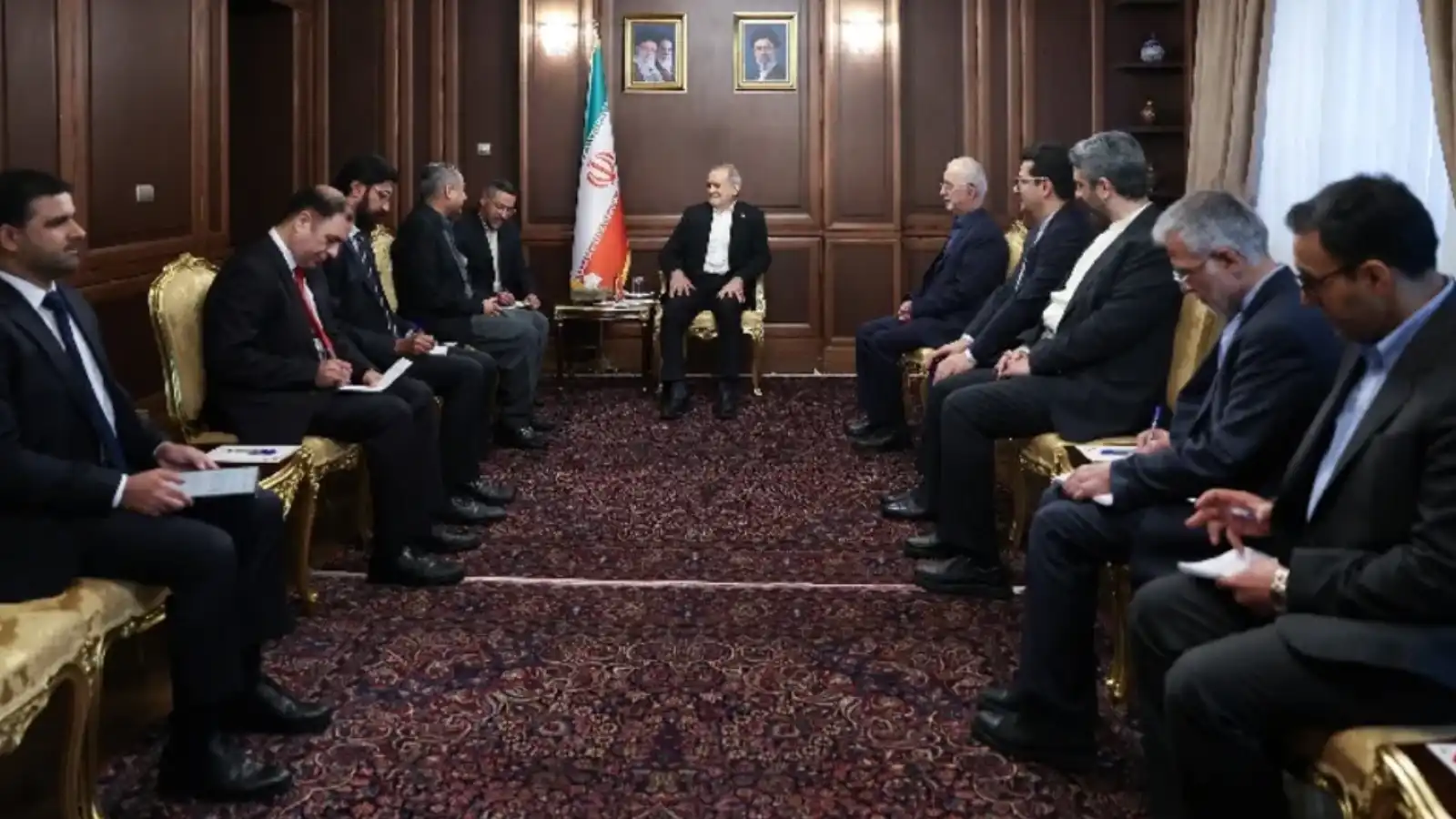
Pakistan has intensified its diplomatic mediation between Tehran and Washington as fears grow that the current Middle East conflict could widen further.
Executive Summary:
Pakistan has delivered a revised Iranian peace proposal to the United States in an effort to restart stalled negotiations linked to the ongoing Middle East conflict. The diplomatic effort highlights Islamabad’s growing role as a key intermediary between Tehran and Washington amid rising regional tensions and disputes over Iran’s nuclear program.
Pakistan Revives Iran US Mediation Effort Amid Regional Tensions
Pakistan shared a revised Iranian proposal with the United States on Sunday night as efforts to restart negotiations between Tehran and Washington remain deadlocked over ceasefire conditions and nuclear demands.
According to a Pakistani source cited by Reuters, the latest diplomatic package was intended to narrow the gap between both sides after weeks of indirect negotiations failed to produce a breakthrough. The source warned that time was running short, stating that both parties continued to shift negotiating positions during the mediation process.
The revised proposal reportedly followed a meeting in Tehran between Pakistani Interior Minister Mohsin Naqvi and Iranian parliamentary speaker and senior negotiator Mohammad Bagher Ghalibaf on Saturday.
Iranian media reports indicated that the package combined elements of Tehran’s earlier 14 point proposal with several core U.S. conditions that had been transmitted through Islamabad.
The diplomatic initiative comes as tensions remain elevated across the Middle East, with regional governments increasingly concerned that prolonged confrontation between Iran and the United States could destabilize maritime trade routes, energy infrastructure, and regional security arrangements.
Washington Maintains Pressure Over Nuclear Conditions
The latest mediation effort follows strong criticism from U.S. President Donald Trump, who rejected Iran’s earlier counterproposal on May 10 and described it as totally unacceptable.
Washington has reportedly presented five conditions for negotiations to move forward. One of the most sensitive demands involves the transfer of approximately 400 kilograms of highly enriched uranium held by Iran.
That issue remains central to the broader dispute surrounding Iran’s nuclear activities and international monitoring mechanisms. Western governments have repeatedly argued that Iran’s enriched uranium stockpile significantly exceeds levels required for civilian nuclear energy programs.
Iran has consistently defended its nuclear activities as peaceful while rejecting what it describes as politically motivated pressure from Washington and its allies.
Iranian Foreign Ministry spokesperson Esmaeil Baghaei confirmed that Pakistan remains the only officially recognized intermediary between Tehran and Washington in the current negotiation framework.
Baghaei stated that Tehran’s primary objectives remain ending hostilities, securing a ceasefire agreement, and obtaining guarantees tied to future negotiations.
Pakistan Expands Regional Diplomatic Role
Pakistan’s involvement reflects Islamabad’s broader attempt to position itself as a stabilizing diplomatic actor amid growing geopolitical fragmentation in the Middle East and South Asia.
Islamabad maintains working relations with both Tehran and Washington, giving Pakistani officials a rare channel of communication at a time when direct U.S. Iran engagement remains limited.
The mediation effort also highlights Pakistan’s strategic interest in preventing wider regional instability along its western border. Escalation involving Iran could affect border security, refugee flows, regional trade routes, and energy connectivity projects tied to Pakistan’s long term economic planning.
Analysts note that Pakistan’s role as a mediator may also strengthen its diplomatic standing with Gulf states and Western governments seeking to avoid a broader regional conflict.
At the same time, the lack of visible progress underscores the deep mistrust that continues to define U.S. Iran relations.
Stalled Talks Reflect Wider Strategic Divide
Despite renewed diplomatic activity, major disagreements remain unresolved.
The United States continues to prioritize restrictions on Iran’s nuclear capabilities, regional military posture, and missile development activities. Tehran, meanwhile, is seeking guarantees related to sanctions relief, sovereignty concerns, and limits on future military escalation.
The revised Iranian proposal delivered through Pakistan appears aimed at creating a framework that could reopen negotiations without requiring immediate concessions from either side.
However, diplomatic observers caution that indirect negotiations become increasingly difficult when both parties publicly harden their positions while simultaneously attempting private compromise.
The current impasse also reflects the broader strategic competition shaping the Middle East, where regional security calculations increasingly intersect with global power rivalries involving the United States, China, and Russia.
Any successful agreement would likely require phased confidence building measures, verification mechanisms, and third party guarantees capable of satisfying both Washington’s security concerns and Tehran’s political demands.
Why The Mediation Effort Matters
Pakistan’s revised Iran peace proposal arrives at a critical moment for regional diplomacy.
Continued deadlock increases the risk of further military escalation, disruption to global energy markets, and expanded instability across the Gulf region. Maritime security concerns in strategic waterways remain particularly important for international trade and military operations.
The negotiations also carry implications for future nuclear diplomacy and the credibility of indirect mediation frameworks involving regional powers.
While no breakthrough has yet emerged, Islamabad’s continued involvement demonstrates that regional actors are attempting to prevent further deterioration in U.S. Iran relations through backchannel diplomacy and phased negotiation efforts.
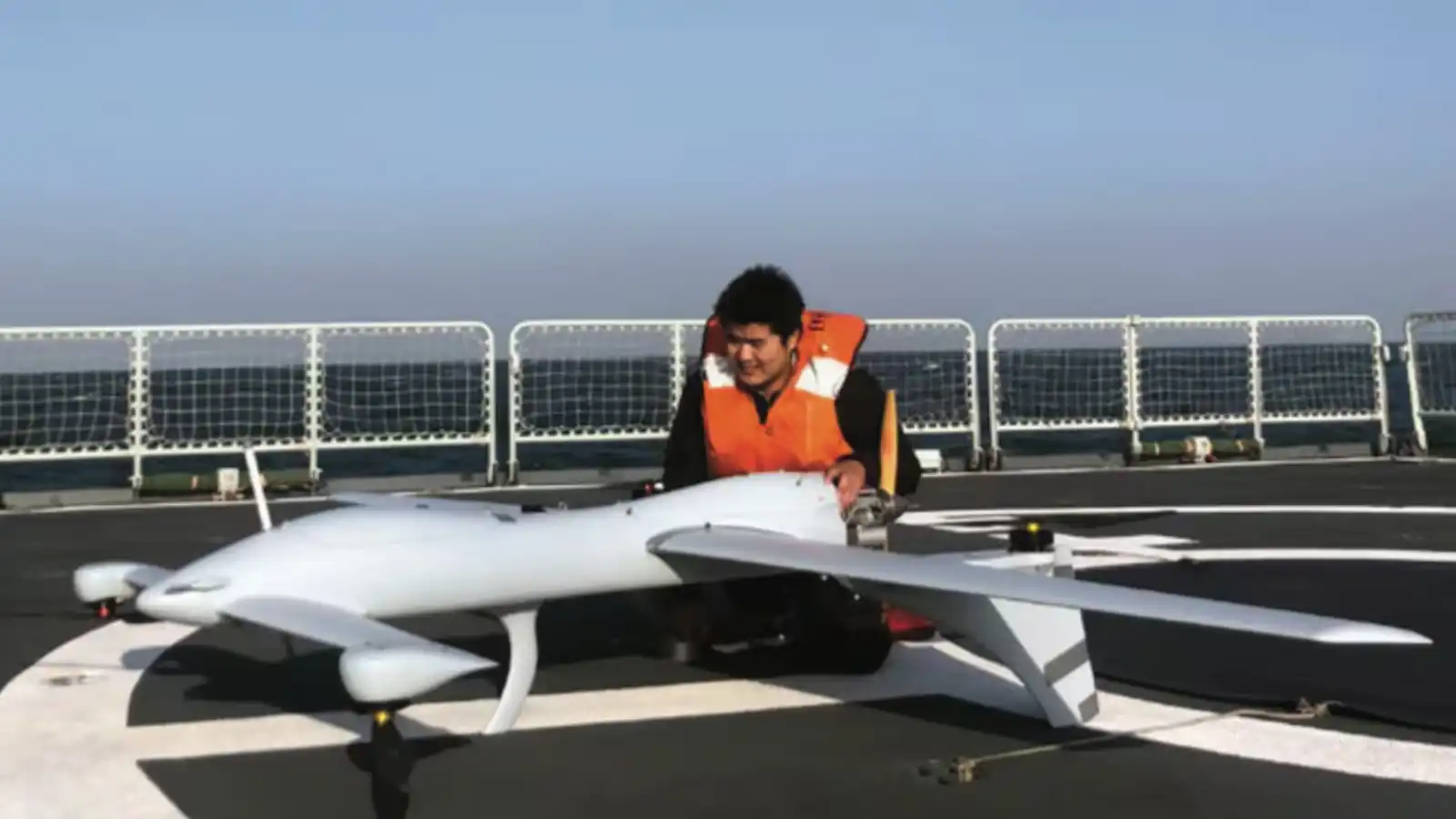
The case adds to growing U.S. scrutiny of academic research ties connected to China’s military drone sector.
Executive Summary:
U.S. federal investigators have accused a former University of Michigan research scholar of concealing ties to a Chinese drone company allegedly linked to the People’s Liberation Army. The case reflects growing American concern over research security, academic partnerships, and the transfer of dual-use aerospace technologies tied to China’s military modernization.
Former University Of Michigan Researcher Accused Of Concealing Chinese Military Drone Links
A former University of Michigan researcher is facing federal accusations after U.S. authorities alleged he concealed involvement with a Chinese military drone company while working and traveling in the United States.
According to a criminal complaint, Chinese national Chuan Wang allegedly misrepresented his employment history and denied involvement in military drone development connected to the People’s Republic of China.
Federal investigators claim Wang co-founded Tianxun Chuangxin Technology, a company described in court filings as a manufacturer of unmanned aerial vehicles and drones supporting the Chinese military. Authorities allege Wang falsely denied participation in military-related aerospace projects during questioning by U.S. Customs and Border Protection officers in 2023.
The case is the latest example of heightened U.S. scrutiny surrounding Chinese-linked academic researchers, aerospace technology transfers, and dual-use drone innovation.
Federal Investigation Focused On Drone Development
Investigators say Wang initially entered the United States in 2012 under a J-1 research visa to conduct aerospace research at the University of Michigan. Court documents indicate his stated research involved aeroelastic wing design and radio-controlled aircraft development.
Authorities later alleged that Wang’s professional background and company affiliations changed repeatedly in visa-related filings over several years. According to investigators, those records included references to engineering and technology firms connected to UAV development in China.
The FBI investigation reportedly intensified after Wang was interviewed at Detroit Metropolitan Airport while preparing to board a flight to China in July 2023. During the interview, investigators said Wang provided inconsistent answers regarding Tianxun and his engineering work. Federal agents later seized and reviewed his mobile phone.
According to the complaint, investigators discovered thousands of files allegedly related to drone design, manufacturing, and sales. Authorities also cited online promotional materials and Chinese-language articles describing Wang as a co-founder of a drone manufacturer serving Chinese military customers.
One message referenced in the complaint allegedly showed confirmation of a payment tied to a bureau associated with the Chinese military.
As of publication, Wang had reportedly not yet been arraigned on charges related to making false statements to federal investigators.
Growing U.S. Concern Over Academic Research Security
The investigation comes amid broader concerns in Washington about the transfer of sensitive aerospace, AI, and drone-related research through academic channels.
In recent years, U.S. lawmakers, intelligence officials, and defense agencies have increasingly warned about China’s military-civil fusion strategy, which seeks to integrate civilian technological innovation into military modernization programs.
The Pentagon and Congress have expanded oversight of federally funded university research, particularly involving artificial intelligence, aerospace engineering, unmanned systems, and advanced materials.
The University of Michigan has faced multiple federal investigations and criminal cases involving Chinese nationals since 2023. Several previous cases involved allegations ranging from unauthorized photography of military facilities to biological material smuggling investigations.
While many U.S. officials argue stronger research security measures are necessary, critics have also warned against broad profiling of Chinese researchers and academics.
The debate reflects a wider policy challenge facing American universities and defense agencies: balancing open scientific collaboration with national security concerns tied to emerging technologies.
Why Drone Technology Remains A Strategic Concern
The allegations surrounding Chinese military drone ties arrive as unmanned systems continue to reshape modern warfare and intelligence operations.
China has rapidly expanded its domestic drone industry over the past decade, producing both commercial and military UAV platforms for surveillance, reconnaissance, electronic warfare, and strike missions. Chinese drone manufacturers have also become major exporters across Asia, Africa, and the Middle East.
U.S. defense officials increasingly view advanced drone technologies, including autonomous navigation, AI-assisted targeting, anti-jamming systems, and long-endurance UAV designs, as strategically sensitive areas vulnerable to technology transfer.
Academic aerospace research involving lightweight airframes, flight controls, propulsion systems, and autonomous operations often carries dual-use implications, meaning technologies developed for civilian applications can also support military systems.
That overlap has placed universities under greater pressure to strengthen disclosure requirements, foreign funding transparency, and vetting procedures for international research partnerships.
Broader Implications For U.S.-China Competition
The Wang investigation highlights the increasingly confrontational environment surrounding U.S.-China technological competition.
Washington has expanded export controls, tightened investment restrictions, and increased scrutiny of Chinese-linked research activity tied to advanced aerospace, semiconductors, artificial intelligence, and defense technologies.
At the same time, U.S. defense officials remain concerned that China’s military modernization strategy relies heavily on acquiring foreign expertise and dual-use innovation through commercial, academic, and civilian channels.
The case may further intensify calls for tighter oversight of university research programs connected to sensitive aerospace and drone technologies.
For defense planners, the issue extends beyond one individual investigation. It reflects a broader struggle over who controls the next generation of autonomous systems, military AI, and advanced unmanned aerial capabilities.
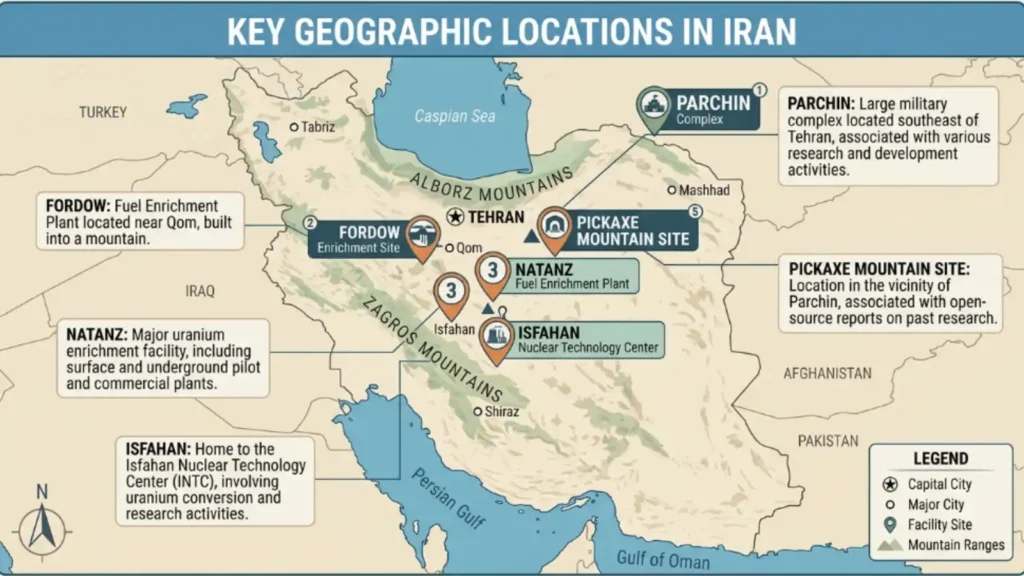
The June 2025 strikes by the United States and Israel damaged or destroyed most of Iran’s visible nuclear infrastructure. But satellite imagery, IAEA reporting, and open-source intelligence through May 2026 reveal a program that is rebuilding, burrowing deeper, and racing to restore capability before a diplomatic window or a next strike closes. This is what the map of Iran’s nuclear sites actually shows — and what any future strike would have to target.
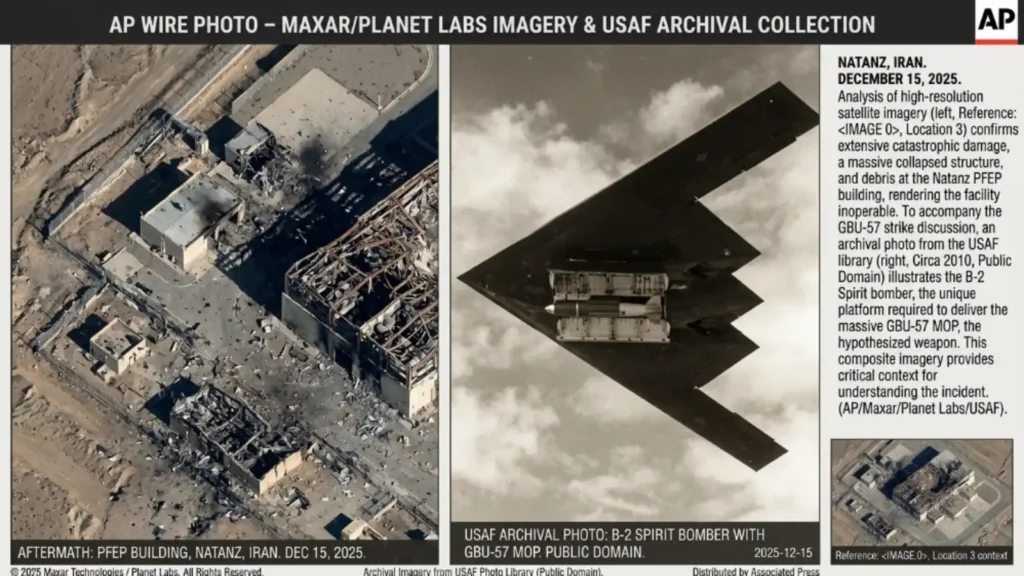
- Operation Midnight Hammer (June 22, 2025) deployed 7 B-2 stealth bombers dropping 14 GBU-57 Massive Ordnance Penetrator bunker-busters — 12 on Fordow, 2 on Natanz — along with 30+ Tomahawk missiles against Isfahan.
- Fordow is buried 80–90 meters under limestone-and-rock overburden near Qom — Iran’s most hardened enrichment site and the primary engineering driver behind the GBU-57’s development.
- Roughly 400 kg of 60%-enriched uranium — enough for several weapons if further enriched — remains unaccounted for, likely buried under rubble at Fordow, Natanz, and Isfahan.
- Iran has not permitted IAEA inspectors access to any struck nuclear site since June 2025. The UN watchdog now relies solely on satellite imagery.
- A new deeply buried site called “Pickaxe Mountain” south of Natanz is under accelerated construction at an estimated depth of 80–100 meters, potentially intended to house the next generation of advanced centrifuges.
Iran’s Nuclear Sites: Mapped, Analyzed, and What a Strike Would Actually Target
Fordow. Natanz. Isfahan. Parchin. These are not just names on an intelligence map — they are the physical backbone of Iran’s nuclear ambitions, places where centrifuges spun, uranium was converted, and weapons-relevant experiments were conducted. Understanding this nuclear facilities map in Iran is now more urgent than ever, because since June 2025, the geography of proliferation has been redrawn — yet not erased.
(adsbygoogle = window.adsbygoogle || []).push({});When U.S. B-2 bombers executed Operation Midnight Hammer on June 22, 2025, they struck what defense planners had spent 15 years preparing to hit. The results were consequential but incomplete. As of spring 2026, Iran is actively rebuilding, hardening, and burying what remains — raising the enduring question that every strike planner faces: what survives, and what comes next?
Natanz: The Nerve Center of Iran’s Enrichment Program
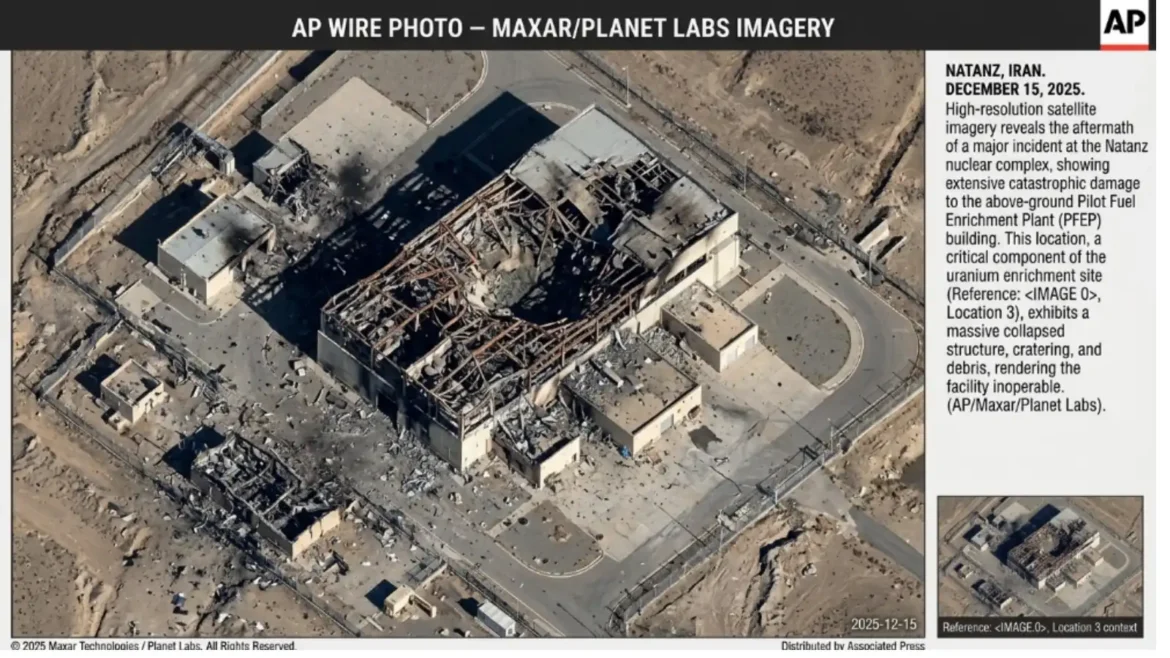
Located roughly 250 kilometers south of Tehran in Isfahan Province, the Natanz Nuclear Complex was — until last summer — the heart of Iran’s enrichment infrastructure. The site houses two main enrichment facilities: the above-ground Pilot Fuel Enrichment Plant (PFEP) and the deeply buried Fuel Enrichment Plant (FEP), the latter sitting several stories underground.
Israeli strikes on June 13 left the aboveground PFEP “functionally destroyed,” with the IAEA confirming a radiological release of alpha particles confined to the facility. An updated assessment on June 17 suggested the underground FEP may also have been penetrated. The U.S. followed with additional strikes on June 21, dropping two GBU-57 Massive Ordnance Penetrators directly into the underground facility’s centrifuge halls.
On March 2, 2026, the facility was struck again by the United States, with entrance buildings sustaining significant damage. A further American strike on March 21 followed, after which Iran accelerated construction at the nearby Pickaxe Mountain underground site.
Despite the cumulative damage, a critical caveat remains. Satellite imagery shows that roofs have been constructed over damaged buildings at Natanz, blocking overhead observation — the only monitoring tool currently available, since Iran has barred IAEA inspectors from the site.
Fordow: The Hardest Target on the Map
If Natanz is the nerve center, Fordow is the fortress. Buried 80–90 meters under rock near the city of Qom, approximately 160 kilometers south of Tehran, the Fordow Fuel Enrichment Plant was originally an Islamic Revolutionary Guard Corps missile base before being converted into an underground uranium enrichment complex. It was, and arguably still is, the most physically protected nuclear site on earth outside a declared weapons state.
(adsbygoogle = window.adsbygoogle || []).push({});Fordow was literally the reason the GBU-57 exists. Pentagon officials confirmed that for more than 15 years, DTRA analysts studied the facility’s geology, construction materials, vent shafts, and environmental systems — every nook and crack — specifically to engineer a weapon capable of destroying it.
During Operation Midnight Hammer, B-2 bombers dropped 12 GBU-57s on Fordow — six down two holes — in a deliberate “double tap” tactic designed to drill successive penetrators deeper into the same entry points. The IAEA’s Director General confirmed in September 2025 that “almost all sensitive equipment” at the site had been destroyed.
Yet even this outcome carries qualifications. While the GBU-57 can reportedly penetrate up to 60 meters of unspecified material, Iranian domestic research has produced concrete exceeding 30,000 psi compressive strength, significantly reducing the bomb’s effective depth. The limestone composition of Fordow’s overburden adds further uncertainty about actual penetration achieved.
The analyst’s caveat: Fordow may be physically damaged, but its approximately 400 kilograms of 60%-enriched uranium — sufficient material to produce several weapons if enriched to 90% — is still unverified and potentially entombed in inaccessible tunnels. Grossi himself warned that if Iran chose to further enrich its surviving stockpile to weapons-grade, the process would take only a matter of weeks.
Isfahan: The Conversion and Manufacturing Hub
Isfahan — or Esfahan — houses a cluster of facilities collectively forming Iran’s nuclear fuel cycle midstream: the Uranium Conversion Facility (UCF), the Fuel Manufacturing Plant (FMP), the Nuclear Technology Center, and several specialized processing labs. During the June 2025 strikes, damage was confirmed at Isfahan’s chemical laboratory, uranium conversion plant, Tehran reactor fuel manufacturing plant, and its UF4-to-enriched-uranium-metal processing facility.
The Isfahan mountain tunnel complex, which was under construction to house a new enrichment plant, was heavily damaged. The IAEA stated it does not know the precise location of this planned facility, its safeguards status, or whether it contained nuclear material at the time of the strikes.
(adsbygoogle = window.adsbygoogle || []).push({});Since the war, Iran has been systematically obscuring damage from overhead observation. Satellite imagery shows that Iran built a roof over a damaged structure near Isfahan’s northeast corner — an area where Israeli strikes reportedly targeted centrifuge manufacturing sites — completing this concealment work by early January 2026.
Parchin and Taleghan 2: The Weaponization Wildcard
Parchin sits approximately 30 kilometers southeast of Tehran and is officially designated as a military explosives research complex. But within its perimeter, the Taleghan 2 facility has long drawn scrutiny from non-proliferation analysts as a site potentially linked to nuclear weapons development work — specifically high-explosive testing relevant to triggering mechanisms.
Israel struck Taleghan 2 in October 2024, disrupting work at the site. Iran did not abandon the program; instead, it encased the rebuilt facility in a concrete sarcophagus and covered it with compacted soil layers in the months leading up to further strikes in early 2026.
On March 12, 2026, the Israel Defense Forces confirmed a strike on Taleghan 2, describing it as “a site used by the Iranian regime to advance nuclear weapons capabilities” and noting it was “used in recent years to develop advanced explosives.” Satellite imagery showed three large penetration impact points directly above the area housing the suspected high-explosive containment vessel.
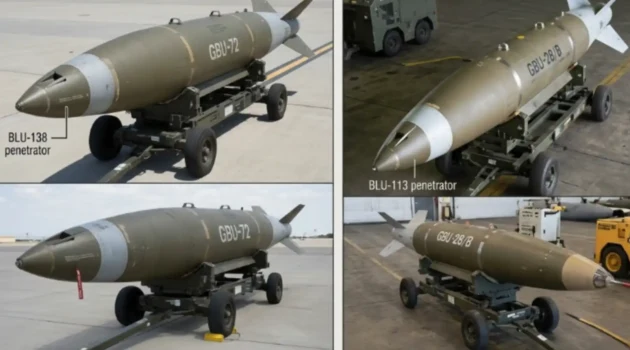
The munitions question remains open. While initial reporting suggested the possible use of GBU-57 MOPs, only U.S. B-2 bombers are certified to carry them. Israel is known to possess GBU-28 and GBU-72 5,000-pound earth-penetrating weapons, either of which would be capable of penetrating the concrete and soil hardening.
Pickaxe Mountain: The Site That Wasn’t Struck — and What That Means
Perhaps the most consequential element of the current Iran nuclear map is a facility that neither the United States nor Israel has yet successfully destroyed: the Pickaxe Mountain complex, formally known as Kūh-e Kolang Gaz Lā, located approximately one mile south of the Natanz perimeter fence.
Excavation at this site is estimated to have reached depths of 80 to 100 meters under hard granite rock — depths that Iranian engineers specifically calculated to provide survivability against the American GBU-57 MOP dropped by B-2 bombers. Security walls have been completed, and analysts assess the facility is designated to house the next generation of thousands of advanced centrifuges.
(adsbygoogle = window.adsbygoogle || []).push({});Construction at Pickaxe Mountain is accelerating in parallel with Iran’s broader post-war nuclear reconstitution strategy, suggesting Tehran intends to preserve enrichment capability underground at depths that conventional strike packages may struggle to confidently neutralize.

This creates a significant doctrinal problem for Western planners. A facility buried under 80–100 meters of granite — harder and denser than the limestone above Fordow — may require a successor to the GBU-57 to hold at genuine risk. DTRA officials have confirmed they are now using battle damage assessment data from Operation Midnight Hammer to inform the design of a next-generation deep-penetrating munition.
Air Defense Coverage: The Strike Corridor Problem
Iran’s nuclear sites are distributed across a wide geographic arc from Qom in the north to Isfahan in the center — a layout that complicates any single strike package. Before June 2025, Iran maintained layered air defense coverage around its nuclear sites using a mix of Russian-supplied S-300 systems, domestically produced Bavar-373 batteries, and shorter-range Tor-M1 and Khordad-15 systems.
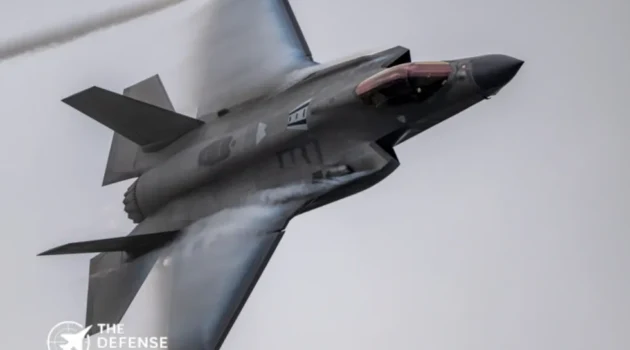
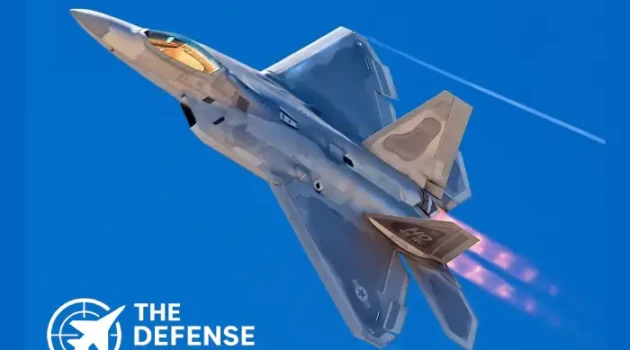
Israel’s multi-year strategic campaign systematically neutralized Iran’s air defense architecture — first destroying Syrian-based assets, then suppressing Iranian air defenses directly — which by June 2025 had opened what analysts describe as “absolute aerial freedom of operation in Iranian skies.” Operation Midnight Hammer exploited this window: the strike package included F-22 and F-35 fighters for air defense suppression, deception tactics, and fighter sweeps to clear a corridor for the B-2s before a single bomb was dropped.
Iran has since prioritized air defense reconstitution. As of early 2026, Tehran is working to rehabilitate its surface-to-air missile inventory and rebuild destroyed launch infrastructure as its primary strategic priority, with the goal of denying the aerial access that made Midnight Hammer possible.
What the Damage Assessment Actually Tells Us
The honest assessment of where Iran’s nuclear program stands in 2026 is this: severely damaged, but not dismantled.
Key nodes eliminated during the combined Israeli and American strikes included four centrifuge manufacturing and testing plants, uranium conversion and metal labs, enrichment plants, and weaponization sites. Pentagon analysts assessed the program had been set back by one to two years, closer to two.
But the structural problem that remains is not one that additional bombs can fully resolve. Roughly 400 kilograms of highly enriched uranium remain unaccounted for, likely entombed within the Fordow and Isfahan tunnel complexes whose entrances have since been buried or backfilled. Bombs cannot produce verified inventories — that requires inspectors, and Iran has refused to allow them in.
(adsbygoogle = window.adsbygoogle || []).push({});Meanwhile, Iran has adopted what analysts describe as a “differential reconstruction doctrine” — combining a public posture of diplomatic openness with the parallel acceleration of air defense rehabilitation, ballistic missile reconstitution, and deep underground hardening of nuclear facilities, betting that survivability itself becomes a strategic deterrent.
Analysis: The Limits of Kinetic Counter-Proliferation
What the Iran nuclear site map reveals, when studied honestly, is an arms race between penetrating munitions and burrowing construction. Iran watched Operation Midnight Hammer and drew a direct lesson: go deeper. Pickaxe Mountain’s 80–100-meter granite ceiling is not an accident of geography — it is an engineered response to the GBU-57’s published penetration envelope.
For U.S. and Israeli planners, this creates a self-reinforcing cycle. Each strike drives Iranian engineers further underground; each new facility demands a more powerful munition; each more powerful munition requires years of development and limited-production B-2 delivery. The Air Force’s recent $62.55 million Boeing contract to replenish its GBU-57 stockpile — described in acquisition documents as “critically needed” — underscores just how thin the deep-strike inventory became after Midnight Hammer.
(adsbygoogle = window.adsbygoogle || []).push({});Ultimately, the most dangerous element on the Iran nuclear map is not the damaged facilities. It is the unverified 400-kilogram HEU stockpile, the unmonitored Pickaxe Mountain excavation, and the Taleghan 2 weaponization program that Iran rebuilt — twice — after being struck. Kinetic strikes can disrupt timelines. Only verified diplomacy and sustained inspection access can close the gap.
FAQs
Does Iran have nuclear weapons?As of May 2026, Iran has not been confirmed to possess a functional nuclear weapon. It accumulated approximately 400 kg of 60%-enriched uranium before Operation Midnight Hammer in June 2025. That material, if further enriched to 90%, would be sufficient for several weapons, but its current location remains unverified by the IAEA.
What happened to Iran’s nuclear sites in 2025?In June 2025, U.S. and Israeli forces struck Natanz, Fordow, and Isfahan in a coordinated campaign. The above-ground facilities at Natanz and Isfahan were largely destroyed; Fordow’s underground enrichment halls were struck by 12 GBU-57 bunker-busters. Iran has barred IAEA inspectors from all struck sites since then.
Where is Fordow located?Fordow is buried 80–90 meters under a mountain near the city of Qom, approximately 160 kilometers south of Tehran. It was originally an IRGC missile base before being converted into a uranium enrichment facility.
What is the GBU-57 Massive Ordnance Penetrator?The GBU-57 MOP is a 30,000-pound GPS-guided bunker-busting bomb carried exclusively by U.S. B-2 Spirit stealth bombers. It was specifically designed to destroy deeply buried hardened targets, with Fordow as its primary engineering driver. Fourteen were used in Operation Midnight Hammer.
What is Pickaxe Mountain and why does it matter?Pickaxe Mountain (Kūh-e Kolang Gaz Lā) is an underground facility under active construction approximately one mile south of the Natanz complex. Iran is excavating it to depths of 80–100 meters under hard granite — deeper than Fordow — potentially to house a new generation of centrifuges beyond the reliable reach of existing bunker-busting munitions.
Has Iran rebuilt its nuclear program after the 2025 strikes?Partially. Iran’s main enrichment facilities remain largely inoperable, but Iran is actively hardening Pickaxe Mountain, rebuilding Taleghan 2 at Parchin (struck again in March 2026), and recovering or obscuring surviving equipment at Isfahan and Natanz under newly constructed roof covers.

Executive Summary:
Russian President Vladimir Putin said the war in Ukraine is “approaching its end” during remarks tied to Moscow’s Victory Day events and a temporary ceasefire initiative. Germany and several Western officials rejected any suggestion that Moscow is pursuing a credible peace process, highlighting continued distrust between Russia and NATO-backed governments.Putin Signals Possible Diplomatic Shift During Victory Day Events
Russian President Vladimir Putin claimed on May 9 that the war in Ukraine is “approaching its logical conclusion,” marking one of Moscow’s strongest public suggestions in months that the conflict could eventually transition toward negotiations.
The statement came during Russia’s annual Victory Day commemorations in Moscow, an event traditionally used to showcase military power and national unity. This year’s parade, however, appeared notably scaled back compared to previous years. Analysts noted the absence of heavy military hardware such as tanks, ballistic missile systems, and armored combat vehicles on Red Square, a departure from the large-scale displays commonly seen since the mid-2000s.
Putin’s remarks coincided with a temporary three-day ceasefire reportedly encouraged through indirect U.S.-supported diplomatic channels. While Moscow framed the pause as a humanitarian measure tied to Victory Day observances, Ukrainian officials continued to accuse Russian forces of maintaining localized offensive operations along parts of the front line.
The Kremlin has repeatedly argued that it remains open to negotiations, but Kyiv and its Western partners continue to insist that any peace process must include the restoration of Ukrainian sovereignty and territorial integrity.
Germany Rejects Russian Mediation Narrative
German officials moved quickly to dismiss suggestions that Berlin could support or facilitate a Russian-led mediation framework.
Representatives from the German government reiterated that Moscow remains the aggressor in the conflict and emphasized that any negotiations would require credible commitments from Russia regarding troop withdrawals and security guarantees.
The response reflects broader European skepticism toward Russian diplomatic messaging. Since the start of the full-scale invasion in 2022, European NATO members have steadily increased military assistance to Ukraine while simultaneously expanding sanctions against Russia’s defense, banking, and energy sectors.
Berlin has become one of Ukraine’s largest European military supporters, providing air defense systems, armored vehicles, artillery ammunition, and training support. German officials also continue to back NATO’s eastern flank reinforcement efforts amid concerns about long-term regional instability.
Reduced Victory Day Display Reflects Operational Pressures
The reduced scale of this year’s Victory Day military parade has drawn attention among defense analysts and intelligence observers.
For years, Russia used the annual event to display next-generation combat platforms, strategic missile systems, and modernization achievements. The absence of major armored formations this year may reflect operational demands linked to the war in Ukraine, where Russian ground forces continue to experience high equipment attrition rates.
Western defense assessments have repeatedly highlighted losses involving tanks, infantry fighting vehicles, and artillery systems since the conflict escalated into large-scale warfare. At the same time, Russia has accelerated defense industrial production to replenish battlefield inventories and sustain long-term military operations.
Despite the smaller parade footprint, Moscow still showcased select strategic assets and emphasized themes of resilience, national sacrifice, and wartime mobilization.
The optics of the event remain important for domestic political messaging. Victory Day carries deep symbolic value in Russia because of its connection to the Soviet Union’s role in defeating Nazi Germany during World War II.
Strategic Messaging Targets Domestic And International Audiences
Putin’s statement that the war may be nearing an end is widely viewed by analysts as part of a broader strategic communications effort aimed at both Russian domestic audiences and international observers.
From a domestic perspective, the Kremlin faces pressure to demonstrate that the costly conflict is delivering strategic gains while avoiding signs of military exhaustion. Presenting the war as potentially entering a closing phase could help reinforce public confidence ahead of future political and economic challenges.
Internationally, the remarks may also be intended to influence ongoing debates inside NATO and Europe regarding long-term military aid to Ukraine. Some Western governments are increasingly balancing continued support for Kyiv with concerns about defense stockpile depletion, industrial capacity, and fiscal pressures.
However, there is little evidence that either side is currently prepared to make major concessions. Ukrainian leadership continues to seek additional Western military assistance, particularly in air defense and long-range strike capabilities, while Russia maintains demands tied to territorial control and Ukrainian neutrality.
Military Situation Remains Unresolved
Despite diplomatic rhetoric surrounding ceasefire discussions, fighting across multiple sectors of eastern and southern Ukraine continues.
Russian forces remain focused on gradual territorial advances through artillery-heavy operations, while Ukraine continues to rely on drone warfare, precision strikes, and layered defensive positions to slow Russian momentum.
The conflict has also accelerated major shifts in modern warfare, particularly in the use of unmanned systems, electronic warfare, long-range fires, and battlefield surveillance technologies. NATO militaries are closely monitoring lessons from the war as they adapt future force planning and procurement strategies.
At the strategic level, the war continues to reshape European security architecture, defense spending priorities, and NATO operational planning.
While Putin’s latest remarks may indicate an effort to project confidence or openness to negotiations, the underlying military and political conditions required for a durable settlement remain far from resolved.
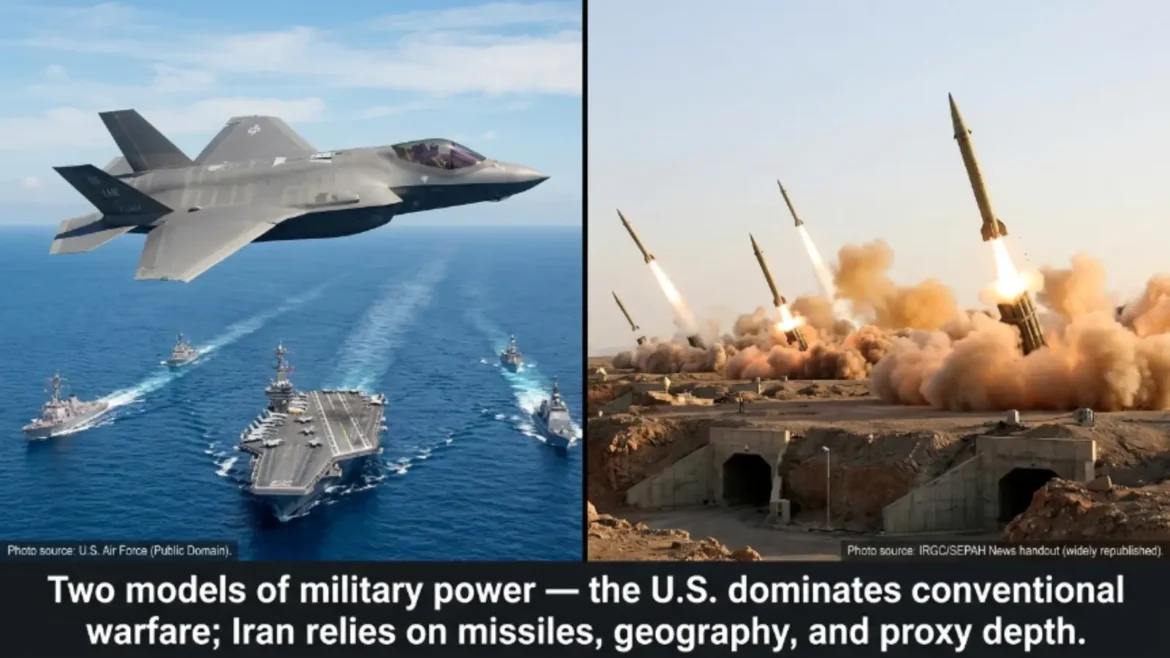
The United States fields the most powerful military force in human history. Iran fields the most capable asymmetric force in the Middle East. As active hostilities and ceasefire negotiations run in parallel through May 2026, this breakdown of US vs Iran military power examines what each side actually brings to the fight — and why the outcome of this conflict is not simply a function of who has the larger defense budget.
¦ KEY FACTS AT A GLANCE- The United States ranks #1 in global military power.
- Operation Epic Fury launched on February 28, 2026 — U.S. and Israeli forces struck nuclear infrastructure, missile production sites, and the compound of Supreme Leader Ali Khamenei, who was killed in the strikes.
- Iran possesses the largest ballistic missile arsenal in the Middle East — over 3,000 missiles — representing its primary strategic equalizer against U.S. air dominance.
- A fragile ceasefire has been in place since April 8, 2026, brokered by Pakistan — but both sides have violated it, and Strait of Hormuz clashes continued as recently as May 8, 2026.
- Trump called Iran’s latest counterproposal, submitted May 10, 2026, “TOTALLY UNACCEPTABLE” — leaving the conflict’s diplomatic resolution deeply uncertain.
US vs Iran War: Who Would Win? A 2026 Military Power Breakdown
The question of who would win a US vs Iran war is no longer entirely theoretical. Since late February 2026, American and Iranian forces have been engaged in a real — if constrained — military confrontation, with Operation Epic Fury reshaping the strategic landscape of the Middle East. As Pakistan-mediated ceasefire talks stall and the Strait of Hormuz remains a live flashpoint, this comparison of US and Iran military power in 2026 carries immediate operational relevance. Raw numbers tell part of the story. Context, doctrine, and geography tell the rest.
Where the Two Forces Stand in 2026
According to GlobalFirepower’s annually updated 2026 rankings, the United States holds a Power Index score of 0.0741 — ranking first among 145 nations — while Iran scores 0.3199, placing it 16th globally. That gap, however, compresses significantly when the analysis shifts from global force projection to regional conflict dynamics.
The U.S. military operates on a global scale with a worldwide network of bases, while Iran focuses its considerable resources on regional influence in the Middle East. This is not merely a structural difference — it is the defining strategic divergence between the two militaries, shaping every domain from air power to naval posture to cyber operations.
Air Power: The United States Holds Decisive Superiority
The air power gap is arguably the most decisive asymmetry in any US vs Iran military comparison. The United States operates approximately 13,300 aircraft — including 5th-generation F-22 and F-35 stealth fighters — while Iran’s air force fields roughly 500 aircraft, many of which date to Shah-era purchases from the 1970s.
The 2025 conflict with Israel provided a live demonstration of just how severe that gap is. A senior Iran analyst at the International Crisis Group noted following the June 2025 war that “Iran’s air defenses are no match for the US and Israeli air power.” Earlier, Israeli strikes in October 2024 reportedly destroyed most of Iran’s air defense network, including nearly all of its advanced S-300 systems, long-range surface-to-air batteries, and detection radars.
Iran has attempted to compensate through Russian and Chinese partnerships. China has transferred offensive drones, loitering munitions, and air-defense systems — including variants of the HQ-16 and HQ-17 surface-to-air missile families — while Beijing has also reportedly supplied rocket fuel chemicals sufficient to power hundreds of mid-range ballistic missiles. These transfers meaningfully extended Iran’s strike capabilities but did not close the fundamental air superiority gap.
Iran’s Real Equalizer: Missiles, Drones, and Underground Arsenals
Where Iran genuinely narrows the power differential is in its missile and drone programs. Iran holds the largest ballistic missile arsenal in the Middle East — over 3,000 missiles — and the geographic proximity of U.S. regional bases means those weapons do not require intercontinental range to carry strategic significance.
The Islamic Revolutionary Guard Corps (IRGC) has built extensive “missile cities” deep underground to survive airstrikes, and Iran is surrounded by the Zagros and Alborz mountain ranges, which act as massive natural barriers limiting viable land invasion routes to a narrow few. This combination of hardened infrastructure and challenging terrain makes Iran one of the most difficult military targets in the world — as U.S. planners discovered firsthand during Operation Epic Fury.
Iranian drone doctrine has also evolved considerably. Tehran has developed and deployed large swarms of one-way attack drones — the Shahed family being the most notable — and has supplied these systems to proxy forces across the region, creating a distributed, resilient strike capability that no single air campaign can easily eliminate.
The Proxy Network: Iran’s Strategic Depth
No honest assessment of Iran military power in 2026 can ignore its proxy network, which functions as a force multiplier across at least seven countries. Hezbollah, Iran’s premier proxy, operates as a state-within-a-state in Lebanon with its own military command structure, social services apparatus, and a substantial missile arsenal. Even after Israel’s sustained targeting of Hezbollah leadership — including the killing of Secretary-General Hassan Nasrallah in September 2024 — the organization reconstituted command authority and rebuilt combat capability under successor Naim Qassem.
Iran has increasingly relied on a dual strategy combining foreign-backed military capability with an entrenched proxy network across the Middle East. When Operation Epic Fury struck Iran’s homeland on February 28, the proxy response was near-simultaneous — demonstrating that Tehran’s strategic depth is not simply a deterrent but an active operational instrument.
The Foundation for Defense of Democracies documented in February 2026 that Israeli forces were still killing Hezbollah operatives actively rebuilding military infrastructure south of the Litani River just days before Operation Epic Fury was launched — evidence that the proxy network’s regenerative capacity presents a durable challenge that kinetic strikes alone cannot resolve.
Naval Warfare and the Strait of Hormuz
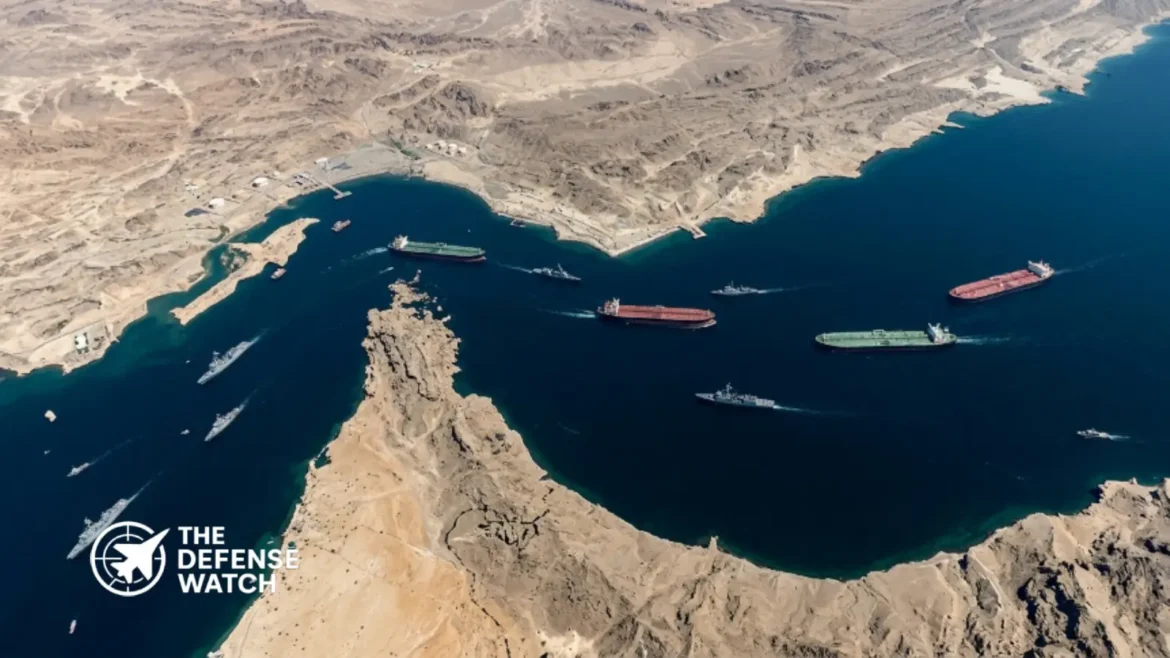
The Strait of Hormuz remains the single most consequential chokepoint in the conflict. Iran’s three Kilo-class submarines — purchased from Russia in the 1990s — are diesel-electric boats that are exceptionally quiet when operating on battery power in shallow Gulf waters, creating a submarine threat that U.S. anti-submarine warfare assets cannot dismiss. Iran’s fast-attack craft, missile corvettes, and mine-laying capabilities are purpose-built for Hormuz warfare, not blue-water competition with U.S. carrier groups.
The consequences have been severe. By March 10, 2026, only 15 ships made it through the Strait of Hormuz before the United States imposed a naval blockade. Iran subsequently closed the Strait to all foreign shipping and captured several foreign-flagged vessels. The economic disruption has been global — and this is precisely the leverage Iran calculated it could exercise even against a vastly superior conventional adversary.
The 2026 Conflict: What the Fighting Has Revealed
The theoretical has become operational. On February 28, 2026, U.S. and Israeli forces struck targets across Tehran, Isfahan, Qom, Karaj, and Kermanshah — targeting nuclear infrastructure, missile production facilities, and the compound of Supreme Leader Ali Khamenei, who was killed in the strikes. Iran responded with missile and drone strikes against Israel, U.S. bases, and allied countries in the Middle East, while closing the Strait of Hormuz.
In the wider regional escalation, Qatar was targeted by over 200 missiles and drones, Saudi Arabia absorbed at least 38 missiles and 435 drones, and Jordan was struck by a combined 204 missiles and drones. The scale of Iran’s retaliatory salvo underscored that its missile arsenal, while degraded, retained significant operational reach even after sustained strikes on production facilities.
A fragile ceasefire, brokered by Pakistan, took hold on April 8, 2026. But as of May 11, 2026, the diplomatic picture remains deeply uncertain. The U.S. sent Iran a 14-point proposal requiring Tehran to halt all uranium enrichment for at least 12 years and surrender its estimated 440kg stockpile of uranium enriched to 60 percent. Iran’s counterproposal, submitted May 10, focused on ending regional hostilities, maritime security in the Gulf, nuclear negotiations, and sanctions relief. Trump immediately called the response “TOTALLY UNACCEPTABLE.”
Analytical Assessment: Who Would “Win”?
The honest answer to the us vs iran war question is that the framing itself requires qualification. The United States would win any conventional, force-on-force engagement by a large margin — the combination of 5th-generation airpower, carrier strike groups, precision munitions, and global logistics creates an asymmetry that Iran’s military planners have never sought to overcome on those terms.
What Iran has instead built is a military designed to make winning costly, protracted, and strategically ambiguous. Iran’s doctrine is built around imposing costs rather than winning pitched battles, with an asymmetric framework honed across decades of preparation against a technologically superior adversary. The 2026 conflict has validated this approach: U.S. and Israeli forces struck Iran’s nuclear program and killed its supreme leader, yet the proxy network endures, the Strait of Hormuz remains contested, and diplomatic resolution has proven elusive.
Victory in a conventional sense — full territorial control, elimination of Iran’s military capacity, regime replacement — would require a ground campaign that no senior U.S. military planner has publicly advocated. The mountains, the missile cities, the proxy depth, and the global economic consequences of a prolonged Hormuz closure all counsel against that option. What the 2026 conflict has demonstrated, in operational terms, is that the U.S. can decisively degrade Iran’s conventional and nuclear infrastructure — but that degrading and defeating are not the same thing.
FAQs
Who would win a direct US vs Iran conventional war in 2026?The United States holds an overwhelming conventional military advantage across air power, naval capability, and precision strike. In a force-on-force confrontation, the U.S. would dominate. However, Iran’s missile arsenal, geography, and proxy networks ensure that “winning” would come at considerable cost and strategic complexity.
What is Iran’s biggest military strength against the U.S.?Iran’s ballistic missile arsenal — the largest in the Middle East with over 3,000 missiles — combined with its proxy network spanning Lebanon, Yemen, Iraq, and Syria, and its ability to disrupt the Strait of Hormuz, represent its most effective strategic tools against a superior adversary.
Has the US already fought Iran in 2026?Yes. Operation Epic Fury on February 28, 2026 saw U.S. and Israeli forces strike nuclear and missile sites across Iran. A ceasefire brokered by Pakistan took effect on April 8, though both sides have continued to violate it, including naval clashes in the Strait of Hormuz as recently as May 8, 2026.
How does Iran’s air force compare to the United States?There is no realistic comparison. The U.S. operates approximately 13,300 aircraft including F-22 and F-35 stealth fighters. Iran’s fleet of roughly 500 aircraft includes many aging Shah-era platforms. Iran’s air defenses were also heavily degraded in 2024 and 2025 Israeli strikes.
Can Iran close the Strait of Hormuz against the U.S. Navy?Iran cannot permanently seal the Strait against U.S. naval power, but it can significantly disrupt traffic in the short to medium term using mines, fast-attack craft, shore-based anti-ship missiles, and submarines — as demonstrated in March 2026 when shipping through the Strait was reduced to 15 vessels per day.
Iran–Israel Ceasefire 2026: A Fragile Halt in a Transformed Middle East
The Iran–Israel ceasefire reached in April 2026 is less a resolution than a heavily armed pause — one where both sides maintain active blockades, continue proxy engagements, and remain fundamentally divided on the core issue that triggered the conflict: Iran’s nuclear program. What began as a Pakistan-mediated two-week truce on April 8 has since been extended by President Trump, complicated by a failed round of high-stakes talks in Islamabad, and strained by a US naval blockade that Tehran calls a pretext for war. For defense analysts tracking the Iran–Israel ceasefire news cycle, the question is no longer whether the truce will hold indefinitely — it is what shape any eventual collapse or deal will take.
(adsbygoogle = window.adsbygoogle || []).push({});| KEY FACTS AT A GLANCE- A US–Iran ceasefire brokered by Pakistan took effect on April 8, 2026, halting 40 days of US–Israeli airstrikes on Iran.
- The Islamabad Talks (April 11–12) ended without a deal after 21 hours of negotiations, with Iran’s nuclear program the central unresolved issue.
- The US imposed a naval blockade on Iranian ports on April 13 following the collapse of talks, while the ceasefire technically remains in effect.
- Lebanon was explicitly excluded from the US–Iran ceasefire framework; a separate Israel–Lebanon truce was announced on April 16 and extended for three weeks on April 23.
- As of early May 2026, the US has presented Iran with a 14-point proposal requiring a halt to uranium enrichment for at least 12 years; Iran is still reviewing it.
How the Ceasefire Came About: From Airstrikes to Islamabad
The War That Preceded It
On February 28, 2026, Israel and the United States launched airstrikes against Iran, killing its Supreme Leader and many other officials, destroying a large number of military and government targets, and killing civilians. The assault followed months of escalating pressure. On March 6, President Trump had said that only Iran’s “unconditional surrender” would be acceptable and said the US would attack Iranian energy infrastructure and bridges if a deal was not reached; he set deadlines of March 21, then March 23, then April 7 for a deal.
With those deadlines expiring and international alarm growing, Pakistan stepped in.
Pakistan’s Mediation and the April 8 Truce
On April 8, 2026, the United States and Iran agreed to a two-week ceasefire in the 2026 Iran war, mediated by Pakistan. The announcement from Pakistani Prime Minister Shehbaz Sharif declared the truce effective immediately and, in his initial post, claimed it included Lebanon — a point that immediately became a flashpoint. A two-week ceasefire between the United States and Iran halted 40 days of US–Israeli attacks on Iran that had pushed the region to the brink of a wider war.
(adsbygoogle = window.adsbygoogle || []).push({});The ceasefire framework carried several key conditions. The framework calls for an immediate halt to hostilities, the reopening of the Strait of Hormuz, and a 15–20-day period of negotiations between Iran and the US. Phase two of the framework envisioned a 45-day structured negotiation window targeting a permanent settlement.
What the Ceasefire Terms Actually Require
The agreement — to the extent it has been clarified — is a phased framework rather than a binding treaty. Here is what each side is expected to deliver:
What Iran Must Do
- Immediately halt all offensive military operations against US and Israeli forces
- Reopen the Strait of Hormuz to unrestricted international shipping
- Commit — as part of any final deal — to halting its pursuit of nuclear weapons
What the US Has Signaled in Return
- A pause on airstrikes against Iranian territory
- Willingness to ease sanctions conditionally, tied to Iranian compliance
- Potential release of frozen Iranian assets, including a reported $6 billion, as part of a final deal
The Lebanon Dispute
One of the most immediate fractures in the ceasefire narrative involves Lebanon. Iran is pushing for a broader regional ceasefire, including an end to fighting involving its allies, such as Hezbollah in Lebanon. While Israeli Prime Minister Benjamin Netanyahu has expressed support for Washington’s decision to suspend the strikes on Iran, he said the ceasefire will not extend to Israel’s ongoing military operations in Lebanon. Trump later added that Lebanon is not included in the ceasefire agreement and that Hezbollah will need to be dealt with.
A separate Israel–Lebanon truce was eventually brokered. The 2026 Israel–Lebanon ceasefire, brokered by the United States, established a 10-day truce intended to halt active fighting and create conditions for further negotiations toward a longer-term settlement. On April 23, US President Donald Trump announced that Israel and Lebanon agreed to a three-week extension of the ceasefire.
The Islamabad Talks: 21 Hours, No Deal
Who Was in the Room
The Islamabad Talks were held in Islamabad, Pakistan, on April 11 and 12, 2026. The 300-member US negotiating team was led by Vice President JD Vance, alongside special envoys Steve Witkoff and Jared Kushner, while the 70-member Iranian team was led by parliamentary speaker Mohammad Bagher Ghalibaf, alongside Foreign Minister Abbas Araghchi. The Pakistani mediating team was led by Prime Minister Shehbaz Sharif, Field Marshal Asim Munir, and Deputy Prime Minister and Foreign Minister Ishaq Dar.
Why They Failed
Both sides reported progress was made but no agreement was reached. The US President said “most points were agreed to, but the only point that really mattered, nuclear, was not.” He described Iran as “unyielding” on the issue. Iran’s Foreign Minister said an agreement was “just inches away” but criticized “maximalist demands” from the US negotiators.
The main unresolved issues reportedly included Iran’s nuclear program and the status of the Strait of Hormuz. While the US side insisted on a phased relief linked to compliance, Iran demanded comprehensive lifting of sanctions and release of assets, including $6 billion in frozen assets, as a precondition to a meaningful deal.
Vance told reporters: “The bad news is that we have not reached an agreement, and I think that’s bad news for Iran much more than it’s bad news for the United States of America.
The Naval Blockade: A War Tool Wrapped in Ceasefire Rhetoric
What makes the current Iran–Israel ceasefire situation analytically unusual is that the US imposed a de facto economic siege even as the truce nominally held. The United States imposed a naval blockade on Iran following the failure of the Islamabad Talks to end the war. Iran said it will view the entry of military vessels near the strait as a breach of the ceasefire and will respond accordingly.
(adsbygoogle = window.adsbygoogle || []).push({});The Strait of Hormuz remains the central pressure point. The war has caused a global energy crisis as Iran has put a chokehold on the Strait of Hormuz, through which about 20 percent of the world’s oil and gas supplies pass. Neither side has removed their blockades.
The USS Spruance incident underscores how close the situation is to renewed armed conflict. President Trump announced that the US had attacked the Iran-flagged cargo ship Touska after it attempted to breach the US naval blockade of Iran, blowing a hole in its engine room and taking the ship into custody.
The Nuclear Flashpoint: America’s Red Line, Iran’s Sovereign Right
The nuclear question is, by every metric, the hardest gap to bridge.
According to US media reports, Washington sent Iran a 14-point document. Under its proposals, Iran would be required to agree not to develop a nuclear weapon and halt all enrichment of uranium for at least 12 years. It would also be required to hand over an estimated 440 kg of uranium, which it has enriched to 60 percent. In return, the US would gradually lift sanctions and release billions of dollars in frozen Iranian assets and withdraw its naval blockade of Iranian ports.
Tehran’s position is fundamentally different in framing. Iranians are saying that, at this stage, they are not negotiating their nuclear programme; it is only about ending the war on all fronts. Iran also insists it requires direct UN Security Council guarantees against renewed strikes before entering substantive nuclear negotiations.
(adsbygoogle = window.adsbygoogle || []).push({});Analyst Negar Mortazavi said Tehran may be willing to show greater flexibility on its nuclear programme once the conflict ends, though she added that Iran is unlikely to agree to hand over its enriched uranium directly to the US. Mortazavi told Al Jazeera that Iran believes negotiations with the Trump administration require “time and patience.
What Israel Wants — and What It Won’t Accept
Israel’s position adds a third layer of complexity to an already fraught diplomatic framework. Israeli Prime Minister Benjamin Netanyahu has made clear that the ceasefire with Iran does not constrain Israeli military objectives. Netanyahu said that despite the conditional ceasefire in April, “we still have goals to complete”, and that these would be completed either through diplomacy or by other means.
As the talks were under way in Islamabad, Netanyahu said his country’s military campaign against Iran was not over: “Israel under my leadership will continue to fight Iran’s terror regime and its proxies.” Israel also rejected any Lebanon ceasefire that left Hezbollah intact.
This creates a structural problem for US diplomacy: Washington is simultaneously serving as Iran’s negotiating counterpart and as Israel’s principal military sponsor — a dual role that Iranian negotiators cite as a core reason for their distrust of the process.
Analysis: Can This Ceasefire Hold?
TheDefenseWatch Assessment: The April 8 ceasefire is best understood as a diplomatic scaffold — just sturdy enough to prevent immediate military escalation, but too structurally incomplete to bear the weight of a final settlement. Several factors suggest the truce’s durability is being tested daily rather than consolidated.
First, the absence of a neutral monitoring mechanism is glaring. Unlike the November 2024 Lebanon ceasefire — which at least nominally had US and French oversight — the Iran truce has no third-party verification body. This means accusations of violations by both Tehran and Washington carry equal rhetorical weight with no arbiter to adjudicate them.
Second, the sequencing problem is real. The US wants nuclear concessions before sanctions relief; Iran wants sanctions relief and security guarantees before nuclear talks. This chicken-and-egg dynamic destroyed the JCPOA revival process between 2021 and 2022, and there is little structural reason to believe it has been resolved.
Third, Israel’s operational independence remains the wildcard that no US–Iran framework can fully contain. As long as Israeli strikes on Hezbollah continue, Tehran will maintain that the ceasefire is being violated in spirit — regardless of what any formal agreement says about Lebanon’s exclusion.
(adsbygoogle = window.adsbygoogle || []).push({});The most realistic near-term scenario is a continued “armed ceasefire” — both sides avoiding direct strikes on each other’s territory while maintaining economic and proxy pressure. A comprehensive peace deal, one that resolves the nuclear file, the Strait of Hormuz, sanctions, and the proxy network, remains months to years away at minimum.
What Comes Next: Key Milestones to Watch
- Iran’s response to the US 14-point proposal — Tehran is currently reviewing the document; its reply will set the tone for whether a second round of talks is even feasible.
- Strait of Hormuz status — The standoff between the US naval blockade and Iranian restrictions on shipping remains the most likely flashpoint for renewed hostilities.
- A second Islamabad round — Iran’s UN envoy has said he believes negotiations will be held in Islamabad once the United States ends its naval blockade. Washington has shown no sign of lifting it.
- The Lebanon variable — Progress on Israel–Hezbollah disarmament talks will directly affect whether Iran re-enters substantive nuclear negotiations or holds firm on its preconditions.
- Internal Iranian cohesion — US officials have suspected there is a significant divide between Iran’s negotiating team and the country’s military leaders in the Islamic Revolutionary Guard Corps, leading to questions about who can ultimately sign off on a deal.
FAQs
Did Iran formally agree to a ceasefire with Israel in 2026?The ceasefire of April 8, 2026 was technically agreed between the United States and Iran, with Pakistan as mediator. Israel was not a direct signatory. Iran and Israel do not have formal diplomatic relations, and the truce was structured as a US–Iran bilateral halt to hostilities, with Israeli operations in Lebanon addressed through a separate, subsequent agreement.
What were the main terms of the Iran–Israel ceasefire?The core terms included an immediate halt to US–Israeli airstrikes on Iranian territory, Iran’s commitment to reopen the Strait of Hormuz, and a structured negotiation window aimed at a permanent settlement. Iran’s nuclear program and sanctions relief were designated for Phase 2 discussions.
Why did the Islamabad Talks fail?The talks collapsed primarily over Iran’s nuclear program. The US demanded Iran commit to halting all uranium enrichment and surrender its enriched stockpile; Iran insisted this was a precondition it would not discuss until the war formally ended and US sanctions were lifted.
Is the ceasefire still in effect as of May 2026?Technically, yes — but it is being violated in practice. Both sides have engaged in naval confrontations in the Strait of Hormuz, the US naval blockade of Iranian ports remains active, and Israeli strikes on Hezbollah in Lebanon have continued despite Iranian protests.
What is the Strait of Hormuz and why does it matter?The Strait of Hormuz is a narrow waterway between Iran and Oman through which roughly 20 percent of the world’s oil and gas supplies transit. Iran’s blockade of the strait triggered a global energy crisis, and its reopening is a core US demand in any permanent settlement.
Executive Summary:
The United States has expressed concern over delays in Taiwan’s defense modernization efforts and warned against policy decisions that could be viewed as concessions to China. Washington is pushing Taipei to accelerate military reforms and weapons procurement as Beijing continues increasing military pressure in the Indo-Pacific.US Taiwan Defense Delays Raise Concern In Washington
US concern over Taiwan defense delays is growing as officials in Washington increase pressure on Taipei to move faster on military modernization and readiness initiatives.
According to a reports, US officials are closely monitoring delays affecting Taiwan’s defense procurement and broader security planning. The concerns come at a time when China continues to expand military activity around Taiwan, including large-scale air and naval operations near the island.
American officials reportedly fear that any slowdown in defense reforms or political concessions could weaken Taiwan’s deterrence posture at a critical moment in regional security dynamics.
The issue reflects a broader US Indo-Pacific strategy focused on strengthening allied military readiness against growing Chinese military capabilities.
Washington Pushes Taiwan To Accelerate Military Modernization
Taiwan has spent the past several years attempting to overhaul its military structure, increase asymmetric warfare capabilities, and improve reserve force readiness. However, delays tied to procurement timelines, budget debates, and political disagreements have reportedly frustrated US policymakers.
The United States has repeatedly emphasized the importance of mobile missile systems, air defense networks, sea mines, drones, and coastal defense weapons for Taiwan’s security strategy. Washington views these systems as essential for complicating any potential Chinese military operation against the island.
US military planners increasingly favor a so-called “porcupine strategy,” which prioritizes survivable and distributed defensive systems over large conventional platforms vulnerable to precision strikes.
Several major US arms packages approved in recent years remain in various stages of production and delivery. Supply chain constraints and industrial production limits have also slowed deliveries of some systems globally, affecting multiple US defense partners.
The Pentagon and US lawmakers have repeatedly stressed that Taiwan must focus on readiness, training, ammunition stockpiles, and rapid mobilization rather than symbolic defense spending increases alone.
China Continues Expanding Military Pressure Around Taiwan
The latest US concerns emerge amid sustained Chinese military activity near Taiwan. Beijing continues to send fighter aircraft, bombers, naval vessels, and surveillance assets into areas surrounding the island on a near-daily basis.
Chinese officials view Taiwan as part of China and have not ruled out the use of force to achieve unification. Taiwan’s government rejects Beijing’s sovereignty claims and maintains that the island’s future should be determined by its people.
In recent years, the People’s Liberation Army has significantly expanded joint operational exercises involving amphibious assault training, missile operations, and blockade-style maneuvers.
Regional military analysts believe China’s growing capabilities are reshaping the security balance across the Taiwan Strait. This has intensified US efforts to strengthen deterrence across the Indo-Pacific region through closer defense coordination with allies and partners.
Why The Taiwan Defense Debate Matters To US Strategy
Taiwan remains central to broader US strategic planning in Asia. The island occupies a critical geographic position within the first island chain, an area viewed by US defense planners as strategically important for regional military access and maritime control.
A conflict involving Taiwan would likely have major consequences for global trade, semiconductor production, regional alliances, and freedom of navigation across the Western Pacific.
Washington officially maintains a policy of strategic ambiguity regarding direct military intervention, while simultaneously continuing arms sales and defense cooperation with Taipei under the Taiwan Relations Act.
The Biden administration and members of Congress have consistently argued that stronger Taiwanese self-defense capabilities are necessary to maintain regional stability and deter escalation.
At the same time, US officials continue balancing support for Taiwan with efforts to avoid direct military confrontation with China.
Taiwan Faces Pressure To Reform Faster
Taiwan’s military reforms have accelerated since Russia’s invasion of Ukraine in 2022, which prompted renewed debate over deterrence, reserve mobilization, and civil defense preparedness.
Taipei has extended mandatory military service, increased defense spending, and expanded domestic missile and drone production programs. Still, some analysts argue implementation remains uneven and slower than required by the current threat environment.
The debate inside Taiwan also reflects differing political views over how aggressively the island should prepare for conflict while maintaining economic and diplomatic stability.
US officials appear increasingly concerned that prolonged delays could undermine deterrence credibility at a time when China is rapidly modernizing its armed forces.
Strategic Implications Across The Indo-Pacific
The growing focus on US Taiwan defense delays highlights a wider shift in Indo-Pacific security planning.
The United States, Japan, Australia, and other regional partners are increasing coordination on missile defense, intelligence sharing, logistics, and military interoperability. Taiwan’s preparedness is now viewed as a major factor in broader regional deterrence calculations.
China’s expanding naval reach and military modernization efforts continue driving defense policy changes across Asia, particularly in maritime security and distributed warfare concepts.
For Washington, Taiwan’s ability to rapidly strengthen defensive capabilities may become one of the defining strategic tests of the current Indo-Pacific security environment.
Executive Summary: Army Air Corps 2nd Lt. Joseph Leroy “Roy” Burke, a World War II prisoner of war killed in 1945, was returned to his family in Troy, New York on May 1, 2026 — 84 years after his capture in the Philippines. The Defense POW/MIA Accounting Agency identified his remains in 2025 using DNA provided by his nephew. The New York Army National Guard Honor Guard conducted a dignified transfer at Albany International Airport, with full military funeral honors to follow.
New York National Guard Receives WWII Airman’s Remains After 84-Year Journey
The remains of a World War II Army Air Corps officer came home to New York on May 1, 2026, closing an 84-year chapter of absence, uncertainty, and loss for one American family — and marking another quiet victory for the U.S. military’s long-running effort to recover and identify its missing.
Army Air Corps 2nd Lt. Joseph Leroy “Roy” Burke arrived at Albany International Airport in Latham, New York, greeted by members of the New York Army National Guard Honor Guard who rendered full dignified transfer honors.
The moment, decades in the making, reflects both the enduring commitment of the U.S. military to its fallen and the increasingly sophisticated forensic tools that are finally making these returns possible.
Captured, Killed, and Lost — The Story of 2nd Lt. Joseph Burke
Burke was captured by Japanese forces in May 1942 in the Philippines and held as a prisoner of war for more than two years. He was killed in January 1945 when U.S. aircraft inadvertently struck the unmarked prison ship transporting him to Japan.
2nd Lieutenant Joseph Burke World War 2 era remains repatriated (Image Source : Army.ml) His death — caused by friendly fire without his captors or countrymen knowing his fate — was one of thousands of tragic incidents that left American service members unaccounted for across the Pacific theater.
Burke’s remains were interred with 431 other unknowns at the National Military Cemetery of the Pacific in Hawaii, commonly known as the “Punchbowl.” For decades, he remained one of the more than 72,000 Americans still unaccounted for from World War II — a number that the Defense POW/MIA Accounting Agency (DPAA) continues to work to reduce year by year.
DNA Science Delivers What Decades Could Not
The breakthrough came in 2025. The Defense POW/MIA Accounting Agency used DNA donated by the son of Burke’s sister to confirm the identity of the remains — a process that has become central to DPAA’s modern identification effort.
The DPAA conducts roughly 200 identifications per year, drawing on advances in mitochondrial DNA analysis, forensic anthropology, and historical records research. Burke’s identification is a direct result of that sustained federal investment in accounting for the missing.
Burke’s family elected to bring him home to Troy, New York, where he had grown up, attended college, and first learned to fly. The decision to repatriate — rather than maintain burial at the Punchbowl — reflects the personal weight of this process for the families involved, many of whom are now grandchildren and great-grandchildren of those who knew the fallen directly.
The Dignified Transfer: Precision, Protocol, and Respect
The homecoming at Albany International Airport was brief by design — but it was no small undertaking.
Ten members of the New York Army National Guard Honor Guard were present for the dignified transfer, moving Burke’s casket from a Southwest Airlines flight to a waiting hearse as television cameras filmed and family members, escorted by casualty assistance officer Lt. Col. Michael Squires, stood nearby.
Staff Sgt. Ryan Gosse, the Non-Commissioned Officer in Charge of the state Honor Guard, noted that while the transfer itself takes about one minute, it required a full week of coordination — including scheduling ten soldiers, securing tarmac access, and working with airline baggage staff.
Three soldiers in Army combat uniforms with white gloves entered the cargo hold first. Their responsibilities included removing the shipping carton, verifying that Burke’s dog tags were properly displayed on the casket, and confirming the American flag was secured.
A seven-member honor guard in dress blue uniforms then moved forward in formation, lifted the casket, and transported the remains to the hearse.
For Burke’s nephew John, who served as the family spokesman, the sight was overwhelming.
“To see the coffin come off, the honor guard go out, his dog tags hanging from the front — it’s just, it’s a lot,” John Burke said.
World War II POW Lt. Joseph L. Burke and parents (Image Source : Army.ml) Full Military Honors at Saratoga National Cemetery
On May 7, 2026, following a memorial service at Siena University — where Burke attended college — he will be interred at the Gerald B. Solomon Saratoga National Cemetery, located near the historic Revolutionary War battlefield at Saratoga.
As a soldier killed in action, Burke is entitled to the highest honors: a firing party, the playing of “Taps,” and a six-man flag fold — what Staff Sgt. Gosse described as among the highest honors the Guard can bestow.
Lt. Col. Squires, who coordinated the logistics of Burke’s return as casualty assistance officer, framed the mission in deeply human terms.
“His parents weren’t able to have that closure; his brother and sisters weren’t,” Squires said. “But now, knowing his brothers and sister and parents see from up above what we’re doing to honor Roy in this time.”
Why This Matters: The Broader Mission of DPAA
Burke’s identification and repatriation is not an isolated event. The Defense POW/MIA Accounting Agency currently lists more than 81,500 Americans as missing from conflicts dating back to World War II. Approximately 72,000 of those are from the Second World War alone — many in the Pacific, where the chaotic nature of island combat, maritime losses, and wartime POW conditions created enormous identification challenges.
The DPAA’s work combines archival research, field recoveries, and cutting-edge forensic science. In recent years, advances in next-generation sequencing (NGS) DNA technology have dramatically increased the agency’s identification rate, making cases like Burke’s — once considered permanently unresolvable — now achievable.
Each identification carries layered significance: it resolves a casualty status, fulfills a federal commitment made to service members and their families, and provides generations of relatives with the knowledge of where their family member rests.
For the Burke family, that knowledge arrived 84 years late — but it arrived.
Analysis: The Military’s Commitment to Accounting for the Fallen
The handling of 2nd Lt. Burke’s return illustrates the institutional depth behind the phrase “no one left behind.” From DPAA’s laboratory work to the Honor Guard’s tarmac precision to the casualty assistance officer’s week of coordination, the return of a single service member from 1945 requires the seamless operation of multiple military branches and specialized units.
It also demonstrates the growing role of DNA science in national defense — not on the battlefield, but in the quiet, painstaking work of forensic accounting. As identification technology improves, more families who have waited decades may yet receive the same call the Burke family received in 2025.