

Executive Summary:
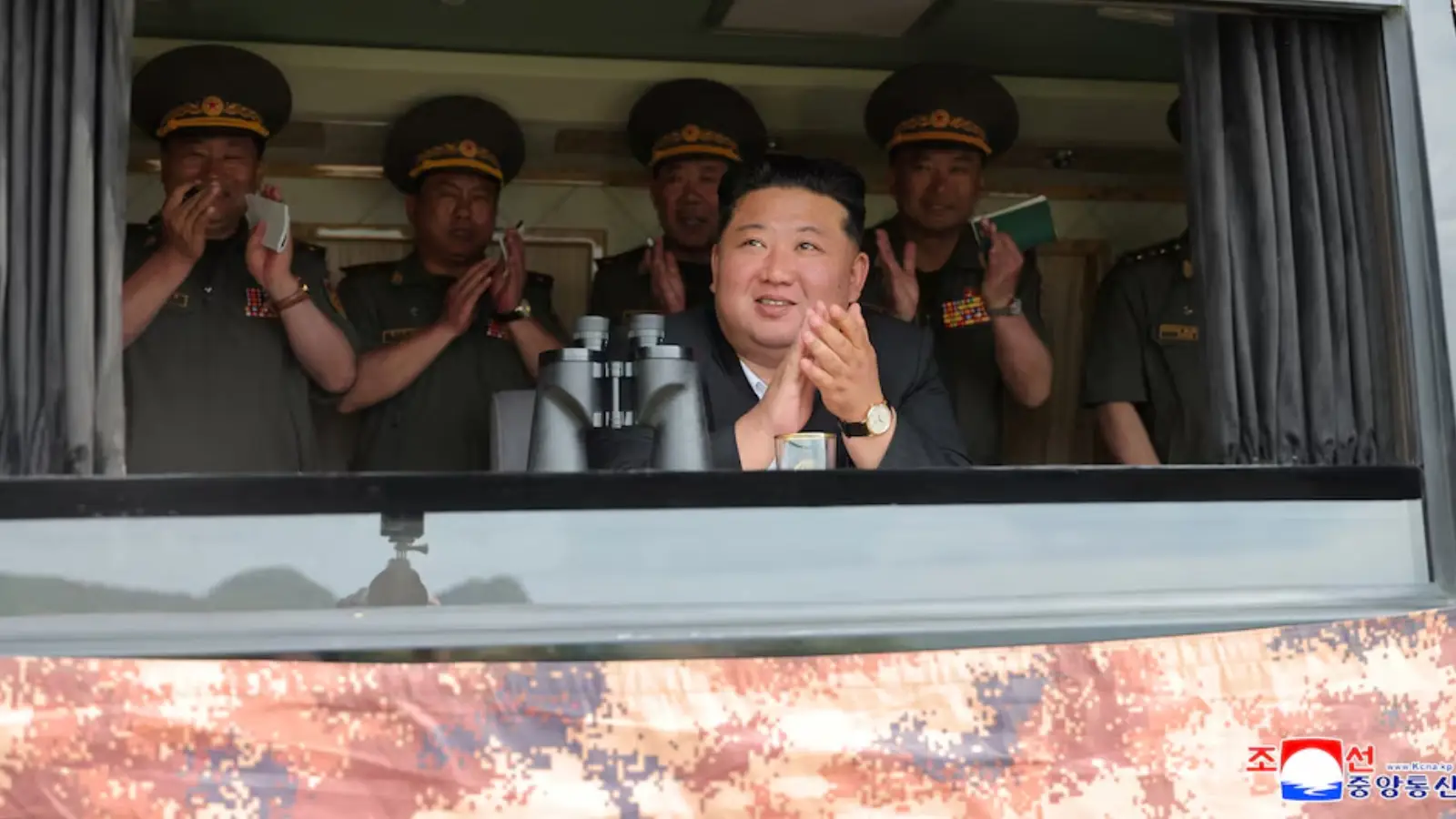
North Korean leader Kim Jong Un observed the launch of a strategic cruise missile and a series of combat system evaluations aboard the new Kang Kon guided missile destroyer during sea trials on Friday, according to state media. The tests mark another step in Pyongyang’s naval modernization effort, with Kim directing officials to complete remaining trials and commission the vessel into operational service within two months.
North Korea Tests Cruise Missile From Kang Kon Destroyer During Final Sea Trials
North Korea’s Kang Kon guided missile destroyer has completed another major milestone in its sea trials after leader Kim Jong Un observed a strategic cruise missile launch and evaluations of multiple naval combat systems, according to the Korean Central News Agency (KCNA).
The reported tests took place on Friday and formed part of a comprehensive assessment of the warship’s combat capabilities before its planned entry into operational service. Kim subsequently instructed military officials to complete all remaining trials and commission the vessel within the next two months, signaling the regime’s intent to accelerate its naval modernization program.
The Kang Kon is the second known member of North Korea’s new 5,000 ton destroyer class, following the commissioning of the Choe Hyon last month.
Comprehensive Combat Systems Evaluation Conducted
According to KCNA, Friday’s trials evaluated nearly every major combat function aboard the destroyer.
The reported testing included:
| System | Purpose |
|---|---|
| Strategic cruise missile | Long range precision strike evaluation |
| Anti ship weapons | Surface warfare capability |
| Anti submarine systems | Underwater threat engagement |
| Air defense systems | Protection against aircraft and missiles |
| Integrated fire control | Coordination of multiple weapon systems |
| Naval gun | Surface fire support |
| Automatic cannons | Close range defense |
| Electronic warfare equipment | Detection, jamming, and battlefield survivability |
| Target detection systems | Sensor performance evaluation |
| Information processing systems | Combat management and data fusion |
KCNA said Kim received a detailed briefing on the destroyer’s weapons evaluation program before personally observing the live-fire demonstrations.
Following the trials, he praised North Korea’s recent weapons development efforts while calling for continued improvements to strengthen what Pyongyang describes as its strategic deterrent and overall combat capability.
Kang Kon Represents North Korea’s Expanding Surface Fleet
The Kang Kon belongs to North Korea’s newest generation of guided missile destroyers, a class intended to significantly expand the capabilities of the Korean People’s Navy.
The ship follows the Choe Hyon, which entered service in June 2026 as the first vessel of the class. Both ships displace approximately 5,000 tons and appear designed to carry a mix of land attack, anti ship, and air defense weapons.
Kim has also announced plans to construct two destroyers of this class annually over the next five years while pursuing development of even larger 10,000 ton warships.
If achieved, the program would represent one of the most significant naval expansion efforts undertaken by North Korea in decades.
Rapid Recovery After Launch Accident
The Kang Kon’s progress is notable because the vessel suffered a highly publicized setback during its launch ceremony last year.
The destroyer partially capsized during the launch process before being recovered and repaired.
State media has since portrayed the restoration effort as a demonstration of North Korea’s industrial capabilities, and the successful completion of live weapons testing indicates the vessel has now progressed into advanced sea trials.
The planned commissioning within two months suggests the regime believes the remaining technical work can be completed on schedule.
Why Naval Modernization Has Become A Priority
For decades, North Korea invested heavily in ballistic missiles, artillery, nuclear weapons, and strategic rocket forces while its conventional navy remained comparatively outdated.
Kim Jong Un has repeatedly described the navy as one of the weakest branches of the country’s armed forces.
Recent investment indicates an effort to rebalance military capabilities by improving:
- Long range maritime strike capability
- Fleet air defense
- Anti submarine warfare
- Blue water operational endurance
- Integrated command and control
- Naval missile employment
Rather than relying solely on coastal defense vessels, North Korea appears increasingly focused on fielding larger multi mission surface combatants capable of operating farther from its coastline.
Strategic Implications For Regional Security
Although North Korea’s navy remains significantly smaller and less technologically advanced than those operated by the United States, South Korea, or Japan, the introduction of larger guided missile destroyers could complicate regional maritime planning.
Modern surface combatants equipped with cruise missiles provide several operational advantages.
They can disperse missile launch platforms beyond fixed land bases, increasing survivability during conflict. Mobile naval launchers also create additional targeting challenges for opposing forces while offering greater flexibility in missile employment.
If North Korea successfully integrates long range cruise missiles, electronic warfare systems, and layered air defenses aboard these destroyers, the vessels could support operations across the Sea of Japan (East Sea) and portions of the Yellow Sea.
However, several uncertainties remain.
State media descriptions provide only limited technical information regarding sensor performance, missile ranges, combat management software, radar capability, and interoperability among onboard systems. Independent verification of these capabilities remains limited because North Korea rarely releases detailed technical data.
Continued Shift Toward Multi Domain Military Modernization
The Kang Kon trials also reflect a broader trend in North Korea’s defense modernization strategy.
Over the past several years, Pyongyang has expanded development across multiple military domains, including:
- Tactical nuclear delivery systems
- Strategic cruise missiles
- Solid fuel ballistic missiles
- Hypersonic weapon research
- Military reconnaissance satellites
- Large unmanned aerial systems
- Modern surface combatants
Rather than emphasizing a single weapons category, North Korea is increasingly pursuing parallel modernization efforts intended to improve the survivability and flexibility of its armed forces.
For regional defense planners, these developments underscore the importance of monitoring not only missile programs but also the evolution of North Korea’s naval capabilities and its growing ability to deploy precision weapons from multiple launch platforms.
