• Home
  • About
  • Defense Systems
  • Manufacturer
  • Comparisons
  • Compare 
  • Tools
TheDefenseWatch.com
  • Aerospace & Aviation
  • Military & Ordnance
  • Naval & Maritime
  • Cyber & Space Defense
  • Policy & Strategy
  • Global News
  • Tools Library
    • Smart Calculator
    • Drone Flight Time Calculator
    • Drone Range Calculator
    • Counter-Drone Jammer Effective Range Calculator
    • Counter-Battery Radar Detection Calculator
    • Artillery Fire Correction Calculator
    • Thermal Camera Detection Range Calculator
    • Missile Range & Time-of-Flight Calculator
    • Radar Detection Range Calculator
    • FPV Strike Drone Payload vs Range Calculator
    • Loitering Munition Endurance Calculator
    • Sniper Ballistic Drop & Windage Calculator
    • Bullet Drop Calculator
    • U.S. Army Combat Fitness Test (ACFT) Calculator
    • Military Pension Calculator
    • Military Retirement Calculator
    • Military Pension Calculator
    • Large Number Calculator
Font ResizerAa

TheDefenseWatch.com

The Defense Watch | U.S. & Global Defense News, Analysis & Military Updates

Search
  • Home
  • About
  • Defense Systems
  • Manufacturer
  • Comparisons
  • Compare 
  • Tools

Stay Updated

Get the latest update

Subscribe

Explore

  • Drone
  • Fighter Jets & Military Aircraft
  • Hypersonic Weapons
  • Aircraft Carriers
  • Strategic History & Missions
  • Tools Library
Home » China Selects Pakistani Astronaut Candidates For Space Station Mission As Strategic Space Ties Expand
Cyber & Space DefenseSpace Assets & Satellites

China Selects Pakistani Astronaut Candidates For Space Station Mission As Strategic Space Ties Expand

Kaleem Sheikh | Regional Defense Correspondent
Last updated: April 23, 2026 3:16 am
Kaleem Sheikh | Regional Defense Correspondent
Share
5 Min Read
China Pakistani astronauts
Photo: screenshot from official Facebook account of Ministry of Information and Broadcasting, Government of Pakistan.
SHARE

China Pakistani Astronaut Program Signals New Phase In Space Cooperation

China Pakistani astronauts became a major regional aerospace story after Chinese state media reported that two Pakistani candidates had been selected as the first foreign astronaut trainees under China’s manned spaceflight program. One of the two is expected to join a future mission aboard China’s Tiangong space station.

Contents
  • China Pakistani Astronaut Program Signals New Phase In Space Cooperation
  • What China Announced
  • Why Pakistan Was Chosen
  • Strategic Meaning For The United States
  • Tiangong As China’s Diplomatic Platform
  • What Comes Next
  • Bottom Line

The announcement is notable for two reasons. First, it opens China’s previously domestic astronaut corps to foreign participation. Second, it places Pakistan at the front of Beijing’s emerging international human spaceflight partnerships.

KEY FACTS AT A GLANCE
  • China says two Pakistani astronaut candidates have been selected for training.
  • One candidate is expected to participate in a future mission to China s orbital space station.
  • The announcement came through official Chinese spaceflight channels on April 22.
  • The move marks the first known foreign astronaut intake for China s manned spaceflight program.
  • It highlights expanding China Pakistan aerospace and strategic cooperation.

For Washington and allied observers, the development also reflects how space cooperation is increasingly tied to diplomacy, industrial policy, and long-term strategic influence.

What China Announced

According to Global Times reporting citing official Chinese sources, the selection process for the first foreign astronauts in China’s manned spaceflight program has been completed, with two candidates from Pakistan chosen for training.

- Advertisement -

China did not publicly disclose mission dates, candidate identities, or the exact training timeline. However, astronaut preparation typically includes:

  • High G tolerance and centrifuge testing
  • Survival and emergency procedures
  • Spacecraft systems instruction
  • Robotics and station operations
  • Language and mission coordination training
  • Long-duration medical screening

If completed successfully, one Pakistani astronaut would become the first foreign national to visit China’s Tiangong station.

Why Pakistan Was Chosen

Pakistan and China have steadily deepened cooperation across defense, infrastructure, satellites, and dual-use technology sectors. Islamabad has previously worked with Beijing on remote sensing and communications satellite programs.

Selecting Pakistani astronauts gives both sides visible strategic benefits.

For Pakistan:

  • Prestige in high technology sectors
  • STEM inspiration and workforce development
  • Access to advanced training ecosystems
  • Stronger bilateral scientific ties

For China:

  • Proof that Tiangong can serve as an international platform
  • Expanded soft power in the Global South
  • A counterweight to Western-led space partnerships
  • Greater legitimacy for its independent human spaceflight architecture

Strategic Meaning For The United States

The United States still leads in commercial space launch scale, deep-space exploration partnerships, and human spaceflight alliances through NASA and the International Space Station legacy framework. But China is building an alternative network.

That matters because access to launch, satellites, navigation systems, and astronaut programs often creates durable political relationships.

- Advertisement -

In practical terms, the China Pakistani astronauts initiative is less about one seat on a spacecraft and more about long-term ecosystem building.

Countries that train together in aerospace often cooperate later in:

  • Satellite procurement
  • Earth observation data sharing
  • Telecommunications
  • Space situational awareness
  • Advanced materials research
  • STEM education pipelines

Tiangong As China’s Diplomatic Platform

China’s Tiangong station has become a centerpiece of Beijing’s post-ISS strategy. With the International Space Station approaching end-of-life planning later this decade, China has positioned Tiangong as a functioning sovereign orbital laboratory open to select partners.

That creates a geopolitical opening. Nations unable to access U.S. or multinational programs may increasingly look to China for research slots, astronaut opportunities, and launch services.

Pakistan now appears to be the first major beneficiary.

What Comes Next

The next indicators to watch include:

  • Formal astronaut names and biographies
  • Training start dates
  • Mission schedule announcements
  • Payload experiments led by Pakistan
  • Additional foreign partner selections

If successful, this could become a model for future Chinese partnerships across Asia, Africa, and the Middle East.

Bottom Line

The China Pakistani astronauts program is a symbolic but meaningful step in global space competition. It demonstrates that China is no longer only launching its own crews, it is beginning to export access, prestige, and partnership through human spaceflight.

For defense and aerospace planners, that shift deserves attention.

TAGGED:aerospace newsChina space programPakistanSpace StationStrategic Cooperation
Share This Article
Facebook Copy Link Print
ByKaleem Sheikh | Regional Defense Correspondent
Follow:
Kaleem Sheikh is a regional defense correspondent at TheDefenseWatch.com covering defense and security developments across Asia and the Middle East, including military operations, procurement, and regional security issues.
Leave a Comment

Leave a Reply Cancel reply

Your email address will not be published. Required fields are marked *

Latest Defense Systems

  • SU-57 Felon Stealth Fighter SU-57 Felon Stealth Fighter
  • Boeing F/A-XX Fighter Boeing F/A-XX Fighter
  • JF-17 Thunder Fighter Jet JF-17 Thunder Fighter Jet
  • Gaurav Glide Bomb Gaurav Glide Bomb
  • F-47 Fighter Jet F-47 Fighter Jet
  • Spirit UAS Spirit UAS
  • GBU-43/B MOAB Bomb GBU-43/B MOAB Bomb
  • John F. Kennedy Aircraft Carrier John F. Kennedy Aircraft Carrier
  • Voyager Tanker Voyager Tanker

Recent Compares

  • J-10C vs JF-17 Thunder: Which Fighter Is More Capable? J-10C vs JF-17 Thunder: Which Fighter Is More Capable? View Comparison →
  • Tejas vs Gripen: Key Differences and Capabilities Tejas vs Gripen: Key Differences and Capabilities View Comparison →
  • Tejas vs MiG-21 Bison: How India Replaced Its Iconic Supersonic Fighter Tejas vs MiG-21 Bison: How India Replaced Its Iconic Supersonic Fighter View Comparison →
  • F-35 vs F-16: Stealth, Sensors and Combat Roles F-35 vs F-16: Stealth, Sensors and Combat Roles View Comparison →
  • Tejas Fighter Jet vs F-16 Fighting Falcon: Capability Compared Tejas Fighter Jet vs F-16 Fighting Falcon: Capability Compared View Comparison →
  • Rafale Fighter Jet vs F-16 Fighting Falcon : Which Fighter Has the Edge? Rafale Fighter Jet vs F-16 Fighting Falcon : Which Fighter Has the Edge? View Comparison →
  • Su-57 Fighter Jet vs J-20 Fighter Jet: Stealth and Air Combat Compared Su-57 Fighter Jet vs J-20 Fighter Jet: Stealth and Air Combat Compared View Comparison →
  • Mirage 2000 vs Tejas Mk1A: Legacy Combat Power vs Indigenous Modernization Mirage 2000 vs Tejas Mk1A: Legacy Combat Power vs Indigenous Modernization View Comparison →
  • Rafale Fighter Jet vs F-22 Raptor: Which Air Dominance Fighter Has the Edge? Rafale Fighter Jet vs F-22 Raptor: Which Air Dominance Fighter Has the Edge? View Comparison →
  • Tejas Fighter Jet vs. Rafale Fighter Jet: India’s Indigenous Fighter Meets France’s Proven Multirole Combat Aircraft Tejas Fighter Jet vs. Rafale Fighter Jet: India’s Indigenous Fighter Meets France’s Proven Multirole Combat Aircraft View Comparison →

Recent Posts

  • Department of War and Lockheed Martin Sign 10-Year F-35 Agreement With $7 Billion Investment Commitment
  • Pentagon Approves Active Denial System for Potential U.S. Southern Border Use
  • U.S. Air Force Plans Larger F-35 Role in 1,509-Aircraft Fighter Fleet
  • Raytheon Wins Two-Year Extension for AN/TPY-2 Radar Support
  • Space Force Selects Northrop Grumman, True Anomaly for New Orbital Reconnaissance Satellites

You Might Also Like

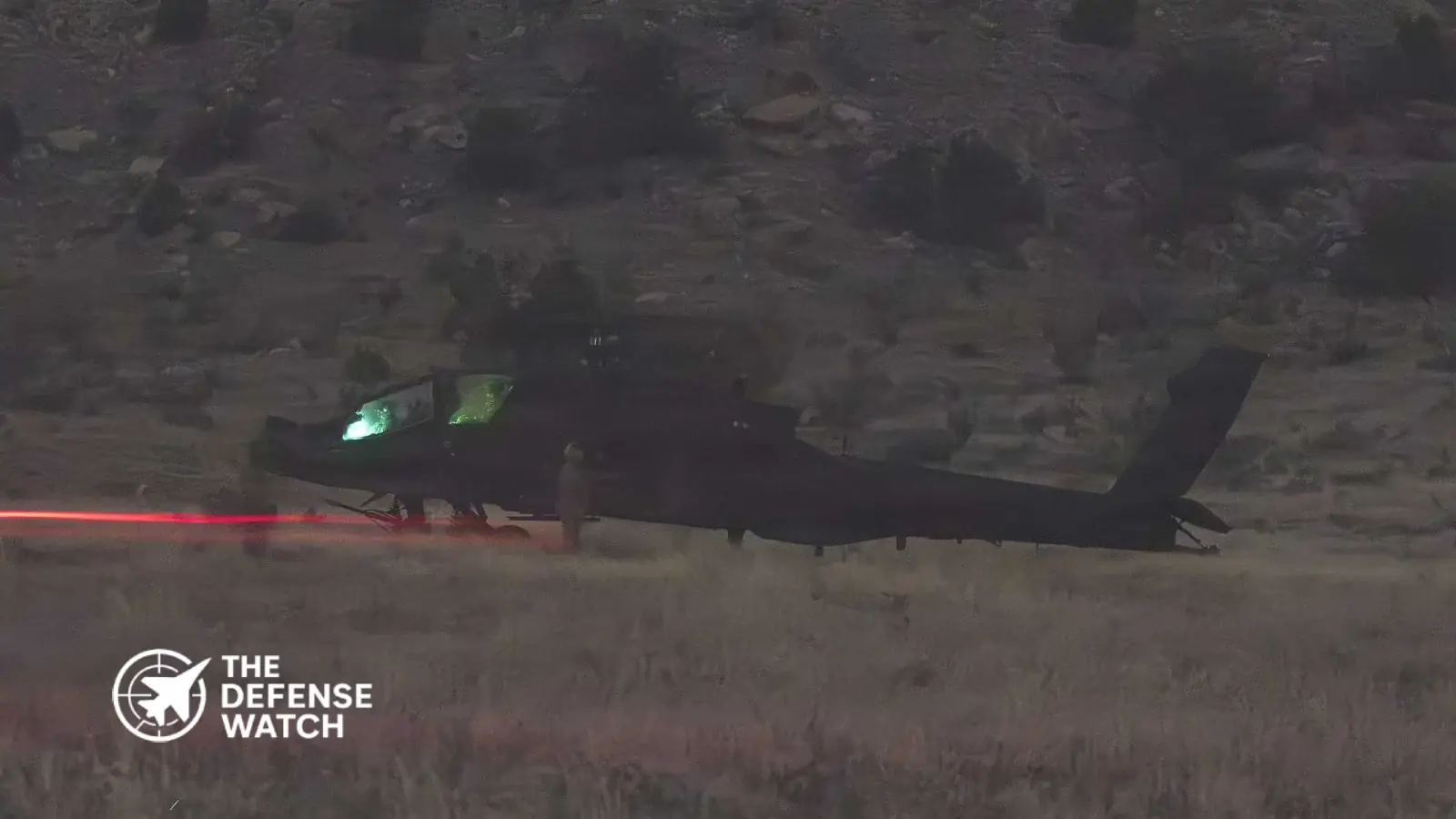
U.S. Army AH 64 Apache helicopter operating with ground combat forces during next generation battlefield network testing exercise
AI & Electronic WarfarePolicy & Strategy

U.S. Army Tests Next Generation Battlefield Network To Link Apache Helicopters And Ground Forces

September 7, 2026
AI chatbots security
Cyber & Space DefenseCyber Warfare

Military Experts Warn of Major Security Hole in AI Chatbots — Threat to U.S. Cyber and Defense Networks

December 8, 2025
lunar nuclear power race
Cyber & Space DefenseSpace Assets & Satellites

US–China Lunar Nuclear Power Race Heats Up as NASA Eyes 100 kW Reactor by 2030

November 14, 2025
Autonomous weapon systems
AI & Electronic WarfareCyber & Space Defense

Autonomous Weapon Systems Spark U.S. Ethics Debate Amid Rapid Military AI Integration

September 24, 2025

Logo

Copyright © 2026 TheDefenseWatch.com

Helpful Links

  • Home
  • About Us
  • Privacy Policy
  • Terms of Use / Disclaimer
  • U.S. Privacy Notice – CCPA Compliance

Defense Systems

  • Defense Systems
  • Comparisons 
  • Manufacturer
  • Tactical Calculators

Popuplar

Which 5 Air Forces Possess the Costliest Fighter Jet Fleets in the World
Evolving Strategic Value: Carrier Strike Groups in the Indo-Pacific’s Future Security Architecture
Autonomous Weapon Systems Spark U.S. Ethics Debate Amid Rapid Military AI Integration

We report on developments involving military forces, governments, defense companies, research organizations, and security institutions around the world. 

Welcome Back!

Sign in to your account

Username or Email Address
Password

Lost your password?