(adsbygoogle = window.adsbygoogle || []).push({});Executive Summary:
Dassault Aviation CEO Éric Trappier stated on July 1, 2026, that the Eurodrone medium-altitude long-endurance (MALE) unmanned aircraft system may prove “a fairly easy target” in future conflicts where air superiority is not assured. The comments, made to the French Senate, come amid ongoing industrial tensions with program leader Airbus and France’s reduced procurement commitments. The remarks underscore broader questions about the program’s alignment with evolving high-intensity warfare requirements.
Eurodrone Program Faces Scrutiny from Key Partner
Dassault Aviation CEO Éric Trappier has publicly questioned the continued operational relevance of the Eurodrone, Europe’s flagship multinational MALE UAS program.
Speaking to the French Senate on July 1, 2026, Trappier highlighted the platform’s potential vulnerabilities in contested environments. While acknowledging its value for long-endurance surveillance in permissive areas like the Sahel, he warned that in armed conflicts without guaranteed air superiority, the Eurodrone could face significant threats from ground-based systems.
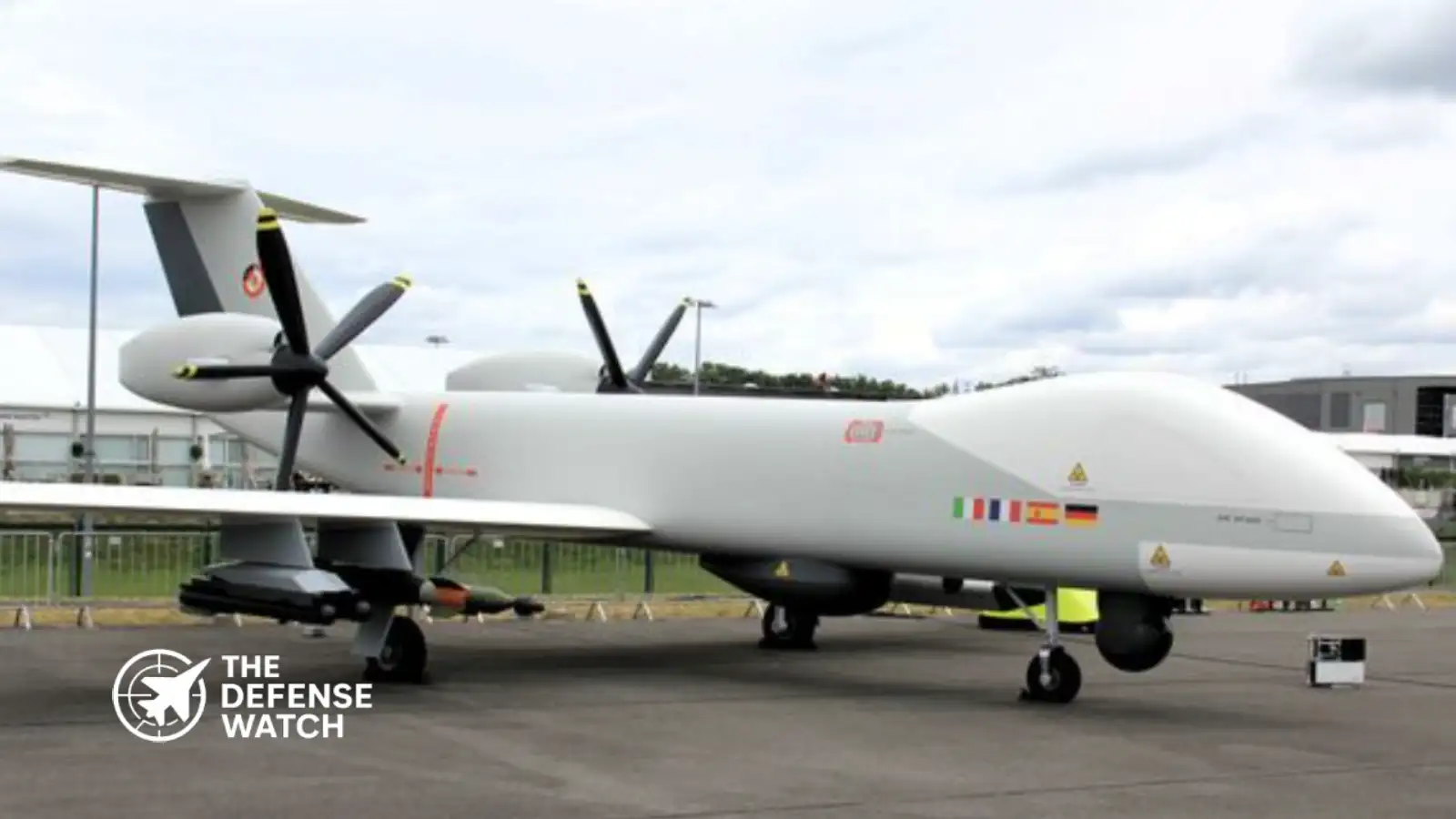
The Eurodrone, also known as the European MALE RPAS, is being developed by Airbus Defence and Space (lead), Dassault Aviation, and Leonardo to provide France, Germany, Italy, and Spain with a sovereign alternative to systems like the U.S. MQ-9 Reaper. A full-scale mockup was displayed at the ILA Berlin Airshow in June 2026.
Industrial and Procurement Challenges Mount
The Dassault CEO’s comments arrive against a backdrop of strained relations between the industrial partners. Recent reports indicate Airbus sought to remove Dassault from the program following France’s decision to reduce its planned orders, prompting compensation discussions under “juste retour” work-share principles.
France’s updated 2024-2030 Military Programming Law (LPM), released in April 2026, significantly scaled back commitments to the Eurodrone, prioritizing lower-cost, more attritable tactical drones suited to high-intensity operations. While not a formal withdrawal, the move has fueled speculation about France’s long-term participation.
Originally, the program envisioned 20 systems (60 aircraft total), with Germany taking seven, Italy five, and France and Spain four each. First flight is now targeted for mid-2027, with deliveries expected around 2028, following multiple delays.
Analysis:
These developments highlight persistent challenges in European defense collaboration. Differing national priorities—Germany’s emphasis on safe operations over its territory versus France’s focus on expeditionary combat—have shaped design choices, resulting in a heavier, twin-engine platform (approximately 11,000 kg) that critics argue lacks the agility and cost-effectiveness needed for modern peer conflicts.
Shifting Battlefield Realities
The Ukraine conflict and other recent operations have accelerated the proliferation of low-cost attritable drones, loitering munitions, and advanced air defenses. Large, expensive MALE platforms optimized for permissive environments face increased risks from man-portable air-defense systems (MANPADS), electronic warfare, and integrated air defense networks.
Trappier’s remarks align with a broader European reevaluation of uncrewed systems. Nations are increasingly investing in swarming technologies, loyal wingmen, and smaller tactical UAS that offer better survivability through numbers and lower unit costs.
For the Eurodrone specifically, its design emphasizes safe integration into non-segregated airspace and long-endurance ISR (intelligence, surveillance, reconnaissance) capabilities. Proponents argue it retains value for strategic persistence in semi-contested scenarios and coalition operations.
Analysis: From a U.S. perspective, the Eurodrone saga mirrors lessons learned with the MQ-9 Reaper fleet. While highly successful in counterinsurgency, Reapers have required adaptations—and sometimes escorts—in higher-threat environments. Europe’s push for sovereignty is understandable, yet the industrial frictions and capability questions risk delaying delivery of needed capabilities to partner forces. A more modular, incrementally upgradable approach with greater emphasis on electronic warfare resilience and attritable elements could better address these gaps.
atOptions = { ‘key’ : ‘3d48d603f906e3fe9f205be3c4433835’, ‘format’ : ‘iframe’, ‘height’ : 250, ‘width’ : 300, ‘params’ : {} };Program Status and Path Forward
Despite the controversies, Airbus maintains that France remains committed to the program. Development continues, with focus on meeting the requirements of the four partner nations. India and Japan participate as observers, indicating potential for broader export interest if the platform proves viable.
The program represents a significant investment—estimated in the billions of euros—and a test case for European defense industrial cooperation post-FCAS tensions.
Key Specifications (Current Estimates):
- Twin-turboprop MALE UAS
- Designed for non-segregated airspace operations
- Focus on ISR with potential armament options
- Emphasis on European sovereignty and interoperability
Implications for Transatlantic Defense Cooperation
For U.S. observers, the Eurodrone’s trajectory offers insights into allied capability development. While Europe seeks to reduce reliance on American systems, internal coordination hurdles can slow progress and increase costs. Successful resolution of the Dassault-Airbus disputes and adaptation to high-intensity requirements will be critical for the program’s long-term viability.
The outcome could influence future collaborative efforts in uncrewed systems, a domain where rapid technological evolution demands agility from both industry and governments.