• Home
  • About
  • Defense Systems
  • Manufacturer
  • Comparisons
  • Compare 
  • Tools
TheDefenseWatch.com
  • Aerospace & Aviation
  • Military & Ordnance
  • Naval & Maritime
  • Cyber & Space Defense
  • Policy & Strategy
  • Global News
  • Tools Library
    • Smart Calculator
    • Drone Flight Time Calculator
    • Drone Range Calculator
    • Counter-Drone Jammer Effective Range Calculator
    • Counter-Battery Radar Detection Calculator
    • Artillery Fire Correction Calculator
    • Thermal Camera Detection Range Calculator
    • Missile Range & Time-of-Flight Calculator
    • Radar Detection Range Calculator
    • FPV Strike Drone Payload vs Range Calculator
    • Loitering Munition Endurance Calculator
    • Sniper Ballistic Drop & Windage Calculator
    • Bullet Drop Calculator
    • U.S. Army Combat Fitness Test (ACFT) Calculator
    • Military Pension Calculator
    • Military Retirement Calculator
    • Military Pension Calculator
    • Large Number Calculator
Font ResizerAa

TheDefenseWatch.com

The Defense Watch | U.S. & Global Defense News, Analysis & Military Updates

Search
  • Home
  • About
  • Defense Systems
  • Manufacturer
  • Comparisons
  • Compare 
  • Tools

Stay Updated

Get the latest update

Subscribe

Explore

  • Drone
  • Fighter Jets & Military Aircraft
  • Hypersonic Weapons
  • Aircraft Carriers
  • Strategic History & Missions
  • Tools Library
Home » U.S. SOUTHCOM Unveils Autonomous Warfare Command To Counter Narcotics Networks With Drones
Geopolitical & Strategic DoctrinesPolicy & Strategy

U.S. SOUTHCOM Unveils Autonomous Warfare Command To Counter Narcotics Networks With Drones

Samuel Drake | Defense Analyst
Last updated: April 22, 2026 6:23 am
Samuel Drake | Defense Analyst
Share
6 Min Read
U.S. SOUTHCOM autonomous warfare
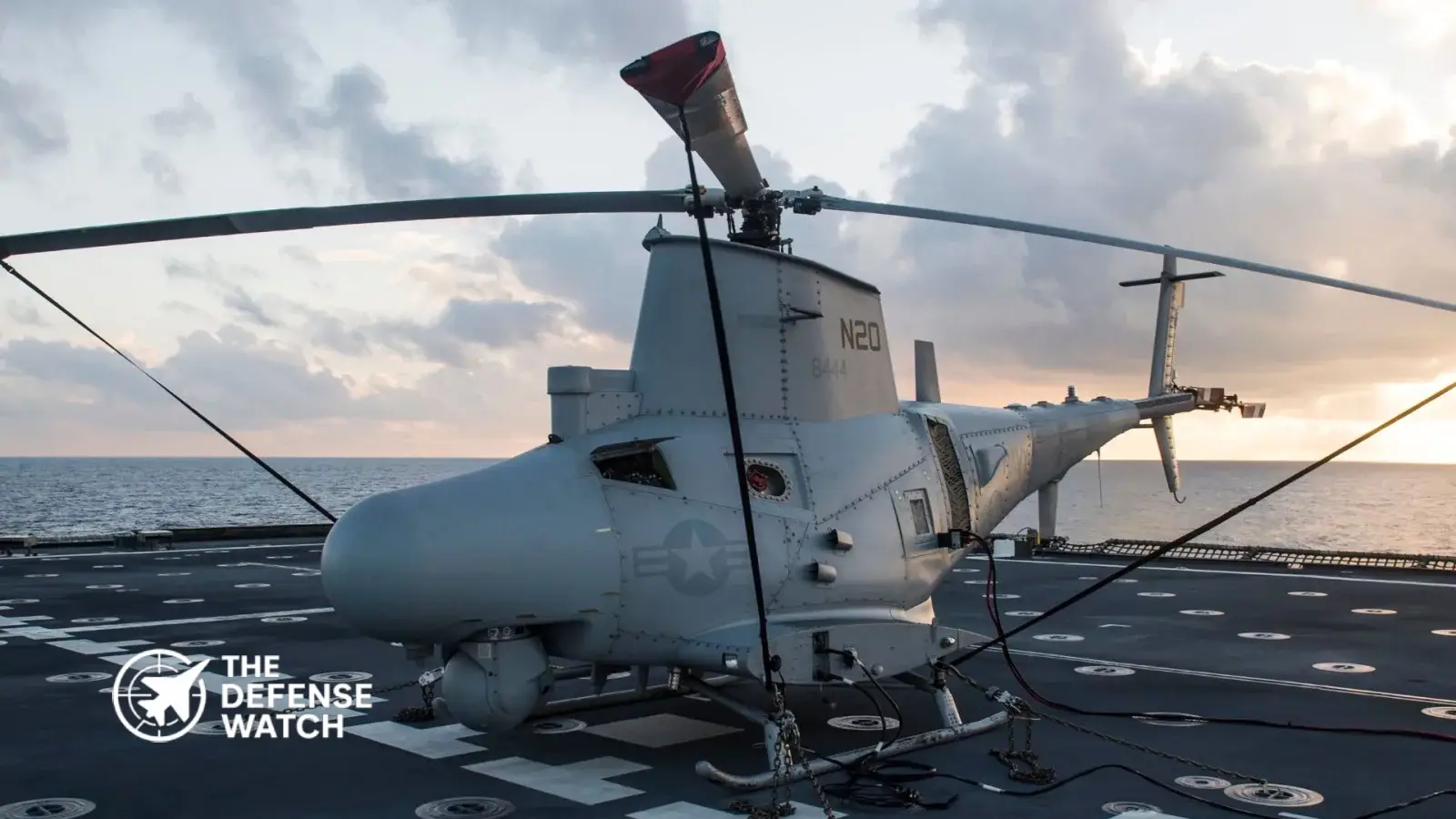
An MQ-8 Fire Scout from Helicopter Sea Combat Squadron 23 sits on the flight deck of USS Coronado (LCS 4) before testing during RIMPAC. (Imagesource: US DoD)
SHARE

U.S. SOUTHCOM Autonomous Warfare Command Targets Smuggling Networks

U.S. SOUTHCOM autonomous warfare efforts entered a new phase after the command announced the creation of an Autonomous Warfare Command designed to deploy drones and related systems for counter narcotics missions across its area of responsibility.

Contents
  • U.S. SOUTHCOM Autonomous Warfare Command Targets Smuggling Networks
  • The Big Picture
  • What Is Happening
  • Why It Matters
  • Strategic Implications
  • Competitor View
  • What To Watch Next
  • Capability Gap
  • The Bottom Line
KEY FACTS AT A GLANCE
  • U.S. Southern Command has created an Autonomous Warfare Command focused on unmanned systems.
  • Initial missions center on intelligence, surveillance, reconnaissance, and counter narcotics operations.
  • The move reflects rising U.S. interest in low cost autonomous systems for regional security missions.
  • SOUTHCOM oversees U.S. military operations across Latin America and the Caribbean.
  • Command may become a model for wider Pentagon adoption of theater level drone integration.

The initiative, first reported by Army Recognition and based on official command messaging, places unmanned and autonomous technologies inside a dedicated operational framework rather than treating them as supporting tools. That distinction matters because it suggests the U.S. military now sees autonomous systems as core mission enablers in the Western Hemisphere.

The Big Picture

U.S. defense planners increasingly view inexpensive autonomous platforms as a force multiplier. Lessons from conflicts in Eastern Europe, the Middle East, and maritime security operations have shown that drones can provide persistent surveillance, precision targeting support, and rapid intelligence collection at lower cost than many crewed assets.

For SOUTHCOM, that model is especially relevant. The command covers vast maritime zones, jungle terrain, and remote transit routes used by narcotics traffickers and transnational criminal organizations. Monitoring those areas with crewed aircraft alone is expensive and resource intensive.

- Advertisement -

A dedicated autonomous warfare structure allows commanders to scale coverage without proportionally increasing manpower or operating costs.

What Is Happening

U.S. Southern Command, headquartered in Doral, oversees U.S. military cooperation and security missions throughout Latin America and the Caribbean. According to the source report, the new organization will focus on deploying drone capabilities to strengthen counter narcotics operations.

That likely includes:

  • Persistent airborne surveillance
  • Maritime route monitoring
  • Detection of small boats and clandestine airstrips
  • Intelligence sharing with partner nations
  • Faster cueing of interdiction forces

The command has not publicly detailed the full mix of platforms, but small tactical UAVs, medium endurance ISR drones, and autonomous maritime systems would align with mission demands.

Why It Matters

Drug trafficking networks adapt quickly. They use low profile vessels, remote jungle logistics hubs, encrypted communications, and decentralized movement patterns. Traditional patrol models often struggle to maintain constant coverage.

Autonomous systems help close that gap by staying on station longer, collecting real time data, and feeding information directly to analysts and patrol forces.

This also reflects a broader Pentagon trend. Combatant commands increasingly want theater specific innovation cells that can test and field new systems rapidly instead of waiting for long acquisition cycles.

Strategic Implications

For regional partners, the new command could improve intelligence fusion and cooperative interdiction. Many Latin American and Caribbean nations face budget limits, making shared access to U.S. surveillance data valuable.

- Advertisement -

For Washington, the initiative supports homeland security indirectly. A large share of narcotics interdiction begins far from U.S. borders, often in transit corridors at sea or in remote land routes.

For the Pentagon, SOUTHCOM may serve as a lower risk environment to refine autonomous doctrine before applying similar structures in more contested theaters such as the Indo Pacific.

Competitor View

China and Russia both monitor U.S. security engagement in Latin America. Beijing has expanded economic and technology ties across the region, while Moscow maintains selective defense relationships.

A stronger U.S. autonomous presence may be interpreted as a sign Washington intends to retain operational influence through modern, lower footprint tools rather than large permanent force deployments.

Criminal organizations will also adapt. Expect more emphasis on deception, route diversification, signal discipline, and attempts to overwhelm surveillance networks with volume.

What To Watch Next

Several indicators will show whether the command becomes strategically important:

  • Public announcements on drone types and procurement
  • Joint exercises with regional partners
  • Integration with Coast Guard and law enforcement agencies
  • Use of autonomous maritime systems
  • Measurable increases in interdictions or route disruption

If SOUTHCOM receives sustained funding, the concept could expand beyond narcotics missions into disaster response, search and rescue, and maritime security.

Capability Gap

The main weakness this initiative addresses is persistent coverage across enormous operating areas. Crewed aircraft are effective but costly and limited by endurance, maintenance cycles, and available airframes.

Drones are not a complete solution. They require secure communications, trained operators, legal authorities, and protection from cyber interference. Dense weather, jungle canopy, and maritime conditions can also limit effectiveness.

The Bottom Line

U.S. SOUTHCOM’s new autonomous warfare command shows how low cost drones are becoming central tools for regional security, interdiction, and future military operations.


TAGGED:autonomous warfarecounter narcoticsDronesSOUTHCOMU.S. military
Share This Article
Facebook Copy Link Print
BySamuel Drake | Defense Analyst
Follow:
Samuel Drake is a defense analyst at TheDefenseWatch.com covering naval warfare, military ordnance, maritime technology, fleet modernization, and defense procurement. His reporting focuses on documented capabilities, procurement programs, and military technology.
Leave a Comment

Leave a Reply Cancel reply

Your email address will not be published. Required fields are marked *

Latest Defense Systems

  • Tomahawk Block V Missile Tomahawk Block V Missile
  • Tomahawk Block IV Missile Tomahawk Block IV Missile
  • SU-57 Felon Stealth Fighter SU-57 Felon Stealth Fighter
  • Boeing F/A-XX Fighter Boeing F/A-XX Fighter
  • JF-17 Thunder Fighter Jet JF-17 Thunder Fighter Jet
  • Gaurav Glide Bomb Gaurav Glide Bomb
  • F-47 Fighter Jet F-47 Fighter Jet
  • Spirit UAS Spirit UAS
  • GBU-43/B MOAB Bomb GBU-43/B MOAB Bomb

Recent Compares

  • J-10C vs JF-17 Thunder: Which Fighter Is More Capable? J-10C vs JF-17 Thunder: Which Fighter Is More Capable? View Comparison →
  • Tejas vs Gripen: Key Differences and Capabilities Tejas vs Gripen: Key Differences and Capabilities View Comparison →
  • Tejas vs MiG-21 Bison: How India Replaced Its Iconic Supersonic Fighter Tejas vs MiG-21 Bison: How India Replaced Its Iconic Supersonic Fighter View Comparison →
  • F-35 vs F-16: Stealth, Sensors and Combat Roles F-35 vs F-16: Stealth, Sensors and Combat Roles View Comparison →
  • Tejas Fighter Jet vs F-16 Fighting Falcon: Capability Compared Tejas Fighter Jet vs F-16 Fighting Falcon: Capability Compared View Comparison →
  • Rafale Fighter Jet vs F-16 Fighting Falcon : Which Fighter Has the Edge? Rafale Fighter Jet vs F-16 Fighting Falcon : Which Fighter Has the Edge? View Comparison →
  • Su-57 Fighter Jet vs J-20 Fighter Jet: Stealth and Air Combat Compared Su-57 Fighter Jet vs J-20 Fighter Jet: Stealth and Air Combat Compared View Comparison →
  • Mirage 2000 vs Tejas Mk1A: Legacy Combat Power vs Indigenous Modernization Mirage 2000 vs Tejas Mk1A: Legacy Combat Power vs Indigenous Modernization View Comparison →
  • Rafale Fighter Jet vs F-22 Raptor: Which Air Dominance Fighter Has the Edge? Rafale Fighter Jet vs F-22 Raptor: Which Air Dominance Fighter Has the Edge? View Comparison →
  • Tejas Fighter Jet vs. Rafale Fighter Jet: India’s Indigenous Fighter Meets France’s Proven Multirole Combat Aircraft Tejas Fighter Jet vs. Rafale Fighter Jet: India’s Indigenous Fighter Meets France’s Proven Multirole Combat Aircraft View Comparison →

Recent Posts

  • P-800 Oniks Missile: Range, Speed and BrahMos Comparison
  • Ukrainian Drone Unit Caused 70% of Simulated U.S. Brigade Casualties in Germany Exercise
  • OCCAR Marks 25 Years of European Defense Cooperation With 28 Programs
  • Saab Q3 2026 Results Show 30.6% Organic Sales Growth as Orders Surge
  • How Much Does a Tomahawk Missile Cost? Price, Range and Blocks

You Might Also Like

U.S. Army Secretary Dan Driscoll and NATO partner representatives sign a counter-UAS letter of intent at Eurosatory 2026 in Paris.
Alliances & DoctrinesPolicy & Strategy

U.S. Army Moves To Expand Counter-UAS Marketplace As NATO Allies Accelerate Drone Defense Cooperation

September 7, 2026
Official UK national terrorism threat level indicator showing the transition to the 'Severe' category
Geopolitical & Strategic DoctrinesPolicy & Strategy

United Kingdom Elevates National Terrorism Threat Level to Severe

May 1, 2026
NATO Joint Warfare Centre campaign plan
Defense Budgets & PolicyPolicy & Strategy

NATO Joint Warfare Centre Unveils Five-Year Campaign Plan Through 2030

February 5, 2026
Iran blockade 2026
Middle East Defense & Security

Hegseth Moves To Tighten Iran Blockade As U.S. Warns Of Renewed Strikes During Ceasefire

September 9, 2026

Logo

Copyright © 2026 TheDefenseWatch.com

Helpful Links

  • Home
  • About Us
  • Privacy Policy
  • Terms of Use / Disclaimer
  • U.S. Privacy Notice – CCPA Compliance

Defense Systems

  • Defense Systems
  • Comparisons 
  • Manufacturer
  • Tactical Calculators

Popuplar

Which 5 Air Forces Possess the Costliest Fighter Jet Fleets in the World
Evolving Strategic Value: Carrier Strike Groups in the Indo-Pacific’s Future Security Architecture
Autonomous Weapon Systems Spark U.S. Ethics Debate Amid Rapid Military AI Integration

We report on developments involving military forces, governments, defense companies, research organizations, and security institutions around the world. 

Welcome Back!

Sign in to your account

Username or Email Address
Password

Lost your password?