Executive Summary:
China is expanding its nuclear missile infrastructure with the construction of new launch pads, bunkers, and communications facilities near intercontinental ballistic missile silo fields in western China. Satellite imagery reviewed by Reuters indicates the project is designed to improve the survivability and responsiveness of Beijing’s nuclear forces amid growing strategic competition with the United States. The development highlights China’s accelerating shift from a minimum deterrence posture toward a more resilient and modernized nuclear force.
China Expands Nuclear Missile Infrastructure Near Strategic Silo Fields
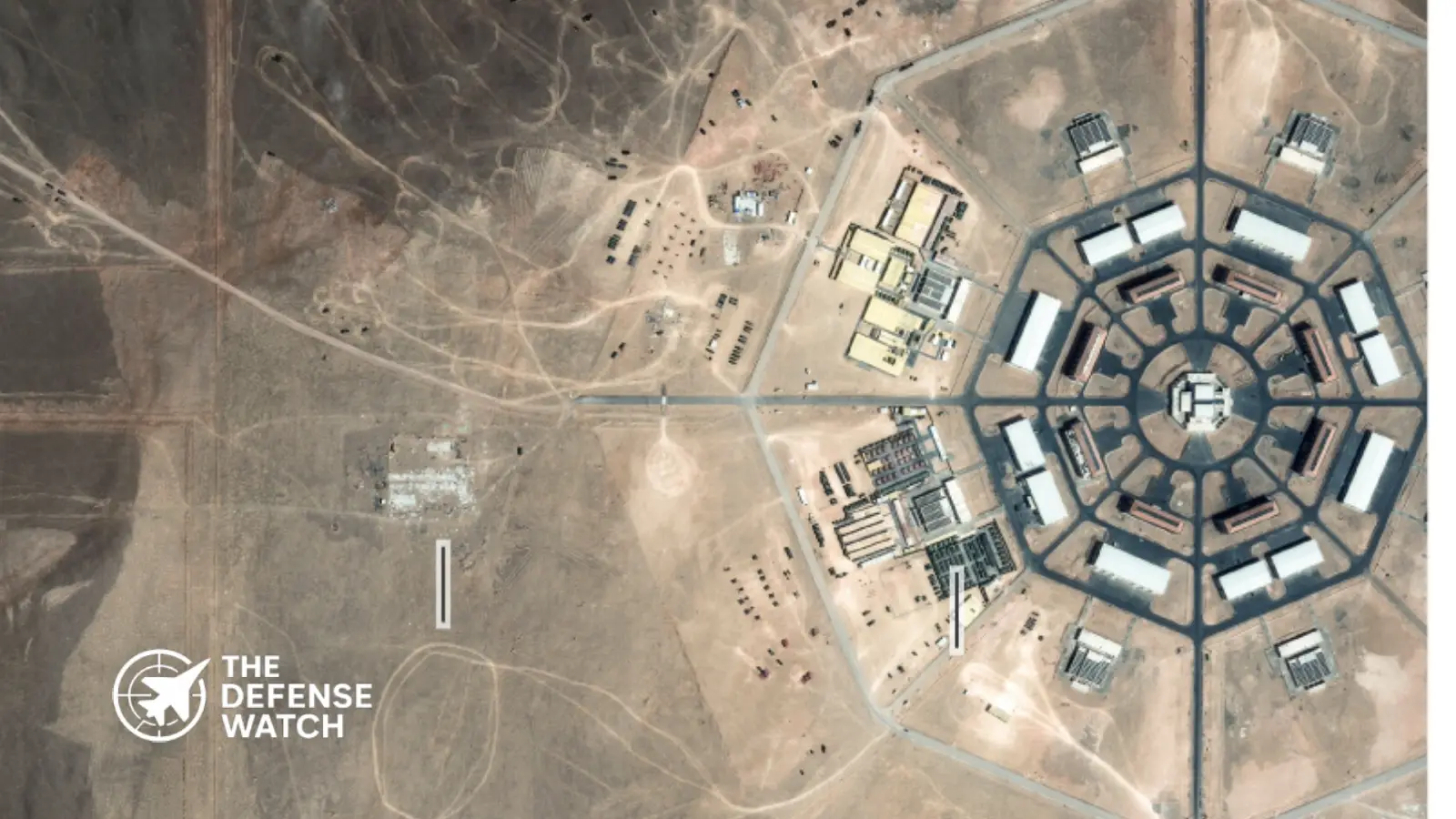
China is constructing an extensive network of launch pads and military support infrastructure near its strategic nuclear missile silo complexes in western China, according to satellite imagery reviewed by Reuters and assessed by defense analysts. The expansion reflects Beijing’s ongoing effort to modernize and harden its nuclear deterrent as tensions with the United States continue to rise over Taiwan and the broader Indo-Pacific region.
The new facilities are located near existing intercontinental ballistic missile (ICBM) silo fields in the remote desert regions of Xinjiang and Gansu provinces. Analysts reviewing the imagery identified more than 80 launch pads, reinforced bunkers, communications nodes, road networks, and support installations that appear linked to China’s expanding missile and air defense operations.
The infrastructure buildup appears designed to enhance the survivability of the People’s Liberation Army Rocket Force (PLARF), particularly against a potential first strike by the United States. Defense experts told Reuters the facilities may support mobile missile launchers, electronic warfare systems, satellite communications, and hardened command-and-control operations.
Strategic Significance of China’s Nuclear Expansion
China’s nuclear arsenal remains smaller than those of the United States and Russia, but it is expanding at the fastest pace among the world’s major nuclear powers. U.S. defense assessments estimate China could possess approximately 1,000 nuclear warheads by 2030, compared with a stockpile believed to exceed 500 warheads today.
The latest construction effort reinforces concerns among Western defense planners that Beijing is transitioning away from its historically restrained nuclear posture. While China officially maintains a “no first use” doctrine, the scale and sophistication of recent infrastructure projects suggest a greater emphasis on rapid response capability, force survivability, and launch readiness.
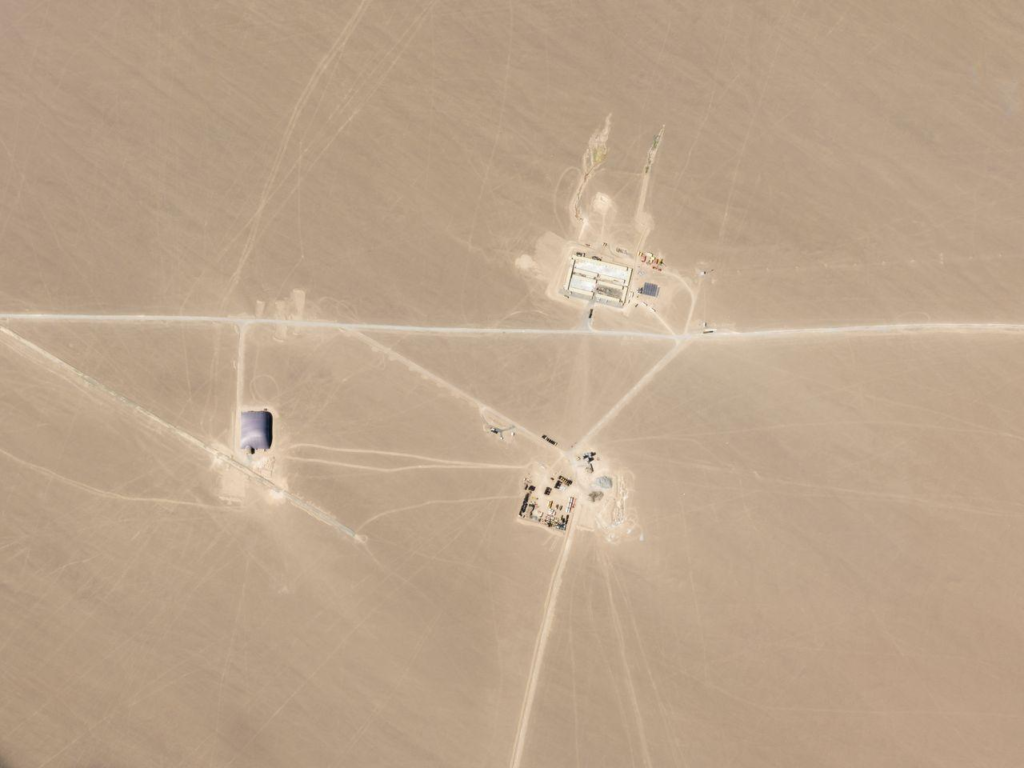
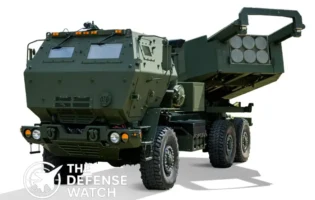
Analysts also note that the dispersed launch pad system could complicate enemy targeting calculations during a crisis. Mobile missile units operating from hardened and widely distributed sites are considerably more difficult to track and neutralize than fixed silo systems alone.
Comparison of China’s Expanding Nuclear Infrastructure
| System / Capability | Range | Payload | Status | Key Technology |
|---|---|---|---|---|
| New Chinese Mobile Launch Network | Intercontinental | Nuclear warheads | Under expansion | Hardened launch pads, mobile missile support |
| Legacy Chinese Silo-Based ICBMs | Intercontinental | Single or MIRV warheads | Operational | Fixed silo launch architecture |
| U.S. Strategic Missile Infrastructure | Intercontinental | MIRV nuclear warheads | Fully operational | Advanced C4ISR and missile defense integration |
| Russian Mobile ICBM Forces | Intercontinental | MIRV nuclear warheads | Operational | Road-mobile launch systems and decoys |
Satellite Imagery Reveals Expanding Military Footprint
The Reuters analysis identified several distinct military features near the silo complexes, including:
- Large launch pad clusters positioned around missile fields
- Reinforced bunkers and underground support facilities
- Extended road networks for transporter erector launchers (TELs)
- Possible electronic warfare and satellite communications sites
- Air defense infrastructure supporting strategic facilities
The development mirrors broader modernization efforts underway across China’s armed forces under Chinese President Xi Jinping. Beijing has invested heavily in advanced missile systems, naval expansion, stealth aircraft, and strategic support forces over the past decade.
China has also showcased increasingly advanced strategic weapons during military parades, including new generations of road-mobile ballistic missiles and hypersonic systems.
Taiwan Tensions Driving Strategic Calculations
The nuclear infrastructure expansion comes amid heightened concern over a potential future conflict involving Taiwan. A recent assessment by the International Institute for Strategic Studies warned that any large-scale U.S.-China conflict over Taiwan could create pathways to nuclear escalation, particularly if command-and-control facilities become targets during conventional operations.
Chinese military planning increasingly emphasizes the ability to survive a surprise attack while maintaining retaliatory strike capability. The newly observed launch facilities appear aligned with that objective.
Western analysts believe Beijing’s long-term strategy is to create a more credible second-strike deterrent capable of withstanding precision conventional and nuclear attacks. The hardened infrastructure and distributed launch network reduce the vulnerability of China’s strategic missile forces and increase operational flexibility during crises.
Implications for Global Nuclear Stability
China’s nuclear modernization is reshaping the strategic balance in the Indo-Pacific and accelerating concerns about a new era of great power nuclear competition.
The United States and Russia continue to possess significantly larger arsenals, but China’s rapid expansion is forcing adjustments in regional military planning, missile defense strategies, and alliance coordination among U.S. partners in Asia.
Key implications include:
- Increased strategic uncertainty in the Indo-Pacific
- Greater complexity for U.S. missile defense planning
- Reduced warning times during crises
- Higher risk of escalation during Taiwan contingencies
- Expanded focus on survivable nuclear command-and-control systems
Despite the rapid buildup, Beijing continues to publicly reject accusations that it is pursuing nuclear parity with Washington or Moscow. Chinese officials maintain that the country’s nuclear policy remains defensive in nature and intended solely to preserve national security.
Still, the scale of the latest construction effort suggests China is preparing for a more contested and dangerous strategic environment in the coming decade.