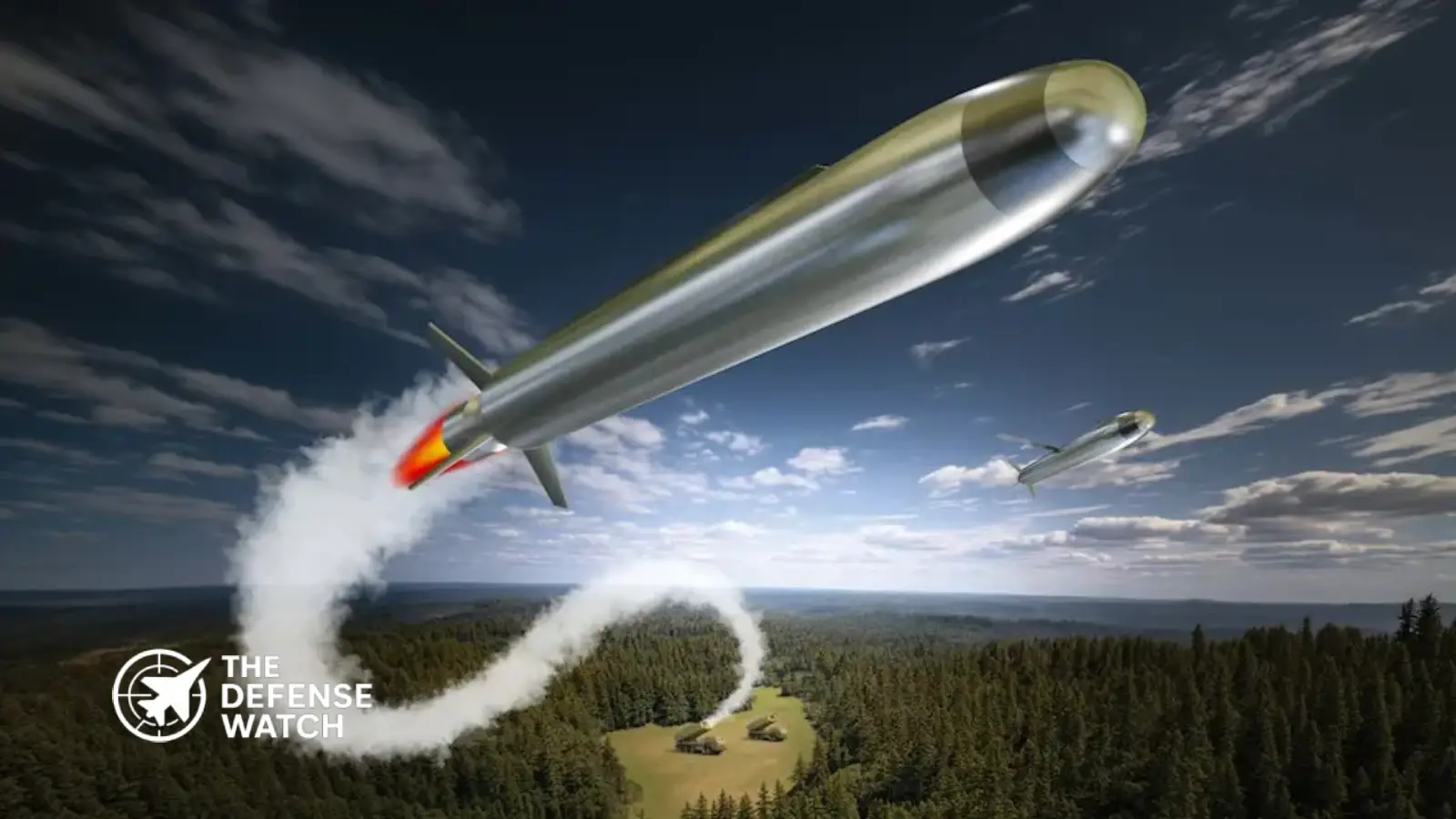
Executive Summary:
Leidos will manufacture 3,000 low-cost containerized cruise missiles under an agreement with the U.S. Department of Defense. The program aims to expand affordable long-range strike capacity while supporting distributed and rapidly deployable missile operations.
Leidos Containerized Cruise Missiles Expand U.S. Strike Capacity
The new Leidos containerized cruise missiles program marks another step in the Pentagon’s push to field larger numbers of affordable precision weapons for future high-intensity conflicts. The agreement calls for the production of approximately 3,000 low-cost cruise missiles designed for containerized launch operations.
The effort reflects a broader U.S. military modernization strategy focused on survivability, scalability, and distributed strike operations. Containerized missile systems can be transported using standard shipping infrastructure, enabling more flexible deployment options across land and maritime environments.
The U.S. Department of Defense has increasingly emphasized the need for mass-produced precision munitions capable of supporting prolonged operations in contested regions, particularly in the Indo-Pacific theater. Defense planners have warned that current missile inventories may be insufficient during a large-scale peer conflict.
Focus On Affordable Mass Production
Unlike traditional high-cost cruise missile programs, the Leidos containerized cruise missiles initiative appears designed around affordability and production scale. That approach aligns with current Pentagon priorities aimed at increasing munition stockpiles without relying exclusively on expensive legacy systems.
The low-cost missile concept also supports the U.S. military’s growing emphasis on attritable weapons. These systems are intended to be affordable enough for large-scale operational use while still delivering precision strike capability.
Containerized launchers provide additional operational advantages. By using commercial-style containers, missile systems can be rapidly repositioned, concealed, or dispersed across wider operational areas. Military analysts have increasingly linked such concepts to distributed maritime operations and expeditionary warfare strategies.
The agreement also highlights continuing industry demand for scalable manufacturing capacity. The U.S. defense industrial base has faced pressure to accelerate missile production following rising global tensions and continued military aid commitments overseas.
Strategic Relevance In The Indo-Pacific
The Leidos containerized cruise missiles program comes amid heightened U.S. concern over long-range strike competition in the Indo-Pacific region. The Pentagon has repeatedly identified the need for survivable and dispersed missile systems capable of operating inside contested environments.
Containerized systems may complicate enemy targeting by reducing reliance on fixed launch infrastructure. This concept aligns with evolving U.S. operational doctrines focused on mobility and distributed force structures.
Military planners are increasingly prioritizing systems that can be deployed across islands, forward operating bases, or support vessels with limited infrastructure requirements. The ability to rapidly field missile launch capability using containerized systems could provide operational flexibility during regional contingencies.
The production scale of 3,000 missiles also suggests the Pentagon is placing greater emphasis on sustained combat capacity rather than smaller inventories of highly specialized weapons. Analysts have noted that future conflicts may require significantly larger munition stockpiles than previously anticipated.
Defense Industry Implications
For Leidos, the agreement strengthens the company’s role in emerging precision strike and advanced weapons programs. Traditionally known for defense electronics, integration, and technology services, the company has continued expanding into advanced military systems and next-generation defense solutions.
The agreement may also reinforce broader Pentagon efforts to diversify missile suppliers and reduce dependence on a limited number of major prime contractors. Expanding industrial participation is viewed as a critical step toward increasing resilience across the U.S. defense manufacturing sector.
The missile production effort follows a wider trend across the defense industry involving low-cost strike systems, autonomous weapons, and distributed launch concepts. Multiple U.S. and allied defense programs are currently exploring similar approaches to improve operational flexibility while lowering procurement costs.
Growing Demand For Distributed Strike Systems
The Leidos containerized cruise missiles initiative reflects changing assumptions about future warfare. Defense planners increasingly expect future conflicts to involve dispersed operations, contested logistics, and heavy demand for precision munitions.
As a result, military modernization programs are shifting toward systems that can be produced rapidly, deployed flexibly, and sustained at scale. Containerized missile systems fit within that evolving framework by combining mobility, concealment, and lower operational complexity.
The Pentagon has not publicly disclosed full technical specifications for the missiles covered under the agreement. However, the scale of the production plan underscores the growing strategic importance of affordable long-range precision strike systems in U.S. defense planning.