

(adsbygoogle = window.adsbygoogle || []).push({});Executive Summary:
North Korean leader Kim Jong Un has reaffirmed full support for Russia and President Vladimir Putin in a message marking Russia Day. The statement highlights the continued strengthening of the North Korea-Russia strategic partnership as both countries expand political, economic, and security cooperation amid ongoing international tensions.
North Korea-Russia Alliance Strengthens As Kim Backs Putin
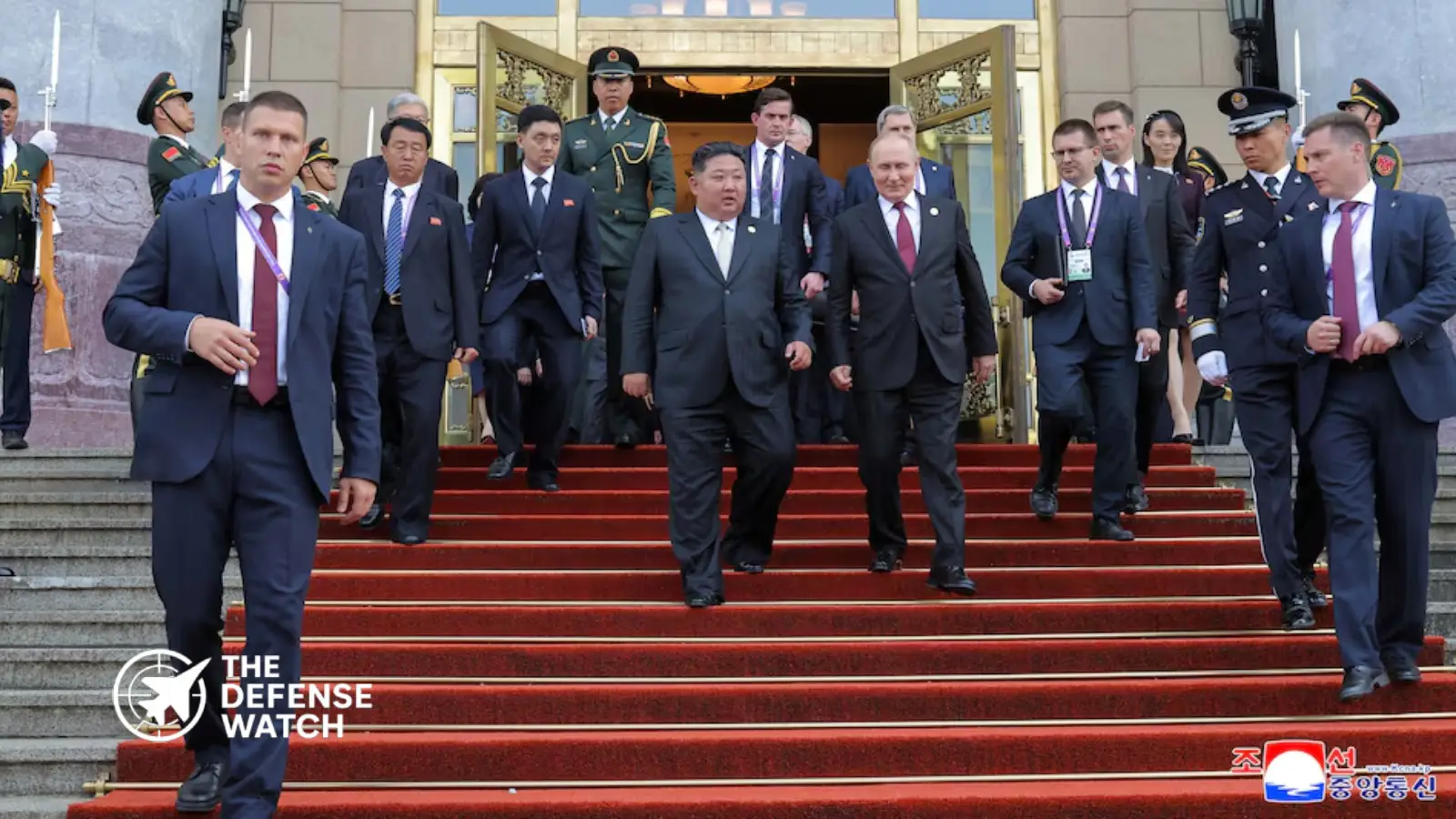
North Korea-Russia alliance dynamics took center stage this week after North Korean leader Kim Jong Un sent a congratulatory message to Russian President Vladimir Putin for Russia’s National Day, reaffirming Pyongyang’s support for Moscow’s domestic and foreign policies. According to North Korea’s state-run Korean Central News Agency (KCNA), Kim described bilateral ties as an increasingly strong alliance built on a comprehensive strategic partnership treaty.
Kim reportedly pledged that North Korea would continue to stand alongside Russia, reflecting the increasingly close relationship that has emerged between the two nations over the past several years.
The message comes at a time when North Korea and Russia are expanding cooperation across diplomatic, economic, and security sectors, raising concerns among Western governments and regional allies.
Strategic Partnership Continues To Expand
The foundation of the current relationship was established during Putin’s visit to Pyongyang in June 2024, when both countries signed a comprehensive strategic partnership treaty. Since then, officials in both capitals have repeatedly highlighted the agreement as a cornerstone of their growing cooperation.
KCNA stated that Kim views the relationship as evolving into a genuine alliance based on mutual trust and shared strategic interests. Russian and North Korean officials also participated in commemorative events marking Russia Day, including visits to Soviet war memorials and diplomatic receptions hosted by the Russian Embassy in Pyongyang.
One significant infrastructure project supporting closer ties is a new land bridge connecting the two countries. The project is expected to facilitate trade and transportation links between Russia’s Far East and North Korea. According to reports, the bridge is scheduled for completion in June 2026.
Defense And Security Implications
The deepening North Korea-Russia partnership has attracted significant attention from defense analysts and policymakers.
Washington and Seoul have repeatedly accused Pyongyang of supplying artillery ammunition, missiles, and other military equipment to support Russian operations in Ukraine. North Korea and Russia have denied allegations of weapons transfers.
Separately, intelligence assessments from South Korea and Western governments have alleged that North Korean personnel have been deployed in support roles linked to Russia’s war effort. These reports have intensified scrutiny of the evolving security relationship between the two countries.
For defense planners across the Indo-Pacific and Europe, the partnership represents more than symbolic diplomacy. It demonstrates the emergence of a more coordinated relationship between two states facing extensive Western sanctions and international pressure.
Growing Regional Geopolitical Significance
Kim’s message to Putin arrives only days after a high-profile visit by Chinese President Xi Jinping to Pyongyang, where both leaders pledged to strengthen bilateral cooperation. The sequence of events highlights North Korea’s increasingly active diplomatic engagement with both Russia and China.
From a strategic perspective, Pyongyang appears to be leveraging closer ties with Moscow while maintaining its traditional relationship with Beijing. This approach provides North Korea with greater diplomatic flexibility and potentially broader economic opportunities.
The growing Russia-North Korea relationship also reflects broader geopolitical shifts occurring across Eurasia. As Moscow seeks partners outside Western-led institutions and sanctions frameworks, North Korea has emerged as a willing strategic partner.
(adsbygoogle = window.adsbygoogle || []).push({});Why The Latest Statement Matters
While Kim’s message does not announce any new agreement or military initiative, it reinforces a consistent pattern of closer political alignment between Pyongyang and Moscow.
For Russia, continued support from North Korea demonstrates that it retains strategic partners despite international isolation efforts. For North Korea, the relationship offers economic opportunities, diplomatic backing, and potential access to technology and infrastructure cooperation.
The latest exchange also signals that the comprehensive strategic partnership signed in 2024 remains a central element of both countries’ foreign policy agendas. As infrastructure projects advance and diplomatic engagement continues, observers are likely to monitor whether political cooperation evolves into deeper economic and security integration.
Defense Analysis
The significance of Kim’s latest message lies less in the statement itself and more in what it reveals about long-term strategic trends. The North Korea-Russia alliance is increasingly institutionalized through treaties, infrastructure projects, and recurring high-level political engagement.
For the United States, South Korea, Japan, and NATO partners, the development represents an evolving geopolitical challenge that links European security concerns with Indo-Pacific stability. Continued coordination between Moscow and Pyongyang could influence future assessments of regional deterrence, sanctions enforcement, and military planning.
Although no immediate policy changes were announced, Kim’s public endorsement of Russia underscores that the partnership remains on an upward trajectory and is likely to remain a significant factor in regional security calculations throughout 2026.
