(adsbygoogle = window.adsbygoogle || []).push({});Executive Summary:
For thirteen days in October 1962, the United States and the Soviet Union stood at the edge of nuclear annihilation — not as an abstraction, but as a live military situation with armed missiles, combat-ready bombers, and a Soviet submarine that nearly launched a nuclear torpedo without Moscow’s authorization. The Cuban Missile Crisis was the only moment in Cold War history when both superpowers simultaneously placed their strategic nuclear forces on maximum alert. Its resolution depended less on formal diplomacy than on a chain of individual decisions — some brilliant, some terrifyingly close to catastrophic — made under near-total uncertainty.
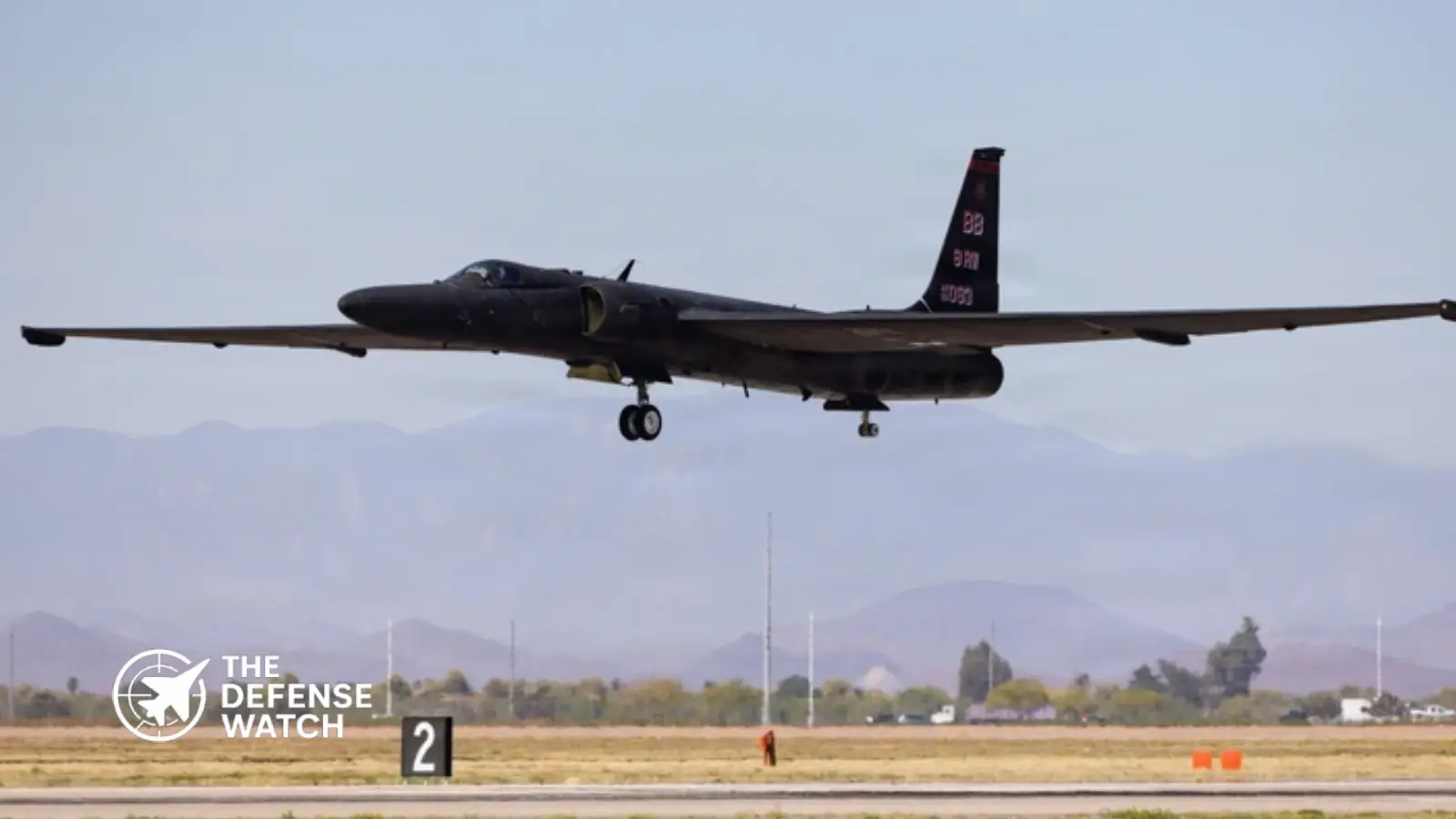
October 14, 1962. A U-2 reconnaissance aircraft flying at 72,000 feet over western Cuba points its cameras at a stretch of cleared jungle near the village of San Cristóbal. The images it captures will reach the White House the following morning — and trigger the most dangerous thirteen days in recorded history.
- The Hardware: What Khrushchev Actually Sent to Cuba
- The Missiles: A Technical Comparison
- The Timeline: Day by Day
- Pre-Crisis: July – October 13, 1962
- Day 1 — October 16
- Days 2–5 — October 17–20
- Day 7 — October 22
- Day 8 — October 23
- Day 9 — October 24: “Eyeball to Eyeball”
- Days 10–11 — October 25–26
- Day 12 — October 27: Black Saturday
- Day 13 — October 28: Resolution
- Aftermath: November–December 1962
- The Structural Lesson: What the Crisis Actually Proved
- Conclusion: Why October 1962 Still Defines the Nuclear Age
The crisis was not born that morning. It had been assembling quietly since July, when Soviet freighters began delivering crated R-12 Dvina medium-range ballistic missiles under the cover of agricultural equipment manifests. By the time American analysts annotated the San Cristóbal photographs, Soviet engineers were already grading launch pads for 24 R-12 launchers capable of placing a one-megaton warhead on Washington, D.C. in under ten minutes.
What followed was not a diplomatic dance. It was a live nuclear confrontation — with armed missiles, DEFCON 2 bombers circling fail-safe points, and a Soviet submarine commander who nearly fired a 10-kiloton torpedo at a U.S. Navy carrier group without Moscow’s knowledge.
(adsbygoogle = window.adsbygoogle || []).push({});The Hardware: What Khrushchev Actually Sent to Cuba
Understanding the crisis requires understanding the weapons at its center. Operation Anadyr — the Soviet codename for the deployment — was not improvised. It was a calculated strategic move to close a missile gap that ran decisively in America’s favor.
In 1962, the United States held approximately 27,000 nuclear warheads against the Soviet Union’s 3,600. Washington also enjoyed a decisive advantage in delivery systems — Minuteman ICBMs in hardened silos, Polaris submarines, and NATO forward-basing across Western Europe. Khrushchev’s response was to collapse the geographic buffer. Missiles in Cuba would put every major American city within a five-to-ten minute flight time, effectively negating U.S. early warning systems.
The primary weapon was the R-12 Dvina (NATO designation: SS-4 Sandal). The first truly mass-produced Soviet ballistic missile, the R-12 carried a 2.3-megaton thermonuclear warhead — roughly 150 times the yield of the Hiroshima bomb — to a range of 2,000 kilometers. Three regiments with 24 launchers were deployed. Alongside them, two regiments were preparing to receive the longer-legged R-14 Chusovaya (SS-5 Skean), an 86-metric-ton intermediate-range missile with a 4,500-kilometer reach that would have put Seattle and Los Angeles in its targeting envelope.
(adsbygoogle = window.adsbygoogle || []).push({});The R-14s never made it. The crisis broke before their launchers were assembled. But 36 nuclear warheads for the R-12 were already on the island when Kennedy went on television on October 22.
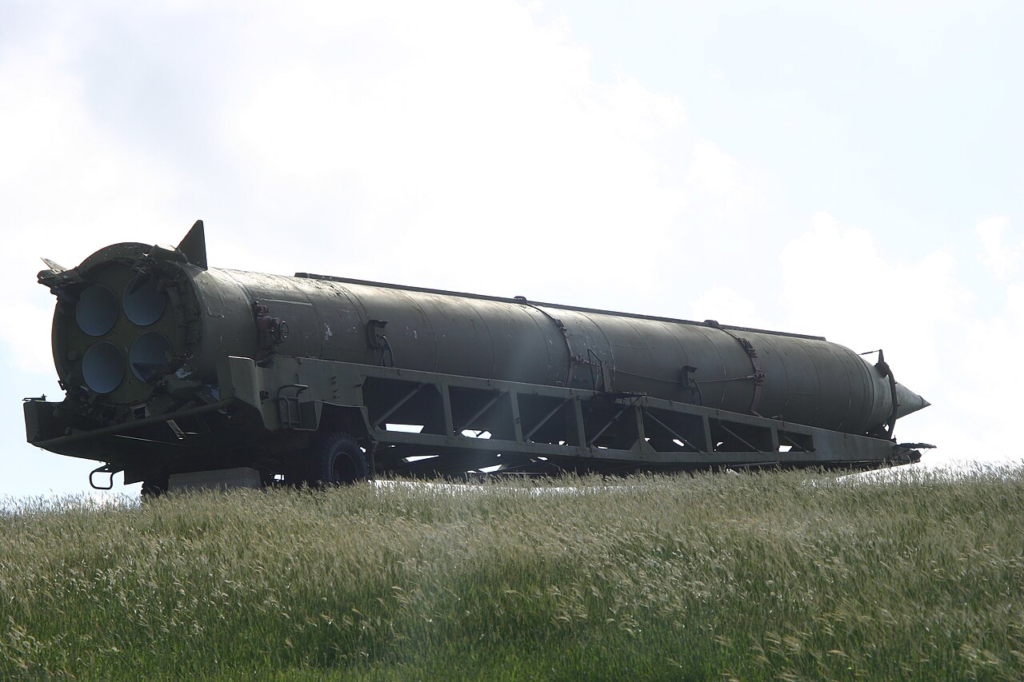
What U.S. intelligence did not know — and would not learn for decades — was that Soviet General Issa Pilyev also had authority to employ nine Luna tactical nuclear missiles against any American invasion force, and that 98 additional tactical nuclear warheads were dispersed across the island. A U.S. amphibious assault on Cuba would have been walking into a nuclear kill zone.
The Missiles: A Technical Comparison
| System | NATO Code | Range | Warhead Yield | Launch Prep Time | Deployed to Cuba |
|---|---|---|---|---|---|
| R-12 Dvina | SS-4 Sandal | 2,000 km | 2.3 Mt | 3–4 hours (cold) | 24 launchers |
| R-14 Chusovaya | SS-5 Skean | 4,500 km | 1–2.3 Mt | ~4 hours (cold) | 0 (warheads arrived; missiles cancelled) |
| Luna (FROG-3) | FROG | 65 km | 10 kt tactical | ~1 hour | 9 launchers |
| Jupiter IRBM (U.S., Turkey) | — | 2,400 km | 1.44 Mt | 15 min (pre-fueled) | 15 (Cigli AB, Turkey) |
| Thor IRBM (U.S., UK) | — | 2,400 km | 1.44 Mt | 15 min (pre-fueled) | 60 (UK bases) |
The symmetry is notable: Khrushchev’s deployment of R-12s in Cuba mirrored, almost precisely, the American deployment of Jupiter IRBMs at Cigli Air Base in Turkey — a fact that would quietly determine the crisis’s endgame.
(adsbygoogle = window.adsbygoogle || []).push({});The Timeline: Day by Day
Pre-Crisis: July – October 13, 1962
Operation Anadyr moves in plain sight — hidden by audacity. Soviet cargo ships unload military equipment at Cuban ports, officially described as agricultural and industrial goods. U.S. intelligence tracks a general Soviet arms buildup, including IL-28 jet bombers, but the missile sites remain undetected. On September 4, Kennedy issues a public warning against offensive weapons in Cuba. The Soviets continue construction.
By early October, the first R-12 site at San Cristóbal is nearly complete. Warheads are stored at three separate facilities — some as far as 300 miles from their assigned launchers. In the event of a launch order, Soviet troops would require 14 to 24 hours simply to transport warheads across Cuban roads to the missiles.
(adsbygoogle = window.adsbygoogle || []).push({});Day 1 — October 16
Kennedy is briefed at 8:45 a.m. on the U-2 photographs. The images are unambiguous: MRBM launch sites under active construction, with missile erectors, fuel tankers, and blast deflectors visible. Two options immediately surface within the Executive Committee (ExComm): an air strike to destroy the sites before they become operational, or a naval quarantine.
The Joint Chiefs unanimously recommend airstrikes followed by invasion. Kennedy is skeptical. An air strike, he notes, cannot guarantee 100% destruction — and any surviving missile could still hit an American city.
(adsbygoogle = window.adsbygoogle || []).push({});Days 2–5 — October 17–20
ExComm deliberates in secret while Kennedy maintains his public schedule to avoid tipping off Moscow. The hawks, led by Air Force Chief of Staff General Curtis LeMay, push hard for military action. LeMay tells Kennedy that a blockade “would be seen as a greater defeat than the Bay of Pigs.” Kennedy holds the line.
By October 20, the first R-12 site reaches operational status — eight launchers ready. Kennedy formally decides on a naval quarantine, framed as a “quarantine” rather than a “blockade” to sidestep the legal definition of an act of war under international law.
Day 7 — October 22
Kennedy addresses the nation in a televised broadcast at 7 p.m. He reveals the existence of the missile sites, announces a naval quarantine of Cuba effective at 10 a.m. the following morning, and demands the removal of all Soviet offensive weapons. He explicitly warns that any nuclear missile fired from Cuba against any nation in the Western Hemisphere will be treated as an attack by the Soviet Union on the United States — requiring “a full retaliatory response.
The Strategic Air Command immediately elevates to DEFCON 2. It is the only time in history SAC reaches that alert level. Over 1,400 bombers and 145 ICBMs are placed on maximum readiness. B-52s begin continuous airborne alert patrols.
Khrushchev’s initial response is defiant. Soviet ships — 25 of them, some likely carrying additional military equipment — continue toward Cuba.
(adsbygoogle = window.adsbygoogle || []).push({});Day 8 — October 23
The Organization of American States unanimously endorses the quarantine. Kennedy signs Proclamation 3504, formally establishing the naval exclusion zone at a radius of 500 nautical miles from Cape Maisí, Cuba.
Simultaneously, CIA Director John McCone informs Kennedy that four Soviet Foxtrot-class submarines have left their Kola Bay base and are tracking toward Cuba. Each carries one nuclear-armed torpedo. Kennedy does not know this. Neither does he know that the B-59, one of those submarines, is already positioned near the quarantine line with a 10-kiloton torpedo ready for launch.
Day 9 — October 24: “Eyeball to Eyeball”
At 10 a.m., the quarantine takes effect. Soviet ships approach the line. The world watches in real time. Then — one by one — Soviet vessels stop or reverse course. Secretary of State Dean Rusk turns to McGeorge Bundy and says: “We’re eyeball to eyeball, and I think the other fellow just blinked.”
It is not the whole story. Khrushchev orders the ships to halt because he needs time — not because he is backing down. Construction on the missile sites in Cuba continues around the clock. By October 25, two additional R-12 sites reach operational status. All 24 R-12 launchers are functional by the evening of October 27.
Days 10–11 — October 25–26
U.S. Ambassador Adlai Stevenson confronts Soviet Ambassador Valerian Zorin at the UN Security Council, demanding he deny the missiles exist. Zorin stonewalls. Stevenson presents the U-2 photographs live on the Security Council floor. It is one of the most dramatic intelligence disclosures in diplomatic history.
On the night of October 26, Khrushchev sends Kennedy a long, uncharacteristically personal letter — drafted without the input of the Politburo — proposing a deal: the Soviets will remove the missiles if the United States pledges not to invade Cuba. Kennedy sees an opening. Then, the following morning, a second, harsher letter arrives from Moscow — this one almost certainly written by hardliners — adding a new condition: the United States must also remove its Jupiter missiles from Turkey.
(adsbygoogle = window.adsbygoogle || []).push({});Day 12 — October 27: Black Saturday
The most dangerous day of the crisis — arguably the most dangerous day of the 20th century — begins before dawn.
At 9:12 a.m., a U-2 reconnaissance aircraft piloted by Major Rudolf Anderson is shot down over Cuba by a Soviet SA-2 surface-to-air missile. Anderson becomes the only combat fatality of the crisis. The Joint Chiefs immediately recommend retaliatory strikes. Kennedy refuses.
Simultaneously, another U-2 conducting an unrelated Arctic sampling mission strays into Soviet airspace over Chukotka. Soviet MiGs scramble; American F-102 interceptors armed with nuclear-tipped Falcon air-to-air missiles launch to escort the errant U-2 home. A midair miscalculation could have triggered war without either head of state’s knowledge.
That evening, beneath the Atlantic, the situation aboard B-59 reaches its breaking point. The Foxtrot-class submarine has been submerged for days, evading U.S. Navy ASW forces. Internal temperatures have reached 45°C (113°F). The batteries are nearly depleted. Cut off from communications with Moscow, Captain Valentin Savitsky concludes that war has already begun.
Savitsky orders the nuclear torpedo armed and prepared for launch.
Under Soviet Navy procedures aboard B-59, launch required the consent of three officers: the captain, the political officer, and the brigade commander. The first two agreed. The third — Flotilla Commander Vasili Arkhipov — refused.
Arkhipov argued, calmly, that the depth charges dropping around them were signaling devices, not attack weapons. He persuaded Savitsky to surface. B-59 breached the water surrounded by eleven U.S. destroyers and the carrier USS Randolph. The torpedo was never fired. The Americans had no idea the submarine was nuclear-armed. They would not find out for forty years, when the Soviet archives were opened.
That same night, Robert Kennedy meets secretly with Soviet Ambassador Anatoly Dobrynin. The terms are conveyed: the Soviets withdraw their missiles from Cuba; the United States publicly pledges not to invade, and privately commits to removing its Jupiter missiles from Turkey within several months. The Turkey component is to remain secret.
Day 13 — October 28: Resolution
At 9 a.m. Moscow time, Radio Moscow broadcasts Khrushchev’s announcement: the Soviet Union will dismantle and remove all offensive weapons from Cuba. Soviet technicians begin tearing down the launch sites within hours. The world steps back from the edge.
The public resolution looks clean. The private one is more complicated. The secret Jupiter deal — a genuine concession that gave Khrushchev political cover to stand down without appearing to capitulate — would remain classified for over 25 years. When it was finally disclosed in the late 1980s, the clean narrative of American resolve forcing Soviet retreat required significant revision.
(adsbygoogle = window.adsbygoogle || []).push({});Aftermath: November–December 1962
The quarantine is not lifted immediately. Kennedy addresses the nation on November 2, confirming the dismantling of Soviet missile sites. Soviet ships depart Cuba between November 5–9, each visually inspected as it crosses the blockade line. The removal of IL-28 bombers requires additional negotiations, finally resolved by December 6.
The U.S. officially ends the quarantine at 6:45 p.m. on November 20, 1962. The Jupiter missiles in Turkey are removed the following April, framed publicly as a routine “modernization” of NATO forces.
One lasting institutional legacy: on June 20, 1963, the United States and Soviet Union establish the Moscow–Washington hotline — the direct teletype link between the Kremlin and the White House — specifically to prevent a future crisis from being resolved via broadcast radio and back-channel intermediaries.
The Structural Lesson: What the Crisis Actually Proved
“The nuclear age requires a new way of thinking. It is not enough to be strong; you must also be able to communicate that strength without triggering the very war you are trying to prevent.” — Derived from Kennedy’s post-crisis address, November 1962
The Cuban Missile Crisis is typically framed as a triumph of American resolve. That framing is incomplete. Kennedy did not simply outface Khrushchev — he gave him something real in return, and kept it secret precisely because public acknowledgment would have collapsed the narrative of victory for both sides.
The crisis also demonstrated that the greatest danger in nuclear confrontation is not deliberate first strikes. It is autonomous decision-making at the tactical level, severed from strategic command. B-59’s near-launch was not authorized by Moscow. The SA-2 that downed Major Anderson’s U-2 was fired on Cuban initiative, not Soviet orders. The straying U-2 over Chukotka was a navigational error. Any of these incidents, in isolation, could have been the tripwire.
(adsbygoogle = window.adsbygoogle || []).push({});The architecture of modern crisis management — hotlines, deconfliction channels, formalized command-and-control protocols — was built on the wreckage of Black Saturday. So was the doctrine of ensuring no single tactical commander can initiate a strategic nuclear exchange. Those lessons remain entirely current.
Conclusion: Why October 1962 Still Defines the Nuclear Age
The Cuban Missile Crisis did not end the arms race. Khrushchev’s political humiliation accelerated Soviet military investment; by the late 1960s, the USSR had achieved rough strategic parity. The crisis did not make the world safe. It made the world conscious — for the first time — of how close the logic of deterrence can bring two rational actors to mutual annihilation.
Sixty years later, the structural conditions that produced the crisis — geographic proximity, second-strike anxiety, miscommunication under stress, and the terrifying autonomy of tactical commanders — have not been engineered out of nuclear strategy. They have been replicated in new theaters.
The thirteen days of October 1962 are not history. They are the template.