Executive Summary:
British paratroopers carried out a rapid island insertion exercise as part of a simulated hantavirus response scenario. The drill tested airborne deployment, medical coordination, and expeditionary logistics in a contested environment, reflecting the UK military’s focus on rapid crisis response operations.
British Paratroopers Conduct Island Hantavirus Response Exercise
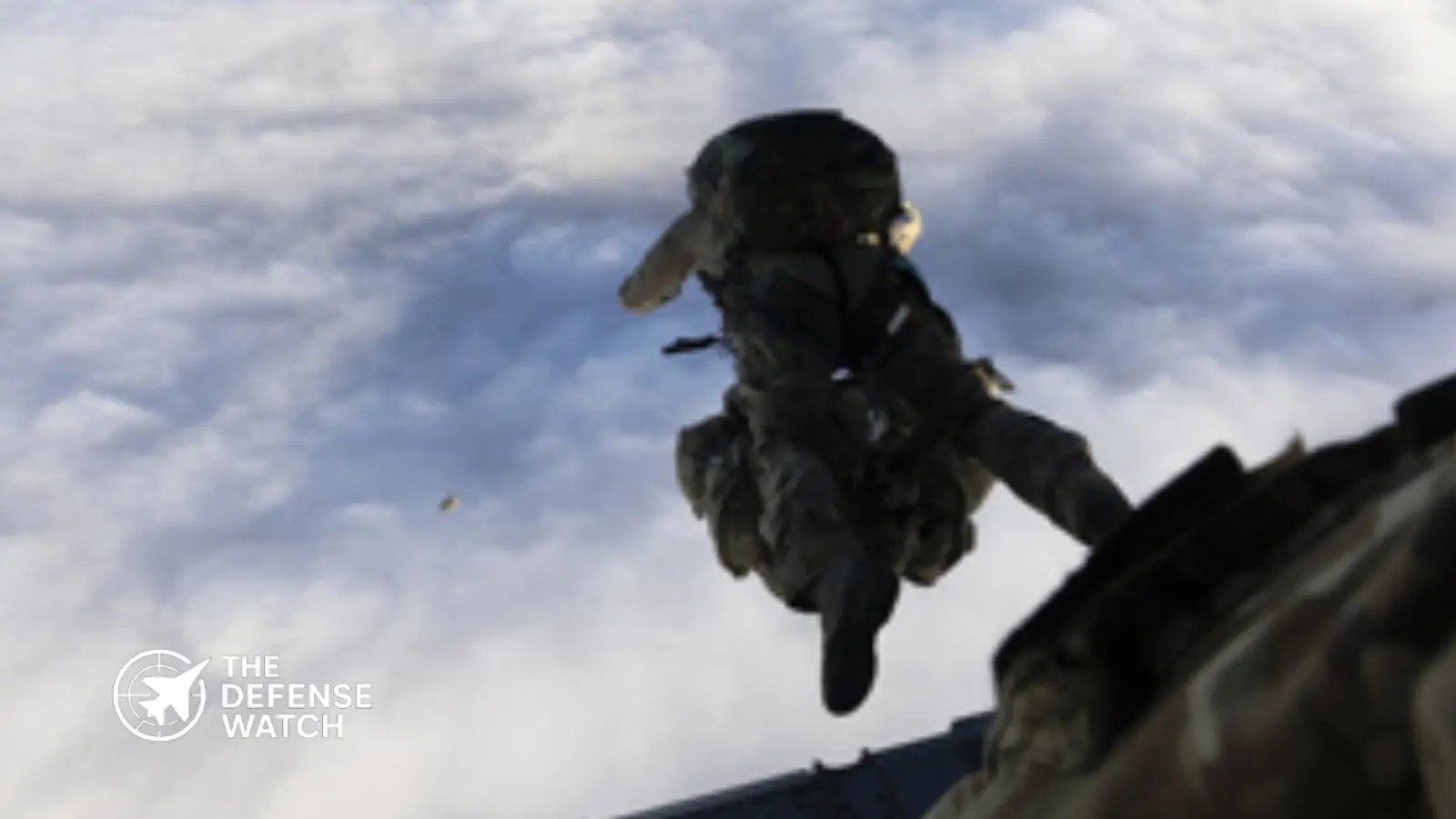
British paratroopers conducted a rapid airborne assault exercise onto a remote island during a UK military training operation centered on a simulated hantavirus outbreak, according to reporting by UK Defence Journal.
The exercise involved troops from the British Army’s airborne forces deploying by parachute to secure territory, establish operational control, and support a coordinated biological hazard response mission. The scenario combined elements of expeditionary warfare, humanitarian support, and military medical planning.
The operation reflects a broader trend among NATO militaries toward preparing for multi-domain crisis response missions that combine conventional military capabilities with disaster and health emergency management.
Airborne Forces Practice Rapid Island Seizure
During the exercise, British paratroopers executed an airborne insertion onto the island before securing key positions and establishing support zones for follow-on operations. The deployment reportedly simulated conditions where access to isolated territory was restricted because of a viral outbreak.
The training highlighted the British Army’s emphasis on maintaining rapid reaction capabilities through airborne forces. Such units are designed to deploy quickly with limited warning, particularly in scenarios involving remote territories or contested operational environments.
The use of parachute infantry in the exercise also demonstrated the UK’s continuing investment in expeditionary warfare concepts. Airborne operations remain a core capability for NATO forces because they allow troops to enter areas where ports, airfields, or ground routes may be unavailable or compromised.
Military planners increasingly view these operations as relevant not only in wartime scenarios, but also during disaster response and regional stabilization missions.
Hantavirus Scenario Adds Biosecurity Dimension
The simulated hantavirus outbreak added a biological hazard component to the exercise. Hantavirus is a family of viruses primarily transmitted through rodents and can cause severe respiratory illness in humans.
While the training scenario was fictional, it mirrors growing military concern about biological threats, infectious disease response, and operational resilience during health emergencies.
Since the COVID-19 pandemic, armed forces across Europe and North America have expanded planning for biosecurity-related contingencies. These include quarantine operations, medical evacuation procedures, logistics support during outbreaks, and maintaining operational readiness under biological threat conditions.
The British military has increasingly integrated medical response planning into large-scale exercises, particularly for deployments involving isolated or austere locations.
Expeditionary Logistics And Joint Coordination
The island deployment exercise also tested logistics and command coordination under demanding conditions. Airborne units typically operate with limited supplies during initial insertion phases, making rapid sustainment and communication critical.
According to the report, the drill involved coordination between combat forces, medical personnel, and support elements. Such integration is essential during real-world contingency operations where military units may be required to assist civilian authorities or secure infrastructure during emergencies.
The exercise demonstrated how modern military operations increasingly require forces to operate across multiple mission sets simultaneously, including combat readiness, humanitarian assistance, and public health support.
For the British Army, this type of training supports wider modernization goals focused on agility, rapid deployment, and interoperability with allied forces.
UK Focuses On High-Readiness Crisis Response
The British paratroopers exercise comes as the UK continues adapting its armed forces for rapid response missions across Europe and overseas territories.
Recent British defense planning has emphasized high-readiness units capable of deploying quickly to emerging crises, particularly in regions where infrastructure may be degraded or contested.
Airborne forces remain central to that strategy because of their ability to establish an immediate military presence without relying on extensive forward basing.
The exercise also reflects a broader NATO focus on resilience against non-traditional threats, including pandemics, biological incidents, and hybrid crisis scenarios that combine military and civil emergencies.
Analysts note that such drills are increasingly important as defense organizations prepare for complex operating environments where conventional military threats can overlap with health, environmental, or infrastructure crises.
Strategic Relevance Beyond Combat Operations
Although the exercise centered on a simulated disease outbreak, the operational lessons extend well beyond medical emergencies.
Rapid island seizure and sustainment operations are strategically important in several regions where NATO members maintain overseas territories or face contested maritime environments.
Training for austere deployments also improves readiness for evacuation missions, disaster relief operations, and crisis stabilization efforts.
For the UK military, exercises involving airborne insertion and expeditionary response help reinforce deterrence and demonstrate operational flexibility at a time of increasing geopolitical uncertainty.
The integration of biological hazard response into military planning further reflects how modern armed forces are adapting to a broader range of security challenges beyond traditional battlefield operations.