Executive Summary:
Saab and General Atomics Aeronautical Systems successfully completed the first flight of an unmanned airborne early warning solution using the MQ-9B drone and Saab’s LoyalEye radar. The program aims to deliver long-endurance airborne surveillance capabilities while reducing operational risk to aircrews and expanding persistent ISR coverage.
(adsbygoogle = window.adsbygoogle || []).push({});
Saab And GA-ASI Advance MQ-9B Airborne Early Warning Capability
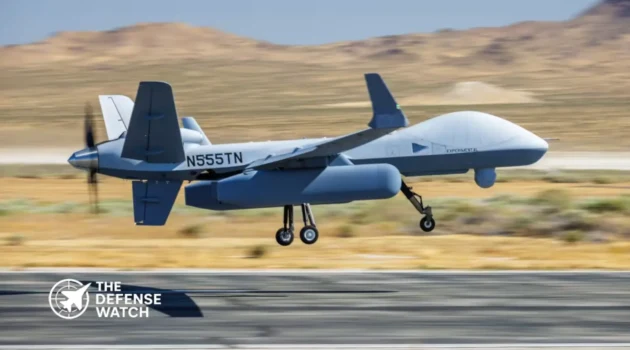
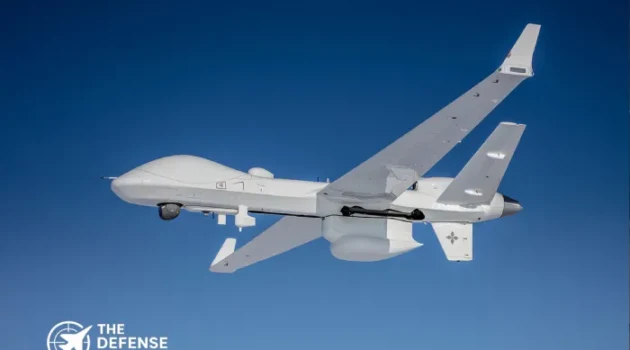
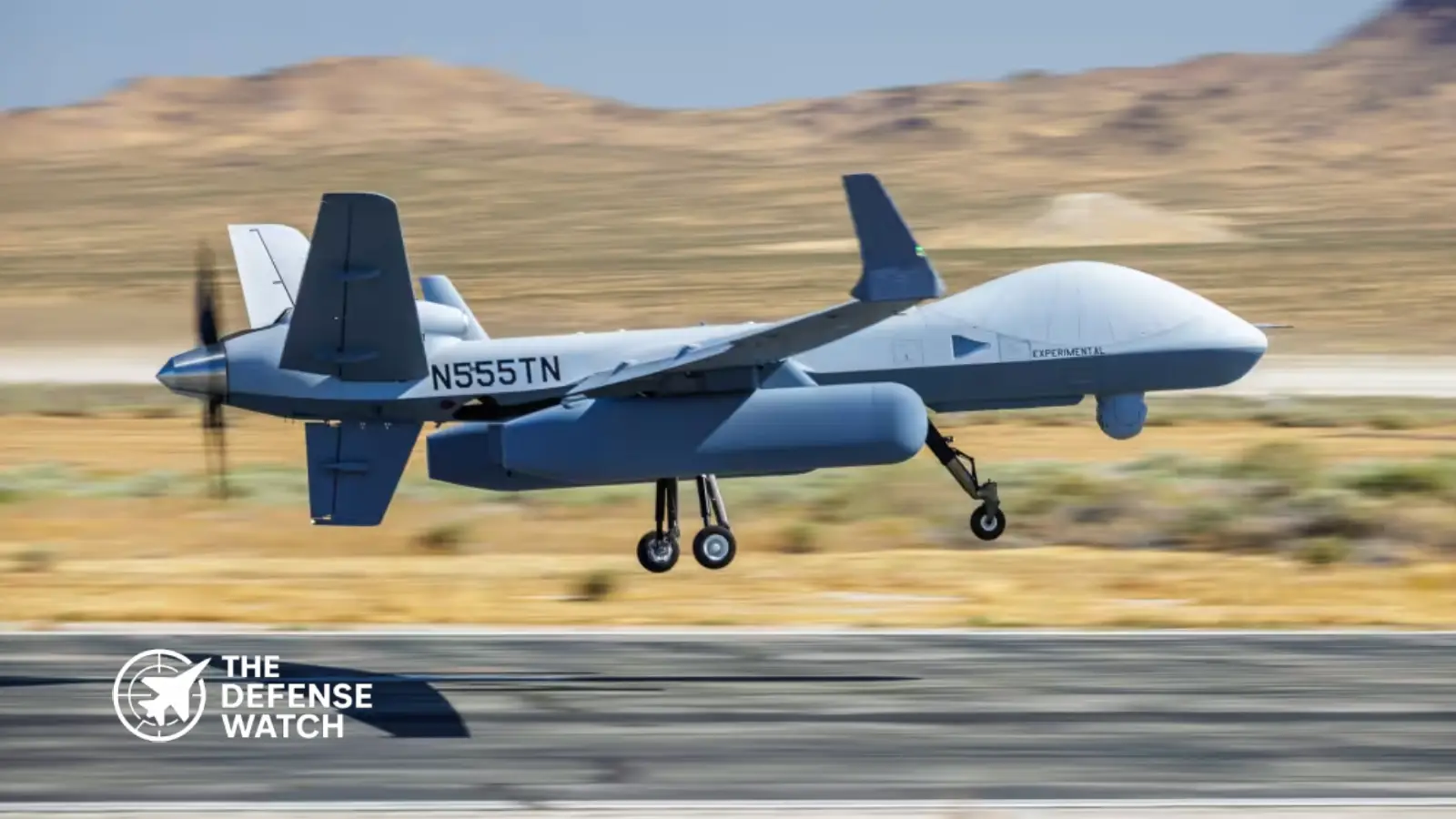
The MQ-9B airborne early warning program reached a major milestone after Saab and General Atomics Aeronautical Systems, Inc. (GA-ASI) completed the first flight of Saab’s LoyalEye radar aboard an unmanned MQ-9B aircraft.
The test flight took place on May 19 at GA-ASI’s Desert Horizon flight operations facility in Southern California. According to both companies, the successful sortie marks the beginning of a multi-month evaluation campaign that will conclude with a full operational capability demonstration later in 2026.
The flight represents what Saab and GA-ASI describe as the world’s first unmanned airborne early warning (AEW) solution. The system combines Saab’s radar surveillance expertise with the MQ-9B’s long-endurance unmanned flight profile.
The development comes as defense planners increasingly seek persistent intelligence, surveillance, and reconnaissance (ISR) capabilities that can remain airborne for extended periods while reducing exposure of manned crews to contested environments.
LoyalEye Radar Expands MQ-9B Mission Set
Saab’s LoyalEye sensor is designed to provide airborne detection and tracking capabilities traditionally associated with larger manned AEW&C aircraft.
The system was integrated onto the MQ-9B platform under a partnership announced in 2025 between Saab and GA-ASI. The companies say the aircraft will support missions including:
- Early warning and threat detection
- Long-range aerial surveillance
- Multi-target tracking
- Beyond-line-of-sight operations
- SATCOM-enabled ISR missions
Carl Johan Bergholm, Head of Saab’s Surveillance business area, said the unmanned configuration is intended to complement existing manned airborne surveillance fleets rather than replace them.
According to Saab, the MQ-9B airborne early warning system could provide extended operational reach and improved flexibility for military commanders operating in large theaters where persistent sensor coverage is essential.
The addition of airborne radar surveillance also significantly expands the MQ-9B’s traditional ISR mission profile. The aircraft family has primarily been associated with reconnaissance and strike operations, but the LoyalEye integration positions the platform for theater-wide air surveillance and command support roles.
Why Unmanned AEW Matters
The unmanned airborne early warning concept reflects broader military trends toward distributed sensing and lower-risk ISR operations.
Traditional AEW&C aircraft such as the Boeing E-3 Sentry or Saab’s GlobalEye provide powerful surveillance capabilities but require large crews and high operational support demands.
(adsbygoogle = window.adsbygoogle || []).push({});By contrast, the MQ-9B airborne early warning system is designed around a medium-altitude, long-endurance unmanned platform capable of remaining airborne far longer than many crewed aircraft.
GA-ASI President David R. Alexander stated that the new system is intended to defend against a range of threats, including guided missiles, drones, tactical air munitions, fighter aircraft, and bomber platforms.
The use of an unmanned aircraft also aligns with evolving operational concepts focused on survivability and distributed operations. In high-threat environments, commanders increasingly favor systems that can continue operating without placing pilots and onboard crews directly at risk.
That operational logic has become particularly important as modern battlefields see expanding use of long-range missiles, electronic warfare systems, and layered air defense networks.
Growing Demand For Persistent ISR And Air Surveillance
The MQ-9B airborne early warning initiative also highlights growing global demand for persistent airborne sensing.
NATO members and Indo-Pacific allies have accelerated investments in ISR and early warning systems following lessons drawn from the war in Ukraine, tensions in the Indo-Pacific, and expanding drone warfare capabilities worldwide.
Persistent radar coverage is increasingly viewed as critical for detecting:
- Low-flying cruise missiles
- Small unmanned aerial systems
- Swarming drone attacks
- Long-range aviation threats
- Maritime air activity
The MQ-9B’s endurance profile may offer advantages in these missions. Unlike traditional AEW aircraft that often require larger support structures and shorter operational rotations, an unmanned system can potentially maintain surveillance coverage for significantly longer durations.
This could prove particularly valuable for maritime security operations, border surveillance, expeditionary deployments, and dispersed force structures.
(adsbygoogle = window.adsbygoogle || []).push({});The development may also strengthen Saab’s position in the airborne surveillance sector beyond its established GlobalEye program. Meanwhile, GA-ASI continues expanding the MQ-9B family into specialized mission roles beyond conventional ISR and strike operations.
Strategic Implications For Future Air Operations
The successful flight test signals a broader shift in how militaries may approach airborne command and surveillance missions over the next decade.
Rather than relying solely on a limited number of high-value manned AEW&C aircraft, future air operations may increasingly use a mix of crewed and uncrewed platforms operating in coordinated networks.
This distributed approach could improve operational resilience while reducing vulnerability to long-range precision strikes targeting critical airborne assets.
The MQ-9B airborne early warning program remains in its testing phase, but the successful first flight demonstrates that unmanned platforms are moving into mission areas once considered exclusive to large crewed aircraft.
If the evaluation program proceeds successfully later this year, the Saab and GA-ASI partnership could establish a new category of operational airborne surveillance capability for allied militaries seeking persistent and lower-risk ISR coverage.