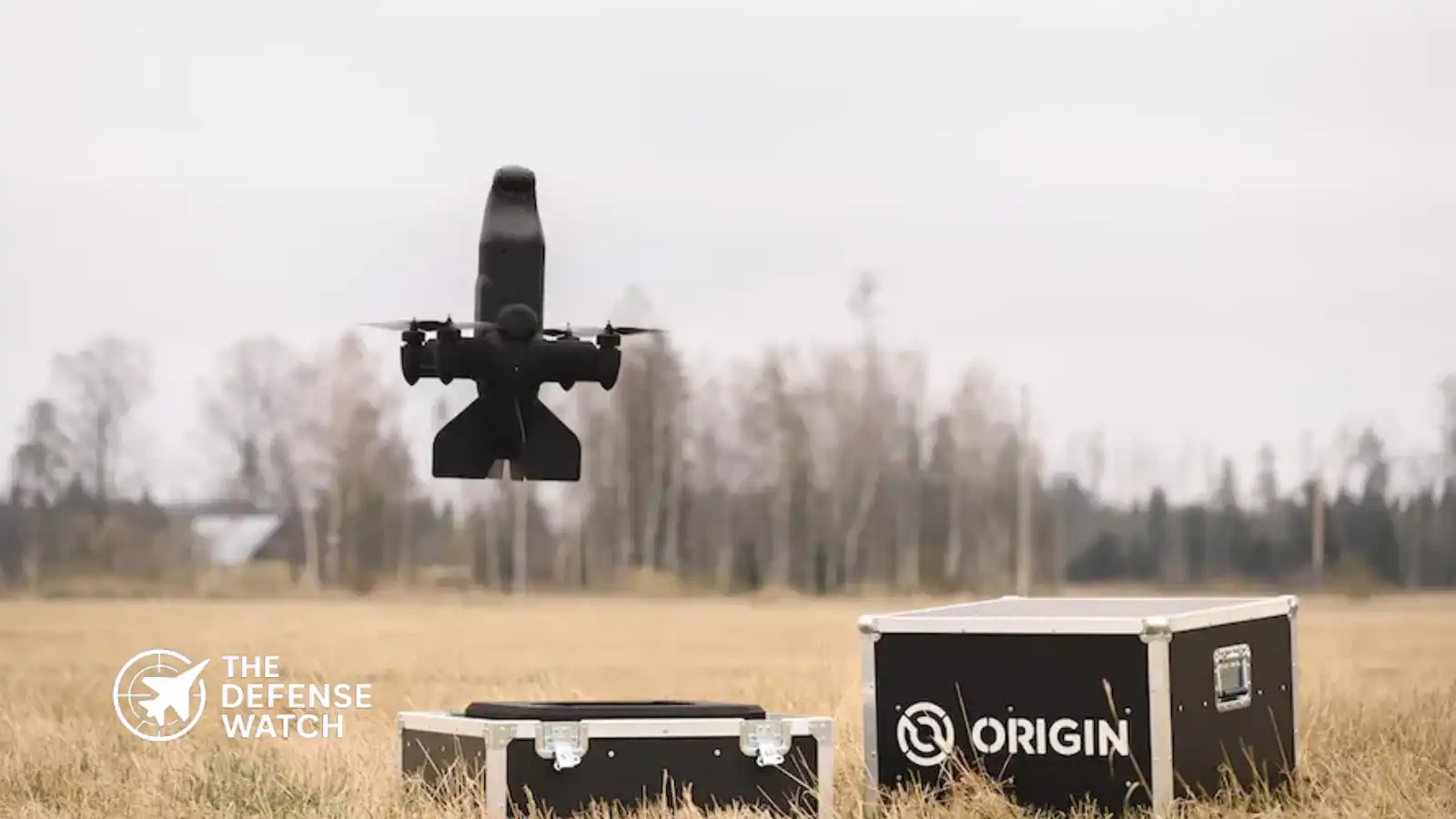
Latvia is strengthening its layered air defense and counter drone network with a new multi year interceptor drone agreement.
Executive Summary:
Latvia’s Ministry of Defense and Origin Robotics have signed a framework agreement covering multi year deliveries of Blaze interceptor drones for the Latvian Armed Forces. The deal highlights growing European demand for affordable counter UAS systems as militaries adapt to lessons from Ukraine and the wider drone threat environment.
Latvian Armed Forces Expand Counter Drone Capability
The Latvian Armed Forces have signed a framework agreement with Latvian defense technology company Origin Robotics for the multi year delivery of Blaze interceptor drones, marking a significant step in the country’s effort to strengthen counter unmanned aerial system capabilities.
The agreement establishes a long term procurement framework that could support sustained production and operational deployment of the Blaze interceptor drone platform.
The Blaze interceptor drone is designed to engage and neutralize hostile unmanned aerial systems, an area that has become increasingly important for European militaries following the widespread battlefield use of drones in Ukraine and other regional conflicts.
Latvia, a NATO member bordering Russia and Belarus, has accelerated investments in air defense, electronic warfare, and drone technologies over the past several years as regional security concerns continue to grow.
Blaze Interceptor Drones Reflect Shift In Modern Air Defense
The Blaze interceptor drones program reflects a broader shift toward lower cost and rapidly deployable counter drone systems capable of defending frontline units and critical infrastructure against small unmanned aircraft.
Traditional surface to air missile systems remain effective against high value aerial threats, but military planners increasingly view interceptor drones as a cost efficient solution against inexpensive commercial and military drones. That operational reality has driven growing interest across Europe in layered air defense architectures combining kinetic interceptors, electronic warfare, and radar integration.
The Latvian Armed Forces’ agreement with Origin Robotics aligns with this trend. By supporting domestic drone production, Latvia also reduces dependence on foreign suppliers while building local industrial capacity in a rapidly expanding defense sector.
The war in Ukraine has demonstrated how relatively inexpensive drones can impose significant operational and economic pressure on conventional military forces. In response, European governments are moving to field scalable counter UAS technologies that can be produced quickly and deployed in large numbers.
Origin Robotics Positions Itself In Expanding European Drone Market
Origin Robotics is part of a growing group of European defense startups focused on autonomous systems, loitering munitions, and interceptor drones.
The framework agreement gives the company an opportunity to scale production and validate its systems under military operational requirements. Although financial details and delivery quantities were not publicly disclosed, the structure of the agreement suggests long term procurement planning rather than a limited test acquisition.
European governments are increasingly seeking domestically developed unmanned systems to strengthen supply chain resilience and shorten procurement timelines. Smaller defense firms specializing in drone technologies have benefited from this shift, particularly as NATO members raise defense spending targets and expand industrial readiness initiatives.
The Blaze interceptor drones agreement may also position Latvia as a regional contributor to NATO counter drone capability development, especially among Baltic and Eastern European allies focused on defending against low altitude unmanned threats.
Counter UAS Demand Continues To Accelerate Across Europe
Demand for counter UAS systems has risen sharply across NATO and European Union member states since 2022. Governments are investing in radar networks, electronic warfare systems, directed energy weapons, and interceptor drones to counter evolving aerial threats.
Several European defense programs now prioritize rapid acquisition pathways for drone and anti drone technologies, recognizing that traditional procurement cycles are often too slow for the pace of technological change in modern warfare.
The Latvian Armed Forces’ decision to pursue Blaze interceptor drones under a framework agreement indicates an emphasis on flexibility and scalable procurement. Such agreements allow governments to increase orders over time while adapting technical requirements as operational lessons emerge.
For Latvia, the program also carries strategic importance beyond procurement alone. Supporting domestic drone manufacturing enhances national resilience, strengthens local defense innovation, and contributes to broader NATO capability goals in the Baltic region.
Strategic Importance For Baltic Security
The Baltic states remain among the most active NATO members in adapting to emerging drone warfare challenges. Latvia, Lithuania, and Estonia have all expanded defense modernization programs focused on air defense, ISR capabilities, electronic warfare, and autonomous systems.
The Blaze interceptor drones agreement highlights how smaller NATO states are pursuing agile and affordable defense technologies that can be fielded quickly without relying solely on large legacy weapons programs.
As drone threats continue evolving, interceptor drones are expected to play an increasingly central role in protecting military formations, logistics hubs, and civilian infrastructure from reconnaissance and attack UAVs.
The agreement between the Latvian Armed Forces and Origin Robotics demonstrates how regional defense industries are becoming more deeply integrated into Europe’s wider security strategy.