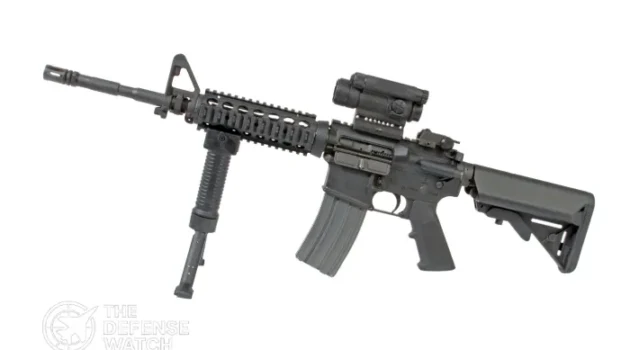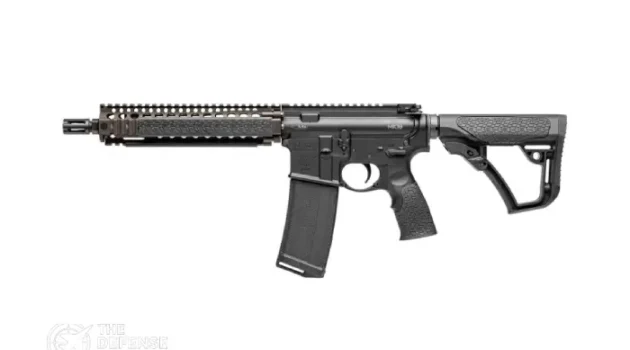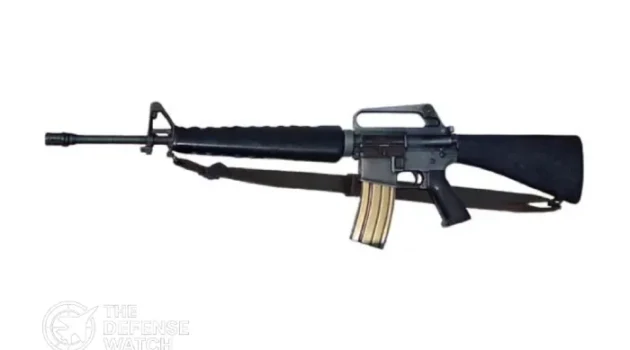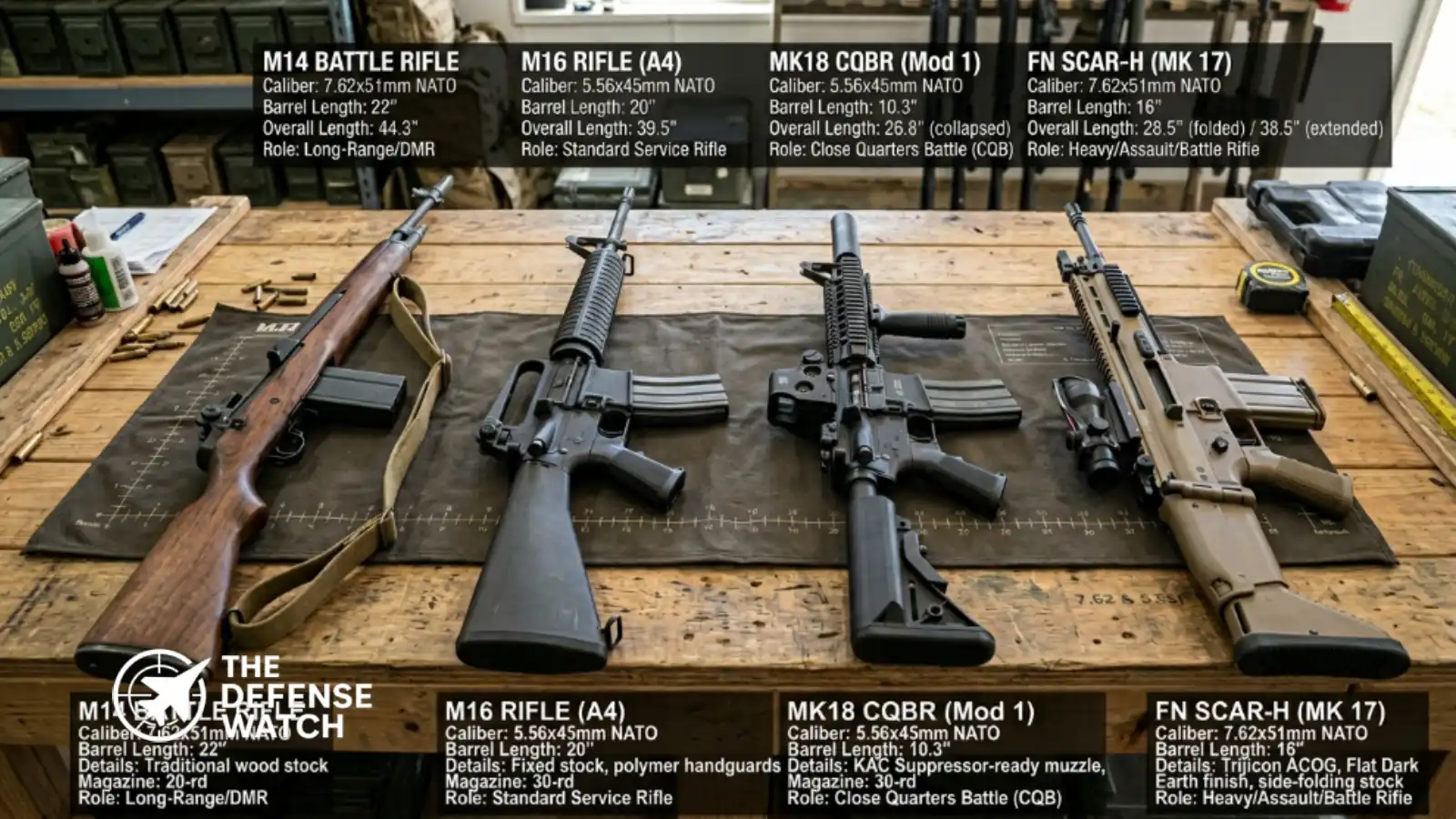
Executive Summary:
The battle rifle vs carbine debate reflects the changing demands of modern warfare, balancing long-range firepower against mobility and adaptability. Battle rifles offer superior range and stopping power through full-size cartridges, while carbines provide lighter weight, reduced recoil, and greater effectiveness in close to medium-range combat. Modern militaries increasingly employ both weapon types to address diverse operational requirements across conventional, urban, and expeditionary battlefields.
The debate over battle rifle vs carbine remains one of the most important discussions in military small arms history. From the battlefields of the Cold War to modern conflicts in Ukraine, Iraq, and Afghanistan, armies have continuously balanced firepower, range, and mobility when selecting infantry weapons.
Historically, soldiers carried full-powered battle rifles chambered in cartridges designed for long-range engagements. However, changing combat realities pushed militaries toward lighter, more compact carbines firing intermediate cartridges. This shift transformed infantry doctrine and influenced weapons such as the M16 rifle, MK18 rifle, and SCAR rifle.
Today, the distinction between battle rifles and carbines remains relevant as NATO forces modernize while preparing for potential high-intensity conflicts against near-peer competitors such as Russia and China.
Battle Rifle vs Carbine Specifications Comparison
| Specification | Battle Rifle | Carbine |
|---|---|---|
| Typical Cartridge | 7.62×51mm NATO | 5.56×45mm NATO |
| Effective Range | 600-800 m | 300-500 m |
| Average Weight | 8.5-11 lbs | 5.5-7.5 lbs |
| Barrel Length | 18-22 inches | 10-16 inches |
| Recoil | High | Moderate |
| Ammunition Carry Capacity | Lower | Higher |
| Typical Role | Long-range infantry combat | Close to medium-range engagements |
| Examples | M14, FN FAL, HK G3, SCAR-H | M4, M16 rifle, MK18 rifle, SCAR-L |
| Service Introduction | 1950s-1960s | 1960s-present |
| Combat Environment | Open terrain, long-range warfare | Urban combat, mechanized warfare |
What Is a Battle Rifle?
A battle rifle is generally defined as a shoulder-fired infantry weapon chambered for a full-power rifle cartridge such as the 7.62×51mm NATO round.
Classic examples include:
- M14
- FN FAL
- HK G3
- FN SCAR-H
These weapons emerged during the early Cold War when military planners expected large-scale conventional warfare across Europe. Engagement distances were believed to exceed 500 meters, requiring powerful cartridges capable of penetrating cover and maintaining energy at long range.
Battle rifles deliver superior terminal performance and longer effective range but typically generate greater recoil and weight.
What Is a Carbine?
A carbine is a shorter and lighter rifle designed for improved mobility. Modern military carbines usually fire intermediate cartridges such as 5.56×45mm NATO.
Common examples include:
- M4 Carbine
- M16 rifle variants
- MK18 rifle
- FN SCAR-L
The rise of mechanized warfare, airborne operations, and urban combat increased demand for compact weapons that could be easily carried inside vehicles, helicopters, and confined spaces.
Carbines sacrifice some long-range performance but provide greater maneuverability and reduced soldier fatigue.
Design and Technology: Battle Rifle vs Carbine
Battle Rifle Design Philosophy
Battle rifles were built around maximum battlefield effectiveness at extended distances.
Key characteristics include:
- Long barrels for increased muzzle velocity
- Robust receivers
- Full-power ammunition
- Enhanced penetration against barriers
Weapons such as the M14 and FN FAL reflected lessons learned during World War II, where infantry often engaged targets across open terrain.
The modern SCAR rifle family continues this philosophy through the SCAR-H variant, which uses the 7.62×51mm NATO cartridge while incorporating modern materials and modular accessories.
Carbine Design Philosophy
Carbines emphasize mobility and adaptability.
Modern carbines feature:
- Shorter barrels
- Lightweight materials
- Accessory rails
- Optical sights
- Suppressor compatibility
The MK18 rifle, developed for U.S. Special Operations Forces, exemplifies this approach. Its compact 10.3-inch barrel makes it highly effective in close-quarters combat and urban operations.
Similarly, the M16 rifle family evolved into shorter configurations that ultimately led to the M4 carbine becoming the standard U.S. infantry weapon.
Firepower and Performance
Battle Rifle Firepower
Battle rifles excel in:
- Long-range engagements
- Barrier penetration
- Suppression at extended distances
- Higher retained energy
The 7.62×51mm NATO cartridge delivers significantly greater energy than 5.56mm ammunition. This makes battle rifles particularly valuable in mountainous terrain and open battlefields.
Modern designated marksmen frequently employ battle-rifle platforms because of their superior range and accuracy.
Carbine Firepower
Carbines prioritize controllability and volume of fire.
Advantages include:
- Faster follow-up shots
- Lower recoil
- Increased ammunition capacity
- Improved handling
The M16 rifle became famous during the Vietnam War partly because soldiers could carry substantially more ammunition than those armed with battle rifles.
The MK18 rifle further optimized performance for special operations missions involving close engagements and rapid target acquisition.
Operational Range and Mobility
Battle Rifle Range Advantages
Battle rifles maintain effectiveness beyond 600 meters and can engage targets at distances that challenge most carbines.
This capability remains important in:
- Mountain warfare
- Open desert operations
- Long-range patrol missions
- Designated marksman roles
Weapons like the SCAR-H continue to serve special operations units because they provide greater reach against distant threats.
Carbine Mobility Advantages
Modern combat often occurs in urban environments where engagement distances are significantly shorter.
Carbines offer:
- Faster movement through buildings
- Easier vehicle operations
- Reduced fatigue
- Better close-quarters handling
The MK18 rifle became especially popular among U.S. special operations units because its compact size is ideal for ship boarding, hostage rescue, and urban warfare.
Combat Effectiveness in Modern Warfare
Battle Rifles in Contemporary Conflicts
Although many armies transitioned away from battle rifles as standard infantry weapons, they never disappeared entirely.
Recent conflicts have highlighted their continued relevance.
In Afghanistan, coalition forces often encountered enemies engaging from distances beyond the effective range of standard carbines. This renewed interest in 7.62mm weapons and designated marksman rifles.
The war in Ukraine has also demonstrated the importance of long-range infantry engagements, reinforcing demand for more powerful cartridges.
Carbines in Modern Combat
Carbines remain the dominant infantry weapon worldwide.
Reasons include:
- Most engagements occur within 300 meters
- Increased mobility for soldiers
- Compatibility with modern optics
- Reduced logistical burden
The U.S. military’s widespread adoption of the M4 carbine reflects these realities.
Modern optics, lasers, and suppressors have further enhanced carbine effectiveness, allowing compact weapons to perform beyond their traditional limitations.
M16 Rifle vs MK18 Rifle vs SCAR Rifle
M16 Rifle
The M16 rifle revolutionized military small arms by introducing lightweight construction and the 5.56mm cartridge.
Strengths:
- Excellent accuracy
- Lightweight
- High ammunition capacity
Weaknesses:
- Longer overall length compared to carbines
- Less maneuverable in confined spaces
MK18 Rifle
The MK18 rifle is optimized for close-quarters combat.
Strengths:
- Extremely compact
- Ideal for special operations
- Excellent urban warfare performance
Weaknesses:
- Reduced effective range
- Lower muzzle velocity
SCAR Rifle
The SCAR rifle family offers both light and heavy variants.
Strengths:
- Modular design
- Multi-role capability
- Available in both 5.56mm and 7.62mm configurations
Weaknesses:
- Higher procurement cost
- More complex logistics compared to standard service rifles
Cost and Export Value
Battle Rifles
Battle rifles generally cost more to operate due to heavier ammunition and increased wear from more powerful cartridges.
However, many countries continue to purchase modern 7.62mm systems for specialized roles.
The SCAR-H has attracted interest among special operations forces seeking greater long-range effectiveness.
Carbines
Carbines remain more economical for large-scale military procurement.
Benefits include:
- Lower ammunition costs
- Reduced transportation burden
- Simpler training requirements
- Greater suitability for mass infantry forces
This explains why most NATO members continue to field 5.56mm carbines as their primary service weapons.
Battle Rifle vs Carbine: Which Has the Edge?
The answer depends entirely on mission requirements.
Battle rifles offer:
- Superior range
- Better penetration
- Greater stopping power
Carbines offer:
- Better maneuverability
- Lower recoil
- Higher ammunition capacity
- Greater versatility in urban combat
The U.S. military increasingly employs a mixed approach. Standard infantry units rely primarily on carbines, while designated marksmen and specialized personnel use battle-rifle platforms when extended range is required.
This layered strategy provides flexibility across diverse operational environments.
Conclusion
The battle rifle vs carbine debate reflects the changing nature of warfare rather than a clear winner. Battle rifles continue to provide unmatched long-range performance and terminal effectiveness, while carbines dominate modern infantry operations through superior mobility and ease of use.
Weapons such as the M16 rifle, MK18 rifle, and SCAR rifle demonstrate how military small arms have evolved to meet different battlefield requirements. As future conflicts increasingly combine urban combat with long-range engagements, both categories are likely to remain essential components of modern military arsenals.
For most conventional infantry missions, carbines retain the advantage. For extended-range combat and specialized roles, battle rifles still offer capabilities that lighter weapons cannot fully replace.
FAQ: Battle Rifle vs Carbine
What is the main difference between a battle rifle and a carbine?A battle rifle typically fires a full-power cartridge such as 7.62×51mm NATO, while a carbine usually fires an intermediate cartridge like 5.56×45mm NATO and features a shorter barrel.
Is the M16 rifle a battle rifle or a carbine?The M16 rifle is generally classified as a service rifle firing an intermediate cartridge. It shares many characteristics with modern carbines but has a longer barrel than most carbine designs.
Why do special forces use the MK18 rifle?The MK18 rifle is highly compact and optimized for close-quarters combat, making it ideal for urban warfare, direct action missions, and maritime operations.
Is the SCAR rifle a battle rifle?The SCAR family includes both variants. The SCAR-L is a carbine-style rifle chambered in 5.56mm, while the SCAR-H is considered a modern battle rifle chambered in 7.62mm NATO.
In a battle rifle vs carbine comparison, which weapon wins?Neither wins in every scenario. Battle rifles dominate at long range and against hard targets, while carbines excel in mobility, urban combat, and general infantry operations.