(adsbygoogle = window.adsbygoogle || []).push({});Executive Summary:
THAAD and Patriot PAC-3 represent the two most combat-tested layers of U.S. ballistic missile defense — but the emergence of maneuvering hypersonic glide vehicles is stress-testing both systems in ways their original architects never designed for. Real-world expenditure data from the June 2025 Israel-Iran conflict, where over 150 THAAD interceptors were fired in twelve days, has exposed a production crisis that no amount of technical capability can paper over. Understanding what these systems can and cannot do against hypersonic threats is no longer an academic exercise — it is the defining strategic question of the 2020s.
Thirty-nine THAAD interceptors, at $12.7 million each, were fired in a single twelve-day window during June 2025. That figure — a minimum estimate from CSIS and Arms Control Wonk analysis — consumed more than a full year’s production run of the entire system. The question of whether these interceptors actually work against the newest category of hypersonic threats is not rhetorical. It now has budget line items, operational after-action reports, and documented failures attached to it.
- The Architecture of Layered Defense: What THAAD and PAC-3 Are Actually Built to Do
- The Hypersonic Problem: Physics That Neither System Was Designed For
- Comparative Data: THAAD vs. Patriot PAC-3 MSE
- The Magazine Problem: Why Production Numbers Are the Real Strategic Vulnerability
- The Layered Defense Doctrine: What Game Theory Teaches Us About Saturation
- The Next Step: LTAMDS, THAAD-ER, and the Future of the Kill Chain
- Conclusion: The Exchange Ratio Is the War
The layered air defense problem comes down to geometry, physics, and time windows measured in seconds. THAAD and Patriot PAC-3 MSE are complementary systems that occupy different altitude bands in U.S. missile defense architecture. Neither was designed primarily to defeat maneuvering hypersonic glide vehicles. Both are being asked to do exactly that.
The Architecture of Layered Defense: What THAAD and PAC-3 Are Actually Built to Do
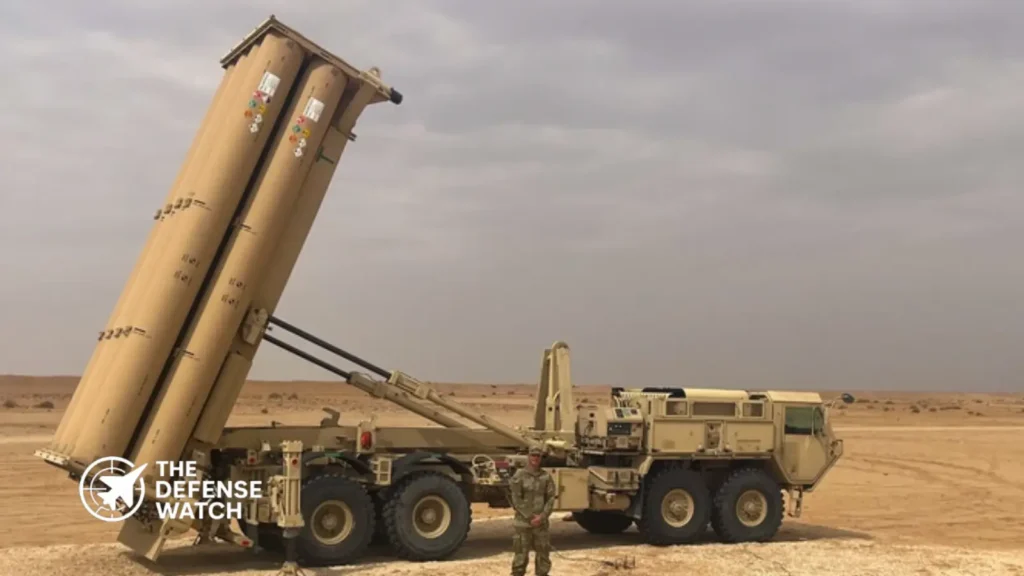
THAAD — Terminal High Altitude Area Defense — is a hit-to-kill system produced by Lockheed Martin. It is designed to defeat short- and medium-range ballistic missiles in the terminal phase of flight, engaging targets both inside and outside the atmosphere using kinetic impact technology. The system’s operational altitude band runs from approximately 40 km to 150 km, sitting above Patriot but below the exoatmospheric intercept envelope of the Navy’s SM-3.
A complete THAAD battery deploys with six M1120 HEMTT-based launchers, each carrying eight interceptors, for a total capacity of 48 missiles, requiring a 95-soldier crew for full operations. The AN/TPY-2 radar — which received a Gallium Nitride (GaN) upgrade delivered in May 2025 that doubles detection range and provides enhanced sensitivity for hypersonic threat tracking — is the system’s most strategically valuable component. The radar alone runs $400–500 million per unit.
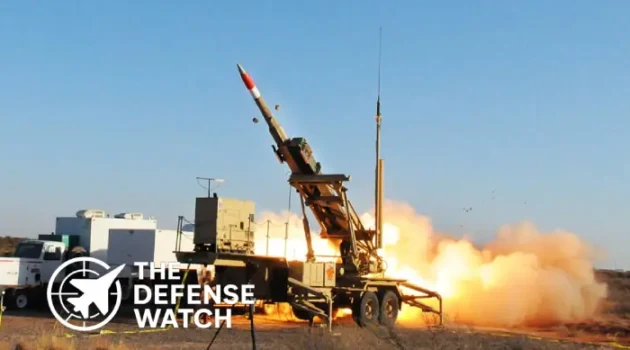
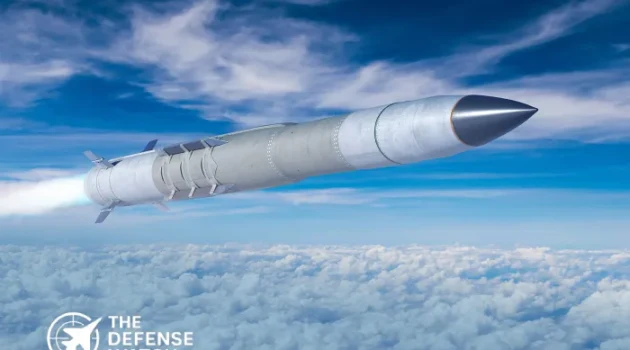
Patriot PAC-3 MSE (Missile Segment Enhanced) operates at the lower tier, handling threats in the 10–40 km altitude band that THAAD either overshoots or cannot engage cost-effectively. PAC-3 MSE features a dual-pulse motor, improved guidance, and the ability to counter ballistic missiles, cruise missiles, and aircraft, with an extended range of 60-plus kilometers. In 2022, Lockheed Martin integrated PAC-3 MSE with the THAAD system, allowing the Army to engage targets across both altitude bands without co-locating the two weapon systems — a significant reduction in logistics and ground equipment requirements.

The cost differential between the two systems is stark. THAAD interceptors cost $12.7 million per unit, while Patriot PAC-3 MSE interceptors run $3.7–4.2 million each — roughly 71 percent less expensive. That gap matters enormously when both systems are firing at volume.
The Hypersonic Problem: Physics That Neither System Was Designed For
A conventional ballistic missile follows a predictable arc. Radar tracks the trajectory; fire control calculates the intercept point; the interceptor flies to that geometry. The physics are difficult, but deterministic. THAAD has achieved a 100% success rate in controlled operational testing against ballistic threats with this profile.
Hypersonic glide vehicles break that determinism. They operate in the 20–80 km altitude band — precisely the seam between THAAD’s lower engagement floor and Patriot’s upper ceiling — and they maneuver laterally throughout terminal approach. If a hypersonic weapon is maneuvering aggressively while traveling at speeds exceeding Mach 6, interceptors may struggle to match its lateral acceleration and speed. A study modeled a scenario involving PAC-3 MSE attempting to destroy a hypersonic glide vehicle similar to the experimental HTV-2, with results suggesting successful interception becomes unlikely if the target maintains speeds above Mach 6 during its terminal dive.
The engagement timeline is the critical constraint. At Mach 10 — roughly 3.4 km per second — a target descending through THAAD’s engagement envelope gives a fire control system roughly 20–30 seconds to detect, track, compute, and launch. Some interceptors, such as Aegis SM-2 and SM-6 missiles, travel at around Mach 4, making them potentially less effective against hypersonic threats. THAAD’s own interceptor reaches approximately Mach 8 in boost phase, but that speed advantage narrows dangerously against a maneuvering target.
(adsbygoogle = window.adsbygoogle || []).push({});Real-world data confirmed the gap. In May 2025, THAAD failed to intercept a hypersonic missile targeting Ben Gurion Airport, followed by a second failure against a Houthi missile within one week — highlighting challenges against maneuvering threats that operate below THAAD’s optimal engagement envelope.
Comparative Data: THAAD vs. Patriot PAC-3 MSE
Parameter THAAD Patriot PAC-3 MSE Interceptor Unit Cost ~$12.7 million ~$3.7–4.2 million Engagement Altitude 40–150 km ~10–40 km Engagement Range ~200 km ~60 km Intercept Mode Hit-to-kill, endo- & exo-atmospheric Hit-to-kill, endoatmospheric Interceptors Per Battery 48 (6 launchers × 8) 16 (4 launchers × 4) Radar System AN/TPY-2 (GaN-upgraded 2025) AN/MPQ-65 / LTAMDS (new) FY2025 Annual Production ~12–32 interceptors ~600–620 interceptors Target Threat Profile MRBMs, IRBMs, limited HGVs SRBMs, cruise missiles, aircraft Battery Acquisition Cost ~$3 billion ~$1 billion Combat Deployment Israel (2025), UAE (2022) Saudi Arabia, Israel, Qatar (2025) Sources: FY2025 MDA Budget, CSIS Missile Defense Report, JINSA cost analysis
The Magazine Problem: Why Production Numbers Are the Real Strategic Vulnerability
Technical performance is only half the equation. During the June 2025 Israel-Iran conflict, a minimum of 39 THAAD interceptors were fired in twelve days, at $12.7 million each — more than an entire year’s FY2026 production quota of 32 missiles, with FY2025 production running at only 12 interceptors total.
The broader inventory picture is more alarming. The United States reportedly engaged Iranian ballistic missile attacks with over 150 THAAD interceptors and approximately 80 SM-3s during the 12-day conflict, following a year of defending against Houthi attacks in the Red Sea that consumed roughly 200 SM-2 and SM-6 interceptors.
The Pentagon, in partnership with Lockheed Martin and Boeing, is now executing a seven-year plan to triple PAC-3 MSE production from roughly 600 annually to 2,000 by 2030. THAAD production will also be increased. But seven-year production ramps offer zero relief for a conflict that could exhaust stockpiles in weeks.
(adsbygoogle = window.adsbygoogle || []).push({});“The strategic math is already alarming. More than an entire year’s worth of THAAD interceptors were fired in twelve days. The production rate in FY2025 was only 12 missiles.” — Arms Control Wonk, June 2025
This is the defining asymmetry in modern layered defense: adversaries can manufacture hypersonic glide vehicles — and the ballistic missiles used to saturate defense systems — at a fraction of the cost of the interceptors fired to stop them. The U.S. used up roughly 14 percent of all its THAAD interceptors during the twelve-day conflict, with replenishment estimated to take three to eight years at prior production rates.
The Layered Defense Doctrine: What Game Theory Teaches Us About Saturation
This is where the operational parallels to competitive strategy become analytically useful — not as decoration, but as structural insight. Any competitive system with high-value, limited-magazine assets faces the same core problem: when your opponent can force you to expend premium resources against low-cost probes, they shift the exchange ratio in their favor.
Iran’s June 2025 campaign sent approximately 550 ballistic missiles at Israel. The saturation logic is explicit — force the defender to shoot expensive interceptors at cheap threats, then route the actual priority payloads through degraded coverage. During periods when THAAD represented over 60 percent of interceptors used, Iran increased its successful hit rate by one to four percent. That marginal increase, compounded across a sustained campaign, compounds into strategic effect.
Layered defense doctrine is the counter: force the adversary to penetrate multiple overlapping systems, each with different engagement geometries, rather than concentrating all intercept burden on one tier. THAAD handles the high-altitude midcourse threats; PAC-3 MSE takes the low-end leakers and cruise missiles; the Aegis SM-3 provides midcourse engagement at sea. The seam, however, is the hypersonic glide vehicle — which threads the 20–80 km band between these tiers and maneuvers to avoid the intercept geometry each system is optimized for.
Traditional systems like Patriot and THAAD can engage ballistic missiles traveling at hypersonic speeds along predictable trajectories, but maneuvering hypersonic glide vehicles present significantly greater challenges due to their ability to change course during flight. No fielded U.S. system has a confirmed intercept of a maneuvering HGV under real combat conditions. That gap remains open.
The Next Step: LTAMDS, THAAD-ER, and the Future of the Kill Chain
The path forward has three vectors. First, sensor modernization: the Lower Tier Air and Missile Defense Sensor (LTAMDS) is a next-generation AESA radar replacing the AN/MPQ-65, providing 360-degree coverage and simultaneous multi-mission capability, while IBCS (Integrated Battle Command System) enables a network-centric architecture allowing distributed sensors and shooters — breaking the “one radar, one battery” limitation.
Second, interceptor upgrades: THAAD-ER (Extended Range) is a future variant with a larger booster for increased velocity, enabling extended engagement range and higher intercept altitude. Higher terminal velocity on the interceptor is the most direct kinematic response to the HGV speed problem.
(adsbygoogle = window.adsbygoogle || []).push({});Third, directed energy. Israel’s Iron Beam delivered confirmed operational use against drone and rocket threats in limited engagement on the Lebanon front in March 2026, with per-shot costs estimated at approximately two dollars. Directed-energy systems cannot yet engage maneuvering ballistic threats at altitude — but against the low-end saturation threats that drain Patriot and THAAD magazines, they represent an asymmetric cost equalizer.
Conclusion: The Exchange Ratio Is the War
THAAD and Patriot PAC-3 MSE are, by any objective metric, the most combat-capable mobile air defense systems currently deployed. The PAC-3 MSE’s documented intercept of Russian Kinzhal missiles over Ukraine validated hit-to-kill technology against a real hypersonic weapon. THAAD’s performance defending Israel — even while burning through annual production in less than two weeks — confirmed the system’s lethality under sustained attack.
But the hypersonic glide vehicle remains a fundamentally different problem. It exploits the altitude seam between tiers, combines ballistic speed with aerodynamic maneuverability, and degrades the fire control geometry that both systems depend on. The GaN radar upgrades and LTAMDS modernization improve tracking. THAAD-ER improves terminal kinematics. Neither fully closes the intercept gap against a Mach 8+ maneuvering target at 40 km.
The deeper issue is economic. At $12.7 million per THAAD shot versus the estimated $3–10 million cost of an advanced hypersonic missile, the attacker holds the exchange ratio advantage. No amount of technical performance closes that gap if the magazine runs empty first.
The strategic lesson from the June 2025 data is unambiguous: production capacity is now as operationally decisive as intercept probability. Until annual THAAD production scales from dozens to hundreds, the most technically advanced air defense system in U.S. inventory remains a finite resource in an era of potentially unlimited threats.