
- Home
- Defense Systems
- Missiles & Precision Weapons
- BGM-109 Tomahawk Missile
BGM-109 Tomahawk Missile

Defense Systems Full Specifications
1. General Information
| Name / Designation | BGM-109 / RGM-109 / UGM-109 Tomahawk (TLAM) |
| Type / Role | Long-range subsonic cruise missile; land-attack and maritime strike |
| Country of Origin | United States |
| Manufacturer | Raytheon (RTX); originally General Dynamics |
| Service Entry / Year Introduced | 1983 |
| Operational Status | Active (Block V current production/recertification) |
2. Performance & Range
| Range | ~1,600–1,700 km (Block IV/V conventional); up to ~2,500 km historical nuclear |
| Speed | Subsonic (~Mach 0.74 / 880–920 km/h) |
| Ceiling / Altitude Limit | Low-level flight, typically 30–50 m AGL |
| Accuracy (CEP) | Approximately 10 m or better with full guidance suite |
| Warhead Type | High-explosive unitary; multi-effects (Block Vb); earlier cluster (retired) |
3. Guidance & Targeting
| Guidance System | GPS / INS / TERCOM / DSMAC; active radar (anti-ship variants) |
| Targeting Mode | Pre-planned with in-flight retargeting (Block IV/V); fire-and-forget elements |
| Launch Platform Compatibility | Surface combatants (Mk 41 VLS), attack submarines |
| Seeker Type | DSMAC optical correlator; multi-mode for Maritime Strike (Block Va) |
4. Physical Characteristics
| Length | 5.56 m (without booster); 6.25 m (with booster) |
| Diameter | 0.52 m |
| Wingspan | 2.67 m |
| Launch Weight | ~1,300–1,600 kg (with booster) |
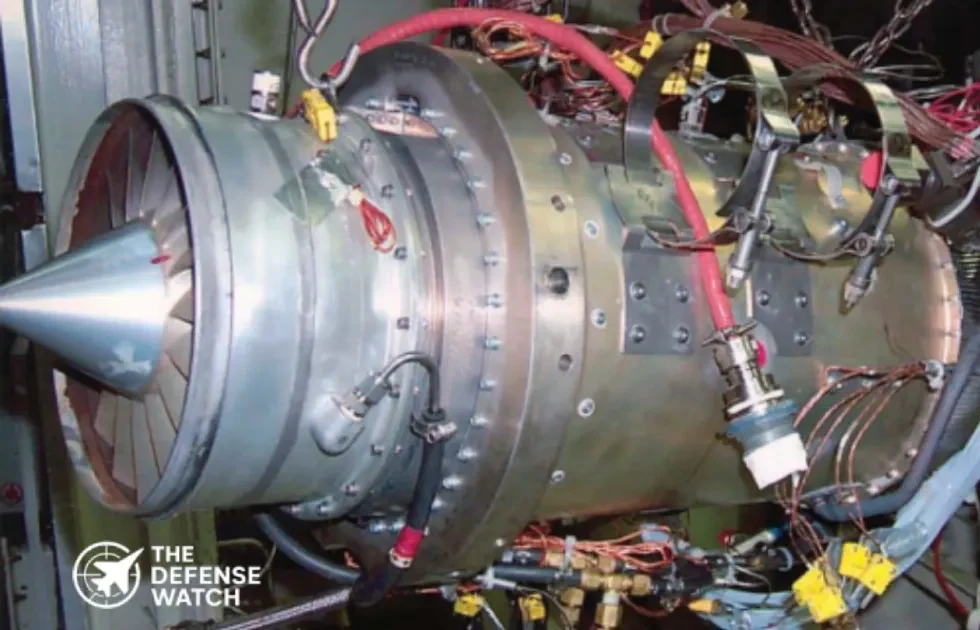
| Propulsion | Solid-fuel booster + Williams International turbofan |
5. Warhead & Payload
| Warhead Weight | Approximately 450 kg class (unitary) |
| Explosive Type | High-explosive unitary; Joint Multiple Effects Warhead System |
| Detonation Mechanism | Impact / delay / proximity options depending on variant |
| Payload Options | Conventional only (nuclear retired) |
6. Operational Use & Capabilities
| Operational Range Type | Long |
| Deployment Platform | Sea (surface ships and submarines) |
| Target Types | Fixed land targets, infrastructure, ships (later variants) |
| Combat Proven | Yes |
| Users / Operators | United States, United Kingdom, Australia, Japan, and others |
PROS
- Long standoff range reduces risk to launch platforms and aircrews
- High accuracy through multi-mode guidance (GPS/INS/TERCOM/DSMAC)
- Combat-proven across multiple operations since 1991
- In-flight retargeting and loiter capability on Block IV/V
- Compatible with both surface ships and submarines
CONS
- Subsonic speed increases vulnerability to modern air defenses compared with hypersonic systems
- High unit cost limits large-scale sustained employment
- Relatively large radar cross-section and flight profile detectable by advanced sensors
- Dependence on GPS and satellite links introduces potential jamming or disruption risks
- Limited magazine capacity on many platforms relative to shorter-range munitions
BGM-109 Tomahawk Cruise Missile
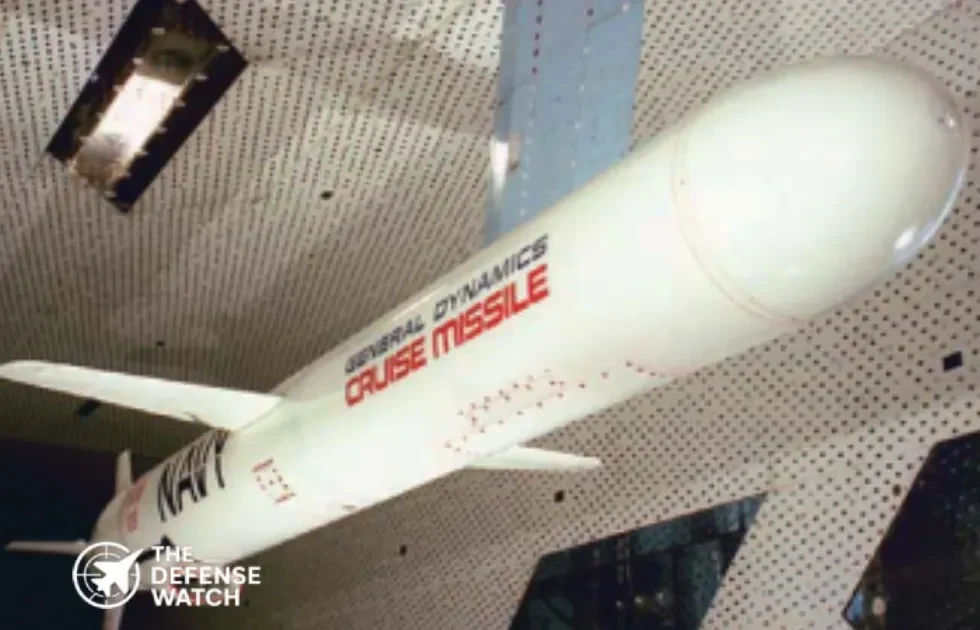
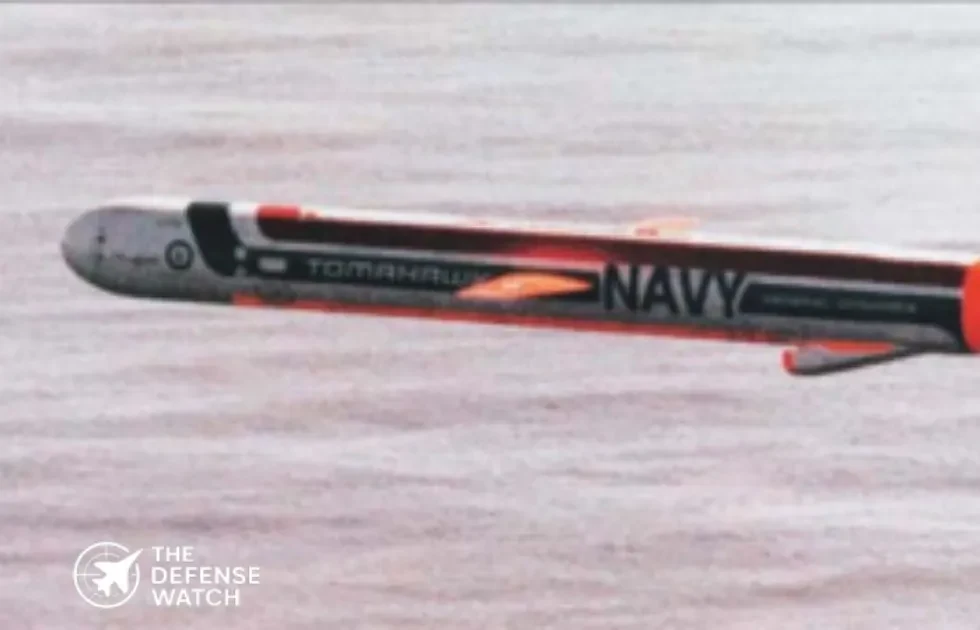
The BGM-109 Tomahawk is a long-range, all-weather subsonic cruise missile that has served as a cornerstone of U.S. Navy precision-strike capability since the early 1980s. Designed for standoff attacks against fixed and, in later variants, moving targets, it enables surface ships and submarines to engage land and maritime objectives without exposing crews to high-threat environments.
Overview/Introduction
Originally developed for both nuclear and conventional roles, the Tomahawk entered service in 1983. Nuclear-armed versions were later retired, leaving today’s inventory focused on conventional land-attack and maritime-strike missions. The missile flies at low altitude, using terrain masking to reduce detectability. It has been employed extensively in combat operations beginning with the 1991 Gulf War and continuing through later conflicts, demonstrating high reliability in real-world use.
Manufacturer
The Tomahawk was initially produced by General Dynamics. Production later transferred through McDonnell Douglas and Hughes before Raytheon (now RTX) became the sole manufacturer. Current Block V production and recertification programs are managed by Raytheon under U.S. Navy contracts.
Speed and Range
The missile is powered by a solid-fuel booster for launch followed by a Williams International turbofan engine for cruise. It sustains subsonic speeds of approximately Mach 0.74 (about 550–570 mph or 880–920 km/h). Operational range for current conventional Block IV and Block V variants is typically listed near 900 nautical miles (approximately 1,600–1,700 km), varying by warhead configuration, flight profile, and launch platform. Earlier nuclear variants reached farther distances before retirement.
Cost/Price
Unit cost for recent Block V production has been reported in the range of roughly $1.9–2.5 million per missile in U.S. procurement data, with higher all-in figures for export packages that include support, training, and integration. Actual prices fluctuate with quantity, fiscal year, and contract terms.
Guidance combines inertial navigation, GPS, Terrain Contour Matching (TERCOM), and Digital Scene Matching Area Correlation (DSMAC). Later blocks add two-way satellite datalink for in-flight retargeting and loitering. Launch platforms include vertical launch systems on surface ships and torpedo tubes or vertical launch systems on submarines. The system remains in active service with the United States and selected allied operators.
Disclaimer Note
The information provided on TheDefenseWatch.com is for general informational purposes only. While we strive to ensure the accuracy, completeness, and timeliness of our content regarding defense and aerospace products, technologies, and specifications, we cannot guarantee that all information is 100% accurate or up-to-date due to the evolving nature of military technology and classified data.TheDefenseWatch.com does not warrant the reliability, suitability, or availability of the information for any specific purpose. Users are advised to consult official sources, such as manufacturers, government publications, or defense agencies, for precise and verified data before making decisions based on our content.We are not affiliated with any defense manufacturers, governments, or military organizations mentioned. Opinions, reviews, and ratings reflect expert analysis but are subjective and should not be considered endorsements. TheDefenseWatch.com is not responsible for any errors, omissions, or consequences arising from the use of this website’s content.External links are provided for convenience and do not imply endorsement. TheDefenseWatch.com reserves the right to update or modify content without prior notice. By using this website, you agree to our Privacy & Cookies Policy.

New Arrivals



Popular Comparisons
-
 J-10C vs JF-17 Thunder: Which Fighter Is More Capable?
View Comparison →
J-10C vs JF-17 Thunder: Which Fighter Is More Capable?
View Comparison → -
Tejas vs Gripen: Key Differences and Capabilities
View Comparison →
-
Tejas vs MiG-21 Bison: How India Replaced Its Iconic Supersonic Fighter
View Comparison →
-
F-35 vs F-16: Stealth, Sensors and Combat Roles
View Comparison →
-
Tejas Fighter Jet vs F-16 Fighting Falcon: Capability Compared
View Comparison →
-
Rafale Fighter Jet vs F-16 Fighting Falcon : Which Fighter Has the Edge?
View Comparison →
-
Su-57 Fighter Jet vs J-20 Fighter Jet: Stealth and Air Combat Compared
View Comparison →
-
Mirage 2000 vs Tejas Mk1A: Legacy Combat Power vs Indigenous Modernization
View Comparison →
-
Rafale Fighter Jet vs F-22 Raptor: Which Air Dominance Fighter Has the Edge?
View Comparison →
-
Tejas Fighter Jet vs. Rafale Fighter Jet: India’s Indigenous Fighter Meets France’s Proven Multirole Combat Aircraft
View Comparison →


- DIA 2026 Space Report Warns China May Field Orbital Directed-Energy Weapons by Late 2020s

- Boeing Advances Second MQ-25 Stingray Toward Testing for U.S. Navy
- Saab Unveils Sea Giraffe AMB D Radar With 250-Kilometer Air Surveillance Range
- Most Advanced Fighter Jet in the World in 2026: F-22 vs. F-35 vs. J-20
- Lockheed Martin Wins $88.6 Million Navy Contract for Radiant Mercury Systems
- Pentagon Uses Department of War Name to Reinforce Message to Adversaries
- Israel’s Military Chief Reportedly Opposed Pre-Election Strike on Iran
- Canada Receives First Two F-35 Fighters as Review of 72 Aircraft Continues
- Lockheed Martin Completes $3.45 Billion Ultra Maritime Acquisition
- Lockheed Martin Advances Ramjet-Powered PrSM Increment 4 Missile






Fighter Jets
-
 F-100 Super Sabre
-
North American F-86 Sabre
-
Northrop YF-23 Fighter
-
Rafale F5 Fighter
-
SU-57 Felon Stealth Fighter
-
Boeing F/A-XX Fighter
-
JF-17 Thunder Fighter Jet
-
F-47 Fighter Jet
-
MIG-31 Fighter Jet
-
J-10CE Fighter Jet
-
Chengdu J-10 Fighter Jet
-
Chengdu J-10C Fighter Jet
-
Gripen E Fighter Jet
-
Tejas Mk1A Fighter Jet
-
Tejas Mk‑2 Fighter Jet
-
F-16V Viper Block 70 Fighter Jet
-
F-15EX Eagle II Fighter
-
F-15E Strike Eagle Fighter
-
F/A-18E/F Super Hornet Fighter Jet
-
Saab Gripen F Fighter Jet
-
JAS 39E/F Gripen Fighter Jet
-
JAS 39 Gripen Fighter Jet
-
F-35A Lightning II Fighter Jet
-
F/A-18F Super Hornet







Recent Compares
-
J-10C vs JF-17 Thunder: Which Fighter Is More Capable?
View Comparison →
-
Tejas vs Gripen: Key Differences and Capabilities
View Comparison →
-
Tejas vs MiG-21 Bison: How India Replaced Its Iconic Supersonic Fighter
View Comparison →
-
F-35 vs F-16: Stealth, Sensors and Combat Roles
View Comparison →
-
Tejas Fighter Jet vs F-16 Fighting Falcon: Capability Compared
View Comparison →
Latest Defense Systems
10 Compares Defense Systems
-
J-10C vs JF-17 Thunder: Which Fighter Is More Capable?
View Comparison →
-
Tejas vs Gripen: Key Differences and Capabilities
View Comparison →
-
Tejas vs MiG-21 Bison: How India Replaced Its Iconic Supersonic Fighter
View Comparison →
-
F-35 vs F-16: Stealth, Sensors and Combat Roles
View Comparison →
-
Tejas Fighter Jet vs F-16 Fighting Falcon: Capability Compared
View Comparison →
-
Rafale Fighter Jet vs F-16 Fighting Falcon : Which Fighter Has the Edge?
View Comparison →
-
Su-57 Fighter Jet vs J-20 Fighter Jet: Stealth and Air Combat Compared
View Comparison →
-
Mirage 2000 vs Tejas Mk1A: Legacy Combat Power vs Indigenous Modernization
View Comparison →
-
Rafale Fighter Jet vs F-22 Raptor: Which Air Dominance Fighter Has the Edge?
View Comparison →
-
Tejas Fighter Jet vs. Rafale Fighter Jet: India’s Indigenous Fighter Meets France’s Proven Multirole Combat Aircraft
View Comparison →
- DIA 2026 Space Report Warns China May Field Orbital Directed-Energy Weapons by Late 2020s
- Boeing Advances Second MQ-25 Stingray Toward Testing for U.S. Navy
- Saab Unveils Sea Giraffe AMB D Radar With 250-Kilometer Air Surveillance Range
- Most Advanced Fighter Jet in the World in 2026: F-22 vs. F-35 vs. J-20
- Lockheed Martin Wins $88.6 Million Navy Contract for Radiant Mercury Systems