










@2026 – All Right Reserved. TheDefenseWatch.com
- Home
- Defense Systems
- Fighter Jets
- F-14D Tomcat Fighter Jet
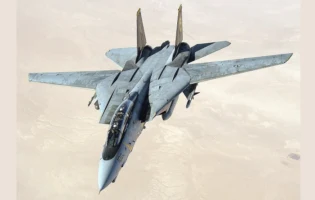
F-14D Tomcat Fighter Jet
Defense Systems Full Specifications
General Information
| Name | F-14D Tomcat |
| Manufacturer | Grumman Aerospace |
| Country of Origin | United States |
| Type / Role | Fleet Defense Fighter / Multirole Fighter |
| Generation | Fourth Generation |
| Status | Retired from U.S. Navy service |
| First Flight | 1990 |
| Introduction / In Service Since | 1991 |
| Number Built | 55 new-build and conversions |
| Operators | United States Navy |
Dimensions & Structure
| Length | 62 ft 9 in |
| Wingspan | 38 ft 2 in to 64 ft 1 in |
| Height | 16 ft |
| Wing Area | 565 sq ft |
| Empty Weight | 43,735 lb |
| Maximum Takeoff Weight (MTOW) | 74,350 lb |
| Internal Weapons Bay | None |
| External Hardpoints | 8 |
Performance
| Maximum Speed | Mach 2.34 |
| Range | 1,600 miles |
| Combat Radius | Approx. 575 miles |
| Service Ceiling | 50,000+ ft |
| Rate of Climb | 45,000 ft/min |
| Thrust-to-Weight Ratio | Approx. 0.91 |
| G Limits | +7.5 G |
Powerplant
| Engine Type | GE F110-GE-400 Turbofan |
| No. of Engines | 2 |
| Thrust (each) | 27,000 lbf with afterburner |
| Thrust Vectoring | No |
| Fuel Capacity | Approx. 16,200 lb internal |
Armament
| Gun | 1× 20mm M61 Vulcan |
| Missiles (Air-to-Air) | AIM-54 Phoenix, AIM-7 Sparrow, AIM-9 Sidewinder |
| Missiles (Air-to-Ground) | Limited precision-guided weapons |
| Bombs | JDAM, LGBs, Mk 82 series |
| Hardpoints | 8 |
| Payload Capacity | Approx. 14,500 lb |
Avionics & Systems
| Radar | AN/APG-71 |
| Radar Range | 200+ k |
| Electronic Warfare (EW) System | Advanced ECM suite |
| Targeting System | LANTIRN targeting pod |
| Helmet Display | No |
| Navigation | INS/GPS |
| Autopilot / AI Assistance | Digital flight systems |
| Communication | Secure naval communication suite |
Stealth & Technology
| Radar Cross Section (RCS) | Large compared to stealth aircraft |
| Stealth Features | Limited |
| Infrared Signature Reduction | Minimal |
| Sensor Fusion | Partial |
| Networking Capabilities | Tactical data links |
Variants
| Special Export Versions | Proposed enhanced strike version |
Operational History
| Major Conflicts / Deployments | Iraq, Afghanistan, Balkans |
| Notable Operators | United States Navy |
| Combat Proven? | Yes |
| Mission Types | Air superiority, interception, strike missions |
Cost & Program
| Unit Cost | Approx. $74 million |
| Development Cost | Multi-billion dollar Tomcat program |
| Program Name | F-14 Tomcat Program |
| Funding Countries | United States |
Additional Information
| Upgrades Planned | Retired before major modernization |
| Future Replacement | F/A-18E/F Super Hornet |
| Export Restrictions | Strict U.S. export controls |
| Notable Achievements | Long-range Phoenix missile integration |
| Competitors | MiG-31, Su-27, F-15 Eagle |
PROS
- Powerful long-range radar capability
- Excellent high-speed interception performance
- Strong air-to-air missile loadout
- Improved engines over earlier variants
- Proven carrier-based combat platform
CONS
- High maintenance requirements
- Expensive operational costs
- Large radar signature compared to stealth fighters
- Aging avionics by modern standards
- Complex swing-wing maintenance system
F-14D Tomcat Super Fighter
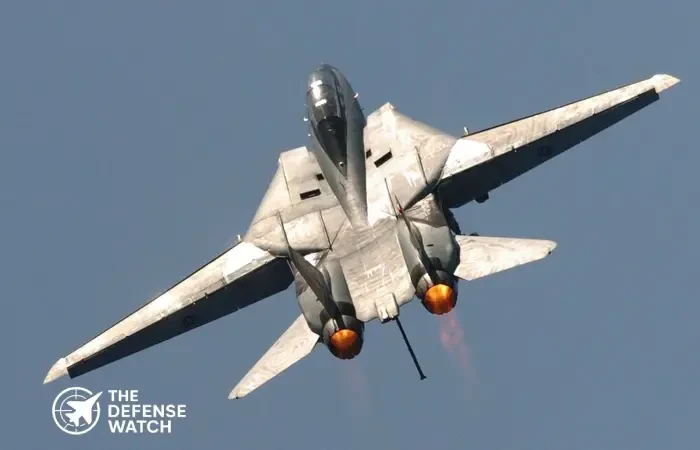
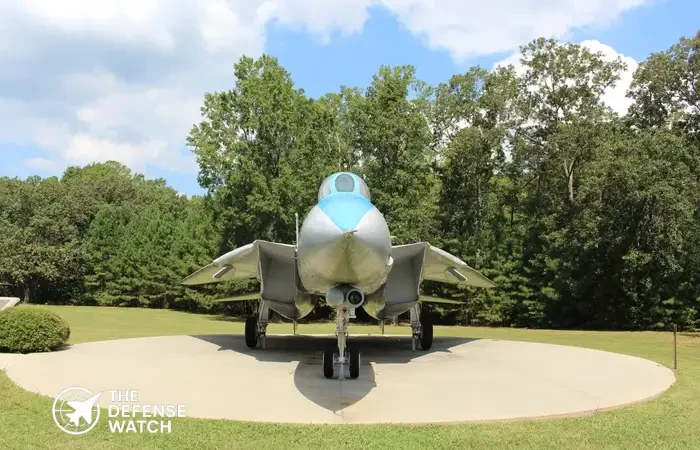
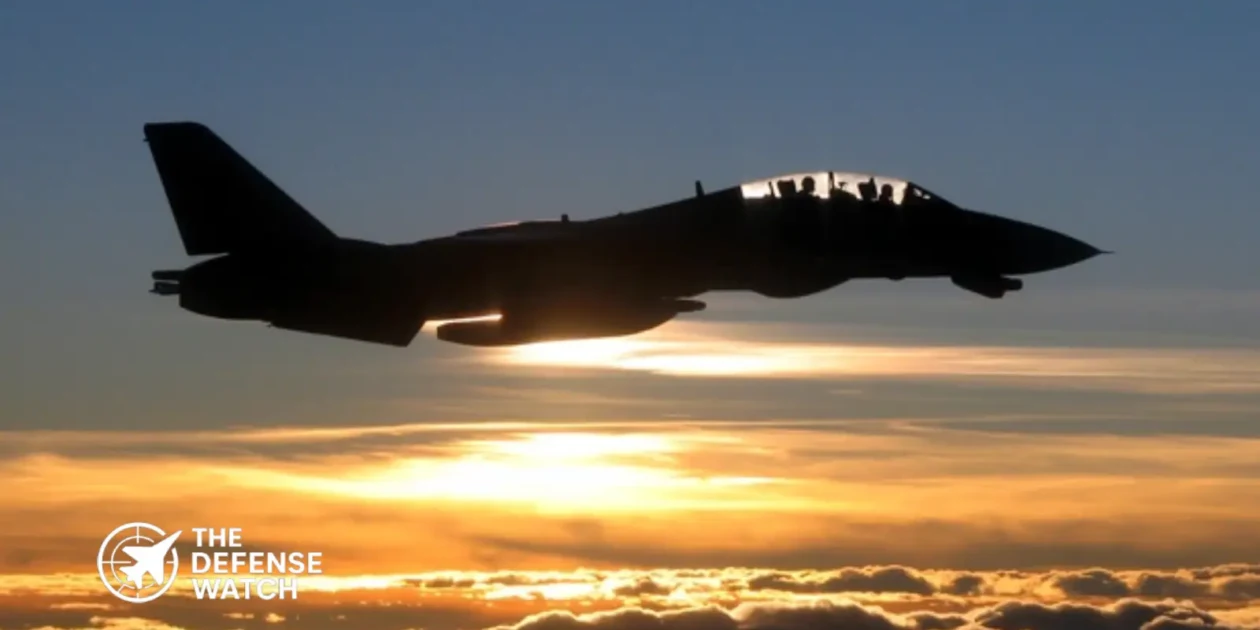
The F-14D Tomcat represented the final and most advanced production version of the legendary F-14 Tomcat family. Developed for the U.S. Navy during the late Cold War era, the F-14D introduced major upgrades in radar systems, engines, avionics, survivability, and precision strike capability.
Often referred to as the Super Tomcat, the aircraft improved upon earlier F-14A and F-14B variants by replacing the problematic TF30 engines with more reliable and powerful General Electric F110 engines. The result was significantly better acceleration, maneuverability, and carrier launch performance.
The F-14D served as both an air superiority fighter and long-range fleet defense interceptor. It later evolved into a precision strike platform capable of delivering guided bombs during combat operations in Iraq, Afghanistan, and the Balkans.
Manufacturer
The F-14D Tomcat was produced by Grumman Aerospace, now part of Northrop Grumman. The aircraft featured upgraded digital avionics, improved electronic warfare systems, and the AN/APG-71 radar, derived from systems used in the F-15 Eagle.
The aircraft retained the Tomcat’s iconic variable-sweep wing design, allowing optimized flight performance at both low and high speeds.
Speed and Range
The F-14D could reach speeds exceeding Mach 2.3 and had a combat radius of approximately 500 nautical miles. With aerial refueling capability, the aircraft could perform long-range interception and strike missions far from carrier groups.
Powered by two F110-GE-400 afterburning turbofan engines, the aircraft delivered improved thrust and operational reliability compared to earlier variants.
Variant Table
| Variant | Role |
|---|---|
| F-14A | Original fleet defense interceptor |
| F-14B | Improved engine variant |
| F-14D | Advanced digital avionics and radar version |
| Super Tomcat 21 | Proposed upgraded multirole concept |
Cost / Price
The estimated unit cost of the F-14D Tomcat was approximately $74 million per aircraft in then-year dollars. The upgrade program focused on extending fleet capability until the arrival of newer carrier fighters such as the F/A-18E/F Super Hornet.
Disclaimer Note
The information provided on TheDefenseWatch.com is for general informational purposes only. While we strive to ensure the accuracy, completeness, and timeliness of our content regarding defense and aerospace products, technologies, and specifications, we cannot guarantee that all information is 100% accurate or up-to-date due to the evolving nature of military technology and classified data.TheDefenseWatch.com does not warrant the reliability, suitability, or availability of the information for any specific purpose. Users are advised to consult official sources, such as manufacturers, government publications, or defense agencies, for precise and verified data before making decisions based on our content.We are not affiliated with any defense manufacturers, governments, or military organizations mentioned. Opinions, reviews, and ratings reflect expert analysis but are subjective and should not be considered endorsements. TheDefenseWatch.com is not responsible for any errors, omissions, or consequences arising from the use of this website’s content.External links are provided for convenience and do not imply endorsement. TheDefenseWatch.com reserves the right to update or modify content without prior notice. By using this website, you agree to our Privacy & Cookies Policy.
More Defense Systems from Grumman Aerospace Corporation
New Arrivals
Popular Comparisons
-
 Tejas Fighter Jet vs F-16 Fighting Falcon: Capability Compared
View Comparison →
Tejas Fighter Jet vs F-16 Fighting Falcon: Capability Compared
View Comparison → -
Rafale Fighter Jet vs F-16 Fighting Falcon : Which Fighter Has the Edge?
View Comparison →
-
Su-57 Fighter Jet vs J-20 Fighter Jet: Stealth and Air Combat Compared
View Comparison →
-
Mirage 2000 vs Tejas Mk1A: Legacy Combat Power vs Indigenous Modernization
View Comparison →
-
Rafale Fighter Jet vs F-22 Raptor: Which Air Dominance Fighter Has the Edge?
View Comparison →
-
Tejas Fighter Jet vs. Rafale Fighter Jet: India’s Indigenous Fighter Meets France’s Proven Multirole Combat Aircraft
View Comparison →
-
F-22 Raptor vs. F-35 Joint Strike Fighter: Which Fifth Generation Fighter Has the Edge?
View Comparison →
-
F-35A vs. F-22 Raptor: Which U.S. Stealth Fighter Dominates Modern Air Combat?
View Comparison →
-
AGM-114 Hellfire vs. AGM-179 JAGM: Which U.S. Precision Missile Is Better?
View Comparison →
-
Patriot (PAC-3) vs. THAAD: Complete Missile Defense System Comparison, Capabilities, Range, and Strategic Roles
View Comparison →
- Raytheon Wins $34.4M V-22 Tactical Software Sustainment Contract

- Dayton T. Brown Wins $55.8M P-8A Mobile Mission Systems Contract
- Finland deepens European F-35 cooperation with first pilot flight in Europe
- Luxembourg Deploys Additional Detection Assets After Drone Sightings
- China’s J-XDS Prototype May Be Testing a New Radar
- L3Harris Pushes Modular, Distributed Architecture for Electronic Warfare
- Northrop Grumman to Deliver GHOST-R Prototype for U.S. Space Force
- Airborne Early Warning Aircraft Ranked: E-7 vs E-2D vs A-50
- Lockheed Martin Shifts Hypersonic Focus From Peak Speed to Sustained Flight and Production
- Spanish F-18s Conduct 15 Scrambles in Romania During First Month of NATO Mission