- Home
- Catalog
- Compare
- F-22 Raptor vs. F-35 Joint Strike Fighter: Which Fifth Generation Fighter Has the Edge?
F-22 Raptor vs. F-35 Joint Strike Fighter: Which Fifth Generation Fighter Has the Edge?
F-22 Raptor vs. F-35 Joint Strike Fighter: Air Dominance vs. Multi Role Supremacy
Executive Summary & Tactical Overview
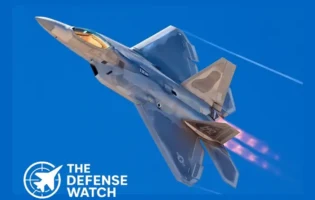
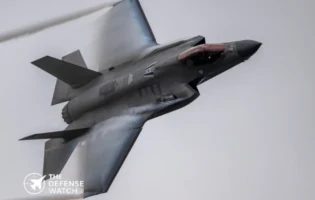
Although both aircraft belong to the fifth generation of stealth fighters, the F-22 Raptor and F-35 Joint Strike Fighter were designed with different priorities. The F-22 remains the world’s premier air superiority fighter, optimized for defeating enemy aircraft in highly contested airspace. The F-35, meanwhile, emphasizes multirole flexibility, advanced sensor fusion, networked warfare, and strike operations across land, sea, and expeditionary environments.
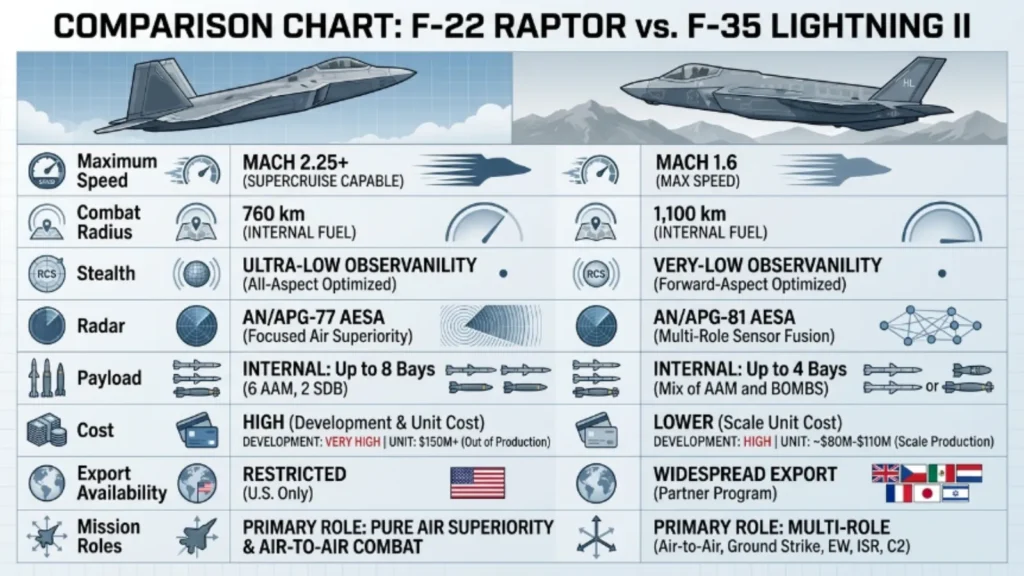
Rather than replacing one another, the two aircraft complement each other within the U.S. military’s modern air combat doctrine.
Key Takeaways
Key Takeaways
F-22 Raptor Advantage
- Unmatched air superiority fighter.
- Supercruise capability at Mach 2+ without afterburners.
- Exceptional stealth and agility for dogfighting.
- Optimized to defeat advanced enemy fighters.
F-35 Joint Strike Fighter Advantage
- Industry-leading sensor fusion and battlefield awareness.
- Advanced electronic warfare and precision strike capabilities.
- Available in Air Force, Navy, and Marine Corps variants.
- Designed for multirole operations and allied interoperability.
Strategic Context
The F-22 Raptor dominates air-to-air combat by securing control of contested skies, while the F-35 Joint Strike Fighter delivers unmatched versatility through precision strike, intelligence gathering, electronic warfare, and network-centric operations. Together, they form the backbone of modern U.S. and allied fifth generation air power.
Technical Specifications Matrix
| Specification | F-22 Raptor | F-35 Joint Strike Fighter |
|---|---|---|
| Generation / Type | Fifth Generation Air Superiority Fighter | Fifth Generation Multirole Fighter |
| Manufacturer | Lockheed Martin, Boeing | Lockheed Martin |
| Crew | 1 | 1 |
| First Flight | 1997 | 2006 |
| Operational Service | 2005 | 2015 |
| Maximum Speed | Mach 2.25 | Mach 1.6 |
| Supercruise | Yes (without afterburner) | No |
| Combat Radius | Approximately 590 miles (950 km) | Approximately 670 miles (1,080 km), F-35A |
| Ferry Range | Around 1,840 miles | Around 1,380 miles |
| Service Ceiling | Over 65,000 ft | Approximately 50,000 ft |
| Internal Weapons Bays | Yes | Yes |
| Maximum Payload | Approximately 8,000 lb internal | Up to 18,000 lb combined internal/external |
| Radar | AN/APG-77 AESA | AN/APG-81 AESA |
| Electro-Optical System | Limited | EOTS with Distributed Aperture System |
| Helmet Mounted Display | No | Yes |
| Electronic Warfare Suite | Integrated | AN/ASQ-239 Advanced EW System |
| Estimated Unit Cost | Approximately $143 million (flyaway, historical estimate) | Approximately $82 million (F-35A production aircraft) |
Deep Dive Analysis
1. Stealth & Survivability
The F-22 was engineered specifically for penetrating dense enemy air defenses while remaining virtually undetectable by radar. Its airframe incorporates edge alignment, internal weapons storage, radar absorbent materials, and optimized engine inlets that contribute to one of the lowest radar cross sections ever achieved by a production fighter.
Its twin engine design also provides greater redundancy and exceptional survivability during high intensity combat.
The F-35 sacrifices some extreme stealth optimization for greater mission flexibility. Although its radar signature remains exceptionally low from frontal aspects, its design incorporates additional sensors, communications equipment, and multirole capabilities that inevitably create engineering tradeoffs.
Where the F-35 excels is in its ability to avoid detection through superior electronic warfare, passive sensing, and information dominance rather than relying solely on low observability.
Advantage: F-22 Raptor
2. Sensors, Radar & Targeting Capabilities
This is where the F-35 establishes a clear technological advantage.
The AN/APG-81 AESA radar is integrated with multiple advanced systems including:
- Electro-Optical Targeting System (EOTS)
- Distributed Aperture System (DAS)
- Electronic Warfare Suite
- Sensor Fusion Engine
- Multifunction Data Link
- Link 16 Networking
Instead of presenting pilots with separate radar, infrared, and electronic warfare information, the aircraft combines all sensor inputs into a single tactical picture.
The F-22’s APG-77 radar remains among the world’s most capable air-to-air radars, offering exceptional detection range and low probability of intercept. However, its original avionics architecture predates many of the networking and fusion capabilities found in newer aircraft.
As a battlefield information node, the F-35 is widely considered the most advanced combat aircraft currently in operational service.
Advantage: F-35 Joint Strike Fighter
3. Payload Options & Operational Deployments
The F-22 primarily carries:
- AIM-120 AMRAAM
- AIM-9X Sidewinder
- GBU-32 JDAM
- Small Diameter Bomb
Its emphasis remains air superiority rather than deep strike.
The F-35 supports a far wider inventory, including:
- AIM-120 AMRAAM
- AIM-9X
- AGM-158 JASSM
- AGM-88G AARGM-ER
- Joint Strike Missile
- SPEAR 3
- Paveway IV
- GBU-53/B StormBreaker
- B61-12 nuclear bomb (planned for select variants)
Three operational variants further expand its flexibility:
- F-35A, Conventional Takeoff
- F-35B, Short Takeoff and Vertical Landing
- F-35C, Carrier Operations
The F-35 has accumulated hundreds of thousands of flight hours across numerous allied air forces and has participated in combat missions over the Middle East and Europe. The F-22 has also seen operational deployments, primarily providing air superiority, precision strike, and deterrence missions, but its fleet size and export restrictions limit its global footprint.
Advantage: F-35 Joint Strike Fighter
Strategic Verdict & Tactical Scenarios
The comparison between the F-22 Raptor and the F-35 Joint Strike Fighter is not about identifying a universal winner. Each aircraft was built to dominate different aspects of modern air warfare.
The F-22 remains the benchmark for air superiority, combining unmatched stealth, supercruise, high altitude performance, and exceptional agility to secure control of contested skies. Its design is optimized for defeating advanced enemy fighters before they can pose a threat.
The F-35, in contrast, is a highly connected multirole platform designed to gather, process, and share battlefield intelligence while conducting air to air combat, precision strike, electronic attack, intelligence collection, and close air support. Its versatility, lower procurement cost, and widespread adoption by allied nations make it the cornerstone of modern coalition airpower.
For the U.S. Air Force, the two aircraft are most effective when employed together. The F-22 clears the airspace and establishes air dominance, while the F-35 leverages its advanced sensors and multirole capabilities to execute precision strikes, coordinate joint operations, and enhance situational awareness across the battlespace.
When the F-22 Raptor Prevails
- Air superiority missions against advanced enemy fighters
- Beyond visual range interception
- High altitude offensive counter air operations
- Stealth penetration in heavily defended airspace
- Maximum maneuverability and supercruise performance
When the F-35 Joint Strike Fighter Prevails
- Precision strike and suppression of enemy air defenses
- Network centric and coalition operations
- Electronic warfare and intelligence gathering
- Carrier based and expeditionary missions
- Multirole combat requiring flexibility across mission sets
Get real time update about this post category directly on your device, subscribe now.
  | |
| Price | |
| Our Rating | |
| Manufacturer | Lockheed Martin Lockheed Martin |
| Category | Fighter Jets Fighter Jets |
General Information
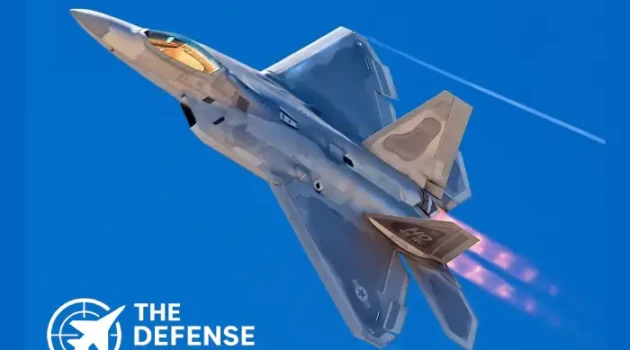
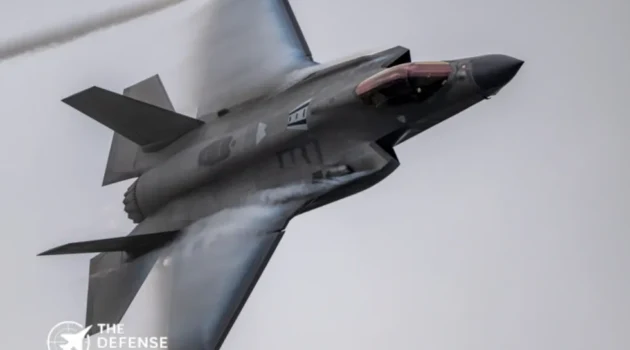
| Name | F-22 Raptor F-35 Lightning II |
| Manufacturer | Lockheed Martin, Boeing Defense Lockheed Martin |
| Country of Origin | United States United States |
| Type / Role | Air Superiority Stealth Fighter Multirole Stealth Fighter |
| Generation | Fifth Generation 5th |
| Status | In active service In Service |
| First Flight | September 7, 1997 December 15, 2006 |
| Introduction / In Service Since | December 15, 2005 2015 |
| Number Built | 187 operational units 1,200+ (as of 2025) |
| Operators | United States Air Force USA, UK, Japan, Israel, Italy, Australia, and others |
Dimensions & Structure
| Length | 62 ft (18.9 m) 51.2 ft (15.6 m) |
| Wingspan | 44.5 ft (13.6 m) 35 ft (10.7 m) |
| Height | 16.7 ft (5.1 m) 14.4 ft (4.38 m) |
| Wing Area | 840 sq ft (78 m²) 460 sq ft (42.7 m²) |
| Empty Weight | 43,340 lb (19,700 kg) 29,300 lb (13,300 kg) |
| Maximum Takeoff Weight (MTOW) | 83,500 lb (38,000 kg) 70,000 lb (31,800 kg) |
| Internal Weapons Bay | 3 total (1 centerline, 2 side) 2 (up to 5,700 lb payload) |
| External Hardpoints | 4 (non-stealth configuration) 6–10 (up to 18,000 lb total) |
Performance
| Maximum Speed | Mach 2.25 (2,414 km/h) Mach 1.6 |
| Range | 1,840 miles (2,960 km) 1,380 mi (2,220 km) |
| Combat Radius | 530 miles (850 km) ~670 mi (1,080 km) |
| Service Ceiling | 65,000 ft (19,800 m) 50,000 ft (15,240 m) |
| Rate of Climb | 62,000 ft/min (315 m/s) 45,000 ft/min |
| Thrust-to-Weight Ratio | 1.26 0.87 |
| G Limits | +9 G +9 |
Powerplant
| Engine Type | Pratt & Whitney F119-PW-100 turbofan Pratt & Whitney F135-PW-100 |
| No. of Engines | 2 1 |
| Thrust (each) | 35,000 lbf (156 kN) 43,000 lbf |
| Thrust Vectoring | Yes (2D pitch vectoring) Yes (on F-35B variant) |
| Fuel Capacity | 18,000 lb (8,200 kg) internal ~18,500 lb internal |
Armament
| Gun | 1× M61A2 Vulcan 20mm cannon GAU-22/A 25mm cannon (F-35A) |
| Missiles (Air-to-Air) | AIM-120 AMRAAM, AIM-9 Sidewinder AIM-120 AMRAAM, AIM-9X |
| Missiles (Air-to-Ground) | JDAM, SDB AGM-154 JSOW, AGM-158 JASSM |
| Bombs | GBU-32 JDAM, GBU-39 SDB JDAM, Paveway II/III, SDB I/II |
| Hardpoints | 4 external (optional) 6 external + 2 internal |
| Payload Capacity | 18,000 lb (8,200 kg) ~18,000 lb |
Avionics & Systems
| Radar | AN/APG-77 AESA radar AN/APG-81 AESA |
| Radar Range | 125+ miles (200+ km) ~150+ km |
| Electronic Warfare (EW) System | AN/ALR-94 suite AN/ASQ-239 suite |
| Targeting System | Integrated multi-sensor fusion EOTS (Electro-Optical Targeting System) |
| Helmet Display | Standard HUD (no HMD in baseline) HMDS Gen III |
| Navigation | GPS/INS GPS/INS with terrain-following |
| Autopilot / AI Assistance | Digital fly-by-wire Advanced flight management |
| Communication | Intra-flight data link, secure comms MADL & Link 16 secure data links |
Stealth & Technology
| Radar Cross Section (RCS) | ~0.0001 m² ~0.001 m² |
| Stealth Features | Radar-absorbent materials, internal weapons RAM coating, internal weapons bay, edge alignment |
| Infrared Signature Reduction | Engine exhaust shielding Yes |
| Sensor Fusion | Yes Full 360° data integration |
| Networking Capabilities | Limited Link-16, proprietary data link Distributed data-sharing with allied units |
Variants
| Special Export Versions | None (export restricted) F-35I (Israel), F-35A (Japan), etc. |
Operational History
| Major Conflicts / Deployments | Syria (2014–present) Middle East operations (Iraq, Syria) |
| Notable Operators | USAF (Air Combat Command, PACAF) USAF, USN, USMC, RAF, IDF |
| Combat Proven? | Yes Yes |
| Mission Types | Air superiority, interception, precision strike Air superiority, strike, SEAD, ISR |
Cost & Program
| Unit Cost | ~$150 million (flyaway) $80–100 million (variant-dependent) |
| Development Cost | ~$67 billion (program total) ~$400 billion (program total) |
| Program Name | Advanced Tactical Fighter (ATF) Joint Strike Fighter (JSF) |
| Funding Countries | United States only USA, UK, Italy, Netherlands, Canada, Australia, etc. |
Additional Information
| Upgrades Planned | Avionics, radar, networking, sensors Block 4, Tech Refresh 3 |
| Future Replacement | NGAD (Next Generation Air Dominance) NGAD (2035+) |
| Export Restrictions | U.S. Congress export ban U.S. FMS approval required |
| Notable Achievements | First operational 5th-gen fighter Widest global fighter program in history |
| Competitors | F-35 Lightning II, Su-57, J-20 Su-57, J-20, Tempest, KF-21 |
  |
Disclaimer Note
The information provided on TheDefenseWatch.com is for general informational purposes only. While we strive to ensure the accuracy, completeness, and timeliness of our content regarding defense and aerospace products, technologies, and specifications, we cannot guarantee that all information is 100% accurate or up-to-date due to the evolving nature of military technology and classified data. TheDefenseWatch.com does not warrant the reliability, suitability, or availability of the information for any specific purpose. Users are advised to consult official sources, such as manufacturers, government publications, or defense agencies, for precise and verified data before making decisions based on our content. We are not affiliated with any defense manufacturers, governments, or military organizations mentioned. Opinions, reviews, and ratings reflect expert analysis but are subjective and should not be considered endorsements. TheDefenseWatch.com is not responsible for any errors, omissions, or consequences arising from the use of this website’s content. External links are provided for convenience and do not imply endorsement. TheDefenseWatch.com reserves the right to update or modify content without prior notice. By using this website, you agree to our Privacy & Cookies Policy.

New Arrivals
Popular Comparisons
-
 F-35A vs. F-22 Raptor: Which U.S. Stealth Fighter Dominates Modern Air Combat? View Comparison →
 - AGM-114 Hellfire vs. AGM-179 JAGM: Which U.S. Precision Missile Is Better? View Comparison →
- Patriot (PAC-3) vs. THAAD: Complete Missile Defense System Comparison, Capabilities, Range, and Strategic Roles View Comparison →
- AIM-120 AMRAAM vs. AIM-9X Sidewinder: Complete Air-to-Air Missile Comparison, Range, Speed, and Combat Roles View Comparison →
- BGM-109 Tomahawk vs. AGM-158 JASSM: Which Long Range Precision Strike Missile Offers Greater Strategic Advantage? View Comparison →
- Patriot PAC-3 vs. Russian S-400 Triumf: Which Air Defense System Is More Capable? View Comparison →
- Su-30MKI Fighter Jet vs JF-17 Thunder: Complete Comparison of Capabilities, Radar, Weapons & Performance View Comparison →
- Babur Missile vs BrahMos Missile: Cruise Missile Comparison View Comparison →
- Fatah 2 Missile vs BrahMos Missile: Which Supersonic Strike Weapon Has the Edge? View Comparison →
- BrahMos Missile vs PL-15 Missile: Complete Comparison of Speed, Range, Guidance, and Combat Roles View Comparison →


- L3Harris Secures Seven Year Framework To Nearly Triple PAC-3 MSE Propulsion Production For U.S. Missile Defense

- HENSOLDT Wins First CAIRAS Order For Helsing CA-1 Europa Autonomous Combat Aircraft

- Helicopter Alliance Moves To Expand Acquisition Strategy As Demand Grows For Full Lifecycle Black Hawk Services
- Bell Secures $300 Million Deal For USMC H-1 Helicopter SPINE Upgrades
- Turkish Aerospace Moves To Position Hürjet As UK Seeks New Advanced Jet Trainer
- Nitro-Chem Moves To Expand TNT Production In UK As NATO Races To Strengthen Munitions Supply Chains
- Exosens Moves To Triple Thermal Camera Production As Global Military Drone Demand Accelerates
- Saab Secures $1 Billion GlobalEye AEW&C Deal From Middle East Customer, Deliveries Scheduled For 2030
- Airbus U030 Flexrotor Expands Maritime Surveillance Capability In Baltic Sea Under EMSA Operations
- U.S. Army Tests Autonomous Volcano System To Rapidly Deploy Minefields Without Exposing Troops