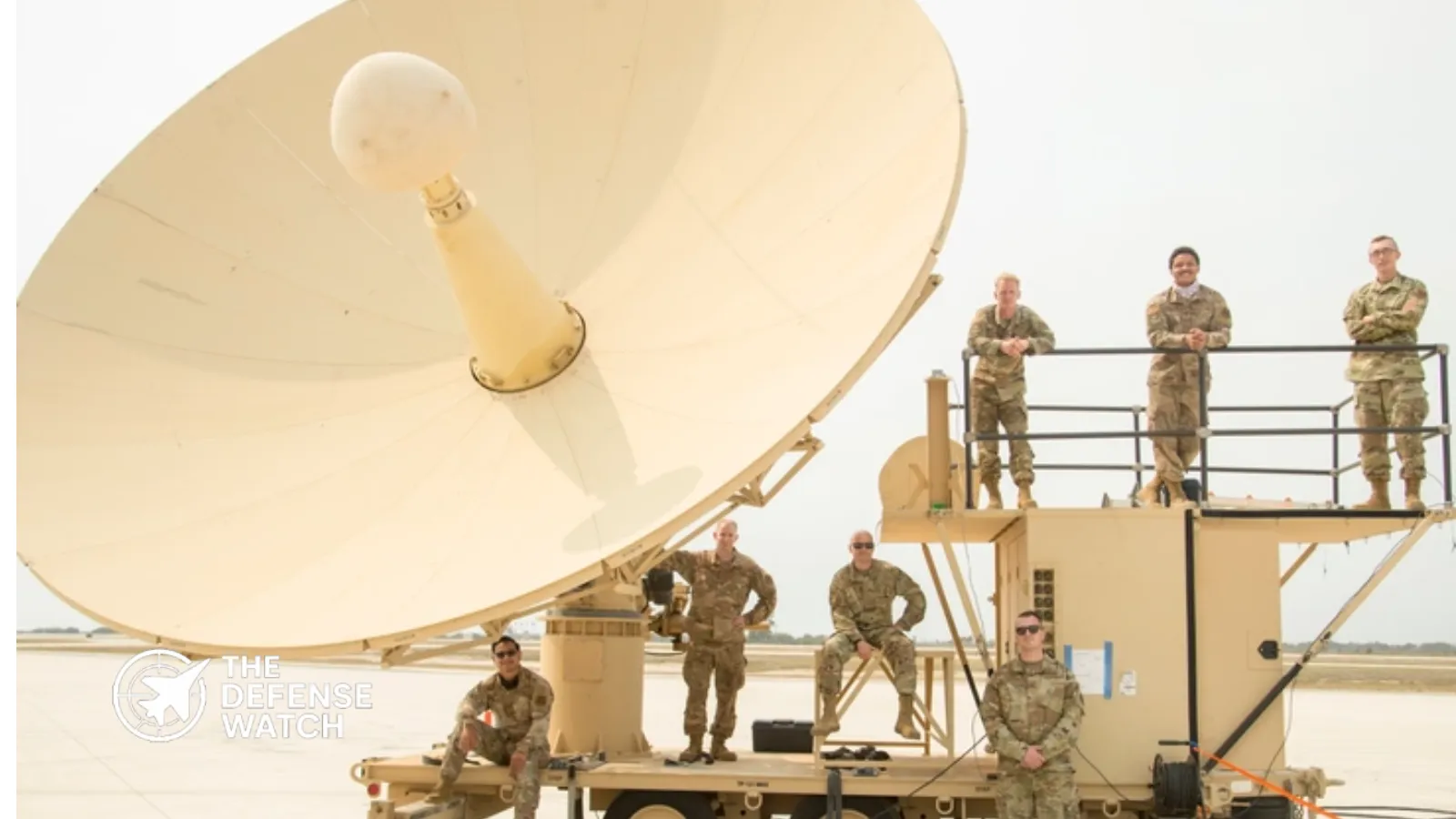
Executive Summary:
The U.S. Space Systems Command has awarded a ceiling value of $981 million in multiple indefinite delivery, indefinite quantity contracts to 15 defense and aerospace companies for the National Space Test and Training Complex Innovative Technology and Engineering, Space Test and Range Capability Development program. The effort will enhance U.S. military space testing, evaluation, engineering, and training infrastructure through July 2032, strengthening the nation’s ability to validate emerging space capabilities before operational deployment.
National Space Test And Training Complex Contracts Expand U.S. Military Space Testing Capability
The National Space Test and Training Complex (NSTTC) has received a major investment after the U.S. Space Systems Command awarded 15 companies positions on a $981 million multiple award indefinite delivery, indefinite quantity (IDIQ) contract to support future space test and range capability development.
According to the U.S. Department of Defense contract announcement, the program will provide engineering and technical services supporting both space based and ground based testing, evaluation, and operational training. The contracts are managed by Space Systems Command’s Operational Test and Training Infrastructure office in Colorado Springs, Colorado.
No funding was obligated at the time of award because future task orders will be issued throughout the contract period.
Fifteen Companies Selected For Long Term Space Development Program
The contract includes a diverse group of established defense primes, emerging space companies, and engineering specialists capable of supporting advanced military space missions.
The selected contractors are:
| Company | Headquarters | Contract Number |
|---|---|---|
| Amentum Technology Inc. | Tullahoma, Tennessee | FA255326DB001 |
| BAE Systems Inc. | Broomfield, Colorado | FA255326DB002 |
| CACI Inc. | Chantilly, Virginia | FA255326DB003 |
| Firefly Aerospace | Leander, Texas | FA255326DB004 |
| L3Harris Technologies Inc. | Palm Bay, Florida | FA255326DB005 |
| Lockheed Martin Space | Littleton, Colorado | FA255326DB006 |
| Northrop Grumman Systems Corp. | Dulles, Virginia | FA255326DB007 |
| Pacific Crest Alliance | Colorado Springs, Colorado | FA255326DB008 |
| Parsons Government Services Inc. | Centreville, Virginia | FA255326DB009 |
| Redwire Space Missions LLC | Littleton, Colorado | FA255326DB010 |
| Rocket Lab USA Inc. | Long Beach, California | FA255326DB011 |
| Sierra Space Corp. | Louisville, Colorado | FA255326DB012 |
| The Boeing Co. | Colorado Springs, Colorado | FA255326DB013 |
| Viasat Inc. | Carlsbad, California | FA255326DB014 |
| York Space Systems | Denver, Colorado | FA255326DB015 |
The Department of Defense said 20 offers were received during the competitive procurement, highlighting strong industry interest in supporting future U.S. military space operations.
What The Contract Will Deliver
The National Space Test and Training Complex serves as a critical infrastructure program for evaluating new military space capabilities before they enter operational service.
Under future task orders, contractors may support:
- Space systems engineering
- Satellite test and evaluation
- Ground infrastructure modernization
- Space range development
- Operational test planning
- Modeling and simulation
- Training support for military operators
- Technology integration and validation
The contract period extends through July 29, 2032, providing a long term framework for rapidly integrating new technologies into the U.S. Space Force’s testing enterprise.
Why Space Test Infrastructure Matters
Unlike traditional military platforms, satellites and other orbital systems cannot easily be repaired or modified after launch. As a result, extensive testing before deployment is essential to ensure mission success.
The National Space Test and Training Complex enables engineers and military operators to validate new spacecraft, communications systems, missile warning sensors, navigation technologies, and space domain awareness capabilities under realistic operational conditions.
Modern testing increasingly combines physical hardware with digital engineering tools, advanced modeling, and simulated orbital environments. These methods help reduce technical risk while accelerating capability delivery.
Strategic Importance For U.S. Space Operations
The contract reflects continued U.S. investment in strengthening its military space enterprise as orbital operations become increasingly contested.
The U.S. Space Force has repeatedly emphasized that future conflicts may depend on resilient satellite communications, precision navigation, missile warning, intelligence collection, and secure command and control networks. Robust testing infrastructure ensures these systems perform as intended before deployment into operational constellations.
The inclusion of both traditional defense contractors and newer commercial space firms also illustrates the Department of Defense’s strategy of leveraging commercial innovation alongside established aerospace expertise. Companies such as Firefly Aerospace, Rocket Lab, Redwire, Sierra Space, and York Space Systems have expanded rapidly in recent years, bringing responsive launch, satellite manufacturing, and spacecraft technologies that complement the capabilities of larger defense integrators.
Another notable aspect of the award is its use of a multiple award IDIQ structure. Rather than assigning all work to a single contractor, Space Systems Command can compete individual task orders among the selected companies as mission requirements evolve. This approach increases flexibility, encourages innovation, and allows the government to rapidly access specialized expertise across different segments of the space industry.
Contract Structure Supports Future Mission Requirements
The contract has a maximum ceiling value of $981 million, but actual expenditures will depend on future task orders issued over the next six years.
Key contract details include:
| Item | Details |
|---|---|
| Total Ceiling Value | $981 million |
| Contract Type | Multiple Award IDIQ |
| Number of Awardees | 15 |
| Offers Received | 20 |
| Performance Period | Through July 29, 2032 |
| Funding at Award | None obligated |
| Contracting Office | Space Systems Command, Operational Test and Training Infrastructure |
This structure allows the Department of Defense to issue work packages only when requirements arise, providing flexibility while maintaining access to a broad industrial base.
Outlook
As military operations become increasingly dependent on space based capabilities, investments in testing and evaluation infrastructure are becoming as important as investments in satellites themselves. The National Space Test and Training Complex provides the foundation for validating next generation systems before they are fielded, reducing operational risk and improving mission readiness.
The latest awards position Space Systems Command to draw on expertise from across the U.S. defense and commercial space sectors as it develops the engineering, testing, and training capabilities needed to support future Space Force and joint military missions through the early 2030s.