Executive Summary:
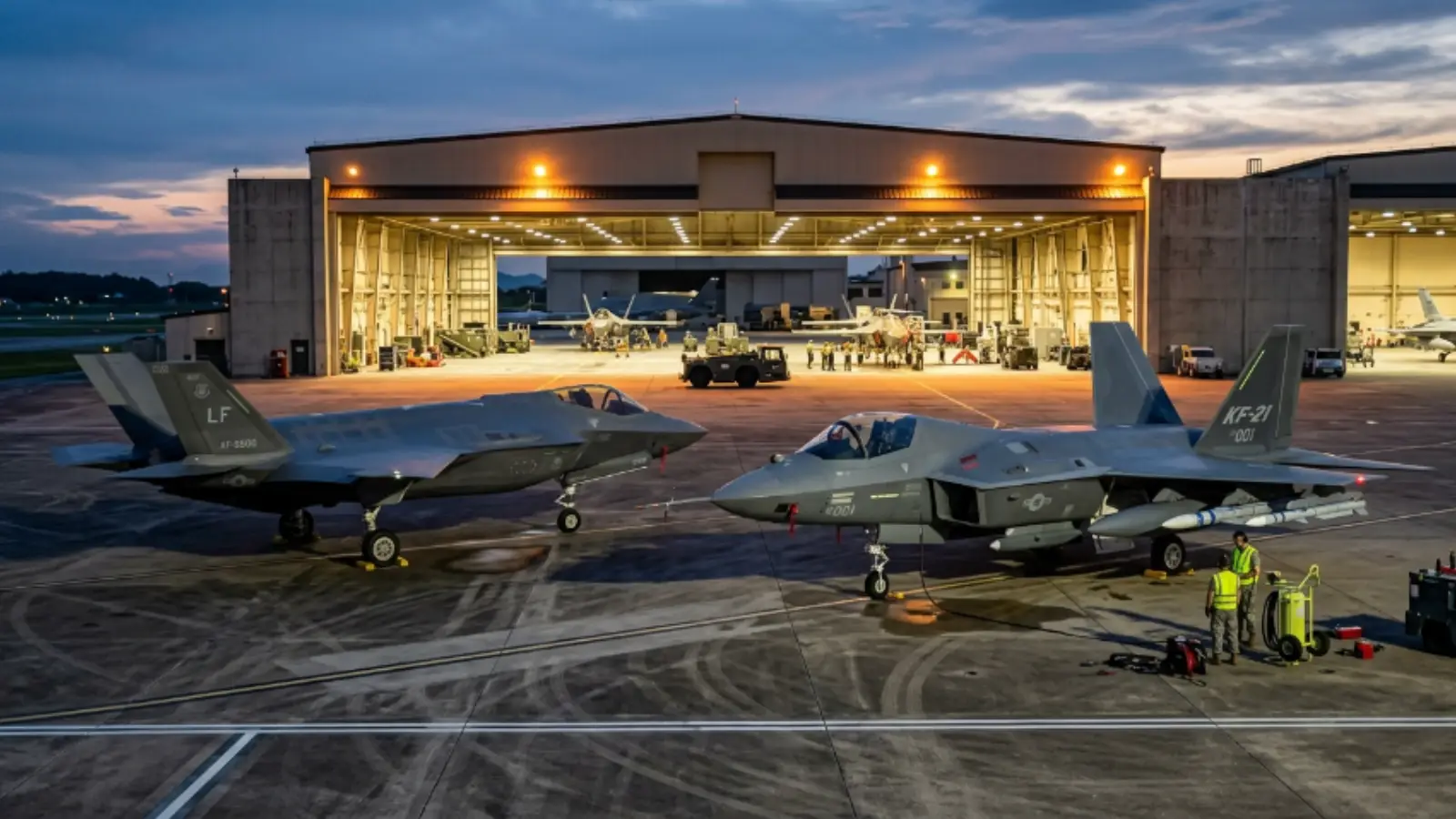
South Korea’s KF-21 Boramae rolled off the production line in March 2026, and its first Block I jets are already reaching the ROKAF — but the airframe still carries its missiles externally, with no internal weapons bay until Block III arrives in the next decade. The F-35A remains the only one of the two built around genuine low observability from the ground up. This is where the “semi-stealth” label stops being marketing language and becomes an operational limitation.
F-35A vs. KF-21 Boramae: Inside the Stealth Gap Splitting Asia’s Skies
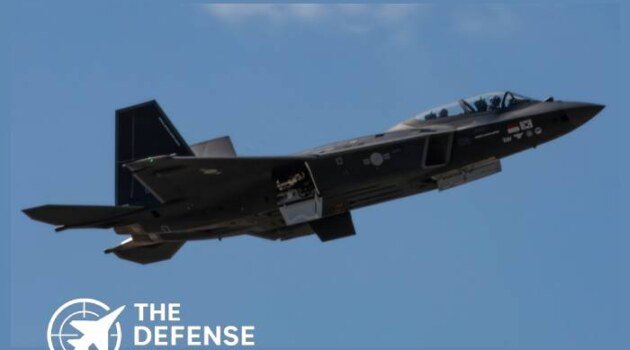
A jet doesn’t need a radar cross-section rated in square meters to change the balance of power in a region. It just needs to be cheaper, available now, and good enough. That’s the bet South Korea is making with the KF-21 Boramae, and the first production airframe left the Sacheon assembly line in March 2026 to prove it.
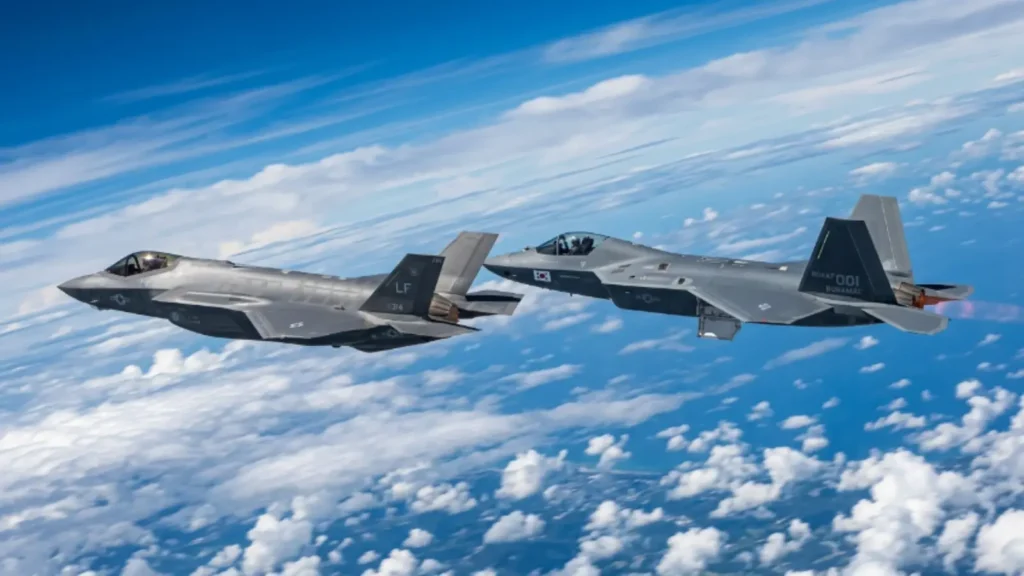
The F-35A, by contrast, has spent over a decade answering a different question: what does it cost to make an airframe effectively invisible to enemy radar? The two jets are being marketed as complementary. The numbers say something more complicated.
The Deep Dive: Two Different Definitions of Stealth
The KF-21 Block I, now entering ROKAF service, carries its weapons the old-fashioned way — bolted to four semi-recessed stations under the fuselage and six wing hardpoints. Korea Aerospace Industries calls this “semi-stealth,” and that’s an honest description, not a euphemism.
Semi-recessed carriage shrinks radar return compared to a fully external pylon, but it’s nowhere near an internal bay. The airframe also skips radar-absorbent coatings on Block I and II, deferring that upgrade to the still-distant Block III, sometimes referred to as the KF-21EX.
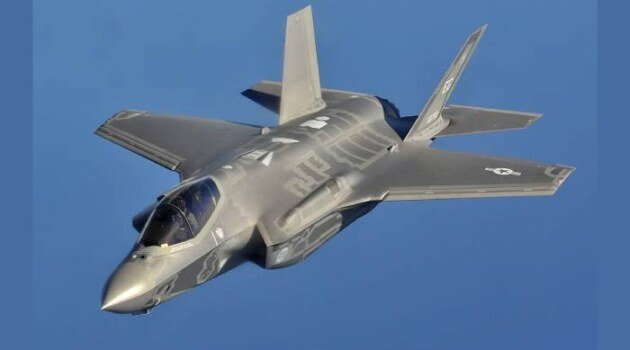
The F-35A was designed in reverse order. Lockheed Martin built the internal weapons bay and RAM coating into the mold line from day one, which is why the jet can carry AIM-120 AMRAAMs and JDAMs without ever exposing a hardpoint to a hostile radar sweep.

That single design choice cascades through everything else. Internal carriage costs the F-35A payload capacity — it can only haul so much before pilots start bolting weapons externally and sacrificing the stealth they paid for. External carriage costs the KF-21 survivability against modern integrated air defense networks, full stop.
Where the Boramae claws back ground is avionics maturity delivered ahead of schedule. Its domestically built APY-016K AESA radar, fielded by Hanwha Systems, uses roughly 1,000 transmit-receive modules to detect targets out to 150–200 km and track around 20 simultaneously. Combined with an indigenous MUM-T (manned-unmanned teaming) architecture, the jet isn’t trying to out-stealth the F-35 — it’s trying to out-network it in cost-effective numbers.
The program’s pace has genuinely surprised skeptics. Flight testing wrapped in January 2026 after 1,600 accident-free sorties across 42 months, two months ahead of schedule. Air-to-ground weapons testing, originally targeted for 2028, has been pulled forward to the first half of 2027. Forty Block I jets are contracted, with eight delivering in 2026 alone, followed by 80 Block II aircraft with expanded strike capability arriving by 2032.
Data Block: Head-to-Head Metrics
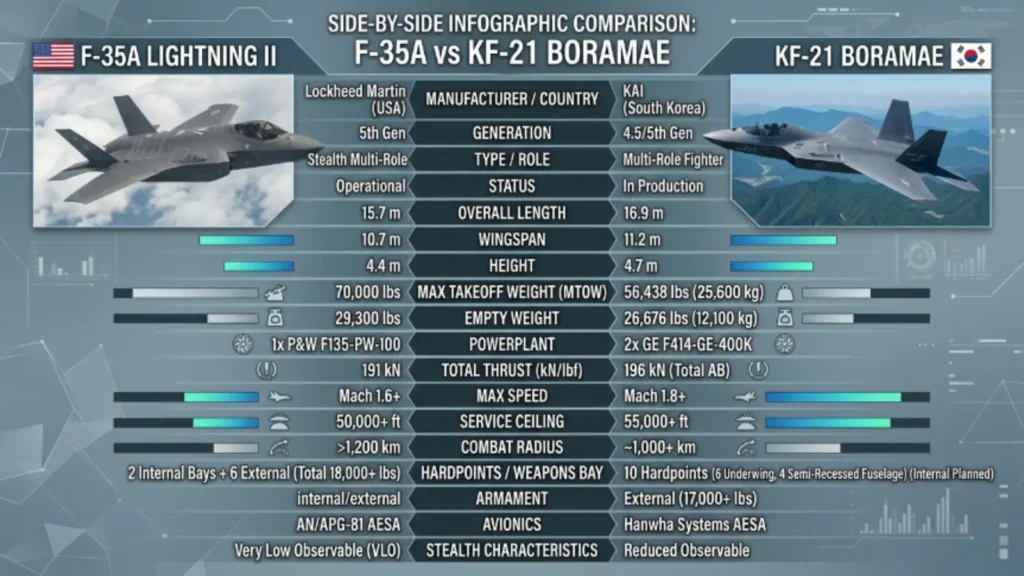
Metric F-35A Lightning II KF-21 Boramae (Block I/II) Generation classification True 5th-generation 4.5-generation, semi-stealth Weapons carriage Internal bay + external hardpoints External / semi-recessed only (internal bay deferred to Block III) Radar-absorbent materials Full airframe RAM coating Not applied until Block III/KF-21EX Primary radar AN/APG-81 AESA APY-016K AESA (~1,000 TR modules, 150–200 km detection) Engine Single Pratt & Whitney F135 (43,000 lbf w/ afterburner) Twin GE F414-GE-400K (indigenous Hanwha engine planned for Block III) Flyaway unit cost (recent lots) ~$82.5 million ~$83 million (Block I) / ~$112 million (Block II) Combat-configured cost ~$95–120 million Comparable once mission systems are added Cost per flight hour ~$34,000–$42,000 Not yet publicly disaggregated; projected lower given simpler airframe Total planned units (initial phases) 2,470+ (multi-nation program) 40 Block I + 80 Block II (120 total through 2032) Weapons bay / MUM-T Bay only; limited teaming autonomy No bay; strong MUM-T/loyal wingman focus Service entry Operational since 2016 Block I entering service 2026 The Insight: Why This Is a Rush Strategy, Not a Stealth Strategy
Competitive gaming has a term for this exact tradeoff: the rush build. In real-time strategy titles, a rush composition sacrifices the late-game power spike for board presence right now — cheaper units, faster production, overwhelming numbers before the opponent’s expensive tech tree finishes.
The KF-21 is South Korea’s rush build. It skips the most expensive, most time-consuming part of fifth-generation design — the internal bay and full-spectrum RAM treatment — to get combat-credible airframes into squadron service years before a from-scratch stealth program could deliver. Block I entered service in 2026. A comparable clean-sheet stealth program elsewhere, like Turkey’s Kaan or the European GCAP effort, isn’t expected to field operational jets until well into the 2030s.
The F-35 is the maxed-out unit that takes longer to reach the field but wins the direct engagement when it arrives. It was never meant to be cheap or fast to produce in year one; the entire program logic bet on economies of scale eventually driving flyaway costs below $80 million; a bet that’s now paying off after years of criticism.
What makes this genuinely interesting from a strategy standpoint isn’t which jet is “better” in isolation. It’s that South Korea isn’t trying to replace its F-35A fleet with the Boramae at all. ROKAF pilots are explicit that the KF-21 shoulders routine air-defense and quick-reaction alert missions, freeing the F-35A for the missions where low observability actually matters — first-look, first-kill strikes against contested, radar-dense airspace.
Finally, South Korea has become a nation that possesses weapons to safeguard peace through its own technology and willpower — not only on land and sea but also in the skies.” — President Lee Jae-myung, at the KF-21 production rollout ceremony, March 25, 2026
What This Means Going Forward
The Boramae isn’t trying to beat the F-35A on stealth, and pretending otherwise misreads the program entirely. It’s trying to make sure South Korea never has to choose between an aircraft it can produce domestically in volume and one it has to wait a decade to import.
Block III, with its planned internal weapons bay, RAM coating, and 16,000-lb-thrust indigenous engine, is where the real fifth-generation claim gets tested — and that airframe is still years from cutting metal. Until then, the F-35A remains the only jet in Korean service built around low observability from the first line drawn on the mold.
For an air force squaring off against China’s J-20, J-35, and a rapidly modernizing North Korean posture, that gap between “semi-stealth today” and “full stealth eventually” isn’t academic. It’s the difference between deterrence on paper and deterrence in the air.
FAQ
Does the KF-21 Boramae have an internal weapons bay?No. Block I and Block II carry weapons externally on semi-recessed fuselage stations and wing hardpoints. An internal bay is planned only for the future Block III/KF-21EX variant.
Is the KF-21 considered a fifth-generation fighter?Officially, no. KAI and DAPA classify Block I/II as 4.5-generation “semi-stealth” aircraft. Full fifth-generation features are reserved for Block III.
How does the KF-21’s cost compare to the F-35A?Recent reporting places Block I units around $83 million and Block II around $112 million, close to the F-35A’s flyaway cost of roughly $82.5 million — though final combat-configured pricing depends on mission systems fitted to each.
When does the KF-21 enter full operational service?Block I aircraft began deliveries in 2026, with initial operational capability targeted before the full 40-jet batch completes by 2028. Block II, adding ground-attack capability, is scheduled through 2032.