









@2026 – All Right Reserved. TheDefenseWatch.com
- Home
- Defense Systems
- Fighter Jets
- Kowsar Fighter Jet
Kowsar Fighter Jet
Defense Systems Full Specifications
General Information
| Name | Kowsar |
| Manufacturer | HESA |
| Country of Origin | Iran |
| Type / Role | Light Fighter / Trainer |
| Generation | 3rd Gen (Modernized) |
| Status | In Service |
| First Flight | 2018 |
| Introduction / In Service Since | 2019 |
| Number Built | Limited |
| Operators | Limited |
Dimensions & Structure
| Length | ~14.5 m |
| Wingspan | ~8.1 m |
| Height | ~4 m |
| Wing Area | ~17 m² |
| Empty Weight | ~4,350 kg |
| Maximum Takeoff Weight (MTOW) | ~11,200 kg |
| Internal Weapons Bay | None |
| External Hardpoints | 5 |
Performance
| Maximum Speed | Mach 1.6 |
| Range | ~1,400 km |
| Combat Radius | ~700 km |
| Service Ceiling | ~50,000 ft |
| Rate of Climb | ~175 m/s |
| Thrust-to-Weight Ratio | ~0.9 |
| G Limits | +7.5 |
Powerplant
| Engine Type | Turbojet |
| No. of Engines | 2 |
| Thrust (each) | ~22 kN |
| Thrust Vectoring | No |
| Fuel Capacity | ~2,500 kg |
Armament
| Gun | 2× 20mm cannons |
| Missiles (Air-to-Air) | Short-range IR missiles |
| Missiles (Air-to-Ground) | Limited |
| Bombs | Unguided / guided bombs |
| Hardpoints | 5 |
| Payload Capacity | ~3,200 kg |
Avionics & Systems
| Radar | Indigenous fire-control radar |
| Radar Range | ~80–100 km |
| Electronic Warfare (EW) System | Basic |
| Targeting System | Limited |
| Helmet Display | No |
| Navigation | GPS/INS |
| Autopilot / AI Assistance | Basic |
| Communication | Standard military comms |
Stealth & Technology
| Radar Cross Section (RCS) | High |
| Stealth Features | None |
| Infrared Signature Reduction | Minimal |
| Sensor Fusion | No |
| Networking Capabilities | Limited |
Variants
| Special Export Versions | None |
Operational History
| Major Conflicts / Deployments | None reported |
| Notable Operators | Iran |
| Combat Proven? | No |
| Mission Types | Training, CAS, Patrol |
Cost & Program
| Unit Cost | ~$20–30 million (est.) |
| Development Cost | Undisclosed |
| Program Name | Kowsar Program |
| Funding Countries | Iran |
Additional Information
| Upgrades Planned | Avionics improvements |
| Future Replacement | Unknown |
| Export Restrictions | High |
| Notable Achievements | Indigenous fighter production |
| Competitors | F-5 upgrades, JL-8, L-15 |
PROS
- Low acquisition and maintenance cost
- Indigenous production reduces reliance on imports
- Suitable for pilot training and light combat roles
- Proven airframe design with known performance
- Upgraded digital avionics improve usability
CONS
- Based on outdated F-5 platform
- Limited radar and sensor range
- No stealth capabilities
- Restricted payload compared to modern fighters
- Not competitive against advanced 4.5 or 5th gen jets
Kowsar Fighter Jet: Iran’s Indigenous Light Multirole Aircraft
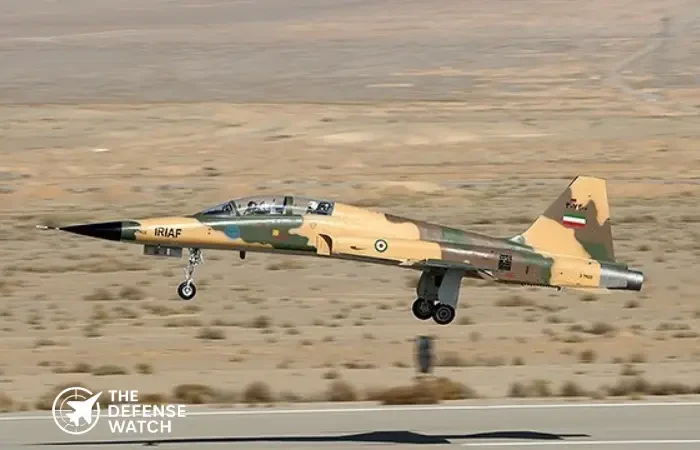
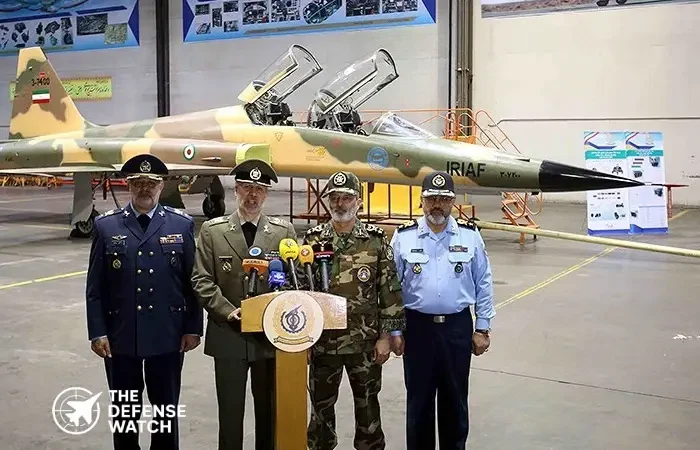
The Kowsar fighter jet is a domestically produced light combat aircraft developed by Iran to support its air force modernization efforts. Unveiled in 2018, the jet is based on the legacy Northrop F-5 platform, adapted with locally developed avionics and systems. Designed for close air support, pilot training, and limited air defense missions, Kowsar reflects Iran’s push for self-reliance under sanctions.
The aircraft features upgraded cockpit displays, digital flight controls, and a modernized fire-control system. While not a fifth-generation platform, it serves as a cost-effective solution for maintaining operational readiness in regional airspace.
Manufacturer
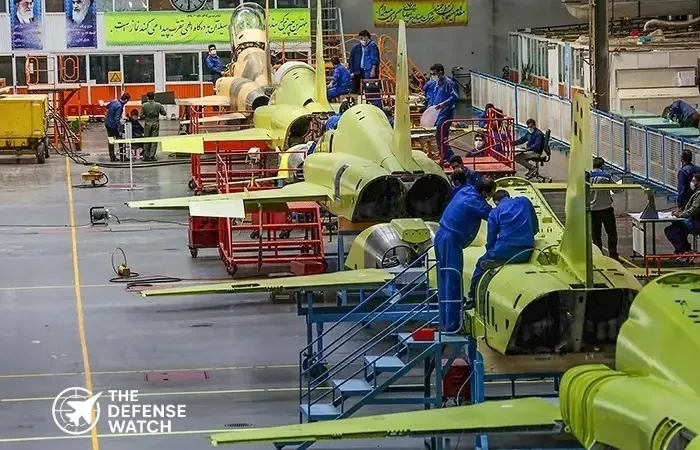
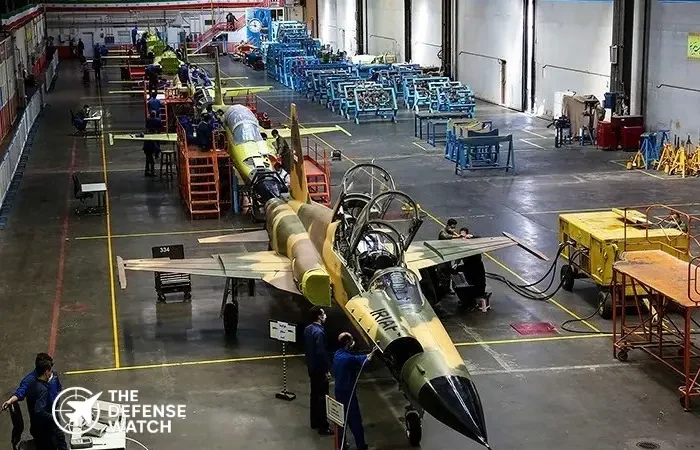
Kowsar is manufactured by the Iran Aircraft Manufacturing Industrial Company (HESA) under the supervision of Iran’s Ministry of Defense. Development focused on integrating indigenous technologies into an existing, proven airframe. The jet is assembled domestically, with Iran emphasizing local production of key subsystems, including avionics and radar.
Speed and Range
Kowsar is capable of reaching speeds up to Mach 1.6, placing it within the supersonic category. Its operational range is estimated at around 1,400 km, depending on mission profile and payload. The aircraft supports short- to medium-range missions, including air patrol and ground attack. Its service ceiling is approximately 50,000 feet, with moderate maneuverability suited for its class.
Cost/Price
Exact unit cost figures remain undisclosed, but estimates suggest Kowsar is significantly cheaper than modern Western fighters, likely in the range of $20–30 million per unit. This lower cost reflects its reliance on an older airframe design and limited advanced stealth or sensor capabilities.
Disclaimer Note
The information provided on TheDefenseWatch.com is for general informational purposes only. While we strive to ensure the accuracy, completeness, and timeliness of our content regarding defense and aerospace products, technologies, and specifications, we cannot guarantee that all information is 100% accurate or up-to-date due to the evolving nature of military technology and classified data.TheDefenseWatch.com does not warrant the reliability, suitability, or availability of the information for any specific purpose. Users are advised to consult official sources, such as manufacturers, government publications, or defense agencies, for precise and verified data before making decisions based on our content.We are not affiliated with any defense manufacturers, governments, or military organizations mentioned. Opinions, reviews, and ratings reflect expert analysis but are subjective and should not be considered endorsements. TheDefenseWatch.com is not responsible for any errors, omissions, or consequences arising from the use of this website’s content.External links are provided for convenience and do not imply endorsement. TheDefenseWatch.com reserves the right to update or modify content without prior notice. By using this website, you agree to our Privacy & Cookies Policy.
More Defense Systems from HESA (Iran)
New Arrivals
Popular Comparisons
-
 Su-57 Fighter Jet vs J-20 Fighter Jet: Stealth and Air Combat Compared
View Comparison →
Su-57 Fighter Jet vs J-20 Fighter Jet: Stealth and Air Combat Compared
View Comparison → -
Mirage 2000 vs Tejas Mk1A: Legacy Combat Power vs Indigenous Modernization
View Comparison →
-
Rafale Fighter Jet vs F-22 Raptor: Which Air Dominance Fighter Has the Edge?
View Comparison →
-
Tejas Fighter Jet vs. Rafale Fighter Jet: India’s Indigenous Fighter Meets France’s Proven Multirole Combat Aircraft
View Comparison →
-
F-22 Raptor vs. F-35 Joint Strike Fighter: Which Fifth Generation Fighter Has the Edge?
View Comparison →
-
F-35A vs. F-22 Raptor: Which U.S. Stealth Fighter Dominates Modern Air Combat?
View Comparison →
-
AGM-114 Hellfire vs. AGM-179 JAGM: Which U.S. Precision Missile Is Better?
View Comparison →
-
Patriot (PAC-3) vs. THAAD: Complete Missile Defense System Comparison, Capabilities, Range, and Strategic Roles
View Comparison →
-
AIM-120 AMRAAM vs. AIM-9X Sidewinder: Complete Air-to-Air Missile Comparison, Range, Speed, and Combat Roles
View Comparison →
-
BGM-109 Tomahawk vs. AGM-158 JASSM: Which Long Range Precision Strike Missile Offers Greater Strategic Advantage?
View Comparison →
- Lockheed Martin Vectis Advances Toward 2027 Stealth Combat Drone Flight

- Netherlands Moves To Acquire Saab GlobalEye As NATO Replaces Aging AWAC
- Bulgaria Investigates Explosion At EMCO Weapons Storage Site
- North Korea Conducts Live Fire Drills With Missiles and Artillery
- U.S. Air Force Plans Major F-15EX Technical Refresh as Production Expands
- Eutelsat Orders 229 OneWeb Satellites To Extend LEO Network Through 2034
- Australia Declares JASSM-ER and LRASM Operational on F/A-18F Super Hornets
- GCAP Electronics Contract Advances Integrated Sensing And Communications For Sixth Generation Fighter
- Northrop Grumman Expands B-21 Raider Production With New Utah Facility
- Kongsberg Integrates Echodyne Radar With PROTECTOR Stations for Counter-UAS Missio