(adsbygoogle = window.adsbygoogle || []).push({});Executive Summary:
Saab has unveiled the new Giraffe AMB D radar at Eurosatory 2026 in Paris, introducing the latest evolution of its long-serving Giraffe Air and Missile Defense radar family. The system combines a redesigned AESA radar array with a modern software-defined architecture to improve detection, tracking, mobility, and upgradeability against evolving airborne threats. The launch reflects growing demand among militaries for adaptable sensors capable of supporting both tactical and strategic air defense missions.
Saab Introduces Giraffe AMB D Radar At Eurosatory 2026
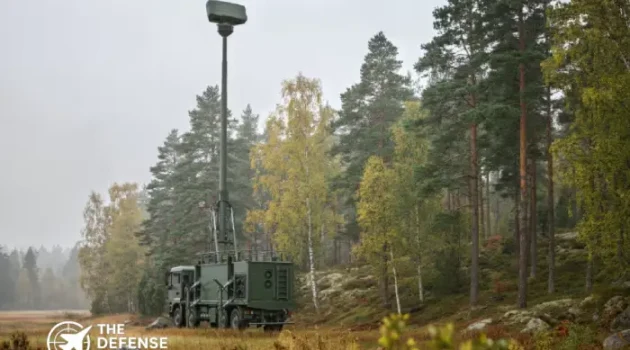
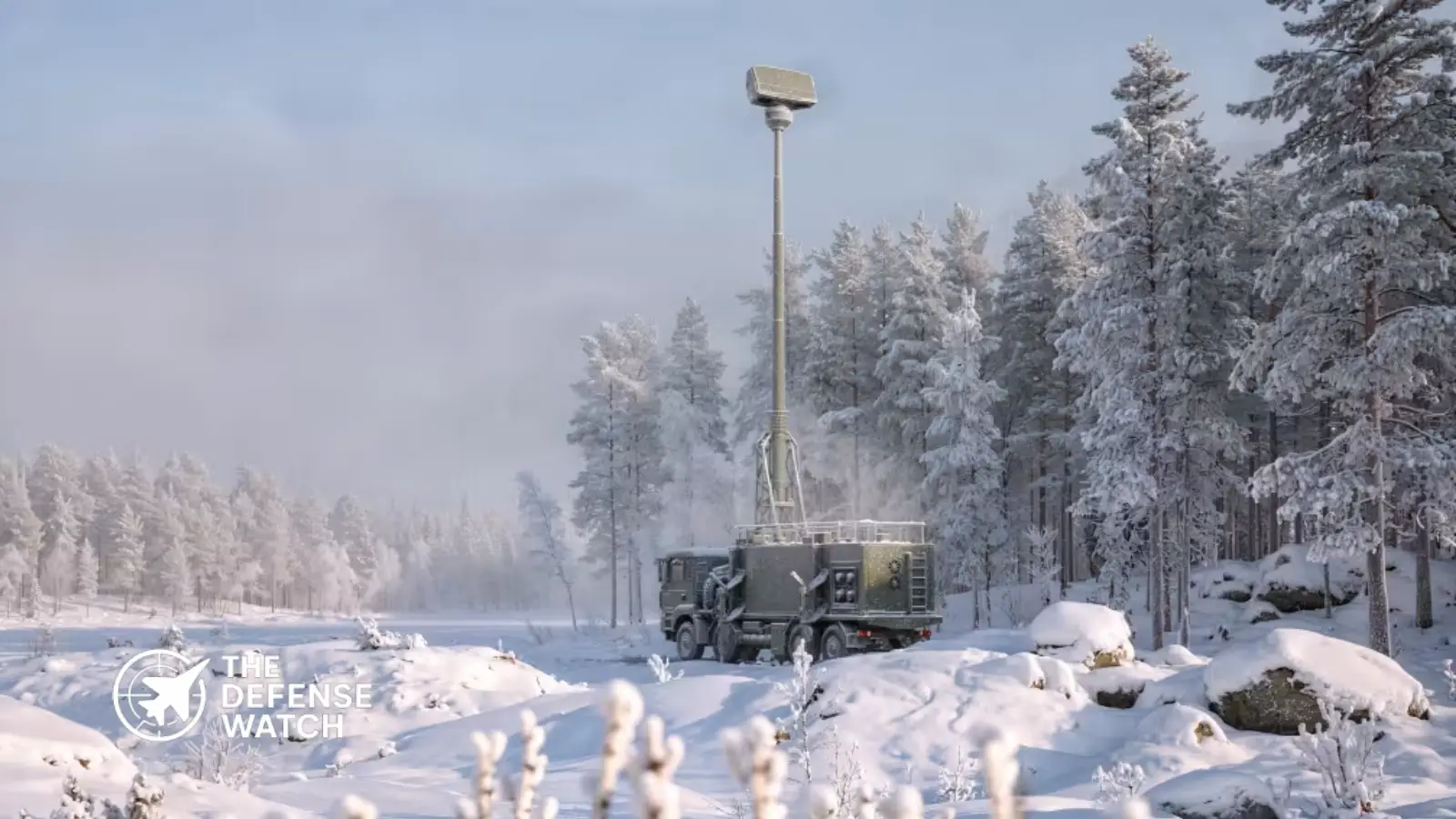
Saab has unveiled the Giraffe AMB D radar during the Eurosatory 2026 defense exhibition in Paris, presenting what the company describes as the next-generation development of its combat-proven Giraffe Airborne and Missile Defense radar family.
The new system builds upon more than two decades of operational experience with the Giraffe AMB platform, which has been fielded by numerous armed forces worldwide for air surveillance, counter-air operations, and air defense missions.
According to Saab, Giraffe AMB D combines a newly designed Active Electronically Scanned Array (AESA) radar with an updated software architecture and modern processing capabilities intended to enhance target detection, tracking accuracy, and operational flexibility.
Carl-Johan Bergholm, Head of Saab’s Surveillance business area, said the radar demonstrates how advances in sensor technology can improve capability while reducing system footprint and deployment requirements.
- (adsbygoogle = window.adsbygoogle || []).push({});
New AESA Architecture Designed For Greater Flexibility
At the core of the Giraffe AMB D is a redesigned AESA radar array that leverages modern digital processing technologies to expand surveillance performance.
Unlike traditional mechanically scanned systems, AESA radars electronically steer beams at extremely high speeds, allowing operators to detect, track, and classify multiple targets simultaneously while improving resistance to electronic interference.
Saab says the new radar has been engineered to support a broad range of missions across multiple operational environments. These include:
- Air surveillance
- Air defense command and control
- Counter-unmanned aerial system (C-UAS) operations
- Cruise missile detection
- Battlefield situational awareness
- Protection of military bases and critical infrastructure
The software-defined architecture is a significant component of the design philosophy. Rather than relying primarily on hardware upgrades, future capability improvements can be delivered through software updates, reducing lifecycle costs and enabling faster adaptation to emerging threats.
Enhanced Detection And Tracking Performance
While Saab has not publicly disclosed detailed performance specifications for the Giraffe AMB D, the company states that the radar provides extended detection capability and improved target tracking compared with previous configurations.
Modern air defense environments increasingly require sensors capable of tracking a diverse set of targets simultaneously. These include:
(adsbygoogle = window.adsbygoogle || []).push({});Threat Type Operational Challenge Small UAVs Low radar cross-section and slow speed Cruise missiles Low-altitude flight profiles Fast jets High-speed maneuvering Helicopters Terrain masking Rockets and artillery Short warning timelines Future autonomous systems High target density The combination of upgraded radar hardware and modern signal processing is intended to improve the radar’s ability to maintain accurate tracks across these varied threat categories.
This capability is becoming increasingly important as military forces confront more complex airspaces characterized by drones, loitering munitions, cruise missiles, and conventional aircraft operating simultaneously.
Mobility Remains A Key Design Requirement
A notable feature of the Giraffe radar family has been its emphasis on mobility, and Saab appears to have maintained that focus with the Giraffe AMB D.
The company says the new system delivers a reduced footprint while preserving operational capability. This approach aligns with lessons emerging from recent conflicts, where fixed radar installations have become increasingly vulnerable to long-range precision strikes.
Mobile radar systems offer several advantages:
- Faster deployment and relocation
- Improved survivability
- Reduced logistical burden
- Greater support for expeditionary operations
- Enhanced integration with maneuver forces
For NATO and partner nations pursuing dispersed operations concepts, mobile surveillance assets are becoming increasingly important components of integrated air and missile defense architectures.
Why The Giraffe AMB D Matters
The introduction of the Giraffe AMB D comes amid a period of significant investment in air and missile defense across Europe, North America, and the Indo-Pacific.
Recent conflicts have highlighted the growing challenge posed by inexpensive drones operating alongside advanced missiles and conventional aircraft. Air defense networks must now identify and track a wider variety of targets than at any point in recent decades.
This trend is driving demand for sensors capable of handling large volumes of data while maintaining accuracy against increasingly complex threats.
The Giraffe AMB D’s software-defined architecture reflects a broader shift occurring across the defense industry. Militaries are increasingly seeking platforms that can evolve through software enhancements rather than requiring costly hardware replacements every few years.
From an operational perspective, this flexibility may allow armed forces to respond more rapidly to emerging threats, including new drone technologies, electronic warfare tactics, and advanced missile systems.
For NATO members in particular, radar modernization remains a critical priority as alliance planners seek to strengthen integrated air and missile defense networks across Europe. Sensors such as the Giraffe AMB D could play an important role in providing early warning and target tracking information to command-and-control systems and interceptor platforms.
Saab Expands Its Air Surveillance Portfolio
The Giraffe AMB D further expands Saab’s established surveillance portfolio, which includes multiple radar variants designed for land-based air defense, naval applications, and short- to long-range surveillance missions.
The company’s radar systems have been deployed globally and are used by military operators for missions ranging from force protection to national airspace monitoring.
By combining proven operational experience with modern digital technologies, Saab is positioning the Giraffe AMB D as a future-ready solution capable of addressing both current and emerging air defense requirements.
As nations continue to modernize their sensor networks and air defense capabilities, systems offering mobility, upgradeability, and multi-domain awareness are likely to remain central to procurement strategies over the coming decade.