

(adsbygoogle = window.adsbygoogle || []).push({});Executive Summary:
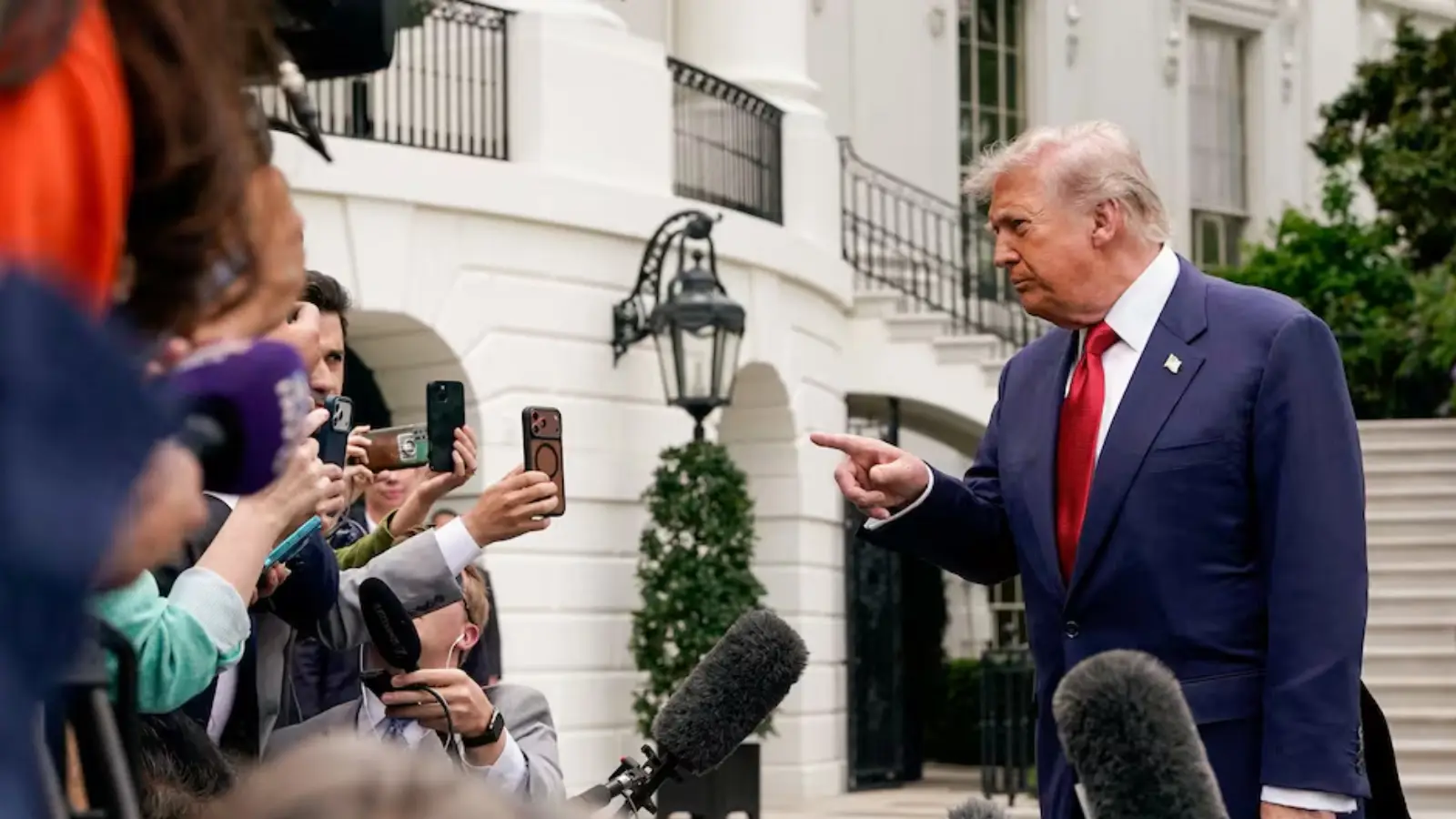
The United States and Iran electronically signed a 14-point memorandum of understanding on June 14-15, 2026, ending more than 100 days of direct warfare and setting conditions to reopen the Strait of Hormuz. President Trump, Vice President Vance, and Iranian Parliament Speaker Mohammad Bagher Ghalibaf signed the document ahead of a formal ceremony scheduled for Friday in Switzerland, but the text defers the war’s hardest questions — the fate of Iran’s enriched uranium stockpile and the size of the U.S. military footprint in the region — to a 60-day negotiating window that both sides acknowledge could collapse.
A Wartime Ceasefire Becomes A Negotiating Framework
The US Iran memorandum of understanding, formally titled the “Islamabad Memorandum of Understanding between the United States of America and the Islamic Republic of Iran,” surfaced in full text Wednesday after Defense News obtained a copy of the document, which had circulated only in summary form since its signing days earlier. The agreement includes a 60-day ceasefire and the reopening of the Strait of Hormuz, and it paves the way for sanctions relief and a $300 billion reconstruction incentive for Iran contingent on a final deal being agreed.
Trump and Vance electronically signed the accord Sunday, ahead of a formal ceremony scheduled for Friday in Switzerland, with Vance expected to lead the American delegation alongside special envoy Steve Witkoff and Jared Kushner. The Swiss government identified the venue as the Bürgenstock resort, with the location proposed jointly by Pakistani and Qatari mediators. On the Iranian side, the document was signed by Parliament Speaker Mohammad Bagher Ghalibaf, the country’s chief negotiator.
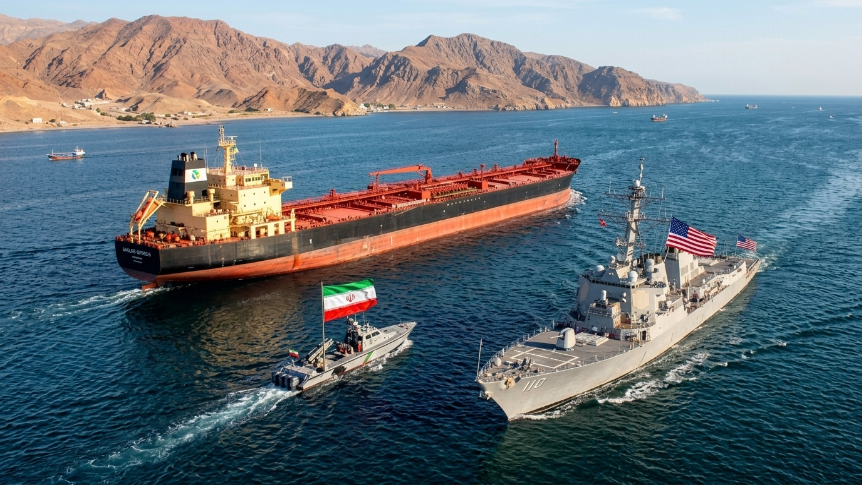
The memorandum caps the deadliest phase of confrontation between the two countries since the 1979 revolution. U.S. and Israeli strikes that began February 28, 2026 killed Supreme Leader Ali Khamenei and senior negotiator Ali Larijani, triggering a 109-day war that closed the Strait of Hormuz, stranded more than 1,500 commercial vessels at its peak, and pushed global energy markets through their sharpest disruption in decades.
What The 14 Points Actually Commit Both Sides To Do
The agreement leaves the most difficult points of contention — including the fate of Iran’s nuclear program — to a second phase of negotiations. The table below summarizes the operative content of each paragraph.
.custom-policy-table-container { margin: 24px 0; overflow-x: auto; box-shadow: 0 4px 15px rgba(0, 0, 0, 0.05); border-radius: 8px; border: 1px solid #e2e8f0; }.custom-policy-table { width: 100%; border-collapse: collapse; font-family: -apple-system, BlinkMacSystemFont, “Segoe UI”, Roboto, Helvetica, Arial, sans-serif; font-size: 15px; line-height: 1.6; color: #334155; background-color: #ffffff; text-align: left; }.custom-policy-table thead tr { background-color: #1e293b; color: #ffffff; font-weight: 600; text-transform: uppercase; font-size: 13px; letter-spacing: 0.5px; }.custom-policy-table th, .custom-policy-table td { padding: 14px 20px; border-bottom: 1px solid #f1f5f9; }/* Specific column widths for better balance */ .custom-policy-table th:nth-child(1), .custom-policy-table td:nth-child(1) { width: 12%; text-align: center; font-weight: 700; color: #64748b; background-color: #f8fafc; border-right: 1px solid #e2e8f0; }.custom-policy-table th:nth-child(2) { text-align: left; }/* Zebra striping for readability */ .custom-policy-table tbody tr:nth-of-type(even) { background-color: #f8fafc; }/* Hover effect */ .custom-policy-table tbody tr:hover { background-color: #f1f5f9; transition: background-color 0.2s ease; }/* Link Styling to match the professional vibe */ .custom-policy-table a { color: #0284c7; text-decoration: none; font-weight: 500; border-bottom: 1px dashed #0284c7; }.custom-policy-table a:hover { color: #0369a1; border-bottom-style: solid; }/* Responsive adjustment for small screens */ @media (max-width: 600px) { .custom-policy-table th, .custom-policy-table td { padding: 10px 12px; font-size: 14px; } }| Paragraph | Core Commitment |
|---|---|
| 1 | Permanent end to hostilities on all fronts, including Lebanon; mutual non-aggression pledge |
| 2 | Mutual respect for sovereignty, territorial integrity, and non-interference in internal affairs |
| 3 | Final deal to be negotiated within 60 days, extendable by mutual consent |
| 4 | U.S. naval blockade lifted in phases, fully ended within 30 days; U.S. forces to withdraw from Iran’s proximity within 30 days of a final deal |
| 5 | Iran to restore safe, toll-free commercial passage through Hormuz within 30 days, pending demining; future strait administration to be negotiated with Oman and Gulf littoral states |
| 6 | U.S. to coordinate a minimum $300 billion reconstruction and development plan for Iran, financing mechanism finalized within 60 days |
| 7 | U.S. to terminate UNSC, IAEA Board, and unilateral sanctions on a schedule set in the final deal |
| 8 | Iran reaffirms no nuclear weapons procurement or development; enriched stockpile disposition to be resolved via on-site IAEA-supervised down-blending as the baseline method; enrichment levels to be negotiated |
| 9 | Status quo pending final deal: Iran freezes its nuclear program at current levels; U.S. imposes no new sanctions or additional regional deployments |
| 10 | Immediate Treasury waivers for Iranian crude oil exports and associated banking, insurance, and transport services |
| 11 | Release of frozen Iranian funds and assets, with procedures to be agreed during negotiations |
| 12 | Joint executive mechanism established to monitor MOU implementation and future compliance |
| 13 | Full negotiations on remaining paragraphs begin once paragraphs 1, 4, 5, 10, and 11 are underway |
| 14 | Final deal to be endorsed by a binding UN Security Council resolution |
The structure is sequential by design: financial and maritime measures move first and quickly, while the nuclear and sanctions questions that sank prior rounds of negotiation are pushed into a 60-day window that, dated from the June 14 signing, runs into mid-August.
(adsbygoogle = window.adsbygoogle || []).push({});Why The Pentagon Isn’t Drawing Down Yet
The memorandum’s silence on immediate U.S. force reductions is itself a signal. Defense officials confirmed the Pentagon intends to hold its current regional posture — an estimated 50,000 troops and two carrier strike groups built around USS Abraham Lincoln and USS George H.W. Bush — through the entire 60-day negotiating period, with any drawdown contingent on a final deal and verified Iranian compliance. Defense Secretary Pete Hegseth framed the logic bluntly, telling CBS the posture would be whatever is needed to keep Iran “compelled” to honor the memorandum’s terms.
That decision matters for force-readiness planning beyond the Middle East. At the war’s height, roughly a third of the Navy’s deployed surface combatants and a third of the Arleigh Burke-class destroyer fleet were committed to the CENTCOM theater, alongside extended carrier deployments that pushed maintenance cycles and crew rotations to their limits. Continuing that posture through August — rather than beginning a phased withdrawal now — extends the strain on a fleet already managing a contested Indo-Pacific tempo, and it telegraphs to Tehran, and to Moscow and Beijing, that Washington views the memorandum as reversible rather than settled.
(adsbygoogle = window.adsbygoogle || []).push({});The Nuclear Paragraph Is The Deal’s Real Test
Paragraph 8’s “minimum methodology” — on-site down-blending of Iran’s enriched uranium under IAEA supervision — sounds more conclusive than it is. The IAEA’s last verified count placed Iran’s 60-percent-enriched stockpile at roughly 441 kilograms, a quantity for which the technical work remaining to reach 90-percent weapons-grade material is a small fraction of the effort already invested. Down-blending that material with natural or depleted uranium would reverse the enrichment process and reduce its proliferation value, mirroring a technique Iran itself used to draw down its stockpile under the 2015 nuclear deal before later shipping the bulk of that material to Russia.
Three complications separate this paragraph from a resolved outcome. First, Iran suspended IAEA inspector access and removed monitoring equipment from its declared facilities earlier this year, and a verified dilution process cannot proceed without restored access — a precondition the memorandum does not itself secure. Second, nonproliferation analysts assess that a large share of the pre-war 60-percent stockpile is likely buried beneath rubble at the Fordow, Natanz, and Esfahan sites struck during the war, meaning its physical condition and recoverability remain unconfirmed; Trump himself told reporters at the G7 summit that he did not consider the buried material urgent, since “nobody’s touching it” for the time being. Third, the memorandum sets no enrichment cap, no centrifuge limits, and no single-site restriction — all features of the 2015 deal it is informally being compared to — leaving Iran’s underlying enrichment infrastructure intact pending the 60-day talks.
Strait Of Hormuz: A Slow Reopening, Not A Switch
The waterway through which roughly one-fifth of the world’s oil and LNG normally moves has not snapped back to normal. Pre-war traffic ran 130 to 140 vessels a day; throughout the spring it fell to a trickle of five to ten. In the days immediately following the MOU’s signing, tracking data showed only marginal movement — a handful of Iranian-flagged tankers exiting the U.S. blockade zone near the eastern approaches, while the bulk of laden tankers anchored off Kharg Island remained in place. Shipowners are reportedly waiting for the formal signing and clarity on mine-clearance and transit rules before committing vessels to the central shipping lanes rather than the safer southern route past Oman.
That caution is rational. The memorandum requires Iran to demine the strait and restore safe passage within 30 days, but mine-clearance is a methodical, multi-week naval engineering task, not a diplomatic formality, and the legal framework for the strait’s longer-term administration — including whether Iran can levy “service fees” on passing vessels — is left to a separate dialogue with Oman and other Gulf states. Energy analysts expect global oil flows to take months, not weeks, to normalize even with a durable ceasefire.
(adsbygoogle = window.adsbygoogle || []).push({});Israel’s Quiet Break With Washington
The memorandum’s silence on Lebanon enforcement has opened a visible rift with Israel. Israeli Defense Minister Israel Katz said Israel expects Trump to uphold the principle of preventing Iran from acquiring nuclear weapons “and additional principles in the realm of missiles and terrorist proxies,” while vowing Israeli forces would not withdraw from Lebanon, Syria, Gaza, or the northern West Bank regardless of the U.S.-Iran agreement. Members of Netanyahu’s cabinet have since called for continued strikes on Hezbollah, arguing Israel is not bound by a document it did not sign. The dynamic underscores a structural feature of the deal: Washington negotiated bilaterally with Tehran, while Israel’s war aims — particularly on Lebanon and on enrichment — were never formally incorporated into the text.
Congress, for its part, has signaled it expects a more active oversight role. The Senate failed Tuesday to advance a war powers resolution that would have required congressional authorization for further U.S. action against Iran, but several senators, including Armed Services Committee members, have said they expect a classified briefing and likely a future vote on any final deal — a process that will test how much latitude the executive branch retains over an agreement negotiated almost entirely inside the White House and Treasury.
(adsbygoogle = window.adsbygoogle || []).push({});The Wider Strategic Read
For U.S. defense planners, the memorandum’s bilateral structure is itself notable. Unlike the 2015 nuclear deal, which bound the United States together with the U.K., France, Germany, Russia, and China, this framework excludes every other power with a stake in Iran’s nuclear trajectory — including Moscow, which fabricates fuel for Iran’s Bushehr reactor and has historically received Iran’s surplus enriched material. Iran’s survival of a war that killed its supreme leader, combined with its ability to extract a $300 billion reconstruction commitment and a phased sanctions rollback without Russian or Chinese diplomatic cover, will likely be read in both Moscow and Beijing as evidence that Tehran no longer needs their backing to negotiate with Washington — a data point worth weighing against Russia’s continued non-intervention on Iran’s behalf throughout the conflict.
The deal’s enforceability ultimately rests on incentives that cut against follow-through in all three capitals. Iran’s new leadership has reasons to accept a narrow, transactional arrangement rather than a comprehensive deal requiring new verification regimes it has resisted for years. Israel has shown it will act unilaterally regardless of Washington’s framework. And the United States has historically struggled to sustain the diplomatic patience that complex nuclear-verification deals require. Absent a credible mechanism to keep all three aligned through August, the memorandum is best understood — as several Middle East analysts have noted — as a codified ceasefire rather than a peace settlement.
