
The race between hypersonic missile speed and ballistic missile defense has become the defining arms competition of the 2020s — and U.S. strategists are watching closely, because the outcome could reshape deterrence across every major theater of war.
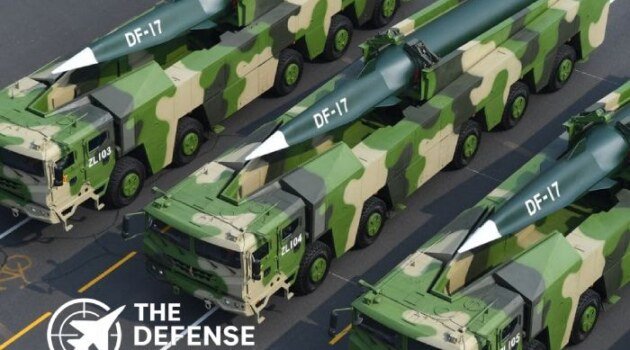
For decades, American ballistic missile defense (BMD) systems were architected around a predictable threat: missiles that arc through space on fixed, calculable trajectories. Intercept the arc, and you win. But adversaries studied that logic — and engineered around it. Today, China’s DF-17 hypersonic glide vehicle and Russia’s Avangard system maneuver unpredictably at speeds exceeding Mach 20, operating in an altitude band that existing sensors and interceptors were never designed to cover. The question facing the Pentagon, NATO partners, and U.S. allies in the Indo-Pacific is blunt: can the shield hold?
- Specifications: Hypersonic Threats vs. BMD Systems
- Design & Technology: A Fundamental Mismatch
- Firepower & Performance: Speed Is the Weapon
- Operational Range & Mobility
- Combat Effectiveness: Real World & Doctrine
- Cost & Export Value: Economics of the Arms Race
- Analysis: Where the Balance Sits in 2026
- Conclusion: Which System Has the Edge?
- FAQs
Specifications: Hypersonic Threats vs. BMD Systems
| Specification | Hypersonic Glide Vehicles (e.g., DF-17 / Avangard) | U.S. Ballistic Missile Defense (GMD / THAAD / SM-3) |
|---|---|---|
| Speed | Mach 5–27 (varies by system) | Interceptors: Mach 8–10+ |
| Flight Altitude | 25–100 km (near-space glide) | GMD: 1,000+ km; THAAD: 40–150 km |
| Maneuverability | High — lateral, pull-up maneuvers | Limited — fire-solution depends on predicted path |
| Range | 1,800–15,000+ km | THAAD: ~200 km; GMD: intercontinental |
| Radar Signature | Small; plasma sheath disrupts radar | Relies on early-warning satellites + ground radar |
| Warhead Options | Conventional / nuclear capable | Hit-to-kill (kinetic); no explosive warhead |
| Unit Cost (est.) | $50–100M+ per missile | SM-3: ~$24M; GBI: ~$75M per interceptor |
| Reaction Window | Minutes to impact from launch | GMD: 30+ min lead time needed; THAAD: 5–8 min |
| Service Entry | DF-17: 2019; Avangard: 2019 | GMD: 2004; THAAD: 2008; SM-3 IIA: 2018 |
| Test Success Rate | China/Russia: Classified | GMD: ~55%; THAAD: ~100% (17/17 tests) |
Design & Technology: A Fundamental Mismatch
How Hypersonic Glide Vehicles Work
Hypersonic glide vehicles (HGVs) are launched atop ballistic missiles but separate before the terminal phase. Instead of following a predictable parabolic arc, they re-enter the atmosphere and glide at sustained hypersonic speeds — generating intense plasma that partially blinds radar. The DF-17’s warhead, designated the DF-ZF, reportedly pulls lateral maneuvers up to several Gs, making fire-control solutions exponentially harder to compute in real time.
How U.S. Ballistic Missile Defense Is Architected
The U.S. BMD architecture is layered. The Ground-Based Midcourse Defense (GMD) system — based at Fort Greely, Alaska — targets ICBMs in their midcourse phase, relying on long-range X-band radars and kill vehicles (EKVs) that collide with warheads at closing speeds above Mach 15. THAAD (Terminal High Altitude Area Defense) handles shorter-range threats in the terminal phase. Aegis SM-3 provides ship-based midcourse intercept capability and is the most mobile layer. The gap: none of these systems was designed to track and intercept a vehicle flying at 40–80 km altitude, maneuvering unpredictably at Mach 10+.
“You can’t intercept what you can’t track. Hypersonic glide vehicles exploit the seam between what our radars see and what our interceptors can reach.”
Firepower & Performance: Speed Is the Weapon
At Mach 20, the Russian Avangard travels roughly 6.8 kilometers per second. From a launch site in western Russia, it can reach the U.S. East Coast in under 15 minutes — far less than the 25–30 minutes a traditional ICBM requires. That compression of decision time is itself the weapon. It does not need to be nuclear to be destabilizing; a conventional HGV strike on a carrier strike group or command node collapses the window in which defensive responses — diplomatic, kinetic, or otherwise — can be organized.
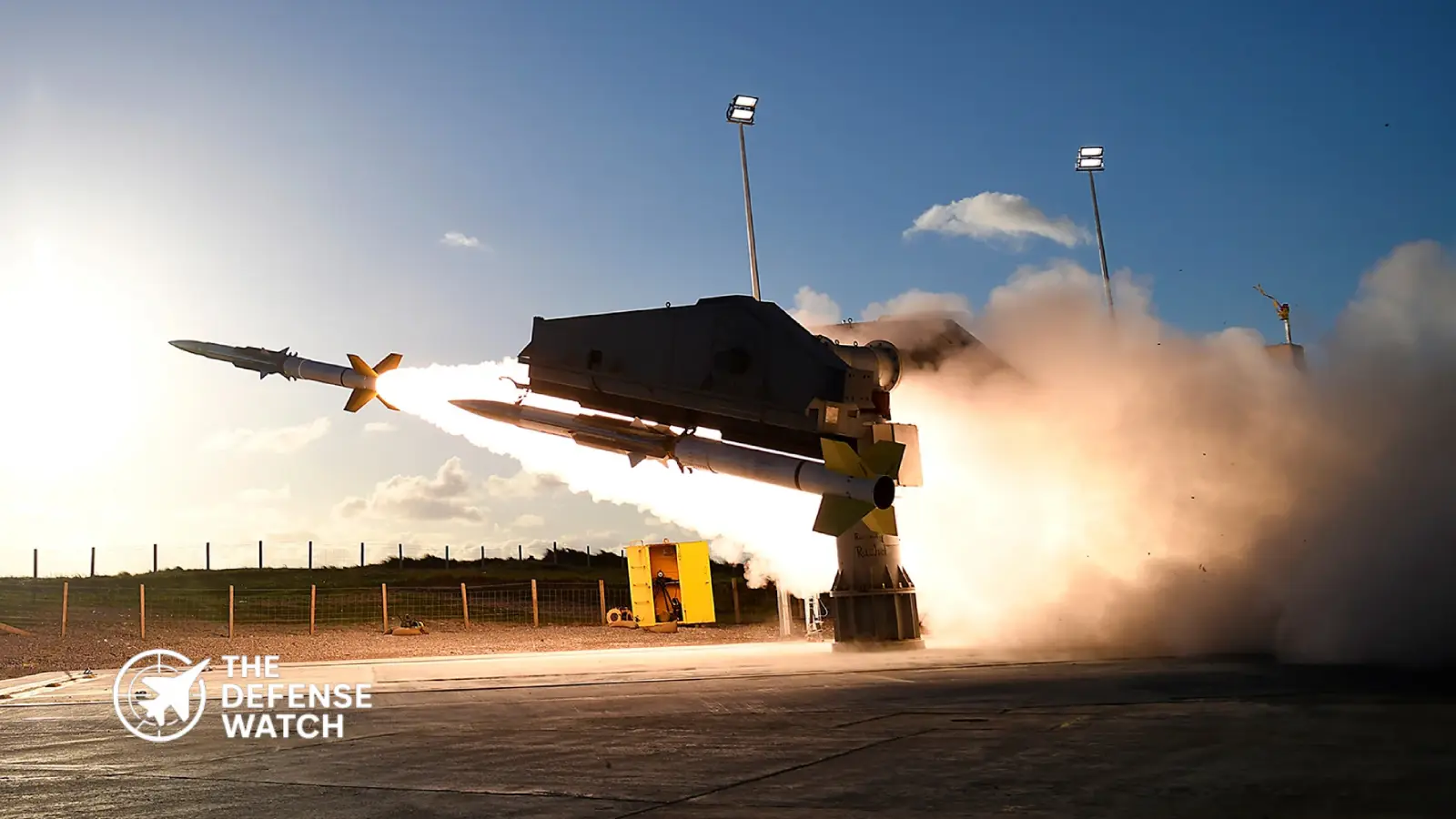
U.S. BMD interceptors are fast, but the geometry is unforgiving. THAAD’s kill vehicle closes at approximately Mach 8. Against a target that maneuvers after radar track, the fire-control algorithm must predict where the threat will be at intercept — and HGVs are specifically designed to defeat that prediction.
Operational Range & Mobility
Range asymmetry compounds the problem. China’s DF-17, with a reported range of 1,800–2,500 km, can target U.S. bases in Guam, Japan, and South Korea from launch sites deep inside Chinese territory — well outside the effective defensive perimeter of sea-based SM-3 batteries. Avangard, boosted by Russia’s heavy RS-28 Sarmat ICBM, is essentially global in range.
On the U.S. side, THAAD batteries are mobile and deployable — as demonstrated by rotational deployments to South Korea and Guam — but they cover relatively small areas. Aegis-equipped destroyers offer flexibility, but repositioning ships takes hours to days. The Missile Defense Agency’s Next Generation Interceptor (NGI), currently in development, is intended to replace aging GMD kill vehicles, but it addresses ballistic threats primarily, not HGVs in their glide phase.
Combat Effectiveness: Real World & Doctrine
Hypersonic Offense BMD Defense Strengths in Combat Strengths in Defense Near-unpredictable terminal trajectory THAAD: 17/17 intercept test success Exploits “midcourse gap” in BMD layers Aegis SM-3: proven at sea, widely exported Compresses adversary decision time Layered architecture — multiple intercept opportunities Dual-use (conventional + nuclear ambiguity) Hypersonic Defense Architecture (HDA) in development China showcased the DF-17 at its 2019 National Day parade; Russia confirmed Avangard operational in December 2019. Neither system has been used in live combat — but Russia’s reported use of the Kinzhal quasi-ballistic missile in Ukraine has offered real-world data on radar evasion under combat conditions. The U.S. Missile Defense Agency acknowledged the HGV gap explicitly in its 2022 and 2024 budget requests, funding the Glide Phase Interceptor (GPI) program to address the near-space threat. The GPI aims for a first intercept demonstration in the late 2020s — a timeline that leaves a window of vulnerability. Cost & Export Value: Economics of the Arms Race
One overlooked dimension is cost asymmetry. A single GBI interceptor costs roughly $75 million. If an adversary saturates defenses with cheaper HGVs — or even conventional ballistic decoys — the economics of defense become unsustainable at scale. Each THAAD battery costs approximately $800 million; the missiles themselves run $11 million apiece. Against a $50–100 million HGV, the exchange ratio is problematic but not catastrophic — yet.
On the export front, Aegis and THAAD are critical U.S. alliance tools. Japan operates advanced Aegis destroyers and is integrating SM-3 Block IIA. South Korea hosts THAAD. Romania and Poland host Aegis Ashore sites. These deployments extend deterrence — but also extend the attack surface that adversary HGVs must be able to defeat, driving their development further. It is a feedback loop baked into the system. For more on U.S. BMD export posture.
Analysis: Where the Balance Sits in 2026
The honest assessment, drawn from open-source MDA documentation and think-tank analyses from CSIS and RAND, is that the United States currently lacks a fielded system capable of reliably intercepting a maneuvering HGV in its glide phase. The GPI program addresses this, but it will not reach operational capability before 2030 at the earliest. Space-based sensors — the Hypersonic and Ballistic Tracking Space Sensor (HBTSS) constellation, now in early orbit testing — are the most promising near-term enabler; they can track HGVs from above the plasma sheath that blinds ground radar.
That said, framing this purely as a “defense loses” story misses strategic context. Deterrence does not require perfect defense. It requires that any adversary calculate that a hypersonic first strike cannot disarm U.S. retaliatory capability entirely. The U.S. nuclear triad — submarines, ICBMs, and bombers — is survivable against a hypersonic strike, which limits the strategic utility of HGVs to coercive or conventional-strike scenarios. The more acute danger is conventional: hypersonic precision strikes on carriers, airfields, or command nodes in a Taiwan or Baltic crisis could create facts on the ground before a U.S. conventional response could organize.
Conclusion: Which System Has the Edge?
In a direct comparison of hypersonic missile speed vs. ballistic missile defense today, the offense holds a meaningful but not absolute advantage. Existing U.S. BMD layers were not designed for the HGV threat. The GPI and HBTSS programs are credible responses, but they are years away from operational readiness. In the near term, the U.S. relies on deterrence-by-punishment rather than deterrence-by-denial against hypersonic threats.
The edge shifts under different conditions. In a theater defense scenario — protecting a fixed asset like Guam — THAAD’s proven kill chain and potential GPI augmentation provide a meaningful layered defense by the early 2030s. In an ICBM-exchange scenario, Avangard’s glide phase still outpaces current GMD. The race is not over. But the United States is, for now, playing catch-up in the glide phase — and speed, in this contest, is everything.
While current U.S. Ballistic Missile Defense systems like THAAD and Aegis are highly effective against traditional arcs, they face a ‘capability gap’ against hypersonic glide vehicles. The Pentagon is currently closing this gap by developing the Glide Phase Interceptor (GPI) and satellite-based tracking layers.
FAQs
Can U.S. missile defense systems currently intercept hypersonic missiles?No current U.S. system is specifically fielded to intercept a maneuvering hypersonic glide vehicle in its glide phase. THAAD and GMD were designed for ballistic trajectories. The Glide Phase Interceptor (GPI), under MDA development, aims to close this gap but is not expected to reach operational status before 2030.
How fast are hypersonic missiles compared to traditional ballistic missiles?Traditional ICBMs re-enter at roughly Mach 20–23 at terminal phase, but follow predictable arcs. Hypersonic glide vehicles sustain speeds of Mach 5–27 across most of their flight and maneuver laterally — making speed and unpredictability a dual threat rather than speed alone.
What is the Glide Phase Interceptor and when will it be ready?The GPI is a Missile Defense Agency program to develop an interceptor capable of engaging HGVs during their extended glide phase, before terminal descent. It is being developed in partnership with Raytheon and Northrop Grumman. A first intercept flight test is targeted for the late 2020s, with initial operational capability potentially in the early 2030s.
Which countries pose the greatest hypersonic missile threat to the United States?China and Russia are the primary concerns. China has operationally deployed the DF-17 HGV and is developing additional hypersonic systems. Russia’s Avangard, boosted by the Sarmat ICBM, is declared operational.