Executive Summary:
The U.S. Army has expanded Lockheed Martin’s PAC-3 Missile Segment Enhancement production program into a seven-year multiyear procurement valued at up to $58.62 billion. Awarded on July 29, 2026, the modification significantly increases long-term production capacity for one of America’s primary air and missile defense interceptors as demand continues to grow among the United States and allied nations.
Lockheed Martin Expands PAC-3 MSE Production Under $58.6 Billion Multiyear Contract
The U.S. Army has awarded Lockheed Martin a $53.86 billion firm-fixed-price contract modification, expanding the company’s existing production agreement for the PATRIOT Advanced Capability-3 Missile Segment Enhancement (PAC-3 MSE) interceptor into a seven-year multiyear procurement.
According to the Department of Defense contract announcement issued on July 29, 2026, the modification converts the original one-year undefinitized contract action into a long-term procurement vehicle supporting missile production through March 31, 2035.
The latest modification increases the total cumulative value of contract W31P4Q-26-C-0013 to $58.62 billion, making it one of the largest missile production contracts awarded by the U.S. Army.
What The Contract Includes
The modification covers virtually every major manufacturing activity required to sustain large-scale production of the PAC-3 Missile Segment Enhancement interceptor, including:
| Contract Detail | Information |
|---|---|
| Contractor | Lockheed Martin Corp. |
| Contract Value | $58.620 billion (total cumulative) |
| Modification Value | $53.859 billion |
| Contract Type | Firm-Fixed-Price |
| Weapon System | PAC-3 Missile Segment Enhancement (MSE) |
| Customer | U.S. Army |
| Completion Date | March 31, 2035 |
| Award Date | July 29, 2026 |
| Funds Obligated at Award | None |
The agreement encompasses the hardware, equipment, manufacturing, and industrial activities required to produce PAC-3 MSE interceptors over the coming decade.
Production Will Span Multiple States
Manufacturing activities will be distributed across a nationwide industrial network supporting the Patriot missile program.
Production locations include:
- Huntsville, Alabama
- Camden, Arkansas
- Hollister, California
- Clearwater, Lake Mary, Ocala and Pinellas Park, Florida
- Wichita, Kansas
- Chelmsford, Massachusetts
- Lincoln, Nebraska
- East Aurora, New York
- Archbald, Pennsylvania
- Grand Prairie and Lufkin, Texas
- Vergennes, Vermont
- Rocket Center, West Virginia
The broad supplier network reflects the complexity of PAC-3 MSE production, which integrates advanced propulsion systems, guidance electronics, seekers, control systems, composite structures, and precision manufacturing from numerous specialized defense suppliers.
Why The PAC-3 MSE Matters
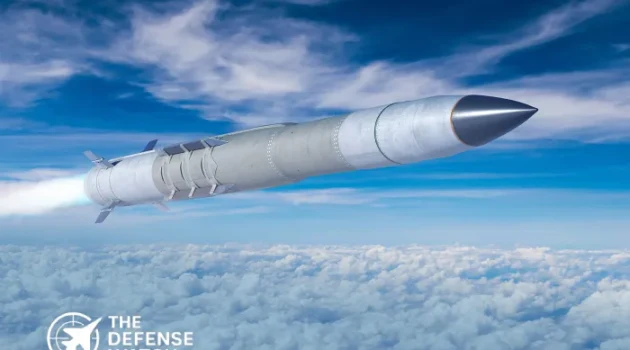
The PAC-3 Missile Segment Enhancement represents the most capable interceptor fielded within the Patriot air and missile defense system.
Unlike earlier Patriot missiles designed primarily for aircraft interception, the PAC-3 MSE employs hit-to-kill technology, destroying incoming threats through direct kinetic impact rather than relying solely on explosive fragmentation.
The interceptor is designed to defeat:
- Tactical ballistic missiles
- Cruise missiles
- Advanced aircraft
- Certain hypersonic-class maneuvering threats within its engagement envelope
- Unmanned aerial systems in specific operational scenarios
Its larger dual-pulse rocket motor, improved maneuverability, and enhanced control surfaces provide greater engagement range and improved performance against increasingly sophisticated missile threats.
Strategic Importance Of A Seven-Year Procurement
The transition from a one-year undefinitized contract to a seven-year multiyear procurement carries strategic significance beyond its headline value.
Long-term contracting allows Lockheed Martin and its suppliers to invest in workforce expansion, manufacturing equipment, and production planning with greater certainty. It also enables the Army to secure critical components through longer purchasing cycles, helping reduce supply chain disruptions and improve production efficiency.
For missile programs requiring thousands of precision-built components sourced across multiple states, predictable procurement can lower unit costs while increasing manufacturing throughput.
Growing Global Demand Continues To Drive Production
Demand for Patriot interceptors has risen sharply over the past several years.
Russia’s continued missile strikes against Ukraine, expanding ballistic missile inventories in the Indo-Pacific, and growing concerns over regional missile threats have prompted the United States and many allied governments to increase investments in integrated air and missile defense.
Several Patriot operators have announced plans to expand interceptor inventories, while additional countries have selected the Patriot system as part of broader modernization initiatives.
Although this contract announcement does not identify specific foreign military sales, expanded production capacity is expected to support both U.S. military requirements and future international deliveries approved through the Foreign Military Sales program.
Industrial Base Expansion Supports Long-Term Readiness
One of the most important aspects of the contract is its contribution to strengthening the U.S. defense industrial base.
Missile production has become a national priority as the Pentagon seeks to replenish inventories while simultaneously meeting increasing operational demand.
By extending production through 2035, the Army provides stability across dozens of suppliers responsible for propulsion systems, electronics, guidance packages, composite materials, and precision machining.
Long-term investments also reduce the risk associated with intermittent procurement cycles that historically challenged missile manufacturing capacity.
Operational Impact For U.S. Missile Defense
From an operational perspective, sustained PAC-3 MSE production ensures that Patriot units can continue replacing training expenditures, replenish deployed inventories, and support expanded force structure requirements.
Modern conflicts have demonstrated that missile defense interceptors are consumed at a far greater rate than many pre-2022 planning assumptions anticipated. Maintaining robust production capacity has therefore become as important as developing next-generation defensive technologies.
The Army’s decision signals confidence that PAC-3 MSE will remain a foundational component of U.S. and allied layered air and missile defense architectures well into the next decade, even as future systems are introduced.
Looking Ahead
The contract modification provides Lockheed Martin with a long-term production framework extending through early 2035 while reinforcing one of the Pentagon’s highest-priority missile defense programs.
As missile threats continue evolving across multiple theaters, sustained production of PAC-3 MSE interceptors will play a central role in ensuring that U.S. forces and allied partners maintain credible defensive capacity against increasingly complex aerial and ballistic threats.