(adsbygoogle = window.adsbygoogle || []).push({});Executive Summary:
Modern home defense is no longer a simple debate between a shotgun and a pistol. Compact pistol caliber carbines, especially premium platforms such as Daniel Defense PCCs, have introduced a third option that changes how professionals evaluate maneuverability, controllability, and defensive effectiveness inside confined spaces.
This analysis compares each platform through the lens of tactical doctrine, ergonomics, terminal performance, and practical employment rather than internet myths or entertainment media.
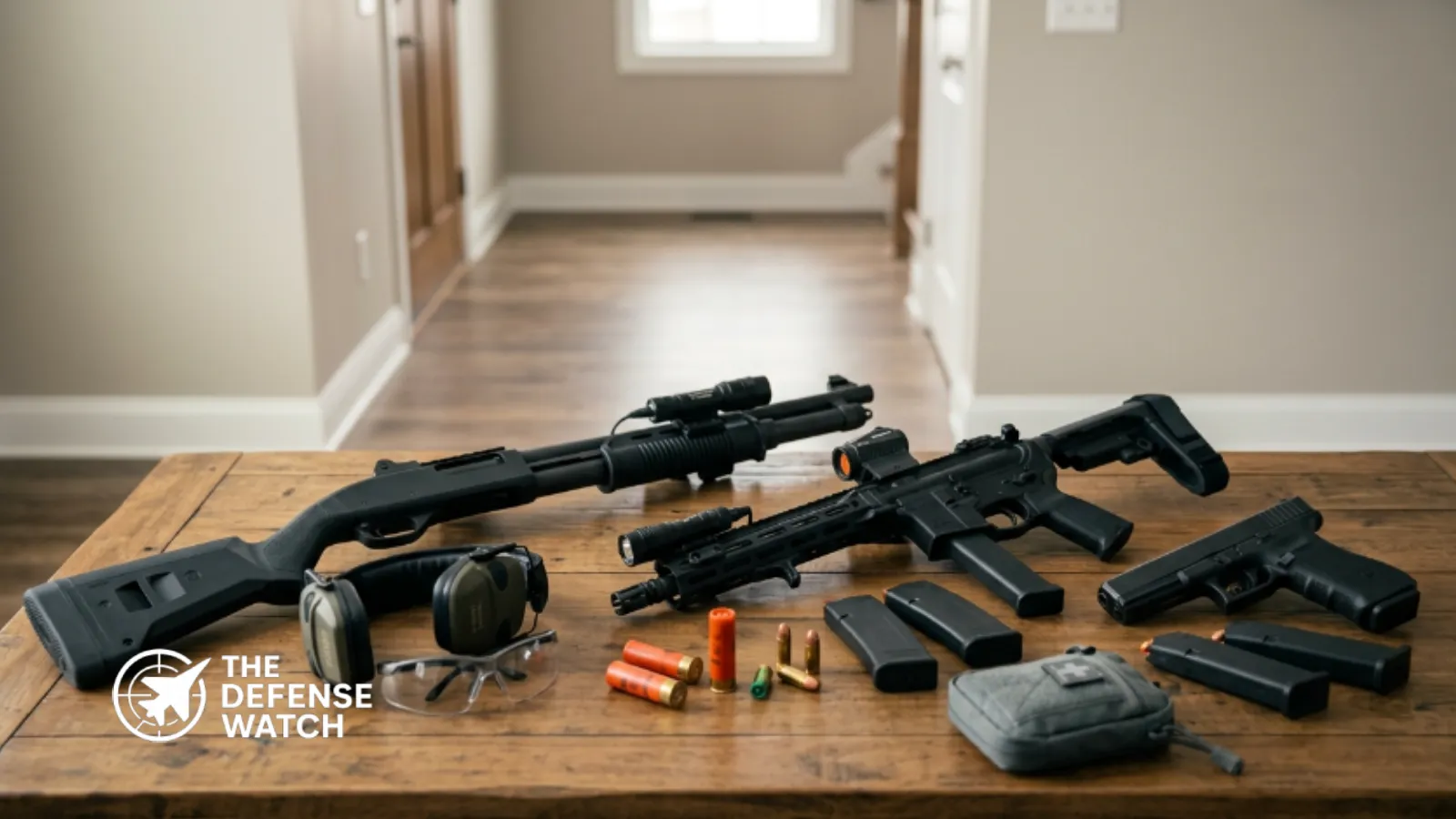
Selecting the best shotgun for home defense is no longer as straightforward as it was twenty years ago. Defensive firearm technology has evolved rapidly, and compact pistol caliber carbines now compete directly with traditional shotguns and defensive handguns.
Military and law enforcement professionals increasingly evaluate defensive weapons through measurable factors such as controllability, target discrimination, recoil management, ammunition capacity, and the ability to place rapid, accurate shots under stress. Hollywood stereotypes rarely survive that analysis.
The question is not which firearm is universally superior. The better question is which platform performs best for a particular defender inside realistic residential environments.
Technical Analysis: Understanding Each Defensive Platform
Home Defense Shotgun
The traditional home defense shotgun remains one of the most effective close range defensive firearms available. A quality 12 gauge loaded with appropriate defensive buckshot delivers exceptional stopping capability within typical room distances.
Contrary to popular myths, shot spread inside most homes remains surprisingly tight. At seven to ten yards, many loads produce patterns only several inches across. Accurate aiming is still essential.
Pump action designs remain popular because of mechanical simplicity, while semi automatic shotguns reduce shooter workload during rapid follow up shots.
Advantages
- Extremely effective terminal performance
- Proven military and law enforcement history
- Reliable mechanical operation
- Strong psychological deterrent
Limitations
- Heavy recoil slows inexperienced shooters
- Lower ammunition capacity
- Longer overall length in narrow hallways
- Slower reloads under pressure
Daniel Defense PCC
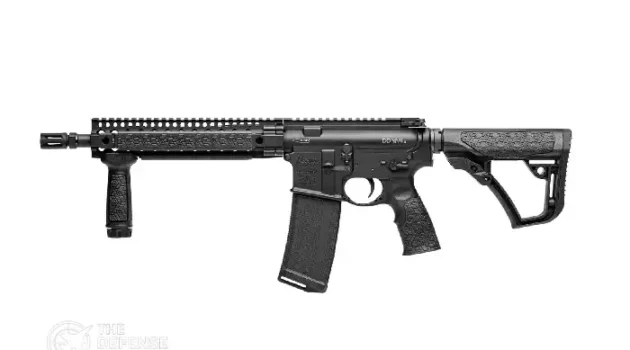
The arrival of premium Daniel Defense PCC platforms reflects a broader trend toward compact carbines chambered in pistol calibers.
Although firing handgun ammunition, these carbines benefit from longer barrels, improved stability, red dot optics, and weapon mounted lights. The result is significantly easier shot placement compared with traditional handguns.
Modern PCCs typically accept high capacity magazines while producing very mild recoil. For many shooters, this translates into faster target engagement and improved accuracy during stressful situations.
Professional instructors often note that new shooters become proficient with PCCs much faster than with handguns.
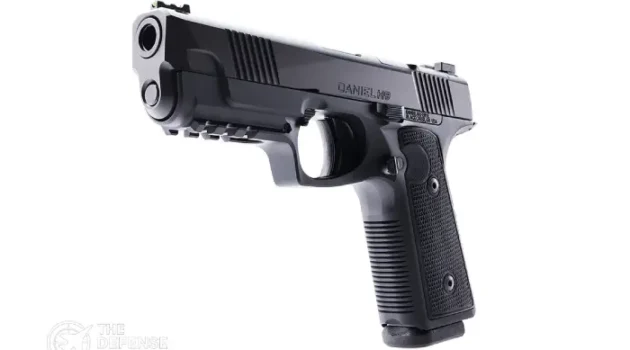
Handgun for Personal Defense
A handgun for personal defense offers one advantage no long gun can match.
Portability.
Most defensive encounters occur outside the home, making concealed carry pistols indispensable for daily protection. Inside the home, however, pistols require greater marksmanship because the shooter has fewer points of contact and a shorter sight radius.
(adsbygoogle = window.adsbygoogle || []).push({});Modern optics ready pistols have improved hit probability, but mastering them still requires consistent training.
Operational Comparison
Feature Home Defense Shotgun Daniel Defense PCC Handgun Effective Home Distance 5 to 25 yards 5 to 75 yards 5 to 25 yards Typical Capacity 5 to 8 rounds 20 to 35 rounds 15 to 20 rounds Felt Recoil High Low Moderate Ease of Accuracy High Very High Moderate Reload Speed Slow Fast Fast Maneuverability Moderate High Excellent Typical Civilian Price $400 to $1,800 $1,700 to $2,500 $500 to $1,200 Training Requirement Moderate Low to Moderate High Tactical Doctrine: Why Professionals Still Respect the Shotgun
Military organizations have relied on combat shotguns since the First World War, particularly for close quarters battle, breaching operations, and urban combat.
Modern doctrine, however, recognizes that every weapon has limitations.
Special operations forces frequently employ compact carbines because they provide greater ammunition capacity, lower recoil, and faster follow up shots without sacrificing precision.
This same reasoning explains why many civilian instructors now recommend PCCs for individuals who may struggle with heavy shotgun recoil.
atOptions = { ‘key’ : ‘e7d18db8b7513fb2a224cf4c3f18bbf0’, ‘format’ : ‘iframe’, ‘height’ : 90, ‘width’ : 728, ‘params’ : {} };The shotgun remains devastating, but it is no longer the only highly capable defensive option.
The Crossover Angle: What Competitive Gaming Accidentally Gets Right
Competitive tactical shooters and military simulators reward players who understand movement, angles, and room clearing rather than simply selecting the weapon with the highest damage.
Professional Call of Duty competitors frequently favor aggressive submachine gun players for close quarters objectives because mobility and rapid target transitions often outweigh raw firepower.
The comparison mirrors real defensive tactics.
A shotgun dominates when the first hit is decisive.
A PCC excels when rapid follow up shots, movement, and precision become equally important.
Meanwhile, the handgun remains the emergency tool that stays with the defender when larger firearms are unavailable.
Although esports naturally simplify real ballistics and tactics, the emphasis on positioning, communication, and weapon handling reflects genuine principles taught in military close quarters battle courses.
Winning a close quarters encounter depends less on raw firepower than on placing accurate shots quickly while maintaining control of the environment.
Choosing Between the Three Platforms
The answer depends on experience, physical ability, and intended role.
A homeowner seeking maximum stopping capability inside the house may still find shotguns for home defense to be the strongest option, provided they train regularly and select appropriate defensive ammunition.
Shooters who prioritize controllability, higher magazine capacity, and faster follow up shots often gravitate toward compact PCCs. Premium models such as those from Daniel Defense have become increasingly attractive because they combine familiar AR ergonomics with manageable recoil.
A handgun for personal defense remains unmatched for concealed carry and everyday accessibility, but it generally demands the highest level of training to achieve consistent accuracy under stress.
Conclusion
The debate over the best shotgun for home defense is no longer about declaring a universal winner.
The shotgun continues to deliver unmatched close range power and remains a respected defensive tool with more than a century of operational history. Daniel Defense style PCCs represent the modern evolution of close quarters firearms by emphasizing precision, capacity, and controllability. Handguns complete the picture by offering continuous personal protection beyond the home.
Understanding the strengths and limitations of each platform is far more valuable than chasing internet myths. Defensive success ultimately depends on training, sound judgment, and selecting the firearm that matches the user’s skill level and intended role.
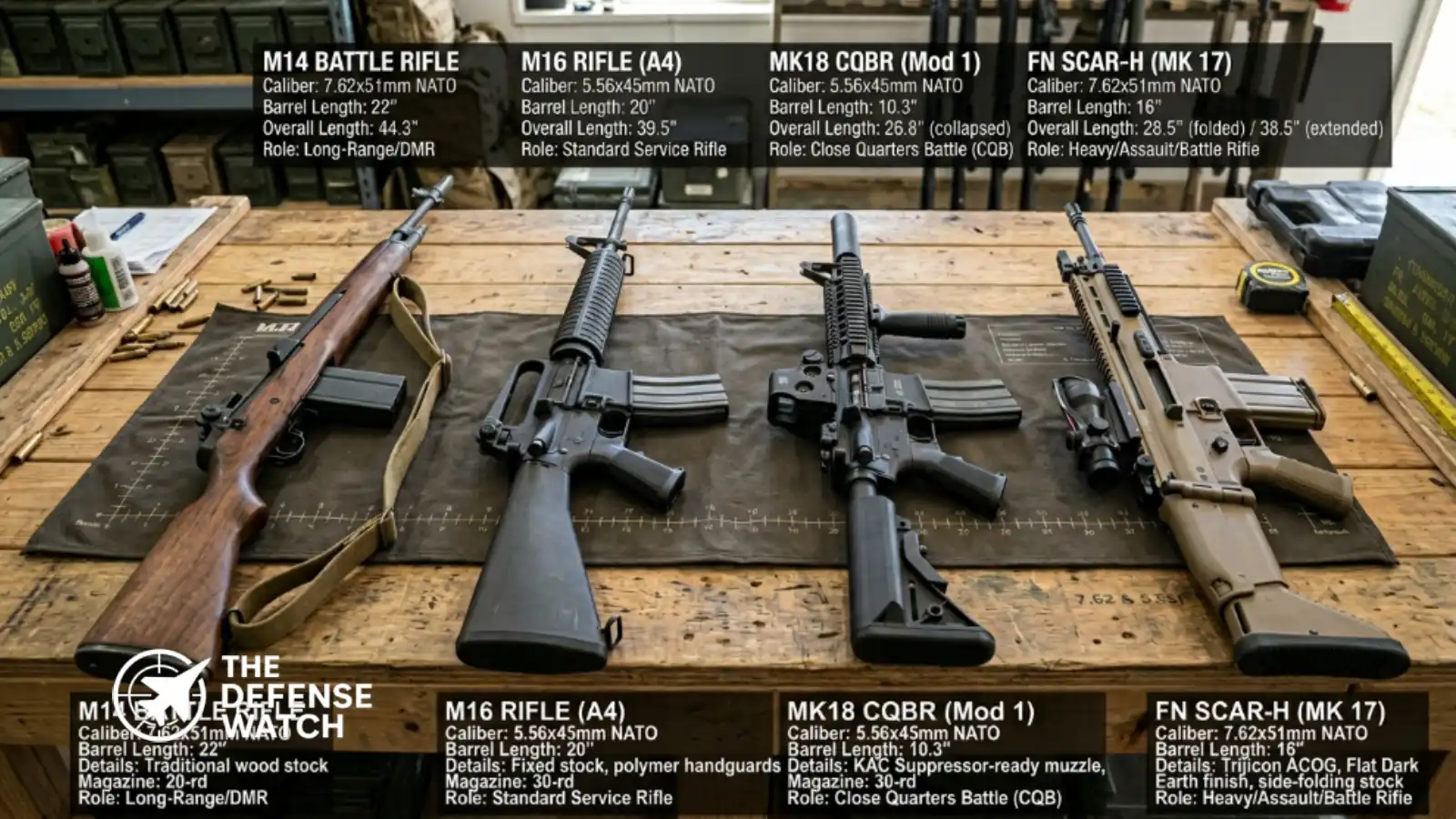
Executive Summary:
The battle rifle vs carbine debate reflects the changing demands of modern warfare, balancing long-range firepower against mobility and adaptability. Battle rifles offer superior range and stopping power through full-size cartridges, while carbines provide lighter weight, reduced recoil, and greater effectiveness in close to medium-range combat. Modern militaries increasingly employ both weapon types to address diverse operational requirements across conventional, urban, and expeditionary battlefields.
The debate over battle rifle vs carbine remains one of the most important discussions in military small arms history. From the battlefields of the Cold War to modern conflicts in Ukraine, Iraq, and Afghanistan, armies have continuously balanced firepower, range, and mobility when selecting infantry weapons.
Historically, soldiers carried full-powered battle rifles chambered in cartridges designed for long-range engagements. However, changing combat realities pushed militaries toward lighter, more compact carbines firing intermediate cartridges. This shift transformed infantry doctrine and influenced weapons such as the M16 rifle, MK18 rifle, and SCAR rifle.
Today, the distinction between battle rifles and carbines remains relevant as NATO forces modernize while preparing for potential high-intensity conflicts against near-peer competitors such as Russia and China.
Battle Rifle vs Carbine Specifications Comparison
| Specification | Battle Rifle | Carbine |
|---|---|---|
| Typical Cartridge | 7.62×51mm NATO | 5.56×45mm NATO |
| Effective Range | 600-800 m | 300-500 m |
| Average Weight | 8.5-11 lbs | 5.5-7.5 lbs |
| Barrel Length | 18-22 inches | 10-16 inches |
| Recoil | High | Moderate |
| Ammunition Carry Capacity | Lower | Higher |
| Typical Role | Long-range infantry combat | Close to medium-range engagements |
| Examples | M14, FN FAL, HK G3, SCAR-H | M4, M16 rifle, MK18 rifle, SCAR-L |
| Service Introduction | 1950s-1960s | 1960s-present |
| Combat Environment | Open terrain, long-range warfare | Urban combat, mechanized warfare |
What Is a Battle Rifle?
A battle rifle is generally defined as a shoulder-fired infantry weapon chambered for a full-power rifle cartridge such as the 7.62×51mm NATO round.
Classic examples include:
- M14
- FN FAL
- HK G3
- FN SCAR-H
These weapons emerged during the early Cold War when military planners expected large-scale conventional warfare across Europe. Engagement distances were believed to exceed 500 meters, requiring powerful cartridges capable of penetrating cover and maintaining energy at long range.
Battle rifles deliver superior terminal performance and longer effective range but typically generate greater recoil and weight.
What Is a Carbine?
A carbine is a shorter and lighter rifle designed for improved mobility. Modern military carbines usually fire intermediate cartridges such as 5.56×45mm NATO.
Common examples include:
- M4 Carbine
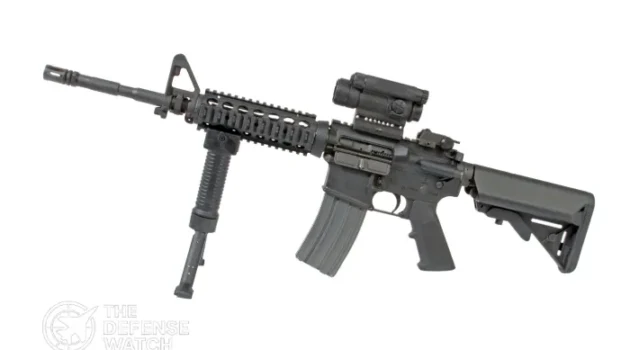
- M16 rifle variants
- MK18 rifle
- FN SCAR-L
The rise of mechanized warfare, airborne operations, and urban combat increased demand for compact weapons that could be easily carried inside vehicles, helicopters, and confined spaces.
Carbines sacrifice some long-range performance but provide greater maneuverability and reduced soldier fatigue.
Design and Technology: Battle Rifle vs Carbine
Battle Rifle Design Philosophy
Battle rifles were built around maximum battlefield effectiveness at extended distances.
Key characteristics include:
- Long barrels for increased muzzle velocity
- Robust receivers
- Full-power ammunition
- Enhanced penetration against barriers
Weapons such as the M14 and FN FAL reflected lessons learned during World War II, where infantry often engaged targets across open terrain.
The modern SCAR rifle family continues this philosophy through the SCAR-H variant, which uses the 7.62×51mm NATO cartridge while incorporating modern materials and modular accessories.
Carbine Design Philosophy
Carbines emphasize mobility and adaptability.
Modern carbines feature:
- Shorter barrels
- Lightweight materials
- Accessory rails
- Optical sights
- Suppressor compatibility
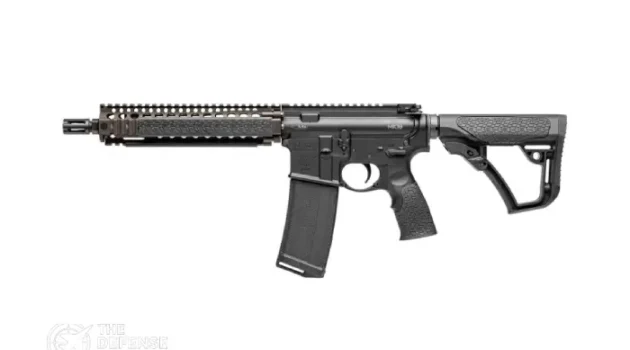
The MK18 rifle, developed for U.S. Special Operations Forces, exemplifies this approach. Its compact 10.3-inch barrel makes it highly effective in close-quarters combat and urban operations.
Similarly, the M16 rifle family evolved into shorter configurations that ultimately led to the M4 carbine becoming the standard U.S. infantry weapon.
Firepower and Performance
Battle Rifle Firepower
Battle rifles excel in:
- Long-range engagements
- Barrier penetration
- Suppression at extended distances
- Higher retained energy
The 7.62×51mm NATO cartridge delivers significantly greater energy than 5.56mm ammunition. This makes battle rifles particularly valuable in mountainous terrain and open battlefields.
Modern designated marksmen frequently employ battle-rifle platforms because of their superior range and accuracy.
Carbine Firepower
Carbines prioritize controllability and volume of fire.
Advantages include:
- Faster follow-up shots
- Lower recoil
- Increased ammunition capacity
- Improved handling
The M16 rifle became famous during the Vietnam War partly because soldiers could carry substantially more ammunition than those armed with battle rifles.
The MK18 rifle further optimized performance for special operations missions involving close engagements and rapid target acquisition.
Operational Range and Mobility
Battle Rifle Range Advantages
Battle rifles maintain effectiveness beyond 600 meters and can engage targets at distances that challenge most carbines.
This capability remains important in:
- Mountain warfare
- Open desert operations
- Long-range patrol missions
- Designated marksman roles
Weapons like the SCAR-H continue to serve special operations units because they provide greater reach against distant threats.
Carbine Mobility Advantages
Modern combat often occurs in urban environments where engagement distances are significantly shorter.
Carbines offer:
- Faster movement through buildings
- Easier vehicle operations
- Reduced fatigue
- Better close-quarters handling
The MK18 rifle became especially popular among U.S. special operations units because its compact size is ideal for ship boarding, hostage rescue, and urban warfare.
Combat Effectiveness in Modern Warfare
Battle Rifles in Contemporary Conflicts
Although many armies transitioned away from battle rifles as standard infantry weapons, they never disappeared entirely.
Recent conflicts have highlighted their continued relevance.
In Afghanistan, coalition forces often encountered enemies engaging from distances beyond the effective range of standard carbines. This renewed interest in 7.62mm weapons and designated marksman rifles.
The war in Ukraine has also demonstrated the importance of long-range infantry engagements, reinforcing demand for more powerful cartridges.
Carbines in Modern Combat
Carbines remain the dominant infantry weapon worldwide.
Reasons include:
- Most engagements occur within 300 meters
- Increased mobility for soldiers
- Compatibility with modern optics
- Reduced logistical burden
The U.S. military’s widespread adoption of the M4 carbine reflects these realities.
Modern optics, lasers, and suppressors have further enhanced carbine effectiveness, allowing compact weapons to perform beyond their traditional limitations.
M16 Rifle vs MK18 Rifle vs SCAR Rifle
M16 Rifle
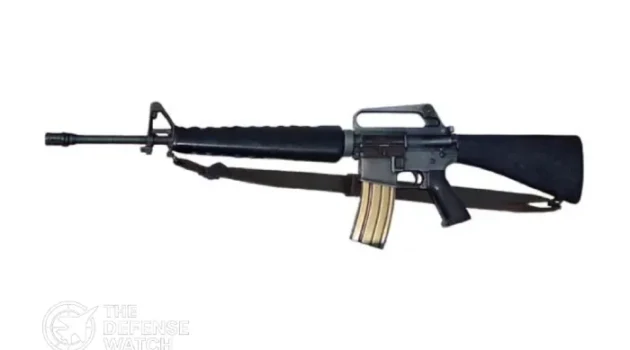
The M16 rifle revolutionized military small arms by introducing lightweight construction and the 5.56mm cartridge.
Strengths:
- Excellent accuracy
- Lightweight
- High ammunition capacity
Weaknesses:
- Longer overall length compared to carbines
- Less maneuverable in confined spaces
MK18 Rifle
The MK18 rifle is optimized for close-quarters combat.
Strengths:
- Extremely compact
- Ideal for special operations
- Excellent urban warfare performance
Weaknesses:
- Reduced effective range
- Lower muzzle velocity
SCAR Rifle
The SCAR rifle family offers both light and heavy variants.
Strengths:
- Modular design
- Multi-role capability
- Available in both 5.56mm and 7.62mm configurations
Weaknesses:
- Higher procurement cost
- More complex logistics compared to standard service rifles
Cost and Export Value
Battle Rifles
Battle rifles generally cost more to operate due to heavier ammunition and increased wear from more powerful cartridges.
However, many countries continue to purchase modern 7.62mm systems for specialized roles.
The SCAR-H has attracted interest among special operations forces seeking greater long-range effectiveness.
Carbines
Carbines remain more economical for large-scale military procurement.
Benefits include:
- Lower ammunition costs
- Reduced transportation burden
- Simpler training requirements
- Greater suitability for mass infantry forces
This explains why most NATO members continue to field 5.56mm carbines as their primary service weapons.
Battle Rifle vs Carbine: Which Has the Edge?
The answer depends entirely on mission requirements.
Battle rifles offer:
- Superior range
- Better penetration
- Greater stopping power
Carbines offer:
- Better maneuverability
- Lower recoil
- Higher ammunition capacity
- Greater versatility in urban combat
The U.S. military increasingly employs a mixed approach. Standard infantry units rely primarily on carbines, while designated marksmen and specialized personnel use battle-rifle platforms when extended range is required.
This layered strategy provides flexibility across diverse operational environments.
Conclusion
The battle rifle vs carbine debate reflects the changing nature of warfare rather than a clear winner. Battle rifles continue to provide unmatched long-range performance and terminal effectiveness, while carbines dominate modern infantry operations through superior mobility and ease of use.
Weapons such as the M16 rifle, MK18 rifle, and SCAR rifle demonstrate how military small arms have evolved to meet different battlefield requirements. As future conflicts increasingly combine urban combat with long-range engagements, both categories are likely to remain essential components of modern military arsenals.
For most conventional infantry missions, carbines retain the advantage. For extended-range combat and specialized roles, battle rifles still offer capabilities that lighter weapons cannot fully replace.
FAQ: Battle Rifle vs Carbine
What is the main difference between a battle rifle and a carbine?A battle rifle typically fires a full-power cartridge such as 7.62×51mm NATO, while a carbine usually fires an intermediate cartridge like 5.56×45mm NATO and features a shorter barrel.
Is the M16 rifle a battle rifle or a carbine?The M16 rifle is generally classified as a service rifle firing an intermediate cartridge. It shares many characteristics with modern carbines but has a longer barrel than most carbine designs.
Why do special forces use the MK18 rifle?The MK18 rifle is highly compact and optimized for close-quarters combat, making it ideal for urban warfare, direct action missions, and maritime operations.
Is the SCAR rifle a battle rifle?The SCAR family includes both variants. The SCAR-L is a carbine-style rifle chambered in 5.56mm, while the SCAR-H is considered a modern battle rifle chambered in 7.62mm NATO.
In a battle rifle vs carbine comparison, which weapon wins?Neither wins in every scenario. Battle rifles dominate at long range and against hard targets, while carbines excel in mobility, urban combat, and general infantry operations.
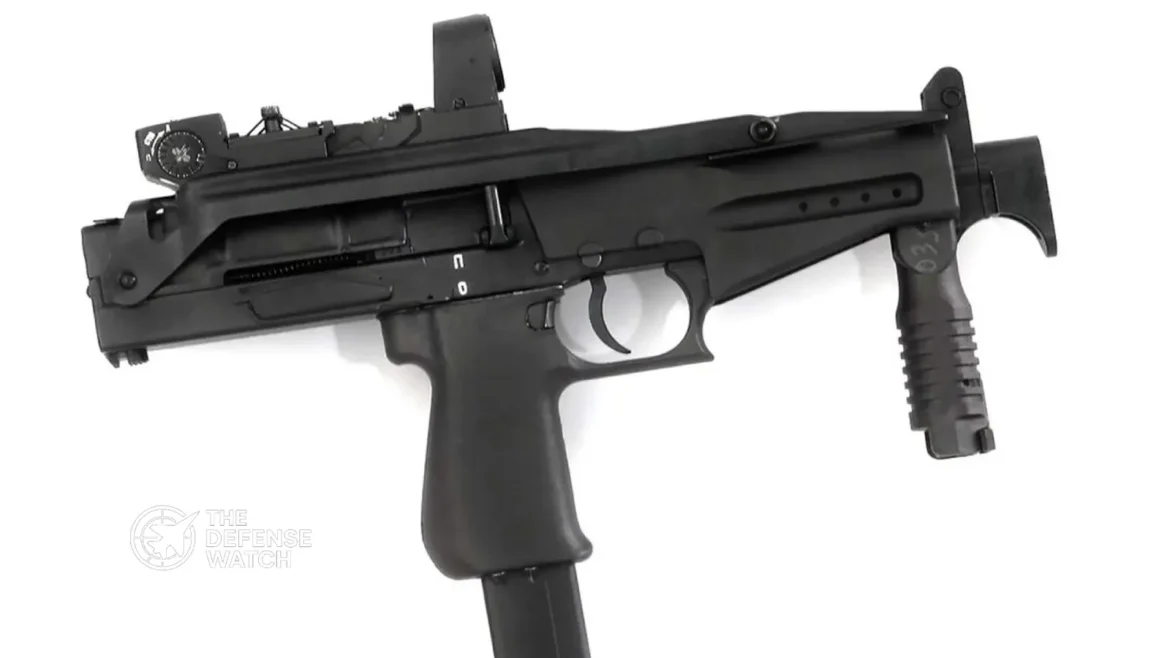
Russia Restarts SR-2M Production to Support Infantry Firepower
Russia has restarted production of the SR-2M Veresk submachine gun as part of efforts to sustain compact armor-piercing firepower for military and internal security forces. The move reflects ongoing demand for close-quarters weapons capable of defeating modern body armor.
(adsbygoogle = window.adsbygoogle || []).push({});The SR-2M, developed by TsNIITochMash under the Rostec state defense conglomerate, is chambered for the 9×21 mm cartridge. This round was designed to penetrate ballistic protection beyond the capabilities of standard 9×19 mm ammunition.
Sustaining a Niche Infantry Capability
The decision to resume SR-2M production comes as Russia continues to prioritize infantry equipment suited for urban combat, vehicle crews, and specialized units. Compact automatic weapons remain in demand for operations where maneuverability and penetration against protected targets are required.
The SR-2M is an upgraded version of the original SR-2, featuring improved ergonomics, an updated folding stock, and compatibility with modern optics. Its compact design allows it to be deployed by personnel operating in confined environments while retaining effective firepower.
Renewed production is aimed at sustaining existing inventories and ensuring replacement weapons remain available rather than introducing an entirely new platform.
Weapon Characteristics and Operational Role
The SR-2M fires the 9×21 mm SP-10 and SP-11 armor-piercing cartridges, which Russian sources claim can defeat certain levels of body armor at close range. This capability has long defined the weapon’s role within Russian internal security units and select military formations.
Key characteristics include a short barrel, high rate of fire, and detachable box magazines. The weapon is designed for close-range engagements where rapid target acquisition and penetration are critical.
(adsbygoogle = window.adsbygoogle || []).push({});The SR-2M is not intended to replace standard assault rifles but to complement them. Its role is focused on close protection details, counterterrorism units, and crews operating armored vehicles or aircraft.
Context Within Russian Small Arms Modernization
Russia’s small arms portfolio already includes platforms such as the AK-74M, AK-12, and the PP-19 Vityaz. However, the SR-2M occupies a specific niche that those systems do not fully address.
By restarting SR-2M production, Russia appears to be maintaining diversity within its infantry weapons inventory. This approach allows different units to be equipped according to mission requirements rather than adopting a single standard solution.
Analysts note that sustaining production of legacy but capable systems is often more cost-effective than developing new weapons during periods of high operational demand.
Industrial and Strategic Implications
The restart also highlights the role of Russia’s domestic defense industry in meeting internal requirements despite external pressures. TsNIITochMash has historically been responsible for specialized weapons development, particularly for ammunition and compact firearms.
Maintaining production lines for systems like the SR-2M ensures technical expertise and manufacturing capacity remain intact. This can be important for long-term sustainment and potential incremental upgrades.
(adsbygoogle = window.adsbygoogle || []).push({});While no export plans have been announced, the SR-2M has previously been marketed to select foreign customers. Any renewed production could also support future limited exports, subject to Russian government approval.
Broader Trends in Compact Weapon Demand
The SR-2M production restart aligns with broader global trends emphasizing close-quarters combat capabilities. Urban warfare, internal security missions, and protective duties continue to drive demand for compact automatic weapons with enhanced penetration.
Similar trends can be observed in other militaries that retain submachine guns or compact carbines for specialized roles rather than fully replacing them with standard rifles.
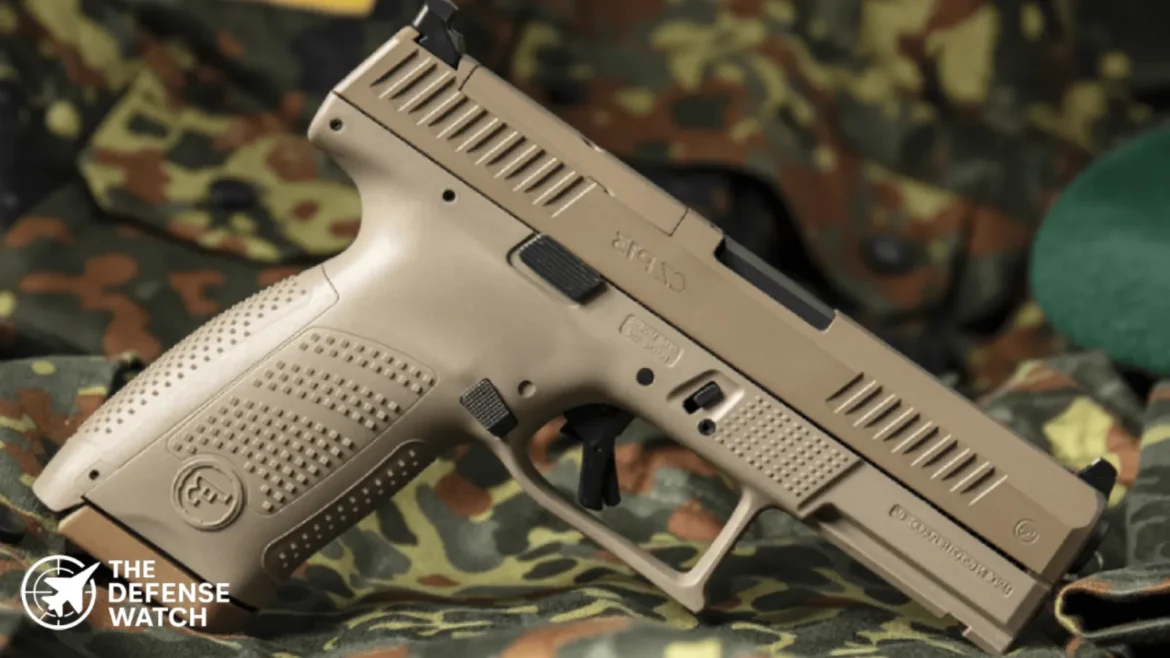
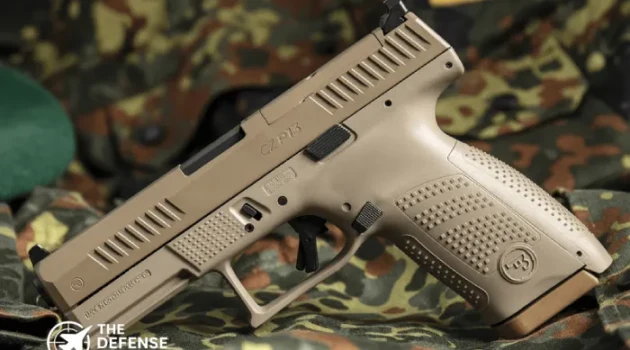
The German Army has officially adopted the CZ P13 9mm pistol as its new standard service sidearm, marking a key step in the modernization of individual weapons across the Bundeswehr. The decision was confirmed in 2025 following a competitive evaluation process led by Germany’s defense procurement authorities.
German Army CZ P13 Pistol Selection
The CZ P13 9mm pistol will replace legacy service pistols currently used by German ground forces. According to defense reporting, the new sidearm was selected for its reliability, modern design, and compatibility with NATO standard ammunition. The German Army CZ P13 pistol is expected to be issued across multiple branches, including regular army units, support forces, and specialized formations.
Background on the CZ P13 9mm Pistol
Developed by Czech manufacturer Ceska Zbrojovka, the CZ P13 is a compact striker fired handgun designed for military and law enforcement use. It features a polymer frame, enhanced ergonomics, and an accessory rail for lights and aiming devices. The pistol is chambered in 9mm, aligning with standard ammunition already in Bundeswehr service.
The German Army has officially adopted the CZ P13 9mm pistol as its new standard service sidearm, marking a key step in the modernization of individual weapons across the Bundeswehr. The decision was confirmed in 2025 following a competitive evaluation process led by Germany’s defense procurement authorities.
Procurement and Operational Use
German defense officials stated that the new pistol meets updated operational requirements, including durability in harsh environments and ease of maintenance. The CZ P13 9mm pistol will support both domestic training and overseas deployments, ensuring commonality across units and improved logistical efficiency.
Initial deliveries are expected to begin following contract finalization, with phased fielding planned across the Bundeswehr. Training programs will be updated to reflect the new weapon system.
Strategic Context
The adoption of the CZ P13 9mm pistol supports Germany’s wider effort to modernize infantry equipment and standardize small arms. The move also strengthens defense industrial cooperation within Europe while ensuring German forces remain aligned with allied standards.
As the German Army CZ P13 pistol enters service, it will become a core element of the Bundeswehr’s individual weapons inventory for the coming years.