(adsbygoogle = window.adsbygoogle || []).push({});Executive Summary: China’s People’s Liberation Army Rocket Force (PLARF) has fielded a three-tier suite of anti-ship ballistic and hypersonic missiles — the DF-21D, DF-26, and YJ-21/YJ-20 — capable of engaging carrier strike groups from stand-off ranges of 900 km to 4,500 km. Designed explicitly to challenge U.S. naval freedom of maneuver in the western Pacific, these systems collectively constitute an Anti-Access/Area-Denial (A2/AD) architecture that compels significant operational and doctrinal adjustments from the U.S. Navy and its regional allies. Their continued development and deployment represent the most consequential shift in naval threat calculus since the introduction of nuclear-powered carrier aviation.
Why “Carrier Killers” Matter
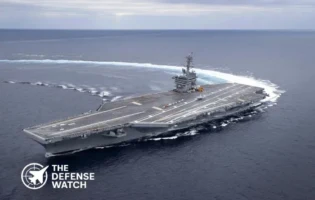
For nearly eight decades, the U.S. aircraft carrier has served as the preeminent instrument of power projection, capable of surging combat airpower to any ocean within days. That strategic calculus rested on a fundamental assumption: that no adversary possessed the precision strike capability to hold carriers at operationally relevant risk beyond the range of shipborne air defenses. China’s PLARF has systematically invalidated that assumption.
- Why “Carrier Killers” Matter
- DF-21D: The Pioneer ASBM
- DF-26: Dual-Role Intermediate Strike — The “Guam Express”
- YJ-21 and YJ-20: The Hypersonic Sea-Launched Tier
- System Comparison: DF-21D vs. DF-26 vs. YJ-21/YJ-20 vs. Legacy Threats
- System Comparison: DF-21D vs. DF-26 vs. YJ-21/YJ-20 vs. Legacy Threats
- System Comparison: DF-21D vs. DF-26 vs. YJ-21/YJ-20 vs. Legacy Threats
- The Strategic Impact on U.S. Navy Operations and NATO Readiness
- Technical Breakthroughs in Targeting Architecture
- The Kill Chain: How China Tracks Moving Targets at Sea
- The Kill Chain: Multi-Layered Targeting Network
- Yaogan-30 ELINT/SIGINT Constellation
- Yaogan-31 SAR Imaging
- OTH-B Backscatter Radar
- Y-8/Y-9 ELINT Patrol Aircraft
- SSK/SSN Submarine Acoustic Reporting
- The Time-Distance Problem
- Known Vulnerabilities in the Kill Chain
- Looking Ahead
Beginning with the operational deployment of the DF-21D — the world’s first land-based ballistic missile explicitly designed to engage moving naval targets — and extending through the intermediate-range DF-26 and the shipborne hypersonic YJ-21, the PLA has constructed overlapping engagement envelopes that can hold carrier strike groups at risk from well within China’s continental territory. The strategic consequence is direct: any U.S. carrier operating within the first island chain faces a threat environment without historical precedent.
DF-21D: The Pioneer ASBM
Technical Specifications & Operational Concept
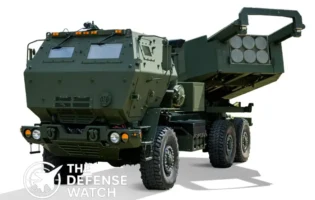
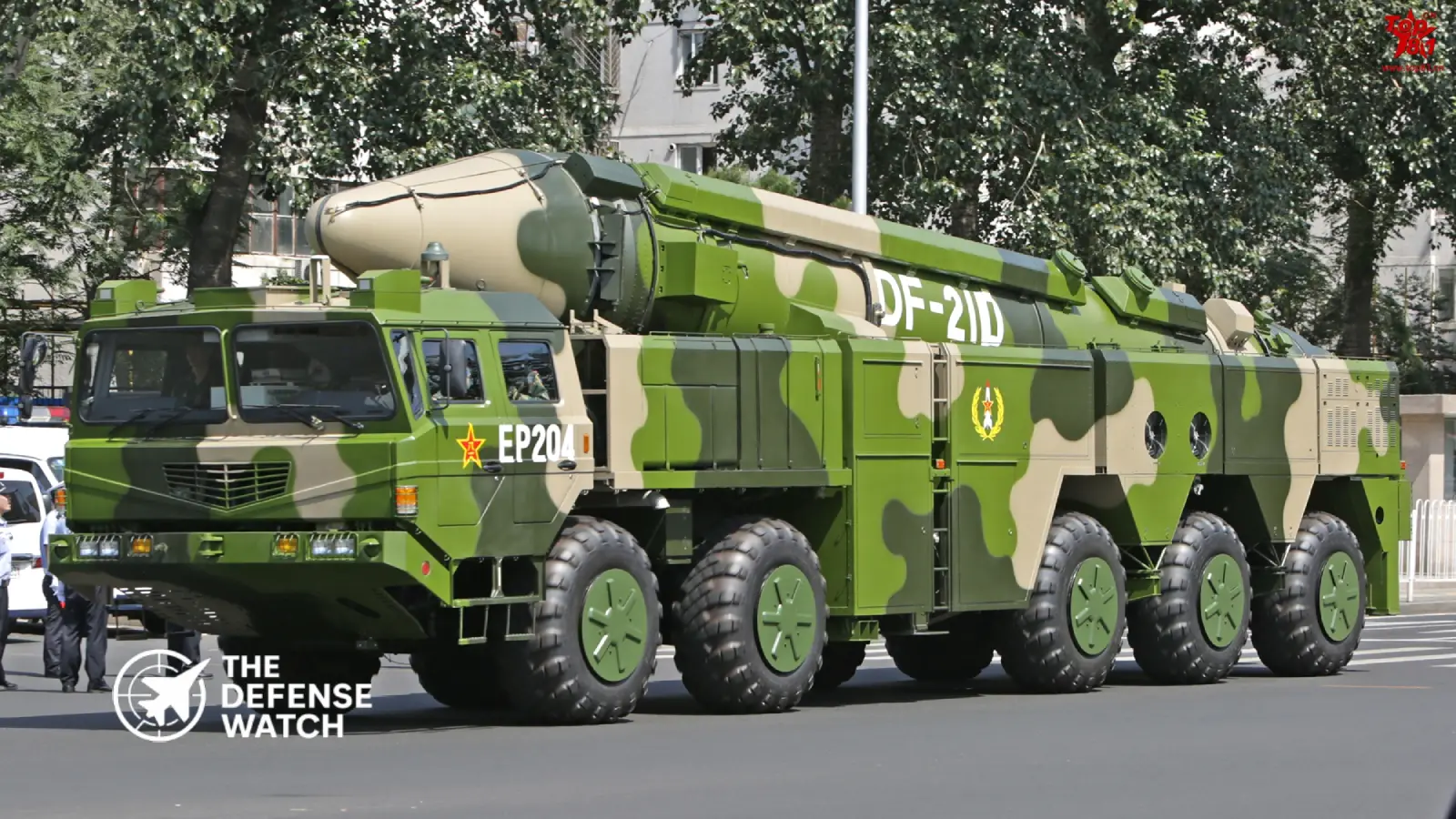
The DF-21D (Dongfeng-21D), designated CSS-5 Mod 5 in NATO parlance, represents the operational proof-of-concept for the anti-ship ballistic missile (ASBM) concept. Launched from road-mobile transporter-erector-launchers (TELs) that significantly complicate pre-launch targeting, the missile’s estimated range of 1,500–1,800 km — exact figures remain classified — covers a substantial portion of the western Pacific from launch positions within China’s interior.
(adsbygoogle = window.adsbygoogle || []).push({});The guidance architecture integrates inertial mid-course navigation with over-the-horizon targeting data fused from a constellation of sensors: the Yaogan series of imagery and electronic intelligence satellites, long-range maritime patrol aircraft, submarine-relayed acoustic intelligence, and surface vessel radar tracks. The terminal phase employs an active radar seeker capable of discriminating a carrier against sea clutter, combined with maneuvering reentry vehicle (MaRV) technology that allows terminal trajectory correction against a target moving at up to approximately 30 knots.
Key Capabilities at a Glance
- Mobile launch platform: Road-mobile TELs allow rapid repositioning, complicating adversary suppression-of-enemy-air-defenses (SEAD) targeting cycles.
- Maneuvering reentry vehicle (MaRV): Terminal course corrections challenge interceptors designed against ballistic trajectories.
- Over-the-horizon targeting: Dependent on satellite, airborne, and naval sensor fusion rather than organic seeker-only acquisition — a known vulnerability in high-EW environments.
- Anti-ship ballistic missile (ASBM) pioneer: First system in the world to transition from concept to declared operational status against moving naval targets.
- Estimated CEP: Open-source assessments suggest a circular error probable (CEP) of approximately 20–40 meters against a stationary target, with degraded accuracy against evasive maneuvering.
“To calculate the theoretical interception window for an Aegis combat system reacting to these ballistic trajectories, utilize our Missile Range & Time-of-Flight Calculator.”
DF-26: Dual-Role Intermediate Strike — The “Guam Express”
Extended Range and Nuclear Ambiguity
The DF-26, first publicly displayed during the September 2015 Beijing Victory Day parade and declared operational by the PLARF in April 2018, substantially extends China’s sea-denial envelope to approximately 4,000–4,500 km. This range brings the U.S. strategic hub at Guam — and the forward-deployed assets it supports — within persistent strike threat, earning the informal designation “Guam Express” in Western defense analyses.
(adsbygoogle = window.adsbygoogle || []).push({});The DF-26’s most operationally significant characteristic is its dual conventional/nuclear capability. Unlike the conventionally-dedicated DF-21D, the DF-26 is assessed by the U.S. Department of Defense as nuclear-capable, introducing a dangerous ambiguity problem: an adversary observing DF-26 launch preparation cannot immediately determine the warhead type, potentially triggering escalatory responses disproportionate to a conventional strike. The more recent DF-26D variant is reported to incorporate an upgraded guidance package and multi-warhead options designed to further complicate point-defense intercept solutions.
Key Capabilities at a Glance
- 4,000–4,500 km range: Covers Guam, the Philippine Sea operating areas, and portions of the Indian Ocean from western China.
- Dual conventional/nuclear role: Creates escalation ambiguity at the strategic level; adversary launch detection does not resolve warhead type prior to intercept decision window.
- DF-26D multi-warhead variant: Reported to carry multiple independently targetable or salvo sub-munitions to saturate shipborne point defenses.
- Rapid reload capability: PLARF mobile launchers are assessed to carry reload rounds, increasing salvo depth beyond a single-shot scenario.
- Land and naval target flexibility: Cleared for both fixed-infrastructure precision strikes and anti-ship missions, unlike the ASBM-specific DF-21D.
YJ-21 and YJ-20: The Hypersonic Sea-Launched Tier
Terminal Hypersonic Intercept Challenge
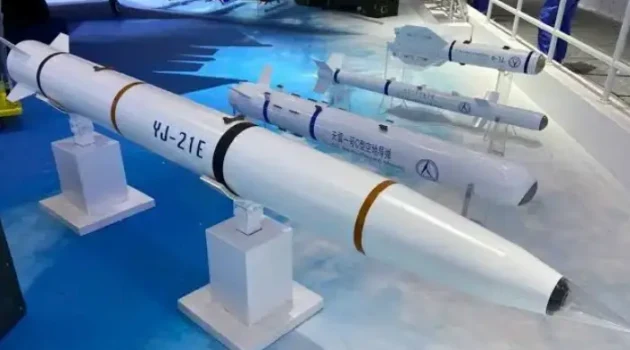
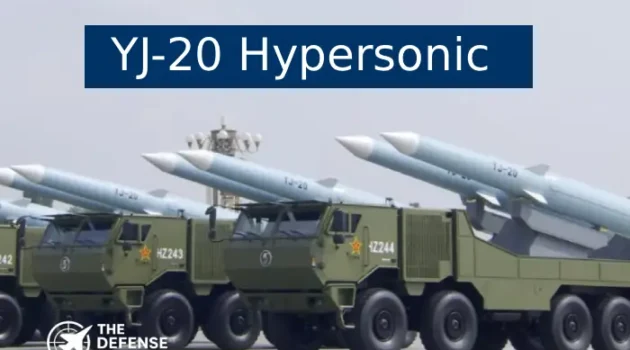
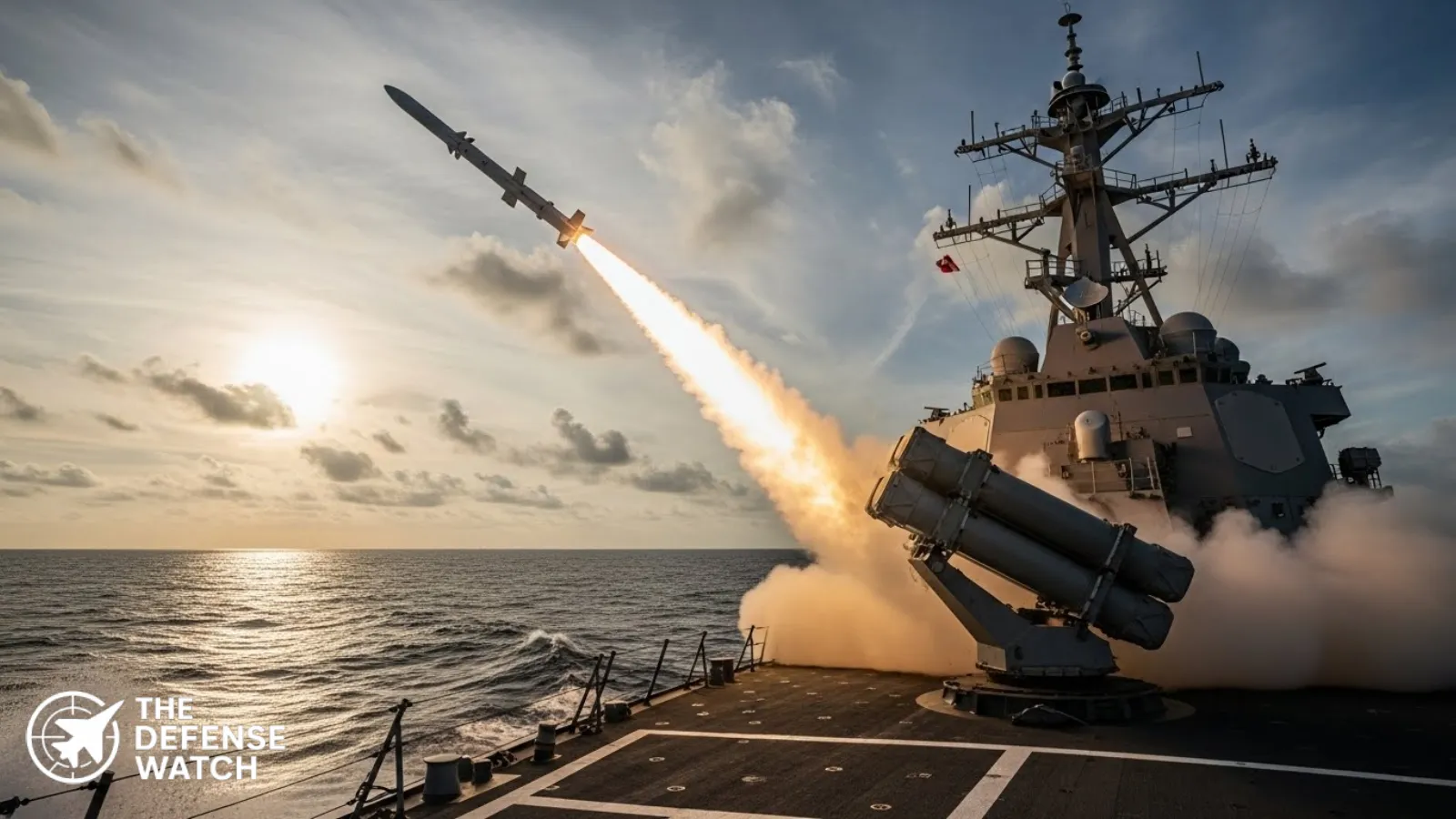
While the DF-21D and DF-26 represent land-based ballistic threats, the YJ-21 (Eagle Strike-21) and YJ-20 extend the carrier-killer concept to surface combatants, embedding hypersonic anti-ship strike capability directly into the PLA Navy’s (PLAN) surface fleet. The ship-launched YJ-20 integrates into the 112-cell vertical launch system (VLS) of the Type 055 Renhai-class cruiser — China’s most capable surface combatant — and is assessed to achieve cruising speeds in the Mach 4–6 envelope with a terminal-phase velocity reported to exceed Mach 10.
(adsbygoogle = window.adsbygoogle || []).push({});The combination of high terminal velocity, low radar cross-section in the terminal phase, and significant kinetic energy on impact creates an interception problem that exceeds the engagement parameters of current shipborne air defense systems, including the SM-6 Block IB, which has a maximum engagement velocity of approximately Mach 3.5 in the anti-air warfare mission. Directed-energy systems under development by the U.S. Navy are assessed to offer future capability against this threat class, but no currently fielded system provides reliable intercept assurance.
Key Capabilities at a Glance
- VLS integration: Fits standard vertical launch cells, enabling deployment from any Type 055 or future PLAN combatant without platform modification.
- Mach 10+ terminal velocity: Exceeds the kinematic intercept envelope of currently fielded U.S. Navy shipborne air defense missiles.
- Distributed threat: Unlike land-based systems, ship-launched missiles can be prosecuted from multiple geographic vectors simultaneously.
- Reduced warning time: High terminal speed compresses the intercept decision window from minutes (ballistic) to seconds at close range.
- Layered threat synergy: Designed to exploit air defense saturation created by simultaneous DF-21D/DF-26 engagement — forcing defenders to allocate interceptors against multiple simultaneous threat axes.
System Comparison: DF-21D vs. DF-26 vs. YJ-21/YJ-20 vs. Legacy Threats
Terminal Hypersonic Intercept Challenge
While the DF-21D and DF-26 represent land-based ballistic threats, the YJ-21 (Eagle Strike-21) and YJ-20 extend the carrier-killer concept to surface combatants, embedding hypersonic anti-ship strike capability directly into the PLA Navy’s (PLAN) surface fleet. The ship-launched YJ-20 integrates into the 112-cell vertical launch system (VLS) of the Type 055 Renhai-class cruiser — China’s most capable surface combatant — and is assessed to achieve cruising speeds in the Mach 4–6 envelope with a terminal-phase velocity reported to exceed Mach 10.
(adsbygoogle = window.adsbygoogle || []).push({});The combination of high terminal velocity, low radar cross-section in the terminal phase, and significant kinetic energy on impact creates an interception problem that exceeds the engagement parameters of current shipborne air defense systems, including the SM-6 Block IB, which has a maximum engagement velocity of approximately Mach 3.5 in the anti-air warfare mission. Directed-energy systems under development by the U.S. Navy are assessed to offer future capability against this threat class, but no currently fielded system provides reliable intercept assurance.
Key Capabilities at a Glance
- VLS integration: Fits standard vertical launch cells, enabling deployment from any Type 055 or future PLAN combatant without platform modification.
- Mach 10+ terminal velocity: Exceeds the kinematic intercept envelope of currently fielded U.S. Navy shipborne air defense missiles.
- Distributed threat: Unlike land-based systems, ship-launched missiles can be prosecuted from multiple geographic vectors simultaneously.
- Reduced warning time: High terminal speed compresses the intercept decision window from minutes (ballistic) to seconds at close range.
- Layered threat synergy: Designed to exploit air defense saturation created by simultaneous DF-21D/DF-26 engagement — forcing defenders to allocate interceptors against multiple simultaneous threat axes.
System Comparison: DF-21D vs. DF-26 vs. YJ-21/YJ-20 vs. Legacy Threats
Terminal Hypersonic Intercept Challenge
While the DF-21D and DF-26 represent land-based ballistic threats, the YJ-21 (Eagle Strike-21) and YJ-20 extend the carrier-killer concept to surface combatants, embedding hypersonic anti-ship strike capability directly into the PLA Navy’s (PLAN) surface fleet. The ship-launched YJ-20 integrates into the 112-cell vertical launch system (VLS) of the Type 055 Renhai-class cruiser — China’s most capable surface combatant — and is assessed to achieve cruising speeds in the Mach 4–6 envelope with a terminal-phase velocity reported to exceed Mach 10.
The combination of high terminal velocity, low radar cross-section in the terminal phase, and significant kinetic energy on impact creates an interception problem that exceeds the engagement parameters of current shipborne air defense systems, including the SM-6 Block IB, which has a maximum engagement velocity of approximately Mach 3.5 in the anti-air warfare mission. Directed-energy systems under development by the U.S. Navy are assessed to offer future capability against this threat class, but no currently fielded system provides reliable intercept assurance.
(adsbygoogle = window.adsbygoogle || []).push({});Key Capabilities at a Glance
- VLS integration: Fits standard vertical launch cells, enabling deployment from any Type 055 or future PLAN combatant without platform modification.
- Mach 10+ terminal velocity: Exceeds the kinematic intercept envelope of currently fielded U.S. Navy shipborne air defense missiles.
- Distributed threat: Unlike land-based systems, ship-launched missiles can be prosecuted from multiple geographic vectors simultaneously.
- Reduced warning time: High terminal speed compresses the intercept decision window from minutes (ballistic) to seconds at close range.
- Layered threat synergy: Designed to exploit air defense saturation created by simultaneous DF-21D/DF-26 engagement — forcing defenders to allocate interceptors against multiple simultaneous threat axes.
System Comparison: DF-21D vs. DF-26 vs. YJ-21/YJ-20 vs. Legacy Threats
System Range Launch Platform Terminal Speed Warhead Type Primary Target Key Technology Status DF-21D ~1,500–1,800 km Road-mobile TEL ~Mach 10 (reentry) Conventional HE, penetrator Carrier strike groups MaRV + active radar seeker; satellite/OTH targeting Operational (PLARF) DF-26 / DF-26D ~4,000–4,500 km Road-mobile TEL ~Mach 18 (reentry) Conv. / Nuclear (dual-capable) Carriers + land infrastructure Dual-role warhead; multi-warhead variant (DF-26D) Operational (PLARF, since Apr 2018) YJ-21 / YJ-20 Est. 1,000–1,500 km VLS (Type 055 cruiser) Mach 4–6 cruise; Mach 10+ terminal Conventional HE, penetrator Carriers, large surface combatants Hypersonic glide terminal phase; VLS-compatible airframe Operational (PLAN, Type 055) Legacy: P-700 Granit (SS-N-19) ~625 km Submarine / surface VLS Mach 2.5 Conventional / Nuclear Carrier groups Active radar + datalink; salvo logic In service (Russian Navy) Legacy: Harpoon Block II+ ~280 km Ship / air / sub ~Mach 0.85 Conventional HE Surface combatants GPS/INS + active radar terminal In service (U.S. Navy, allies) The Strategic Impact on U.S. Navy Operations and NATO Readiness
The U.S. Navy’s response calculus involves multiple concurrent lines of effort. The DDG(X) next-generation destroyer program incorporates directed-energy weapon provisions and substantially upgraded power generation for future hypersonic intercept lasers. The SM-6 Block IB upgrade extends engagement altitude and improves discrimination against maneuvering targets. The Conventional Prompt Strike (CPS) program — a hypersonic weapon carried aboard Virginia-class submarines — directly mirrors China’s land-attack hypersonic capability, signaling a bilateral hypersonic competition that carries its own escalation risks.
(adsbygoogle = window.adsbygoogle || []).push({});For NATO allies operating in the Indo-Pacific — particularly Australia, Japan, and South Korea — the DF-26 range ring fundamentally changes the geography of alliance commitments. Japanese Aegis destroyers, upgraded with SM-3 Block IIA interceptors under the bilateral Aegis cooperation program, provide the most capable currently-fielded allied intercept capability against the DF-26’s midcourse phase. However, intercept probability against a salvo of six or more missiles — a plausible PLARF employment option — remains a classified variable not addressed in open-source literature.
Technical Breakthroughs in Targeting Architecture
The most underappreciated element of China’s ASBM capability is not the missile itself but the targeting kill chain required to support it. A ballistic missile taking approximately 12–15 minutes from launch to impact at DF-21D range must be cued with carrier position data accurate enough to place the terminal seeker’s acquisition basket over the target. This requires a persistent, real-time maritime surveillance architecture.
China has invested substantially in this supporting layer. The Yaogan-30 constellation — a series of electronic intelligence (ELINT) and signals intelligence (SIGINT) satellites operating in low-Earth orbit in groups of three — provides persistent radar emission tracking of surface combatants. The Yaogan-31 series complements this with synthetic aperture radar (SAR) imagery. Shore-based over-the-horizon backscatter radars, operating in the 3–30 MHz band, provide wide-area cueing against major surface contacts at ranges exceeding 3,000 km. The integration of this multi-source picture into a coherent common operating picture remains a recognized Chinese military priority and a continuing intelligence-collection focus for the U.S. Navy.
The Kill Chain: How China Tracks Moving Targets at Sea
An anti-ship ballistic missile is, in isolation, a precision instrument without a target. The true operational capability of China’s DF-21D, DF-26, and YJ-21 systems is inseparable from the surveillance and targeting architecture that supports them — a multi-domain sensor network the PLA refers to internally as the Integrated Joint Operations Platform (IJOP) maritime branch. This kill chain is the operational linchpin that converts a ballistic missile’s physics into a credible naval threat, and it warrants dedicated examination.
A carrier strike group underway generates a substantial electromagnetic and acoustic signature. It radiates radar emissions, communications traffic, and aircraft sortie patterns across a wide electromagnetic spectrum. China’s targeting architecture is engineered to exploit each of these signatures simultaneously, fusing multiple sensor inputs into a continuously updated common operating picture that can cue a missile launch with sufficient accuracy to place the terminal seeker’s acquisition basket over a target moving at 25–30 knots.
The Five-Layer Sensor Architecture
Open-source analysis of Chinese military publications and observable satellite deployments indicates a layered sensor architecture with at least five distinct input streams, each providing different coverage geometry and update rates:
The Kill Chain: Multi-Layered Targeting Network
Layer 1Yaogan-30 ELINT/SIGINT Constellation
Low-Earth orbit triplets passively collect radar and radio emissions from surface combatants. Provides wide-area cueing at global range. Revisit rate estimated at 2–4 hours per triplet cluster.
Layer 2Yaogan-31 SAR Imaging
Synthetic aperture radar satellites provide all-weather, day/night imagery for track confirmation and group-size assessment. Complement ELINT data with physical contact geometry.
Layer 3OTH-B Backscatter Radar
Shore-based over-the-horizon backscatter radars operating in the 3–30 MHz HF band detect large surface contacts at ranges exceeding 3,000 km. Provides persistent wide-area cueing independent of weather.
Layer 4Y-8/Y-9 ELINT Patrol Aircraft
Airborne electronic intelligence platforms extend sensor reach beyond shore-based radar horizons. Capable of discriminating individual ship emissions within a strike group formation.
Layer 5SSK/SSN Submarine Acoustic Reporting
Forward-deployed Type 039A (Yuan-class) and Type 093 (Shang-class) submarines provide acoustic track data via low-probability-of-intercept communications buoys.
The Time-Distance Problem
The most technically demanding aspect of the ASBM targeting problem is temporal. At DF-21D maximum range of approximately 1,800 km, flight time from launch to target is estimated at 12–15 minutes. A carrier group maneuvering at 30 knots can translate approximately 9–11 km from its last known position during that interval. The missile’s terminal seeker must therefore be cued to a predicted position basket — not a last-known position — requiring the targeting system to maintain track continuity and apply a projection algorithm that accounts for likely course and speed variations.
“The performance of surface-based tracking radar against low-observable profiles can be calculated directly using our Radar Detection Range Calculator.”
For the longer-ranged DF-26 at 4,000 km, flight time extends to approximately 25–30 minutes, and the positional uncertainty cone grows proportionally. This is the primary engineering rationale for the DF-26D’s reported multi-warhead or salvo payload options: distributing submunitions or warheads across a wider footprint increases probability of engagement against a maneuvering target when track data is degraded.
Analyst note on EW vulnerability: The kill chain’s dependence on real-time sensor fusion creates a recognized operational seam. U.S. carrier strike group defensive doctrine employs electronic attack assets — including EA-18G Growlers — to deny, degrade, or deceive the targeting sensor layer. If the common operating picture fed to PLARF launch controllers contains falsified or degraded contact data, ASBM terminal seeker acquisition probability falls significantly. Whether China’s sensor redundancy is sufficient to overcome a sustained, coordinated EW campaign at scale remains a classified analytical debate within USINDOPACOM and the Office of Naval Intelligence.
Known Vulnerabilities in the Kill Chain
Assessed kill chain vulnerabilities (open-source)
- Satellite revisit gaps: Yaogan-30 triplets provide roughly 2–4 hour revisit cycles in any given ocean area — sufficient for cueing, but allowing maneuvering carriers to open significant positional uncertainty windows between passes.
- OTH radar geolocation imprecision: Backscatter HF radar provides area cueing, not precision targeting. Estimated CEP at maximum range is on the order of tens of kilometers — adequate to cue follow-on sensors but insufficient for direct ASBM launch authority.
- Communications relay latency: Submarine-relayed acoustic data requires buoy surfacing or VLF relay, introducing lag into the targeting picture and creating potential intercept opportunities for adversary anti-submarine forces.
- EW/deception susceptibility: ELINT-based tracking is inherently dependent on target emissions. Emissions-controlled (EMCON) operations by carrier strike groups significantly degrade the ELINT component, forcing greater reliance on SAR and OTH layers with lower update rates.
- C2 link integrity: The data fusion pipeline from satellite ground stations through PLARF launch authority chains is a high-value target for adversary cyber and kinetic operations. Disruption of even one relay node could deny timely launch authorization.
It is precisely these vulnerabilities that drive U.S. Navy investment in EMCON discipline, the EA-18G Growler electronic attack program, and emerging concepts of distributed maritime operations designed to present adversary ISR networks with a more diffuse, lower-signature target set. The kill chain is a system, and like any system, its operational effectiveness is bounded by its weakest node.
Looking Ahead
China’s carrier-killer architecture is not static. The DF-27, assessed by the U.S. DoD Annual Report on Chinese Military Power (2023) to be in development, is expected to extend ASBM range further while incorporating hypersonic glide vehicle (HGV) technology that renders mid-course intercept substantially more difficult than against a classical ballistic trajectory. Meanwhile, the YJ-21’s integration into PLAN combatants signals an intent to export the sea-denial problem far beyond China’s continental margins, as Type 055 cruisers operate increasingly in the central and western Pacific.