- Home
- Catalog
- Compare
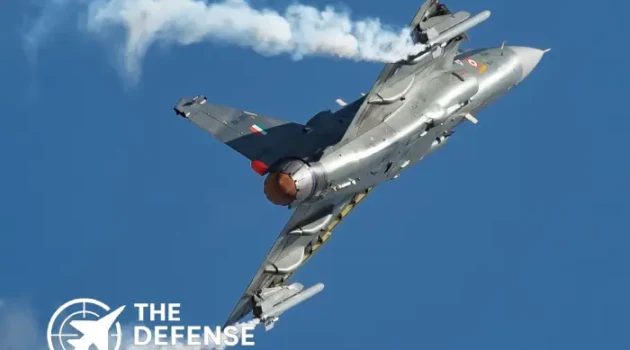
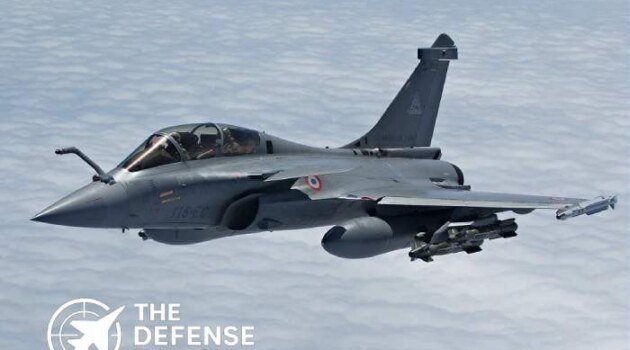
- Tejas Fighter Jet vs. Rafale Fighter Jet: India’s Indigenous Fighter Meets France’s Proven Multirole Combat Aircraft
Tejas Fighter Jet vs. Rafale Fighter Jet: India's Indigenous Fighter Meets France's Proven Multirole Combat Aircraft
Tejas Fighter Jet vs. Rafale Fighter Jet: Lightweight Agility vs Heavy Multirole Firepower
Executive Summary:
The Tejas Light Combat Aircraft and Dassault Rafale represent two very different philosophies in modern fighter aviation. Tejas was designed as an affordable, lightweight multirole fighter to replace aging MiG 21 aircraft, while Rafale was developed as a high end twin engine multirole platform capable of conducting air superiority, deep strike, reconnaissance, and nuclear deterrence missions.
Although both aircraft serve in the Indian Air Force, Rafale delivers greater range, payload, sensor capability, and survivability, while Tejas offers lower operating costs, domestic production, and excellent agility.
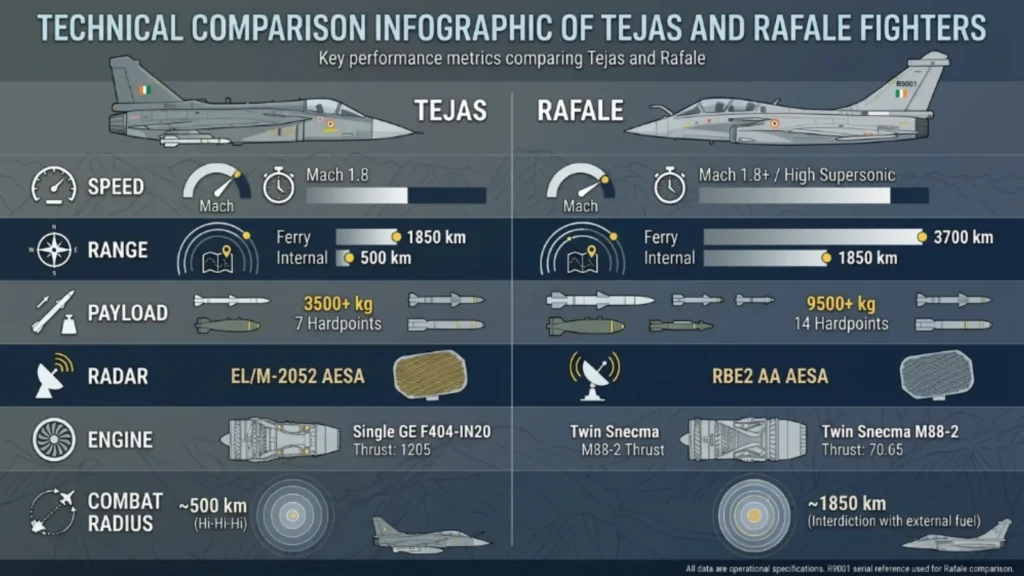
Tactical Overview
The Indian Air Force employs both fighters for complementary missions rather than direct competition.
- Tejas provides homeland defense, point interception, pilot training progression, and tactical strike missions with lower operating costs.
- Rafale performs long range strike, suppression of enemy air defenses, air dominance, maritime attack, and strategic deterrence.
Together, they strengthen India’s layered air combat capability.
Key Takeaways
Tejas Fighter Jet Advantages
- Lower acquisition and operating costs.
- Excellent agility from lightweight delta wing design.
- Modern AESA radar in Mk1A variant.
- Supports India’s indigenous defense industry.
- Ideal for air defense and tactical strike missions.
Rafale Fighter Jet Advantages
- Twin engine survivability.
- Long combat radius and superior endurance.
- Carries significantly heavier weapons payload.
- Advanced Spectra electronic warfare suite.
- Combat proven across multiple operational theaters.
Strategic Context
The Tejas strengthens India’s self reliance by providing an affordable modern fighter for homeland defense, while the Rafale delivers high end multirole capability for long range precision strike, air superiority, and strategic missions. Rather than replacing each other, both aircraft complement India’s evolving air power strategy.
Technical Specifications Matrix
| Specification | Tejas Mk1A | Dassault Rafale F3R/F4 |
|---|---|---|
| Generation / Type | 4.5 Generation Lightweight Multirole Fighter | 4.5 Generation Twin Engine Multirole Fighter |
| Crew | 1 | 1 or 2 |
| Engine | 1 × GE F404-IN20 | 2 × Safran M88 |
| Maximum Speed | Mach 1.8 | Mach 1.8 |
| Combat Radius | Approximately 310 to 500 miles | Approximately 620 to 700 miles |
| Ferry Range | About 1,900 miles | About 2,300 miles |
| Service Ceiling | 52,000 ft | 50,000 ft |
| Maximum Payload | About 8,800 lb | About 20,900 lb |
| Hardpoints | 8 | 14 |
| Radar | EL/M-2052 or Uttam AESA | RBE2 AESA |
| Electronic Warfare | Integrated EW Suite | Spectra EW Suite |
| Primary Missiles | Astra, Derby, Python-5 | Meteor, MICA, SCALP, Exocet, Hammer |
| Estimated Unit Cost | About $43 million | About $115 million to $130 million |
Deep Dive Analysis
1. Airframe Design, Survivability & Flight Performance
Tejas uses a lightweight tailless delta wing design built with a high percentage of carbon fiber composites, reducing structural weight while improving agility. The aircraft excels during close range maneuvering and offers lower maintenance requirements.
Rafale employs a larger delta canard configuration powered by two engines, giving it greater thrust, improved survivability after engine failure, and excellent energy retention during high intensity air combat. It also carries significantly more fuel internally, enabling longer missions.
While neither aircraft is a true stealth fighter, Rafale incorporates radar signature reduction measures and advanced electronic warfare systems that improve survivability in contested airspace.
Advantage: Rafale
2. Sensors, Radar & Targeting Capabilities
The Tejas Mk1A introduces an Active Electronically Scanned Array radar and improved electronic warfare capabilities, representing a substantial upgrade over earlier variants. It also integrates modern beyond visual range missiles including Astra.
Rafale features the RBE2 AESA radar paired with one of the world’s most capable electronic warfare suites, Spectra. This system detects, jams, deceives, and counters enemy radar while providing exceptional situational awareness.
Rafale can simultaneously perform air to air combat, precision strike, reconnaissance, and electronic attack during a single mission.
Advantage: Rafale
3. Payload Options & Operational Deployments
Tejas carries a balanced mix of air to air missiles, laser guided bombs, anti ship weapons, and precision guided munitions. It is well suited for tactical operations and homeland defense.
Rafale carries nearly two and a half times more weapons than Tejas and supports an extensive arsenal that includes:
- Meteor beyond visual range missile
- MICA air to air missile
- SCALP cruise missile
- Hammer precision guided bomb
- Exocet anti ship missile
- Nuclear capable ASMP-A missile (French service)
Unlike Tejas, Rafale has extensive combat experience in Afghanistan, Libya, Mali, Iraq, Syria, and counterterrorism operations.
Advantage: Rafale
Strategic Verdict & Tactical Scenarios
When Tejas Fighter Jet Prevails
- National air policing missions
- Cost effective fleet expansion
- Quick reaction alert operations
- Pilot conversion and training
- High sortie rates with reduced maintenance costs
- Indigenous production and supply chain independence
When Rafale Fighter Jet Prevails
- Long range precision strike operations
- Deep penetration missions
- Beyond visual range engagements
- Maritime strike operations
- Electronic warfare intensive environments
- Air superiority against advanced fighters
Final Assessment
The Tejas Fighter Jet and Rafale Fighter Jet are not direct competitors but complementary assets within the Indian Air Force. Tejas provides a capable, economical, and increasingly advanced indigenous fighter that fulfills frontline air defense and tactical strike missions. Rafale represents a premium multirole combat aircraft with superior payload, endurance, sensor fusion, electronic warfare, and combat proven effectiveness.
For nations seeking an affordable lightweight fighter with modern avionics, Tejas is an attractive option. For air forces requiring long range precision strike, advanced electronic warfare, and superior multirole capability, Rafale remains the more capable platform, albeit at significantly higher acquisition and operating costs.
Get real time update about this post category directly on your device, subscribe now.
  | |
| Price | |
| Our Rating | |
| Manufacturer | Hindustan Aeronautics Limited (HAL) Dassault Aviation |
| Category | Fighter Jets Fighter Jets |
General Information
| Name | HAL Tejas Mk1A Dassault Rafale |
| Manufacturer | Hindustan Aeronautics Limited (HAL) Dassault Aviation |
| Country of Origin | India France |
| Type / Role | Multirole Light Fighter Multirole Fighter |
| Generation | 4.5th 4.5th |
| Status | In production / Entering service Active Service |
| First Flight | 28 March 2024 (prototype) July 4, 1986 |
| Introduction / In Service Since | 2025 2001 |
| Number Built | 83 on order (IAF) 240+ |
| Operators | Indian Air Force (IAF) France, India, Egypt, Qatar, Greece, Indonesia |
Dimensions & Structure
| Length | 13.2 m 15.27 m |
| Wingspan | 8.2 m 10.9 m |
| Height | 4.4 m 5.3 m |
| Wing Area | 38.4 m² 45.7 m² |
| Empty Weight | 6,560 kg 10,600 kg |
| Maximum Takeoff Weight (MTOW) | 13,500 kg 24,500 kg |
| Internal Weapons Bay | None (external only) None |
| External Hardpoints | 8 14 |
Performance
| Maximum Speed | Mach 1.8 (2,205 km/h) Mach 1.8 (2,223 km/h) |
| Range | 3,000 km (ferry) 3,700 km |
| Combat Radius | 500 km 1,000–1,850 km |
| Service Ceiling | 16,000 m (52,500 ft) 50,000 ft |
| Rate of Climb | 213 m/s 305 m/s |
| Thrust-to-Weight Ratio | 1.07 1.13 |
| G Limits | +8 / –3.5 g +9 / -3.6 |
Powerplant
| Engine Type | GE F404-IN20 afterburning turbofan Snecma M88-2 Turbofan |
| No. of Engines | 1 2 |
| Thrust (each) | 84 kN (with afterburner) 16,500 lbf |
| Thrust Vectoring | No No |
| Fuel Capacity | 3,060 L internal (+ drop tanks) 4,700 kg (internal) |
Armament
| Gun | 23 mm GSh-23 cannon GIAT 30mm cannon |
| Missiles (Air-to-Air) | Astra Mk 1/2, Derby, R-73 MICA, Meteor |
| Missiles (Air-to-Ground) | Spice-2000, Crystal Maze, Harop (UCAV control capable) SCALP-EG, AM39 Exocet |
| Bombs | Mk-82/84, LGBs, SAAW Paveway, AASM |
| Hardpoints | 8 14 |
| Payload Capacity | 5,300 kg 9,500 kg |
Avionics & Systems
| Radar | Uttam GaN-based AESA Thales RBE2 AESA |
| Radar Range | 200 km (class) 200+ km |
| Electronic Warfare (EW) System | Unified EW Suite (DARE) SPECTRA Suite |
| Targeting System | Litening Pod Thales Damocles / TALIOS Pod |
| Helmet Display | HMDS Integrated HMD |
| Navigation | GPS/INS GPS/INS |
| Autopilot / AI Assistance | Digital Fly-By-Wire Semi-Automated |
| Communication | V/UHF + Indigenous Data Link Secure Datalink, SATCOM |
Stealth & Technology
| Radar Cross Section (RCS) | ≈ 0.5 m² ~1 m² |
| Stealth Features | 45 % composite airframe Radar-absorbent materials |
| Infrared Signature Reduction | Yes Yes |
| Sensor Fusion | Yes Full |
| Networking Capabilities | Secure Indigenous Data Links NATO-compatible datalink |
Variants
| Special Export Versions | Customized for foreign clients (planned) Rafale EH/IH (India), Rafale EM/QM (Egypt/Qatar) |
Operational History
| Major Conflicts / Deployments | None – Mk1 used in training & exercises Libya, Mali, Iraq, Syria |
| Notable Operators | Indian Air Force France, India, Egypt |
| Combat Proven? | No (Mk1A new platform) Yes |
| Mission Types | Air superiority, ground attack, reconnaissance Air superiority, strike, reconnaissance, deterrence |
Cost & Program
| Unit Cost | ≈ $48 million USD $85–115 million |
| Development Cost | ≈ $2.5 billion (LCA program) ~$45 billion |
| Program Name | Light Combat Aircraft (LCA) Rafale Program |
| Funding Countries | India France |
Additional Information
| Upgrades Planned | Mk2 with GE F414 engine & canards F4 & F5 standard upgrades |
| Future Replacement | Advanced Medium Combat Aircraft (AMCA) Next-Gen Fighter (FCAS) |
| Export Restrictions | None (‘Make in India’ program) Minimal (case-by-case) |
| Notable Achievements | Uttam AESA radar now 100 % indigenous Combat-proven multirole success |
| Competitors | JF-17 Block III, Saab Gripen C/D, KAI FA-50 Eurofighter Typhoon, F/A-18E/F, Gripen E |
  |
Disclaimer Note
The information provided on TheDefenseWatch.com is for general informational purposes only. While we strive to ensure the accuracy, completeness, and timeliness of our content regarding defense and aerospace products, technologies, and specifications, we cannot guarantee that all information is 100% accurate or up-to-date due to the evolving nature of military technology and classified data. TheDefenseWatch.com does not warrant the reliability, suitability, or availability of the information for any specific purpose. Users are advised to consult official sources, such as manufacturers, government publications, or defense agencies, for precise and verified data before making decisions based on our content. We are not affiliated with any defense manufacturers, governments, or military organizations mentioned. Opinions, reviews, and ratings reflect expert analysis but are subjective and should not be considered endorsements. TheDefenseWatch.com is not responsible for any errors, omissions, or consequences arising from the use of this website’s content. External links are provided for convenience and do not imply endorsement. TheDefenseWatch.com reserves the right to update or modify content without prior notice. By using this website, you agree to our Privacy & Cookies Policy.

New Arrivals
Popular Comparisons
-
 F-22 Raptor vs. F-35 Joint Strike Fighter: Which Fifth Generation Fighter Has the Edge? View Comparison →
 - F-35A vs. F-22 Raptor: Which U.S. Stealth Fighter Dominates Modern Air Combat? View Comparison →
- AGM-114 Hellfire vs. AGM-179 JAGM: Which U.S. Precision Missile Is Better? View Comparison →
- Patriot (PAC-3) vs. THAAD: Complete Missile Defense System Comparison, Capabilities, Range, and Strategic Roles View Comparison →
- AIM-120 AMRAAM vs. AIM-9X Sidewinder: Complete Air-to-Air Missile Comparison, Range, Speed, and Combat Roles View Comparison →
- BGM-109 Tomahawk vs. AGM-158 JASSM: Which Long Range Precision Strike Missile Offers Greater Strategic Advantage? View Comparison →
- Patriot PAC-3 vs. Russian S-400 Triumf: Which Air Defense System Is More Capable? View Comparison →
- Su-30MKI Fighter Jet vs JF-17 Thunder: Complete Comparison of Capabilities, Radar, Weapons & Performance View Comparison →
- Babur Missile vs BrahMos Missile: Cruise Missile Comparison View Comparison →
- Fatah 2 Missile vs BrahMos Missile: Which Supersonic Strike Weapon Has the Edge? View Comparison →


- MGI Unveils T-022 Vortex Autonomous Combat Aircraft To Expand UK Storm Fighter Capability

- YIT Secures €30 Million Contract To Build Leopard 2A8 Tank Assembly And Maintenance Plant In Lithuania

- U.S. Air Force Moves Collaborative Combat Aircraft Closer To Operational Use With New Creech Flight Tests
- Kratos Opens $50 Million Indiana Hypersonic Facility To Expand U.S. Weapons Testing Capacity
- Northrop Grumman Unveils Dual Feed Bushmaster Cannon To Counter Growing Drone Threats
- Pentagon Races To Expand U.S. Drone Production Amid Ukraine’s Wartime Manufacturing Lead
- L3Harris Secures Seven Year Framework To Nearly Triple PAC-3 MSE Propulsion Production For U.S. Missile Defense
- HENSOLDT Wins First CAIRAS Order For Helsing CA-1 Europa Autonomous Combat Aircraft
- Helicopter Alliance Moves To Expand Acquisition Strategy As Demand Grows For Full Lifecycle Black Hawk Services
- Bell Secures $300 Million Deal For USMC H-1 Helicopter SPINE Upgrades