Executive Summary:
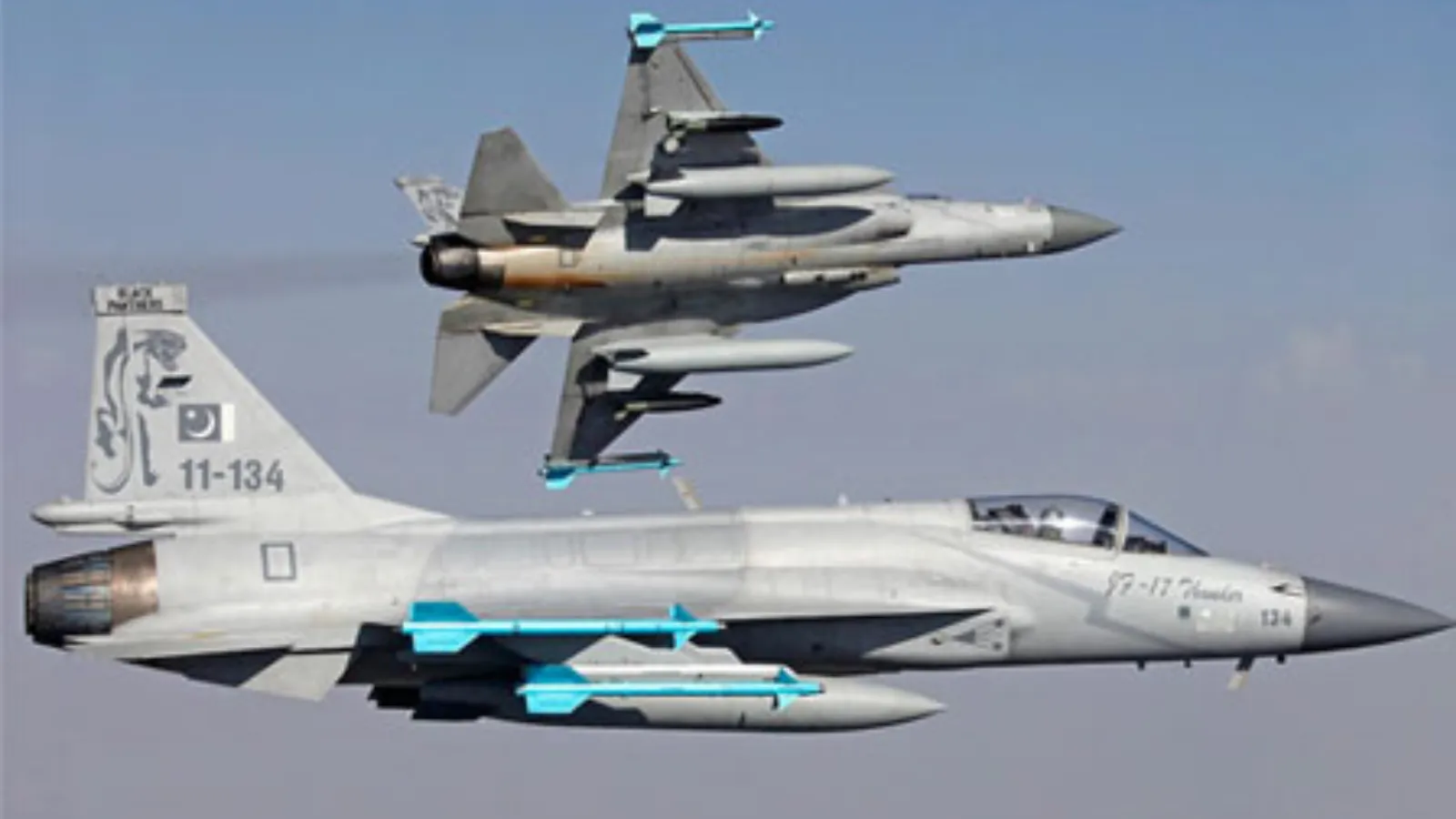
The JF-17 Thunder, co-produced by Pakistan and China, has grown from a Cold-War-era stopgap into a genuine export success story, with Azerbaijan alone signing a $4.6 billion deal for 40 Block 3 jets. Priced at roughly a tenth of a Rafale, the JF-17 is proving that “good enough, cheap, and unrestricted” can out-compete Western jets in the arms bazaar that actually matters — the developing world’s.
A Rafale costs roughly ten times what Pakistan charges for a combat-ready JF-17 Thunder Block 3. That single fact explains why Azerbaijan just signed a $4.6 billion order for 40 of them.
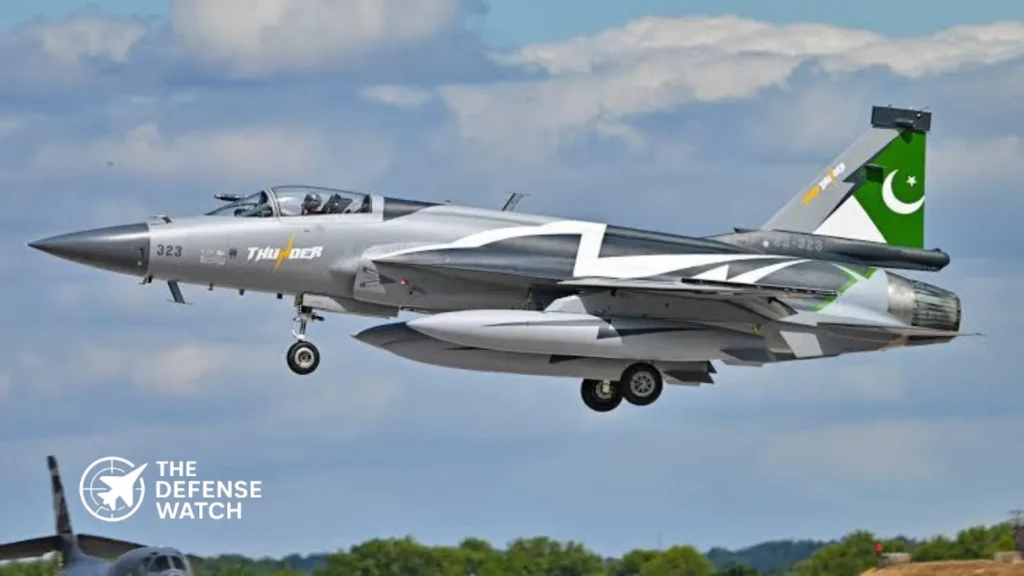
No Western manufacturer can touch that price point on a fourth-generation multirole airframe. The JF-17 was never meant to be the best fighter in the sky — it was built to be the fighter a cash-strapped air force could actually afford, buy without political strings, and keep flying for decades.
That formula is now working better than anyone in Islamabad or Chengdu predicted.
Technical Analysis: The Deep Dive Into The Thunder’s Design
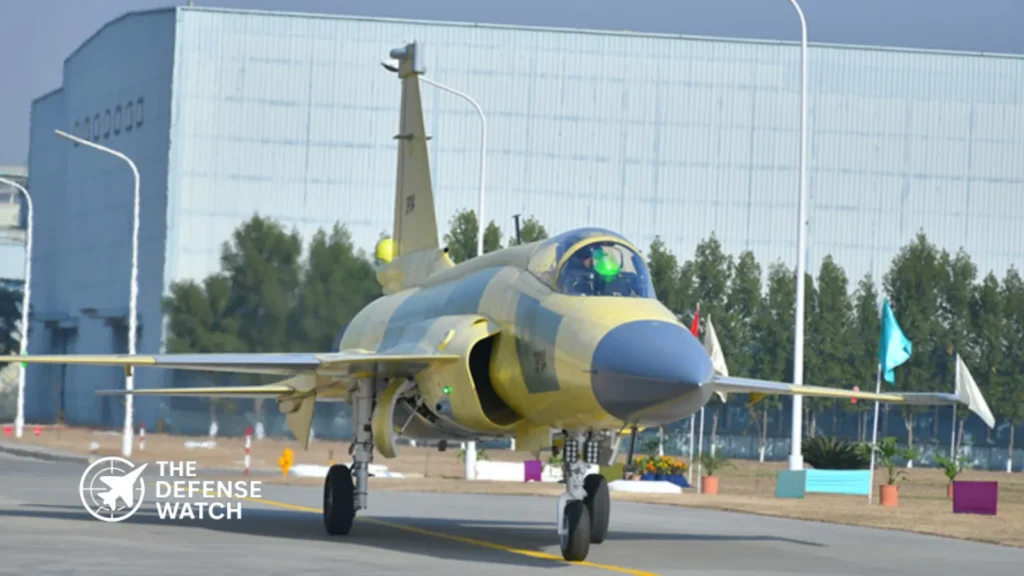
The JF-17 traces back to 1998-99 agreements between Pakistan and China, drawn up after the US Pressler Amendment blocked delivery of 28 already-paid-for F-16s. The first prototype flew in August 2003, and the jet entered Pakistan Air Force service in 2007, becoming fully operational with No. 26 Squadron in 2010.
Three production blocks tell the story of steady, deliberate escalation. Block I was the initial 2007 variant with basic avionics and no aerial refueling; Block II arrived in 2013 with refueling capability, improved avionics, and greater payload; Block III added an AESA radar and a modernized cockpit.

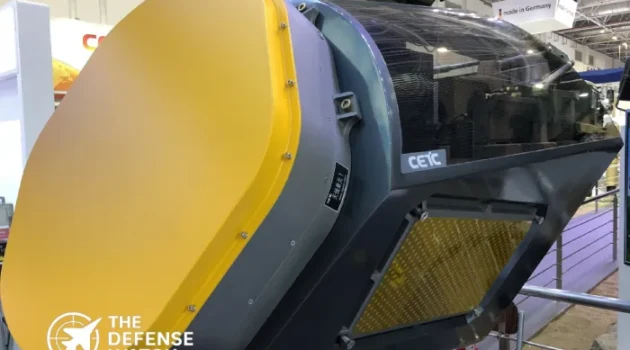
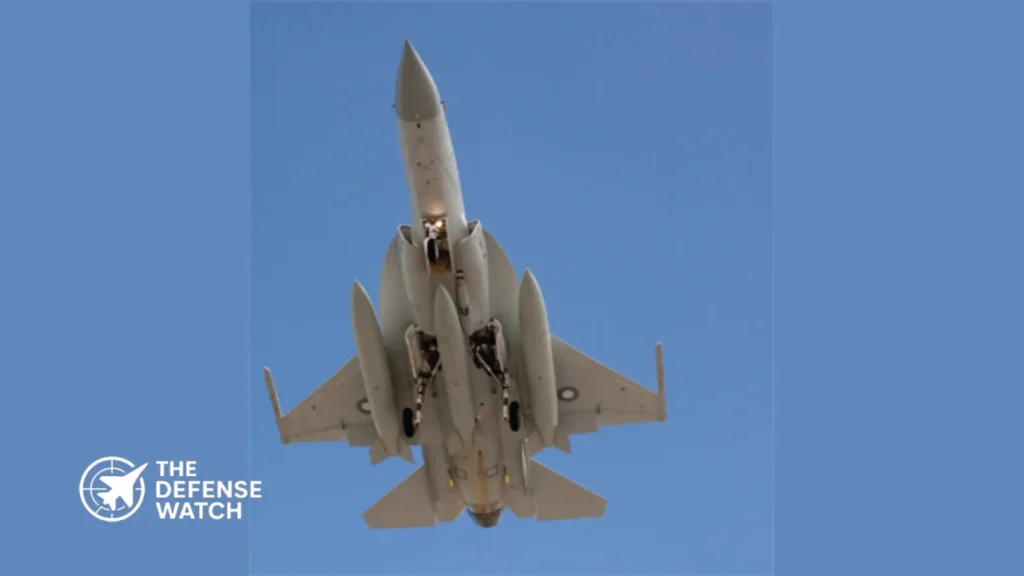
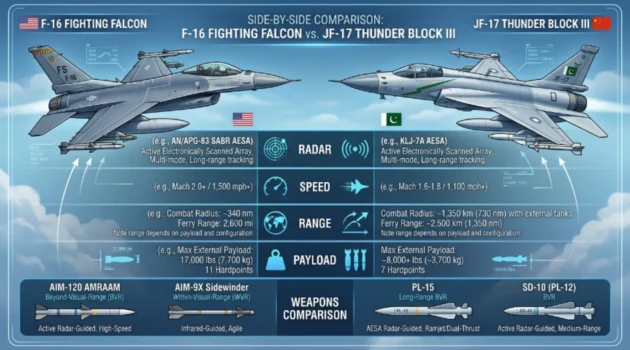
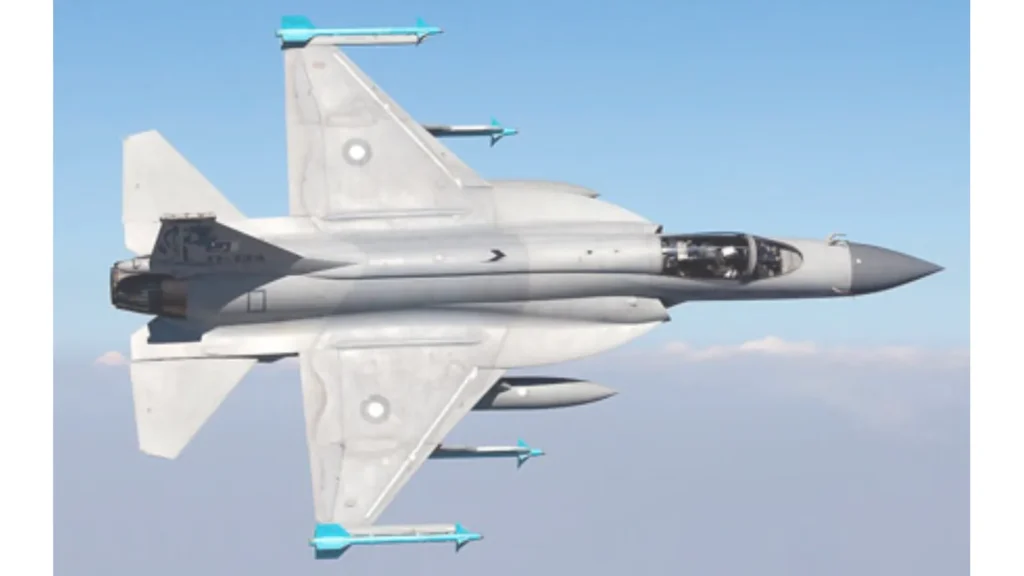
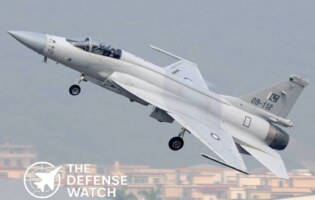
Image : PAC Block III specifically brings the KLJ-7A active electronically scanned array radar, a helmet-mounted display and sight, three-axis fly-by-wire controls, upgraded electronic warfare gear, and infrared search-and-track compatibility. That’s a genuine sensor-fusion cockpit, not a patched-up 1990s jet.
Power comes from a Russian-origin turbofan. The Block III variant runs on the RD-93MA afterburning turbofan, producing about 91 kilonewtons (19,000 lbs) of thrust under full authority digital engine control. That gets the airframe to Mach 1.6, roughly 1,960 km/h.
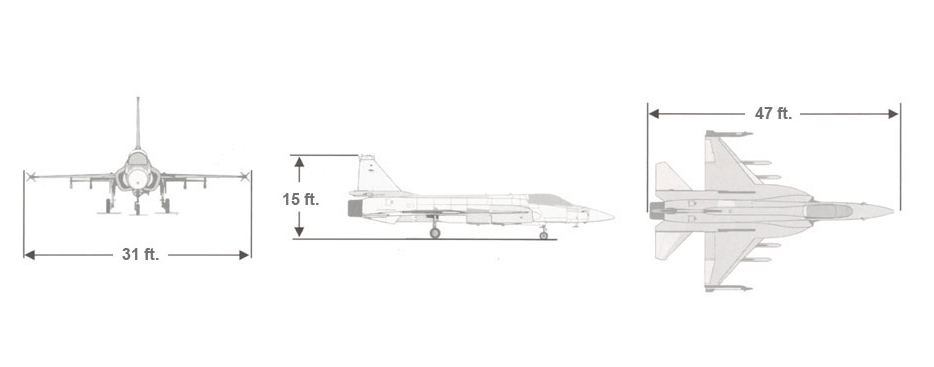
Airframe numbers stay lean by design. The jet measures about 14.3 meters long with a 9.5-meter wingspan, an empty weight near 7,965 kg, and a maximum takeoff weight around 13,500 kg, with a listed service life of roughly 4,000 flight hours or 25 years. Lightweight airframe, single engine, minimal parts inventory — every design choice traces back to keeping the sustainment bill low for the buyer.

Image : PAC Pricing is where the jet actually wins wars — the budget kind. Early Block I units cost around $15 million, Block II pushed closer to $25 million with its added capability, and Block III — now the primary export configuration — is being quoted between $25 million and $50 million depending on package. Pakistan’s Kamra production facility currently runs an annual output of 20-25 aircraft, enough to cover both PAF needs and the growing export backlog.
JF-17 Thunder: Variant-By-Variant Snapshot
Variant Service Entry Key Upgrade Approx. Unit Cost Block I 2007 Baseline avionics, no A2A refueling ~$15M Block II 2013 A2A refueling, composite structure, EW suite ~$25M JF-17B 2017 Twin-seat trainer/combat variant Comparable to Block II Block III 2019 onward KLJ-7A AESA radar, HMD/S, fly-by-wire $25M–$50M The Export Boom: From Baku To Mogadishu
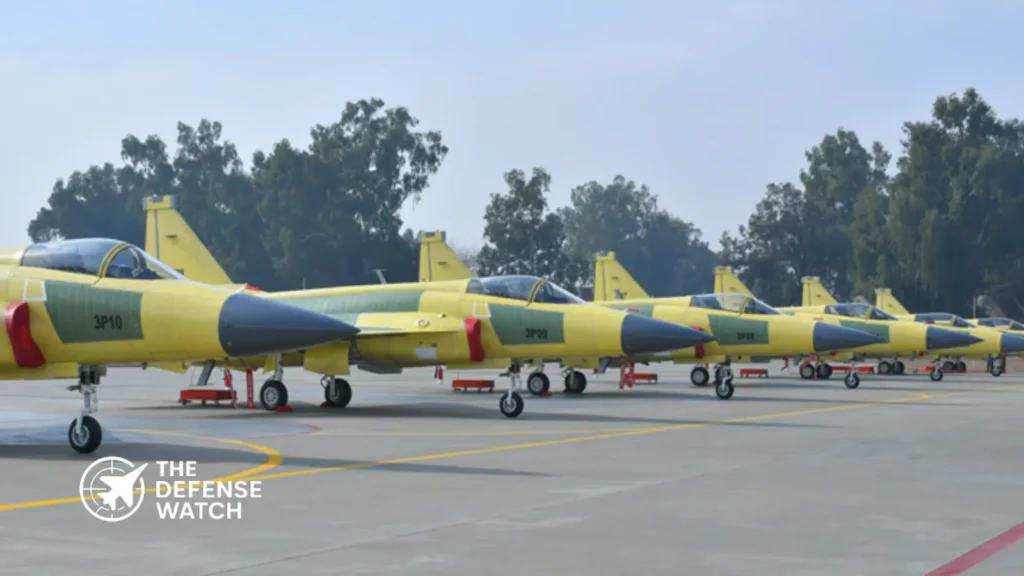
Numbers tell the adoption story better than any press release. By October 2025, 177 JF-17s had rolled off the line, a meaningful share of them Block 3 units built for export customers rather than the PAF.
Azerbaijan is the headline deal. Baku’s acquisition is Pakistan’s largest-ever defense export contract, valued at $4.6 billion for 40 aircraft, building on an earlier 2024 agreement worth $1.6 billion and bundling training, munitions, and full logistics support. The first three jets landed in Baku in October 2025, a geopolitical marker as Azerbaijan modernizes its fleet amid persistent tension with Armenia.
Image : PAC Somalia is the newest name on the list. In February 2026, reports emerged that Somalia is negotiating for up to 24 Block III jets in a package worth roughly $900 million — a deal that would mark the country’s largest defense investment since 1991 and rebuild an air force that currently has no fighter aircraft at all, only light utility planes and helicopters.
Islamabad isn’t stopping at the airframe sale. Pakistan is now pitching the JF-17 in active talks with 13 countries at once, and industrial plans on the table include additional assembly lines, a faster production tempo, and deeper Chinese involvement in component manufacturing. This isn’t a one-off sale — it’s Pakistan building an aerospace export industry around a single airframe family, the same way Sweden built one around the Gripen.
The Insight: Why JF-17 Doctrine Looks Like A Rush-Strategy In Competitive Shooters
Strip away the hardware and the JF-17 program is executing a strategy competitive gamers would recognize instantly: win on tempo and economy, not on raw individual power.
In games like Counter-Strike or Call of Duty, a team with a cheaper loadout that buys more often, contests more angles, and never lets the round economy stall will consistently out-tempo an opponent sitting on a handful of maxed-out weapons. The JF-17 is that strategy in airframe form — Pakistan isn’t trying to out-spec the F-35 one-for-one, it’s trying to field three or four jets, sensors, and pilots for the sustainment cost of one exquisite Western platform.
Image : PAC That’s also the logic behind “econ rounds” in esports: sometimes the correct play isn’t the best gun, it’s the gun you can afford to lose without losing the game. Somalia and Azerbaijan aren’t buying the most capable jet on the market — they’re buying the jet whose loss, in combat or in the balance sheet, doesn’t end their air force.
The JF-17 doesn’t have to beat an F-16 in a dogfight. It has to be affordable enough that a country can field a real squadron instead of a symbolic one — and networked well enough that numbers start doing the work individual capability used to do.”
Conclusion: The Real Threat Isn’t The Jet, It’s The Price Tag
The JF-17 Thunder was born out of an arms embargo and grew into Pakistan’s most consequential defense export product. Its technology is respectable, not revolutionary — the real disruption is economic.
Image : PAC Every Azerbaijan-style deal signed at a tenth of a Rafale’s price puts pressure on Dassault, Lockheed, and Saab to justify their margins to budget-constrained air forces from Africa to the Caucasus. In a market where most buyers are counting dollars per airframe rather than chasing absolute stealth or range, “cheap, capable, and unrestricted” is turning out to be a formula the West doesn’t have a ready answer for.
Frequently Asked Questions
How much does a JF-17 Thunder cost?Early Block I units ran about $15 million, Block II rose to roughly $25 million, and the current Block III export configuration is quoted between $25 million and $50 million depending on the support package.
Who makes the JF-17 Thunder?It’s a joint program between Pakistan Aeronautical Complex (PAC) and China’s Chengdu Aircraft Corporation (CAC), assembled at PAC’s Kamra facility.
Which countries operate or have ordered the JF-17?Pakistan is the primary operator. Azerbaijan has ordered 40 Block 3 jets in a $4.6 billion deal, Myanmar ordered 16 Block 2 aircraft for $560 million in 2015, and Somalia is in negotiations for up to 24 Block III jets worth roughly $900 million. Nigeria has also acquired the type.
What radar does the JF-17 Block III use?The Block III carries the KLJ-7A active electronically scanned array (AESA) radar, giving it a genuine sensor-fusion edge over earlier mechanically-scanned Block I/II variants.