







@2026 – All Right Reserved. TheDefenseWatch.com
- Home
- Defense Systems
- Fighter Jets
- KAI T-50 Golden Eagle
KAI T-50 Golden Eagle
Defense Systems Full Specifications
General Information
| Name | KAI T-50 Golden Eagle |
| Manufacturer | Korea Aerospace Industries |
| Country of Origin | South Korea |
| Type / Role | Advanced Jet Trainer / Light Fighter |
| Generation | 4th Gen Trainer |
| Status | In Service |
| First Flight | 2002 |
| Introduction / In Service Since | 2005 |
| Number Built | 200+ |
| Operators | South Korea, Philippines, Iraq, Thailand, Indonesia |
Dimensions & Structure
| Length | 13.14 m |
| Wingspan | 9.45 m |
| Height | 4.82 m |
| Wing Area | 23.69 m² |
| Empty Weight | 6,454 kg |
| Maximum Takeoff Weight (MTOW) | 12,300 kg |
| Internal Weapons Bay | None |
| External Hardpoints | 7 |
Performance
| Maximum Speed | Mach 1.5 |
| Range | 1,851 km |
| Combat Radius | 444 km |
| Service Ceiling | 55,000 ft |
| Rate of Climb | 39,000 ft/min |
| Thrust-to-Weight Ratio | 0.96 |
| G Limits | +8 / -3 |
Powerplant
| Engine Type | GE F404 Turbofan |
| No. of Engines | 1 |
| Thrust (each) | 17,700 lbf |
| Thrust Vectoring | No |
| Fuel Capacity | Approx. 2,690 kg |
Armament
| Gun | 20 mm cannon |
| Missiles (Air-to-Air) | AIM-9 |
| Missiles (Air-to-Ground) | AGM-65 |
| Bombs | Mk 82/83/84, JDAM |
| Hardpoints | 7 |
| Payload Capacity | 3,700+ kg |
Avionics & Systems
| Radar | APG-67 / EL/M-2032 / AESA options |
| Radar Range | 100+ km |
| Electronic Warfare (EW) System | Defensive suite available |
| Targeting System | Sniper pod compatible |
| Helmet Display | Optional |
| Navigation | INS/GPS |
| Autopilot / AI Assistance | Digital flight controls |
| Communication | Secure datalink |
Stealth & Technology
| Radar Cross Section (RCS) | Conventional |
| Stealth Features | Limited |
| Infrared Signature Reduction | Standard measures |
| Sensor Fusion | Partial |
| Networking Capabilities | Yes |
Variants
| Special Export Versions | T-50, TA-50, FA-50, FA-50 Block 20 |
Operational History
| Major Conflicts / Deployments | Border patrol, strike missions |
| Notable Operators | South Korea, Philippines |
| Combat Proven? | Yes |
| Mission Types | Training, CAS, Air Defense |
Cost & Program
| Unit Cost | $25M to $35M+ |
| Development Cost | Multi-billion program |
| Program Name | T-50 Golden Eagle |
| Funding Countries | South Korea |
Additional Information
| Upgrades Planned | AESA radar, BVR weapons |
| Future Replacement | Ongoing evolution |
| Export Restrictions | U.S. component approvals may apply |
| Notable Achievements | First South Korean supersonic aircraft |
| Competitors | M-346, L-15, Hawk AJT |
PROS
- Supersonic speed for realistic pilot training
- Lower operating cost than frontline fighters
- Proven export success with multiple air forces
- Multirole versions available
- Modern cockpit and avionics suite
CONS
- Single-engine design limits redundancy
- Smaller payload than full-size fighters
- Limited stealth features
- Combat radius lower than larger jets
- Capability depends on chosen variant
KAI T-50 Golden Eagle Supersonic Trainer Jet
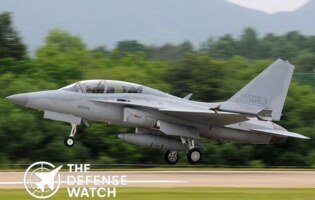
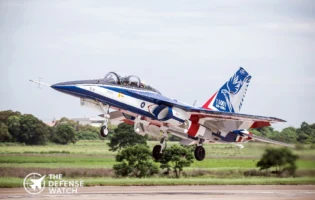
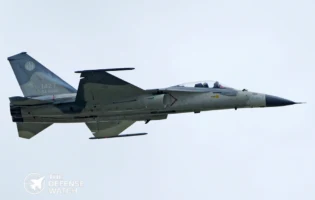
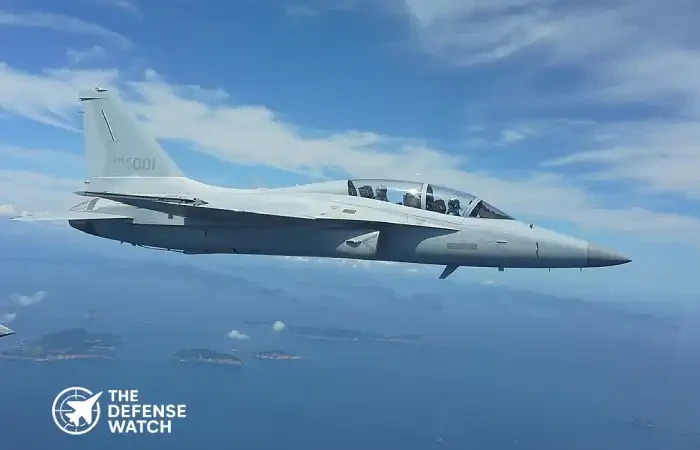
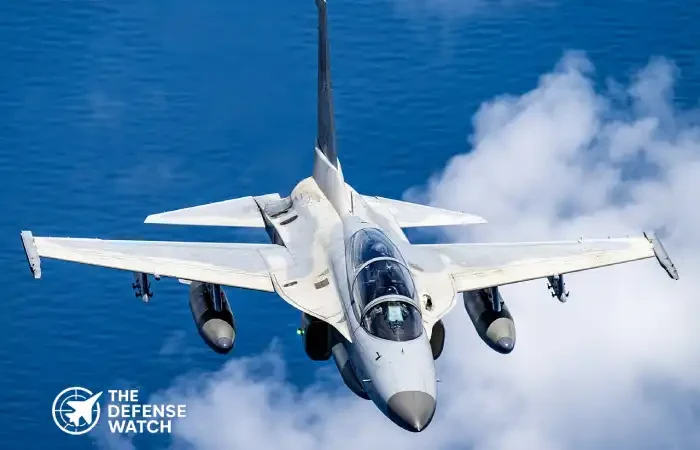
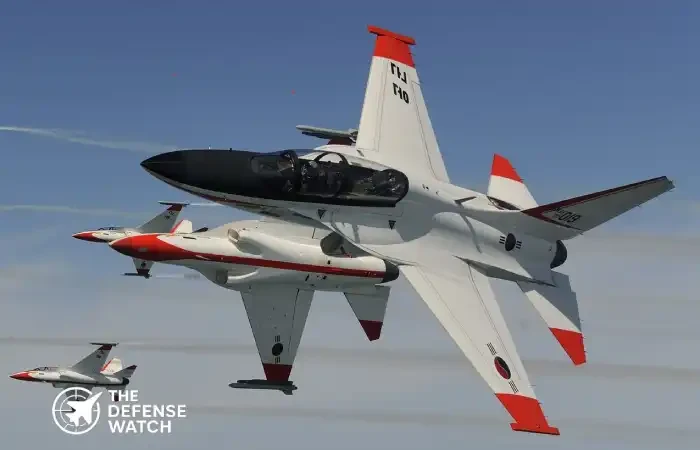
The KAI T-50 Golden Eagle is one of the most successful modern advanced trainer aircraft on the global market. Designed to prepare pilots for front-line fighters such as the F-16 and F-35, the T-50 combines fighter-like performance with lower operating costs. It is also available in armed variants including the TA-50 and FA-50, giving air forces a flexible platform for training, light attack, and air defense missions.
Manufacturer and Origin
The aircraft is built by Korea Aerospace Industries (KAI) in partnership with Lockheed Martin. Developed in South Korea, the T-50 became the nation’s first indigenous supersonic aircraft and marked a major step in Seoul’s aerospace industry. First flight took place in 2002, with service entry beginning in 2005.
Speed, Range, and Performance
Powered by one General Electric F404 afterburning turbofan engine, the T-50 reaches a maximum speed of Mach 1.5. It has a range of about 1,851 km (1,150 miles), service ceiling of 55,000 ft, and high maneuverability with +8 g limits. These features allow trainee pilots to experience near-fighter performance in a safer, more affordable platform.
Weapons and Technology
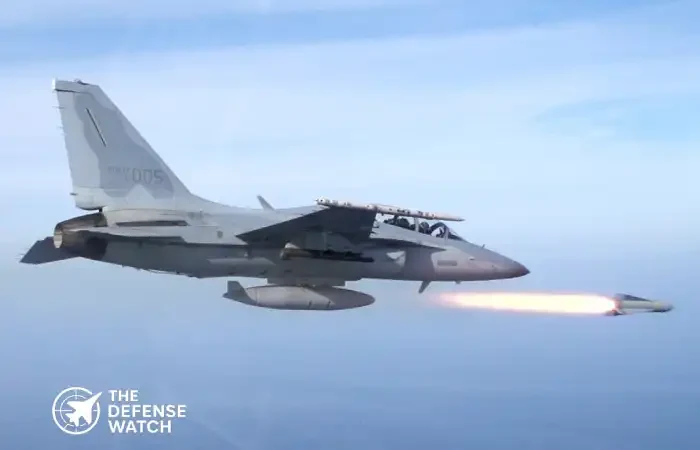
Combat variants can carry a 20 mm cannon, AIM-9 Sidewinder missiles, AGM-65 Maverick missiles, precision bombs, rockets, and external fuel tanks. Avionics vary by model but include multi-mode radar, digital cockpit displays, fly-by-wire controls, datalink capability, and modern navigation systems. Some newer variants offer AESA radar upgrades.
Cost / Price
Estimated unit cost varies by version. Basic trainer models are generally priced around $25 million to $30 million, while armed FA-50 variants can exceed $35 million depending on configuration, radar, and weapons package.
Why It Matters for U.S. Readers
The T-50 family has drawn attention in the United States for pilot training competitions and as a lower-cost light combat aircraft option for allied nations. It remains a strong competitor in the global trainer market.
Disclaimer Note
The information provided on TheDefenseWatch.com is for general informational purposes only. While we strive to ensure the accuracy, completeness, and timeliness of our content regarding defense and aerospace products, technologies, and specifications, we cannot guarantee that all information is 100% accurate or up-to-date due to the evolving nature of military technology and classified data.TheDefenseWatch.com does not warrant the reliability, suitability, or availability of the information for any specific purpose. Users are advised to consult official sources, such as manufacturers, government publications, or defense agencies, for precise and verified data before making decisions based on our content.We are not affiliated with any defense manufacturers, governments, or military organizations mentioned. Opinions, reviews, and ratings reflect expert analysis but are subjective and should not be considered endorsements. TheDefenseWatch.com is not responsible for any errors, omissions, or consequences arising from the use of this website’s content.External links are provided for convenience and do not imply endorsement. TheDefenseWatch.com reserves the right to update or modify content without prior notice. By using this website, you agree to our Privacy & Cookies Policy.
New Arrivals
Popular Comparisons
-
 Tejas Fighter Jet vs F-16 Fighting Falcon: Capability Compared
View Comparison →
Tejas Fighter Jet vs F-16 Fighting Falcon: Capability Compared
View Comparison → -
Rafale Fighter Jet vs F-16 Fighting Falcon : Which Fighter Has the Edge?
View Comparison →
-
Su-57 Fighter Jet vs J-20 Fighter Jet: Stealth and Air Combat Compared
View Comparison →
-
Mirage 2000 vs Tejas Mk1A: Legacy Combat Power vs Indigenous Modernization
View Comparison →
-
Rafale Fighter Jet vs F-22 Raptor: Which Air Dominance Fighter Has the Edge?
View Comparison →
-
Tejas Fighter Jet vs. Rafale Fighter Jet: India’s Indigenous Fighter Meets France’s Proven Multirole Combat Aircraft
View Comparison →
-
F-22 Raptor vs. F-35 Joint Strike Fighter: Which Fifth Generation Fighter Has the Edge?
View Comparison →
-
F-35A vs. F-22 Raptor: Which U.S. Stealth Fighter Dominates Modern Air Combat?
View Comparison →
-
AGM-114 Hellfire vs. AGM-179 JAGM: Which U.S. Precision Missile Is Better?
View Comparison →
-
Patriot (PAC-3) vs. THAAD: Complete Missile Defense System Comparison, Capabilities, Range, and Strategic Roles
View Comparison →
- Bell Boeing Wins $19.8M V-22 Tactical Software Support Contract

- Honeywell Wins $53.9M Navy Contract for WSN-7 Gyro Components
- Lockheed Martin Wins $76.6M Trident II D5LE2 Development Contract
- Lockheed Martin Gets $871.2M F-35 Site Support Contract Increase
- Pete Hegseth Texas Enlistment Ceremony: Hegseth Tells Military Families, We Have Their Back
- U.S., Denmark and Greenland Reach Security Agreement to Expand American Military Presence
- SpaceX Wins Three More NASA Crew Missions in $946 Million ISS Contract
- U.S. Clears Potential $24.3 Billion F-35 Sale to Saudi Arabia
- Type 99B Tank Training Shows China’s Shift Toward Networked Armored Warfare
- JRC Integrated Systems Gets $47.4M SLCM-N Support Contract