

Executive Summary:
Huntington Ingalls Industries Mission Technologies has secured a potential $417.7 million U.S. Navy contract to provide maintenance and repair support for elevator systems aboard aircraft carriers and amphibious warships worldwide. The award ensures sustained operational readiness of critical logistics and weapons-handling infrastructure across some of the Navy’s most strategically important platforms through 2031.
The U.S. Department of Defense announced that Huntington Ingalls Industries (HII) Mission Technologies Corp. has been awarded a $417.7 million cost-plus-fixed-fee, indefinite-delivery/indefinite-quantity (IDIQ) contract to support maintenance and repair of elevator support units installed aboard U.S. Navy aircraft carriers and amphibious ships.
According to the award notice, the contract was issued by Naval Sea Systems Command (NAVSEA) in Washington, D.C. Work will be performed both inside and outside the continental United States, including forward-deployed operational theaters, with performance expected to continue through June 2031.
The contract received a single bid through a competitive procurement process. No funding was obligated at the time of award, with task orders expected to be issued incrementally as operational requirements emerge.
Deep Technical & Strategic Context Analysis
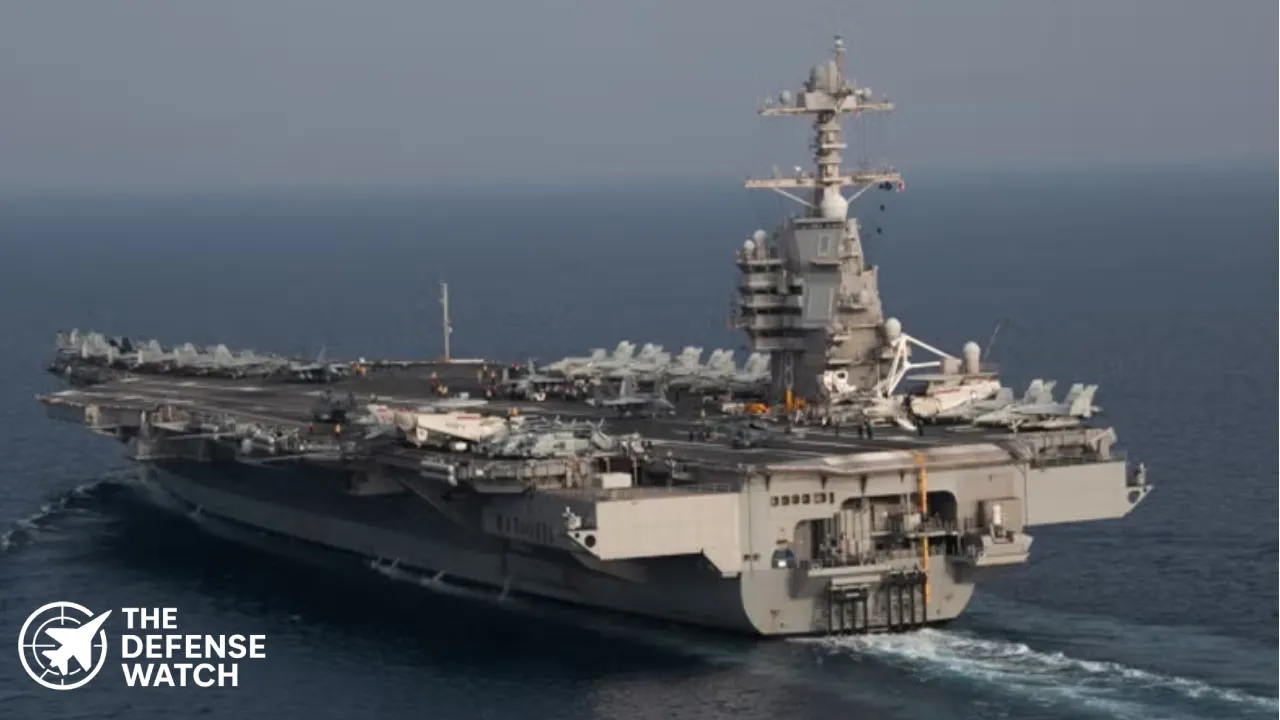
Elevator systems are among the most overlooked but mission-critical subsystems aboard modern naval warships. On aircraft carriers, weapons elevators move bombs, missiles, and munitions from magazines deep within the ship to flight deck preparation areas, directly influencing sortie generation rates during combat operations. Aircraft elevators transport fighter aircraft between hangar bays and flight decks, enabling sustained air operations during high-intensity missions.
For amphibious assault ships, elevators support the movement of vehicles, cargo, supplies, aviation equipment, and personnel across multiple decks. These systems are essential for expeditionary warfare, humanitarian assistance operations, and Marine Corps deployment missions. A failure in elevator availability can significantly degrade operational tempo and logistics flow, particularly during prolonged deployments.
The contract is strategically important as the Navy continues to expand global deployments of its carrier strike groups and amphibious ready groups amid rising maritime competition in the Indo-Pacific, Middle East, and European theaters. High operational demand has increased wear on critical shipboard systems, making predictive maintenance and rapid repair capabilities increasingly important for fleet readiness.
The contract’s cost-plus-fixed-fee structure reflects the complex and often unpredictable nature of naval maintenance work. Under this arrangement, the government reimburses allowable costs while providing a fixed fee to the contractor. Such contracts are commonly used when the exact scope of future repair requirements cannot be fully defined at contract award, transferring some performance risk away from the contractor while ensuring specialized technical support remains available when needed.
Contract Breakdown & Details
Contract Overview
- Contractor: Huntington Ingalls Industries Mission Technologies Corp.
- Location: McLean, Virginia
- Contract Value: $417,692,575
- Contract Type: Cost-Plus-Fixed-Fee (CPFF) IDIQ
- Contract Number: N00024-26-D-4103
- Award Date: June 15, 2026
- Contracting Authority: Naval Sea Systems Command (NAVSEA)
Scope of Work
The contract covers:
- Maintenance of elevator support units
- Repair and refurbishment activities
- Technical engineering support
- Fleet sustainment services
- Forward-deployed maintenance assistance
- Operational readiness support for naval platforms
Supported Platforms
The work is expected to support elevator systems aboard:
- Nimitz-class aircraft carriers
- Ford-class aircraft carriers
- Wasp-class amphibious assault ships
- America-class amphibious assault ships
- Other applicable Navy amphibious vessels utilizing similar elevator infrastructure
Contract Structure
- Indefinite-Delivery/Indefinite-Quantity (IDIQ):
- Establishes a maximum contract ceiling.
- Individual task orders determine actual work performed.
- Provides flexibility for evolving fleet maintenance requirements.
- Cost-Plus-Fixed-Fee (CPFF):
- Government reimburses approved project costs.
- Contractor receives a predetermined fee.
- Frequently used for technically complex sustainment programs where future repair requirements cannot be accurately predicted.
Performance Locations
Work will occur:
- Within the Continental United States (CONUS)
- Outside the Continental United States (OCONUS)
- Forward-deployed fleet locations
- Operational naval bases and maintenance facilities worldwide
NAVSEA did not provide a geographic percentage breakdown in the contract announcement.
Funding
- No funding obligated at award
- Funding will be assigned through future task orders
- Funding sources are expected to include Navy Operations & Maintenance accounts and other fleet sustainment appropriations depending on specific work requirements
Why This Matters
As the U.S. Navy seeks to maintain high operational readiness across a globally deployed fleet, sustainment contracts for critical shipboard infrastructure are becoming increasingly important. While major procurement programs often attract attention, systems such as weapons elevators, cargo elevators, and aircraft handling equipment directly influence a vessel’s combat effectiveness and deployment availability.
For newer Ford-class carriers in particular, advanced electromagnetic weapons elevators represent a key capability designed to accelerate weapons movement and increase sortie generation rates. Ensuring these systems remain operational is essential to realizing the class’s intended combat performance and long-term return on investment.
The HII Mission Technologies award provides NAVSEA with a dedicated mechanism to rapidly address maintenance requirements across the fleet while supporting operational availability of some of the Navy’s most strategically valuable warships through the next five years.
