(adsbygoogle = window.adsbygoogle || []).push({});Executive Summary:
NATO and leading defense manufacturers announced a series of major industrial agreements during the 2026 NATO Defense Industry Forum in Ankara. The initiatives span airborne early warning aircraft, long-range missile production, maritime surveillance drones, strategic airlift, and space launch infrastructure, reflecting the alliance’s growing emphasis on expanding industrial capacity alongside higher defense spending commitments.
NATO Defense Industry Forum Brings New Procurement And Industrial Agreements
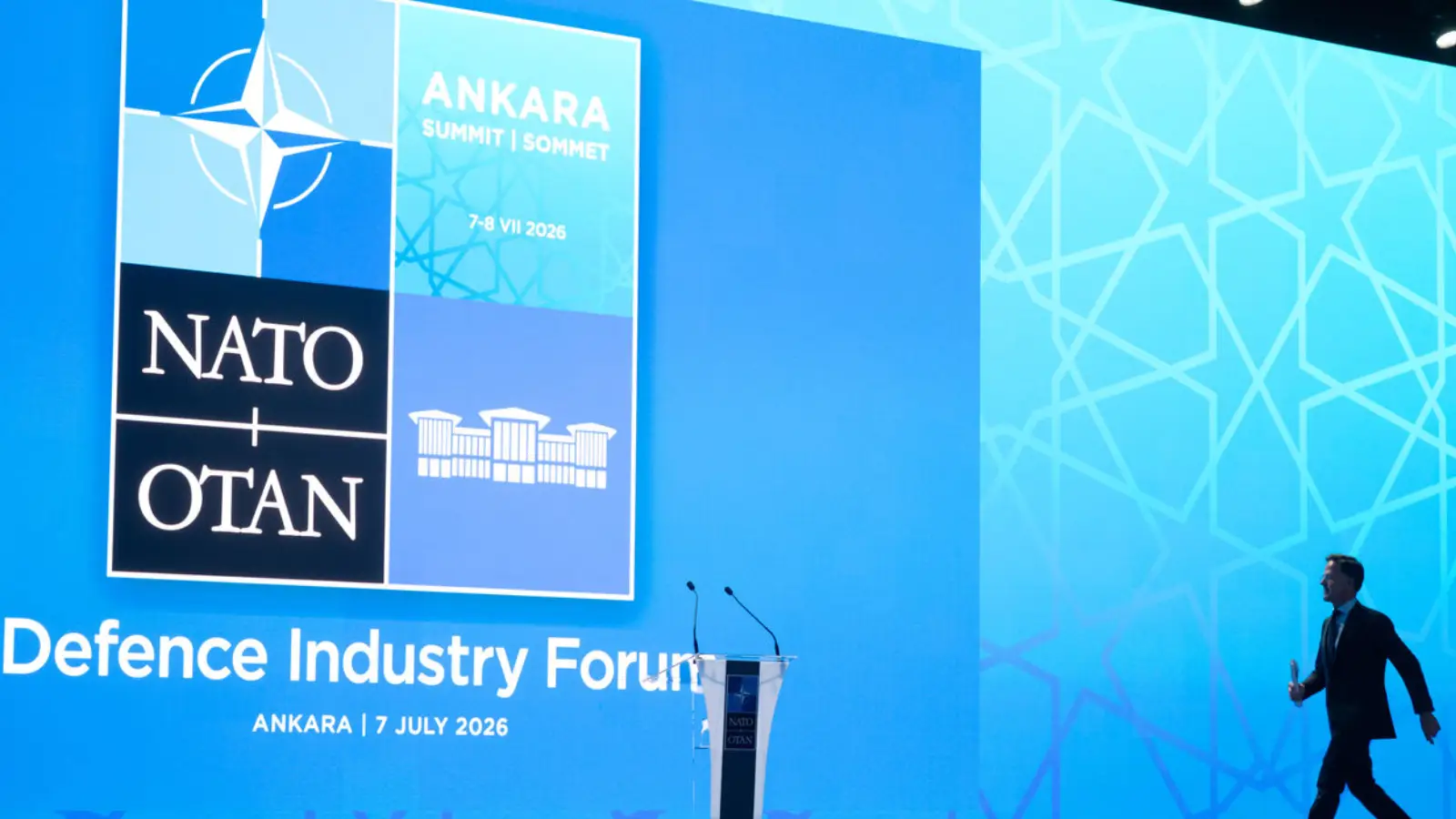
The NATO Defense Industry Forum became the centerpiece of the alliance’s industrial modernization effort as NATO officials and major defense companies unveiled multiple procurement and cooperation agreements during the 2026 NATO Summit in Ankara. The announcements, confirmed by NATO and participating companies, are intended to strengthen alliance readiness while expanding production capacity across several critical defense sectors.
Rather than focusing on a single weapons program, the forum highlighted NATO’s broader strategy of accelerating multinational procurement, improving industrial resilience, and reducing production bottlenecks that have become increasingly apparent since the war in Ukraine.
Saab Advances Toward NATO GlobalEye Acquisition
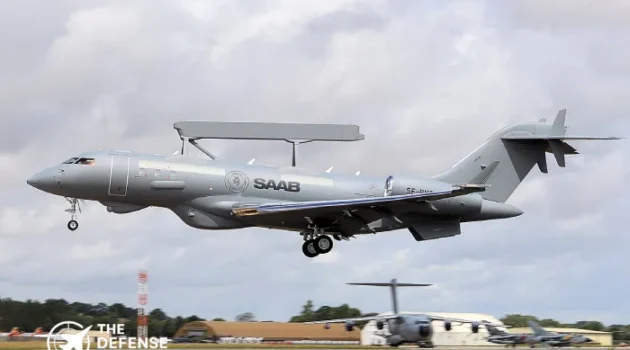
Among the most significant announcements was NATO’s decision to begin formal negotiations with Saab for the acquisition of up to 10 GlobalEye Airborne Early Warning and Control (AEW&C) aircraft.
According to Saab Chief Executive Micael Johansson, deliveries could begin around 2030 if negotiations lead to a finalized contract. Each aircraft is expected to cost approximately $400 million to $450 million, making the potential program worth roughly $4 billion to $4.5 billion.
The GlobalEye combines an Erieye Extended Range radar with multiple surveillance sensors mounted on the Bombardier Global 6500 business jet platform. The aircraft is designed to detect airborne, maritime, and ground threats over long distances while offering improved detection of smaller targets such as cruise missiles and unmanned aerial systems.
(adsbygoogle = window.adsbygoogle || []).push({});Lockheed Martin And Rheinmetall Expand Missile Production
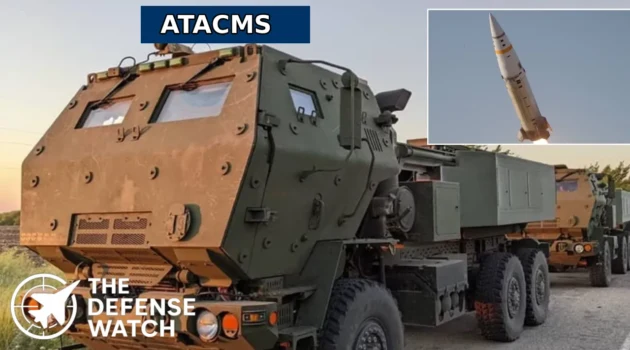
Another major development was the signing of a memorandum of understanding between Lockheed Martin and Rheinmetall to jointly manufacture ATACMS tactical ballistic missiles in Germany.
If implemented, the agreement would represent the first production of ATACMS outside the United States, expanding manufacturing capacity for one of NATO’s most widely used long-range precision strike weapons.
The agreement complements broader efforts to increase European defense manufacturing as NATO members seek to replenish inventories depleted by support for Ukraine while improving long-term production resilience.
(adsbygoogle = window.adsbygoogle || []).push({});NATO Allies Move Forward On MQ-4C Triton Maritime Surveillance
NATO Secretary General Mark Rutte also announced that Norway, Finland, Germany, and Denmark signed a letter of intent supporting the future acquisition of up to five Northrop Grumman MQ-4C Triton high-altitude surveillance drones.
The unmanned aircraft would significantly expand NATO’s maritime intelligence, surveillance, and reconnaissance capability by providing persistent coverage across large maritime areas.
The Triton is designed for long-endurance operations and can monitor shipping lanes, naval movements, and coastal regions while supporting maritime domain awareness across the alliance.
atOptions = { ‘key’ : ‘3d48d603f906e3fe9f205be3c4433835’, ‘format’ : ‘iframe’, ‘height’ : 250, ‘width’ : 300, ‘params’ : {} };Airbus Strategic Airlift Fleet Continues To Grow
NATO also confirmed additional investment in strategic air mobility.
The alliance announced plans to establish a pooled fleet of Airbus A400M transport aircraft while adding a tenth A330 Multi Role Tanker Transport (MRTT) aircraft to NATO’s multinational fleet.
These aircraft strengthen NATO’s ability to deploy forces rapidly, conduct humanitarian missions, perform aerial refueling, and support long-range logistics operations across Europe and beyond.
Program Announcement Strategic Benefit Saab GlobalEye Up to 10 AEW&C aircraft Airborne command and surveillance Lockheed Martin & Rheinmetall ATACMS production in Germany Expanded missile manufacturing capacity Northrop Grumman MQ-4C Triton Up to 5 maritime surveillance drones Persistent maritime ISR Airbus A400M New pooled transport fleet Strategic airlift Airbus A330 MRTT Fleet expansion Air refueling and transport Isar Aerospace Nova Scotia launch infrastructure Space launch capability Space Cooperation Also Expands
The forum extended beyond traditional defense systems.
German launch company Isar Aerospace signed an agreement with Canada’s Maritime Launch Services to secure launch infrastructure at Spaceport Nova Scotia. The agreement is intended to improve operational readiness for the company’s Spectrum launch vehicle while strengthening transatlantic cooperation in commercial space launch services.
Space capabilities are becoming increasingly important within NATO as satellite communications, intelligence collection, navigation, and missile warning systems play a growing role in alliance operations.
atOptions = { ‘key’ : ‘3d48d603f906e3fe9f205be3c4433835’, ‘format’ : ‘iframe’, ‘height’ : 250, ‘width’ : 300, ‘params’ : {} };Why These Agreements Matter
Although each announcement addresses a different capability area, collectively they reveal several long-term priorities shaping NATO’s defense modernization strategy.
First, the alliance is placing greater emphasis on industrial production capacity, recognizing that military readiness depends not only on advanced weapons but also on the ability to manufacture them at scale.
Second, several agreements expand multinational procurement, allowing allies to share development costs while improving interoperability. Common platforms such as GlobalEye, Triton, A400M, and A330 MRTT simplify logistics, maintenance, and operational planning across NATO members.
Third, the agreements demonstrate NATO’s effort to balance North American and European industrial participation. Programs announced in Ankara involve companies from the United States, Germany, Sweden, Canada, and other allied nations, reflecting a more integrated transatlantic defense industrial base.
Finally, the focus on surveillance aircraft, strategic mobility, precision strike weapons, and space infrastructure mirrors lessons drawn from recent conflicts, where intelligence, logistics, long-range fires, and resilient supply chains have become decisive factors.
Looking Ahead
Most of the agreements announced during the NATO Defense Industry Forum remain in early procurement or negotiation stages, with deliveries expected over several years.
Nevertheless, together they represent one of NATO’s broadest collections of industrial announcements in recent years. The initiatives support the alliance’s objective of translating increased defense spending into deployable military capability while strengthening the industrial base needed to sustain future operations.