Executive Summary:
The U.S. Navy has awarded Boeing an $880 million contract to modernize and sustain P-8A Poseidon aircrew and maintenance training systems through 2031. The effort supports both U.S. and international operators as the maritime patrol aircraft continues to evolve with new mission systems, sensors, and operational requirements.
The U.S. Naval Air Warfare Center Training Systems Division (NAWCTSD), based in Orlando, Florida, has awarded The Boeing Company an $880 million indefinite-delivery/indefinite-quantity (IDIQ) contract to provide procurement, modernization, and sustainment of P-8A Poseidon training systems.
According to the Department of Defense contract announcement, the agreement covers the development, integration, testing, delivery, and installation of new training devices and upgrades to existing simulators and maintenance trainers. The contract will also provide associated hardware, software, spare parts, and support services required to maintain training effectiveness as the P-8A fleet continues to receive capability enhancements.
The contract runs through June 2031 and supports both U.S. Navy requirements and a growing network of international P-8A operators across Europe, the Indo-Pacific, and North America.
Deep Technical & Strategic Context Analysis
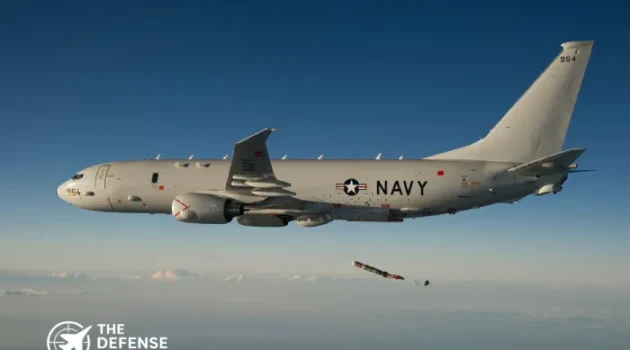
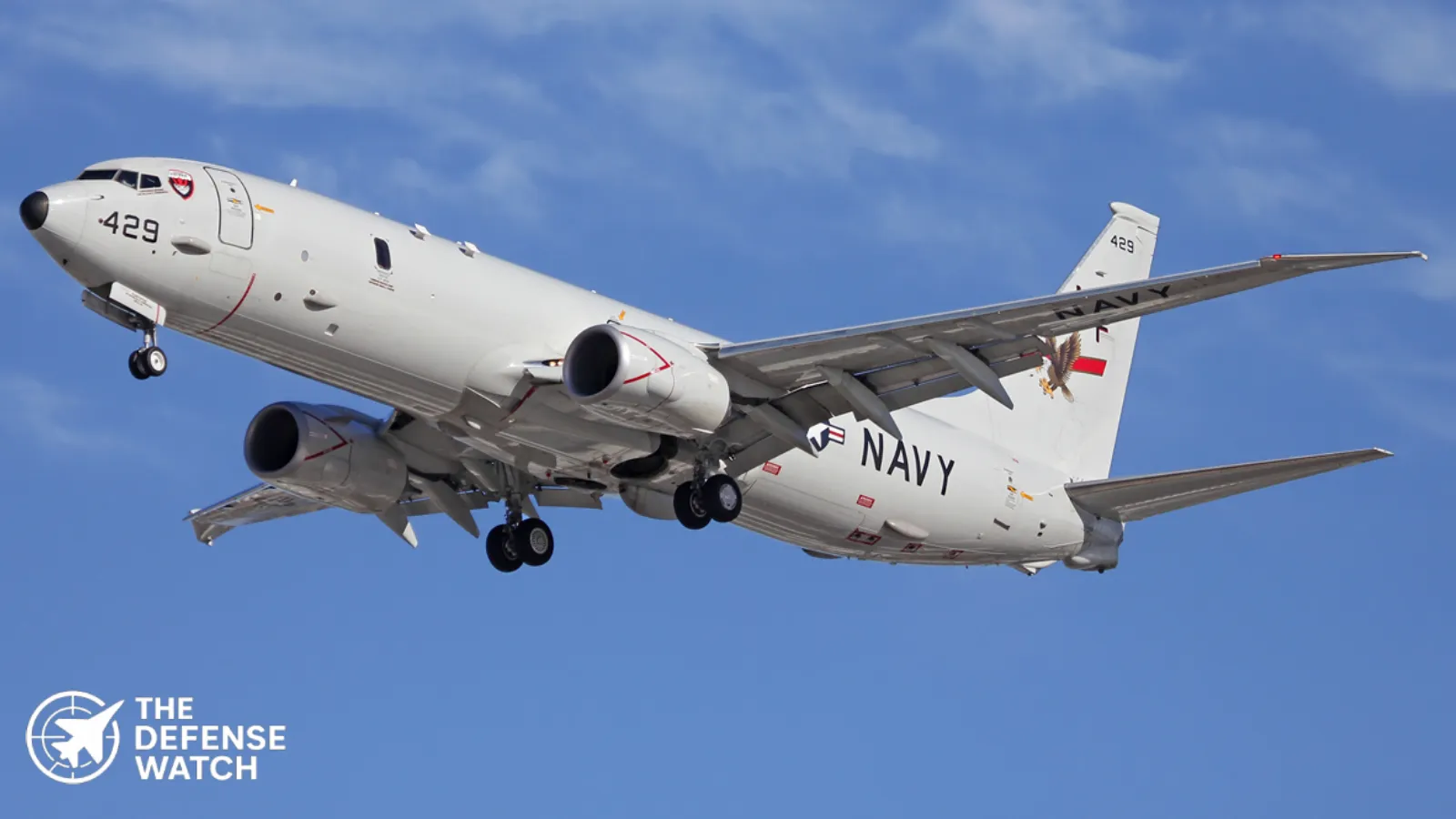
The P-8A Poseidon has become one of the most important maritime patrol and anti-submarine warfare (ASW) aircraft in service today. Based on the commercial Boeing 737-800ERX airframe, the aircraft combines long-range surveillance capabilities with advanced radar, acoustic processing systems, electronic intelligence sensors, and anti-submarine weapons. The platform plays a central role in tracking increasingly capable submarine fleets operated by strategic competitors, particularly in the Indo-Pacific, North Atlantic, and Arctic regions.
Over the past decade, the P-8A has evolved from a replacement for the legacy P-3C Orion into a multinational maritime security platform. In addition to the United States, the aircraft is now operated by Australia, the United Kingdom, Norway, New Zealand, South Korea, Germany, Canada, and other partners, creating a broad coalition of interoperable maritime surveillance forces. The locations listed in the contract closely mirror the expanding global footprint of the Poseidon community.
The contract is strategically significant because training infrastructure must evolve at the same pace as operational aircraft upgrades. New sensors, software baselines, mission systems, and weapons integration efforts require corresponding updates to simulators and maintenance trainers. Modern synthetic training environments allow crews to rehearse complex anti-submarine warfare scenarios, multi-domain operations, and high-end maritime surveillance missions without consuming costly flight hours.
From a procurement perspective, the agreement combines firm-fixed-price and cost-plus-fixed-fee elements within an IDIQ structure. Firm-fixed-price portions provide cost certainty for defined deliverables, while cost-plus-fixed-fee components are commonly used for development and engineering efforts where requirements may evolve over time. The IDIQ framework allows the Navy to issue task orders as needed rather than committing the full contract value upfront, providing flexibility as fleet requirements change through the end of the decade.
Contract Breakdown & Details
Scope of Work
Under the contract, Boeing will provide:
- Procurement of new P-8A training systems
- Modernization of existing simulators and trainers
- Software and hardware integration
- Development and testing of new training capabilities
- Installation and fielding support
- Maintenance training devices
- Spare parts and lifecycle sustainment services
- Support for evolving aircraft configurations and mission systems
Contract Structure
- Contract Value: $880 million
- Contract Type: Firm-Fixed-Price, Cost-Plus-Fixed-Fee, Indefinite-Delivery/Indefinite-Quantity (IDIQ)
- Awardee: Boeing Defense, Space & Security
- Contracting Authority: Naval Air Warfare Center Training Systems Division (NAWCTSD), Orlando, Florida
- Completion Date: June 2031
- Competition: Not competed
- Initial Funding: No funds obligated at time of award
- Contract Number: N6134026D1006
Geographic Work Distribution
Location Share St. Louis, Missouri 80% Jacksonville, Florida 8% Oak Harbor, Washington 2% Edinburgh, South Australia 2% Lossiemouth, United Kingdom 1% Ohakea, New Zealand 1% Gyeongsangnam-do, South Korea 1% Wurster Nordseeküste, Germany 1% Greenwood, Nova Scotia, Canada 1% Comox, British Columbia, Canada 1% Singapore 1% Trondheim, Norway 1% International P-8A Operator Support
The contract’s workshare reflects support requirements for a growing coalition of Poseidon operators, including:
- United States
- Australia
- United Kingdom
- New Zealand
- South Korea
- Germany
- Canada
- Norway
Why This Matters
The award highlights a frequently overlooked aspect of military modernization: training infrastructure. As the P-8A Poseidon fleet expands and receives new mission capabilities, simulator modernization becomes critical to maintaining operational readiness. Advanced synthetic training environments reduce aircraft operating costs, accelerate crew qualification, and allow allied operators to train against increasingly sophisticated submarine and maritime threats in realistic virtual environments.
The contract also reinforces Boeing’s long-term role as the primary sustainment and training partner for the global P-8A enterprise, ensuring that both U.S. Navy and allied forces can maintain a common training standard as the platform continues to evolve through the 2030s.