Executive Summary
- The United States and Albania have signed a $302 million Foreign Military Financing direct loan agreement to support modernization of the Albanian Armed Forces.
- The financing is designed to help Albania acquire U.S. defense articles and services, but DSCA has not identified a specific weapon system or procurement program connected to the loan.
- The agreement comes as Albania increases defense investment and seeks to expand its contribution to NATO under the alliance’s new defense spending framework.
The United States has agreed to provide Albania with a $302 million Foreign Military Financing (FMF) direct loan, creating additional financing capacity for Tirana’s military modernization and future purchases from the U.S. defense industrial base.
- Executive Summary
- What the $302 Million Loan Actually Provides
- Albania’s Broader Military Modernization
- NATO Commitments Add Pressure for New Investment
- Why U.S. Financing Matters to Albania
- The Equipment Question Remains Open
- From Javelin to Air Defense
- A Wider U.S. Financing Model for NATO Allies
- Strategic Significance for the Western Balkans
- What to Watch Next
- Bottom Line
The Defense Security Cooperation Agency announced the agreement on September 10, 2026, in cooperation with the U.S. Department of State. DSCA described the loan as low-cost and flexible financing intended to advance Albania’s defense modernization and strengthen its contribution to allied security.
The agreement is important, but its immediate significance is financial rather than the delivery of a new weapons system. Neither DSCA nor Albania has publicly identified a specific aircraft, missile, air defense system, armored vehicle or other major platform that will be purchased with the $302 million facility.
What the $302 Million Loan Actually Provides
The FMF agreement gives Albania access to financing for U.S.-produced defense articles and services. That distinction matters because the announcement does not represent a $302 million equipment transfer or a confirmed arms contract.
DSCA said the FMF direct loan program enables allies and partners to invest in defense articles and services produced by the U.S. defense industrial base. It also said the mechanism is intended to improve interoperability between the recipient country, the United States and other NATO members.
| Item | Confirmed information |
|---|---|
| Recipient | Albania |
| Financing | U.S. Foreign Military Financing direct loan |
| Value | $302 million |
| Announcement | September 10, 2026 |
| Administrator | Defense Security Cooperation Agency |
| Program | Foreign Military Financing |
| Intended use | U.S. defense articles and services |
| Specific weapons announced | None |
| Strategic objective | Albanian modernization and NATO interoperability |
This makes the agreement different from a Foreign Military Sales announcement that identifies a particular package of equipment. The current announcement establishes financing capacity, while future procurement decisions will determine what Albania actually buys.
Albania’s Broader Military Modernization
The loan arrives amid a wider modernization effort by the Albanian Armed Forces.
Albania’s Defense Ministry said in January that its 2026 defense budget represented a significant increase over 2025 and that approximately half of the defense budget was being directed toward investment. The ministry also identified plans to increase the active force and restore or strengthen capabilities including air defense.
That modernization is already producing concrete changes.
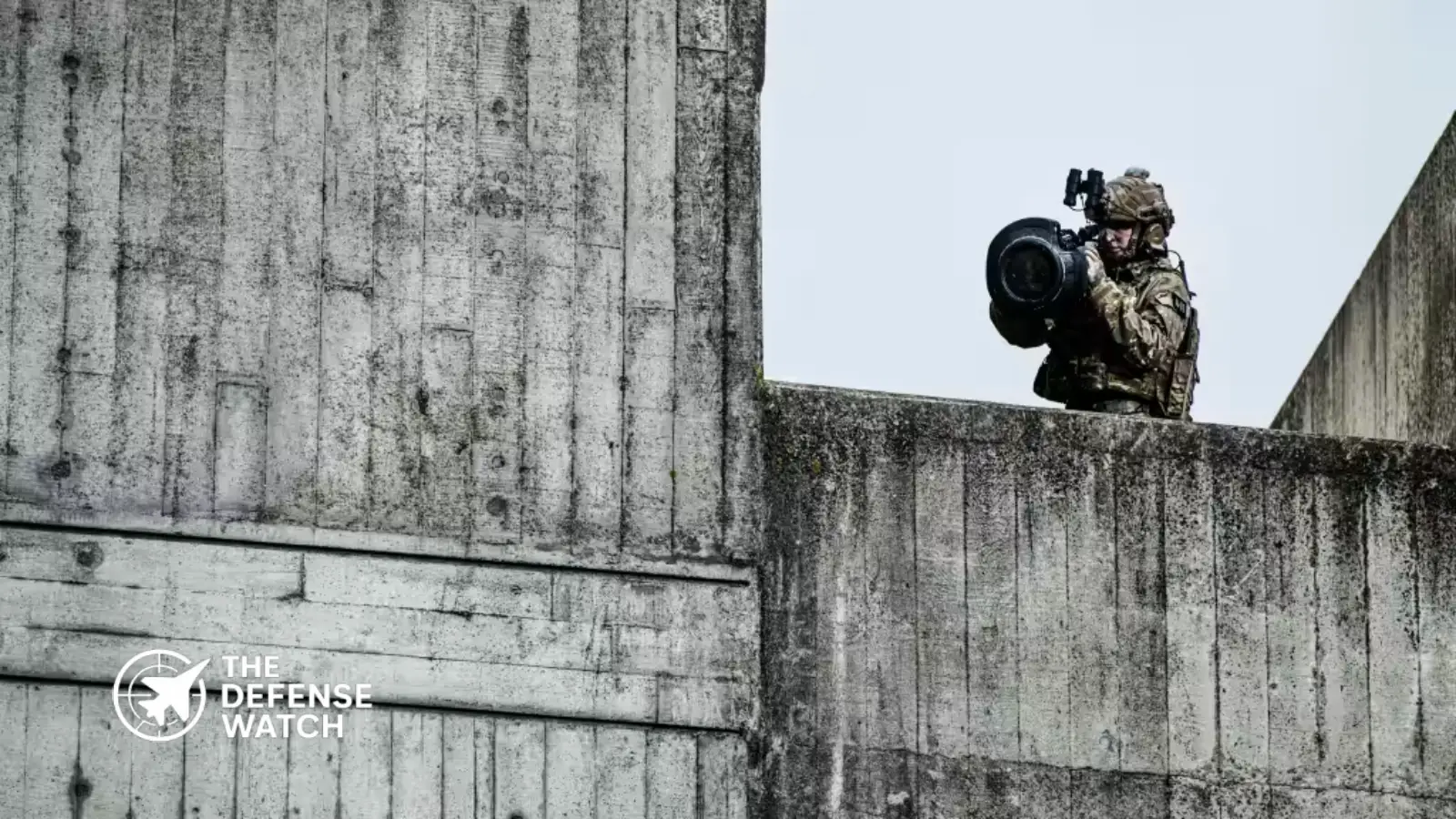
In February 2026, Albania announced delivery of the Javelin missile system to its Land Force. The Albanian Defense Ministry described the system as part of its longstanding military cooperation with the United States.
Albania has also received U.S.-supported UH-60 Black Hawk helicopters. The Albanian Defense Ministry says more than $50 million in U.S. funding assistance supported the helicopter investment, with the aircraft intended for missions including medical evacuation, search and rescue, firefighting and NATO operations.
These developments provide context for the new financing agreement. The $302 million loan is not an isolated modernization event. It adds another financial mechanism to an existing U.S.-Albanian defense relationship.
NATO Commitments Add Pressure for New Investment
The timing also reflects NATO’s changing defense investment requirements.
At the 2025 NATO Summit in The Hague, allied governments committed to increasing defense investment to 5% of GDP annually by 2035. NATO defines the commitment as at least 3.5% for core defense requirements and up to 1.5% for broader defense and security-related investment, including areas such as critical infrastructure, resilience, innovation and defense industrial development.
Albania’s Defense Ministry reported in July that the country’s Ministry of Defense budget allocation had reached 2.6% of GDP in 2026.
The comparison is important because the U.S. loan does not replace Albania’s own defense spending. Instead, it can give Tirana additional flexibility to finance major acquisitions while its national defense budget continues to fund personnel, readiness, infrastructure, sustainment and other requirements.
Why U.S. Financing Matters to Albania
For a relatively small NATO member, the financing mechanism can be particularly relevant to the timing of procurement.
Major military systems require more than the purchase price of the platform itself. Training, spares, maintenance, infrastructure, communications, ammunition, software and long-term sustainment can all affect the financial burden of a modernization program.
An FMF direct loan can therefore help Albania structure future acquisitions without requiring the entire procurement cost to be absorbed immediately through a single annual defense budget.
The U.S. government also has a clear industrial interest in the arrangement.
DSCA explicitly connected FMF financing with demand for products and services from the U.S. defense industrial base. The agency said the program supports U.S. national security by enabling allies and partners to invest in U.S.-produced defense articles and services.
This creates a two-sided modernization mechanism. Albania receives financing capacity for military procurement, while U.S. manufacturers gain another potential source of international demand.
The Equipment Question Remains Open
The most important limitation in the announcement is also the easiest detail to overlook.
There is currently no confirmed $302 million Albanian procurement package.
DSCA’s announcement identifies the financing agreement but does not specify which U.S. systems Albania will acquire. As a result, individual platforms should not be presented as being funded by this loan unless Albania, DSCA, the State Department or another authoritative source subsequently confirms the connection.
That leaves several modernization areas open for future procurement, based on Albania’s publicly stated capability priorities.
These include air defense, land forces, aviation, cyber defense, communications, mobility and broader NATO interoperability. Albania’s Defense Ministry has separately identified cyber defense as a priority and has highlighted the need to improve readiness and professional military capacity.
However, those priorities should not be confused with a confirmed shopping list for the new loan.
From Javelin to Air Defense
Albania’s recent acquisitions indicate a broader effort to rebuild capabilities across several parts of the force rather than concentrate exclusively on one platform category.
The Javelin delivery provides a modern anti-armor capability at the tactical level. Black Hawk helicopters add rotary-wing utility for military and national support missions. Albania has also stated that it was working to restore air defense capabilities after a prolonged period in which that capability had been limited.
The next phase therefore has a potential force-structure challenge: equipment purchases need to be matched by training, sustainment, command and control, infrastructure and personnel.
For a small military, maintaining a manageable number of interoperable systems can be as important as acquiring technically advanced equipment. The value of the U.S. financing will ultimately depend on how Albania connects future purchases to sustainable readiness.
A Wider U.S. Financing Model for NATO Allies
The Albanian agreement also fits into a broader U.S. effort to use financing mechanisms to support allied modernization.
DSCA previously announced a $920 million FMF direct loan for Romania in September 2024. That agreement was aimed at supporting Romania’s modernization objectives and its contribution to NATO security.
The Albanian agreement is substantially smaller, reflecting the different scale of the two countries’ armed forces and modernization requirements. But the underlying mechanism is similar: provide an allied government with financing that can facilitate purchases from the U.S. defense sector.
For Washington, this approach links alliance modernization with defense industrial demand. For European allies, it offers another mechanism for financing major military investments as defense requirements increase.
Strategic Significance for the Western Balkans
Albania’s geographic position gives its modernization effort a regional dimension.
The country is a NATO member and hosts important alliance-related infrastructure and activities. Its armed forces also participate in international missions and exercises. Albania’s Defense Ministry said in May that roughly 250 Albanian military personnel were serving in international missions involving NATO, the European Union and the United Nations.
Modernization therefore affects more than Albania’s national force structure. Better-equipped and interoperable Albanian units can contribute to NATO operations, regional exercises and collective defense missions.
The practical impact, however, will depend on the equipment ultimately purchased through the financing facility and the speed with which Albania can field and sustain those capabilities.
What to Watch Next
The next meaningful indicator will be procurement announcements, not additional statements about the loan itself.
Future U.S. and Albanian announcements should clarify:
- Which U.S. defense systems Albania intends to purchase.
- Whether procurement will focus on air defense, aviation, land warfare, communications or other capability gaps.
- How much of the $302 million financing capacity is committed to individual programs.
- What training, infrastructure and sustainment packages accompany future purchases.
- How new systems are integrated with Albania’s existing NATO force structure.
Until those details emerge, the $302 million agreement should be understood as a financing framework for future modernization rather than a confirmed weapons package.
Bottom Line
The U.S. agreement gives Albania a new financing tool as Tirana expands defense investment and seeks to strengthen its contribution to NATO.
The immediate development is therefore not the arrival of a particular weapon system. It is the creation of $302 million in FMF direct-loan capacity for future U.S. defense purchases.
The strategic significance will become clearer when Albania identifies the programs it intends to finance. Those decisions will determine whether the new funding primarily addresses air defense, land-force modernization, aviation, command and control, or other capability gaps.
For now, the confirmed outcome is financial: Albania has secured a new U.S.-backed mechanism to accelerate defense modernization while strengthening the procurement relationship between Tirana and the American defense industrial base.