Executive Summary:
The U.S. Navy awarded General Dynamics Mission Systems a $66.1 million contract to continue development of the Data Acquisition and Retrieval System for Virginia and Columbia-class submarine testing.
The five-year agreement supports undersea warfare modernization and long-term strategic submarine readiness through 2031.
General Dynamics Navy Contract Supports Submarine Modernization
General Dynamics Mission Systems has secured a $66,176,980 U.S. Navy contract to continue development work tied to the service’s next-generation submarine programs.
The award, announced by the U.S. Department of Defense, covers continued Small Business Innovative Research (SBIR) Phase III development of the Data Acquisition and Retrieval System (DARS). The technology supports testing operations linked to both the Virginia-class submarine and Columbia-class submarine programs.
The contract was awarded to General Dynamics Mission Systems Inc., based in Manassas, under an indefinite-delivery/indefinite-quantity structure combining cost-plus-fixed-fee and cost-only elements.
According to the Pentagon announcement, the ordering period will run for five years, with work expected to continue through May 2031.
Why The Contract Matters
The General Dynamics Navy contract highlights the Pentagon’s continued emphasis on undersea warfare modernization as strategic competition intensifies in both the Atlantic and Indo-Pacific theaters.
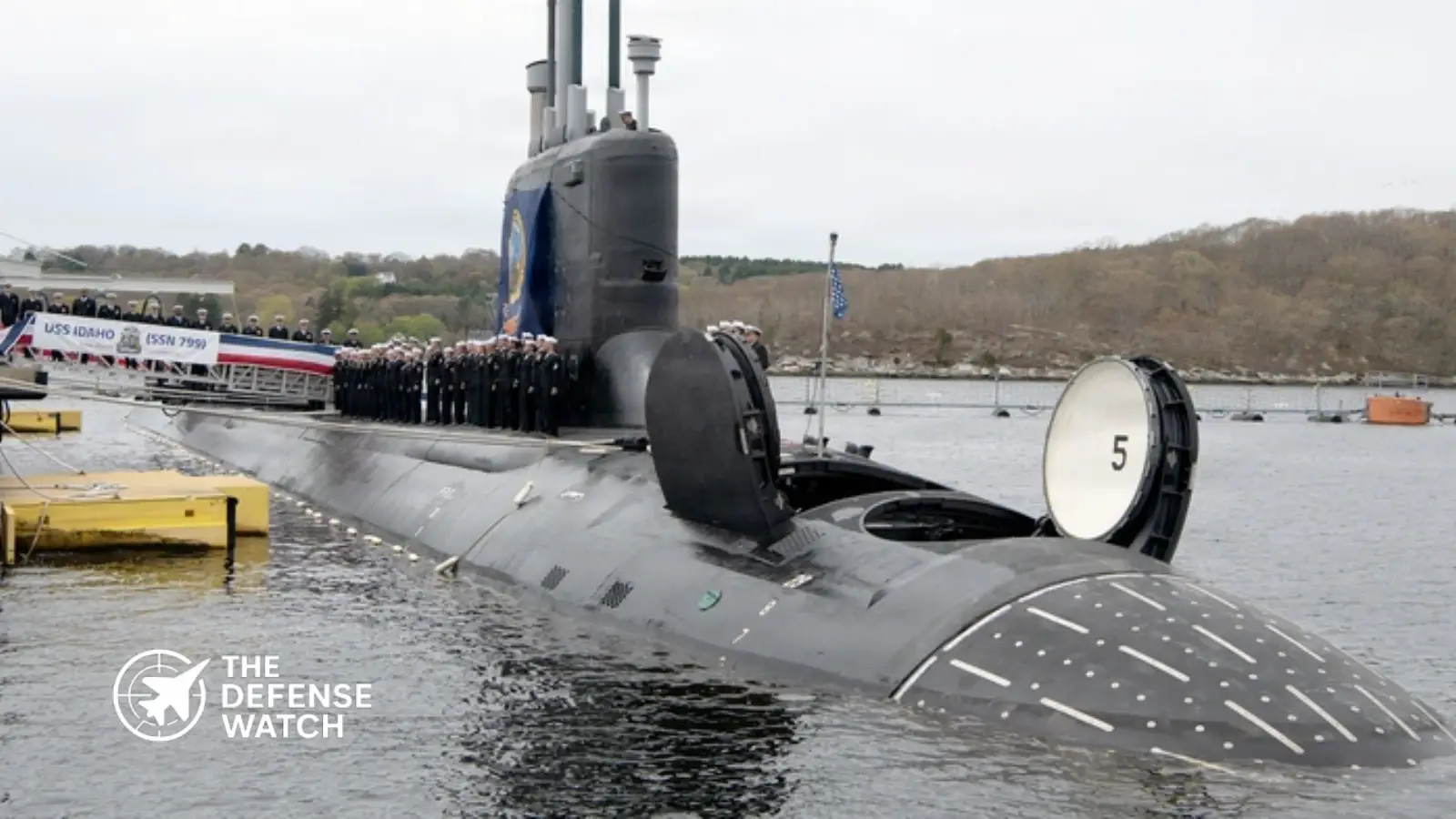
The Virginia-class submarine fleet remains one of the Navy’s most important fast-attack submarine programs, providing intelligence collection, anti-submarine warfare, strike missions, and special operations support. Meanwhile, the Columbia-class program is designed to replace the aging Ohio-class ballistic missile submarines that form the sea-based leg of the U.S. nuclear triad.
Testing infrastructure and data acquisition systems are critical to both programs. These systems gather operational, engineering, and performance data during submarine trials and evaluation exercises. The ability to rapidly collect and analyze this information supports reliability, safety, and mission readiness.
The Navy’s investment also reflects the increasing complexity of modern submarine systems. As platforms become quieter, more connected, and more software-driven, advanced test and telemetry systems become essential for validation and lifecycle sustainment.
Contract Details And Funding Breakdown
The contract was issued by the Naval Undersea Warfare Center Division Newport, which serves as the contracting activity.
Work under the contract will primarily take place in Groton, accounting for roughly 80% of total effort. Additional work locations include:
- Newport
- Port Canaveral
- Andros Island
Initial funding obligated under the first task order totals more than $1.1 million and includes:
- Fiscal 2026 Shipbuilding and Conversion Navy funds: $567,377
- Fiscal 2023 Shipbuilding and Conversion Navy funds: $369,216
- Fiscal 2024 Shipbuilding and Conversion Navy funds: $174,487
The Pentagon stated that none of the obligated funds will expire at the end of the current fiscal year.
SBIR Phase III Sole Source Structure
The General Dynamics Navy contract was awarded as an SBIR Phase III sole-source agreement and was not competitively procured through SAM.gov.
The Department of Defense cited statutory authority under 10 U.S. Code 3204(a)(5), implemented through Federal Acquisition Regulation 6.302-5, which permits certain contracts authorized by statute to proceed without full competition.
SBIR Phase III contracts typically transition technologies developed under earlier research phases into operational deployment or sustained production support. In this case, the Navy appears to be leveraging an already established capability supporting submarine test infrastructure.
Strategic Importance Of Undersea Warfare
The timing of the award aligns with broader U.S. efforts to maintain undersea dominance amid rising naval competition from both China and Russia.
The Navy has repeatedly emphasized the strategic importance of attack and ballistic missile submarines in future conflict scenarios. Virginia-class submarines continue to deploy globally, while Columbia-class boats are expected to become the backbone of U.S. strategic deterrence for decades.
Reliable test systems play a less visible but highly important role in ensuring those platforms perform as intended under operational conditions. Contracts like this one support the broader ecosystem behind submarine readiness, modernization, and long-term sustainment.