Iranian Ballistic Missile Attack Damages U.S. Aircraft in Jordan
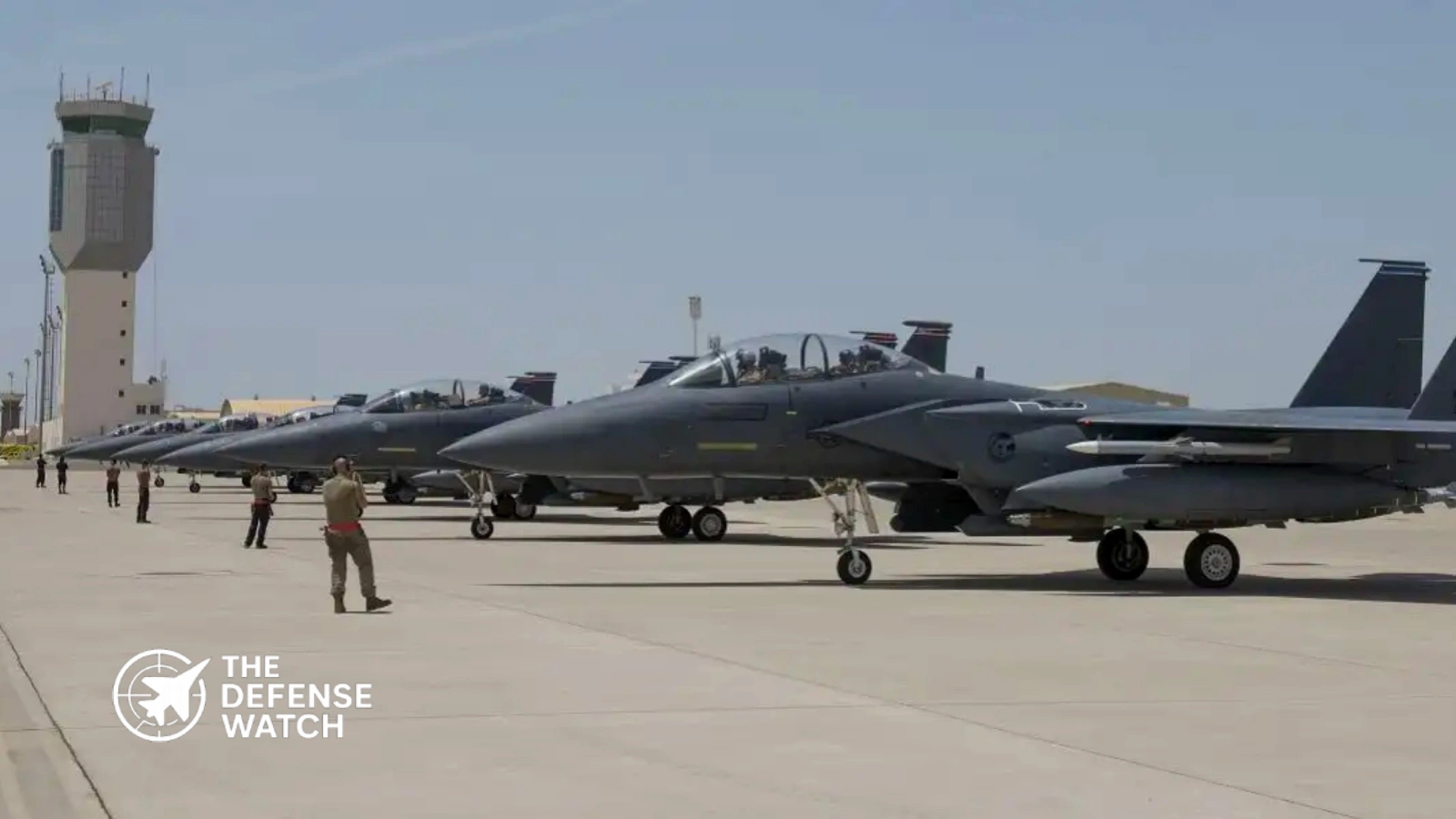
An Iranian ballistic missile attack on Muwaffaq Salti Air Base in Jordan damaged multiple U.S. military aircraft, including an A-10 Thunderbolt and approximately eight F-15 fighter aircraft, according to CBS News reporting based on people familiar with the incident. One A-10 was reportedly left missing a wing, while the F-15s suffered lighter damage and were returned to service.
- Iranian Ballistic Missile Attack Damages U.S. Aircraft in Jordan
- Takeaways
- What Happened at Muwaffaq Salti Air Base
- Jordan Says 18 of 20 Ballistic Missiles Were Intercepted
- The IRGC Claimed It Struck the U.S. Base
- Why the Aircraft Damage Matters
- The F-15 and A-10 Damage Present Different Operational Problems
- The Attack Highlights a Broader Base-Defense Challenge
- What Remains Unclear
- Strategic Implications for U.S. Air Operations
- A Strike That Challenges Simple Interception Metrics
Takeaways
The Iranian ballistic missile attack caused confirmed damage to multiple U.S. aircraft at Muwaffaq Salti Air Base, although the available evidence does not establish how the aircraft were damaged or whether an intact missile reached the base.
The reported damage adds an important dimension to the overnight attack, which Jordanian authorities initially described as an engagement involving 20 Iranian ballistic missiles. The Jordanian Armed Forces said 18 missiles were intercepted and destroyed, while two missiles fell in unpopulated areas and caused no reported casualties.
The aircraft damage confirms that the attack produced physical effects at a U.S.-used military installation. It does not, however, by itself establish that one of the 20 missiles passed through Jordan’s air-defense network without being intercepted.
What Happened at Muwaffaq Salti Air Base
CBS News correspondent Jennifer Jacobs reported that an A-10 Thunderbolt, commonly known as the Warthog, was struck during the attack and left with a missing wing. Roughly eight F-15s also sustained light damage but were subsequently placed back into service, according to sources familiar with the damage.
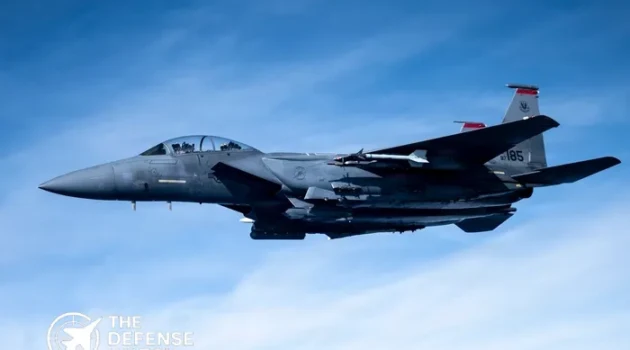
Air & Space Forces Magazine separately reported that people familiar with the incident confirmed severe damage to one A-10 and light damage to approximately eight F-15E Strike Eagles. The publication said the F-15s remained serviceable.
The reported aircraft losses are significant from an operational perspective even though no U.S. fatalities have been reported from the strike. The condition of the aircraft also matters differently by platform. An A-10 with a missing wing represents a major repair or replacement requirement, while light damage to F-15s that can quickly return to service has a much smaller immediate effect on combat availability.
CBS News also reported that U.S. forces in Jordan fired more than 30 Patriot missiles while defending against the Iranian attack.
Jordan Says 18 of 20 Ballistic Missiles Were Intercepted
The Jordanian Armed Forces said on September 9 that its air-defense systems engaged 20 ballistic missiles launched from Iran and successfully intercepted and destroyed 18 of them.
According to the official statement carried by the Jordan News Agency, the remaining two missiles fell in unpopulated areas. Jordan reported no casualties and said specialized teams were securing locations where missile fragments and shrapnel had fallen.
That statement is important when assessing the subsequent reports of aircraft damage. The two claims are not necessarily mutually exclusive.
An air-defense interception does not guarantee that every piece of the incoming missile disappears before reaching the ground. A successful intercept can produce a combination of missile debris, warhead fragmentation and interceptor effects. Depending on the altitude, location and timing of an engagement, fragments can continue toward the defended area.
Consequently, the aircraft damage does not automatically demonstrate that Jordan’s claim of 18 interceptions was false.
What the damage does establish is that the attack generated effects capable of reaching or affecting aircraft operating inside the base.
The IRGC Claimed It Struck the U.S. Base
Iran’s Islamic Revolutionary Guard Corps claimed that its ballistic missile operation targeted the U.S. military presence at Muwaffaq Salti Air Base, also known as Al-Azraq, near Azraq in Jordan.
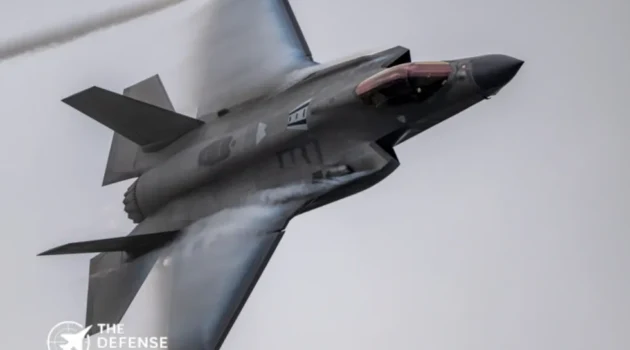
Iranian reporting said the attack targeted areas associated with the maintenance, preparation and deployment of U.S. fighter aircraft. The IRGC claimed that facilities associated with F-15, F-16 and F-35 aircraft were struck. Those claims were not independently verified in the immediate aftermath of the attack.
The newly reported aircraft damage provides evidence that the Iranian attack had effects at the installation, but it does not independently validate every part of the IRGC’s account.
This distinction is important because battlefield damage reporting often develops in stages. Initial statements tend to establish the existence and broad scale of an attack, while later imagery, maintenance assessments, debris analysis and official investigations can determine precisely what happened.
Why the Aircraft Damage Matters
Muwaffaq Salti is strategically important because it supports U.S. air operations in the Middle East. Congressional Research Service reporting has identified the base as one of the Jordanian airfields used by U.S. forces and noted its association with U.S. Air Force combat aircraft and intelligence, surveillance and reconnaissance operations.
The United States has also invested in infrastructure at the installation. Air Force construction documents have described Muwaffaq Salti as a counterterrorism operational hub and identified infrastructure supporting the 332nd Air Expeditionary Wing.
The operational problem is therefore broader than the loss or repair of individual aircraft.
A forward air base has to preserve several functions simultaneously: aircraft parking, maintenance, weapons handling, fuel distribution, command and control, runway operations and aircraft recovery. A ballistic missile attack that damages aircraft can impose disruption even when the air-defense system successfully destroys most incoming weapons.
This creates an important distinction between interception success and mission protection.
An air-defense system may achieve a high interception rate while the defended installation still suffers operational damage. The goal of base defense is not simply to destroy incoming missiles. It is to preserve combat power and maintain the ability to continue operations.
The F-15 and A-10 Damage Present Different Operational Problems
The F-15 is a multirole fighter family used extensively by the U.S. Air Force for air-to-air and air-to-ground missions. U.S. Air Force documentation has previously identified F-15E Strike Eagles operating from Muwaffaq Salti with the 332nd Air Expeditionary Wing.
The reported light damage to roughly eight F-15s is therefore notable because the number of affected aircraft represents a meaningful portion of available combat capacity if the damage had been severe enough to remove the aircraft from service.
In this case, however, the reported return of the aircraft to service limits the immediate operational impact.
The A-10 presents a different issue. The aircraft is designed around close air support and battlefield attack missions and has a heavily protected structure. A wing being torn away or rendered unusable represents extensive structural damage rather than a minor maintenance event.
The reported A-10 loss therefore appears operationally more significant at the individual-aircraft level, although the total impact depends on the number of A-10s available at the base and the time required for repair or replacement.
The Attack Highlights a Broader Base-Defense Challenge
The incident illustrates why modern air forces increasingly treat aircraft survivability as a combination of air defense, dispersal, hardening, deception, rapid repair and mobility.
Fixed bases remain vulnerable because aircraft must spend substantial periods on the ground. Even an advanced fighter that is difficult to detect and engage in the air can be vulnerable while parked, undergoing maintenance or preparing for a mission.
Ballistic missile defense addresses the incoming weapon, but it is only one layer of the broader problem.
Air forces can also reduce risk by dispersing aircraft, increasing the use of hardened shelters, rapidly relocating aircraft between bases and maintaining alternative operating locations. These measures become especially important when an adversary possesses sufficient missile inventory to conduct repeated attacks and force defenders to expend expensive interceptors.
The reported use of more than 30 Patriot interceptors during the Jordan attack also illustrates the cost-exchange problem associated with missile defense. Even when a defender successfully protects an installation, repeated attacks can consume interceptor inventories faster than they can be replenished.
That issue is particularly important for U.S. forces operating across several theaters at the same time.
What Remains Unclear
Several key details have not been publicly established.
It remains unclear which specific missile or missiles caused the aircraft damage, whether the A-10 was struck directly or by fragments, and whether any of the reported aircraft were damaged by an intact ballistic missile warhead.
There is also no public U.S. assessment establishing whether the reported damage resulted from a successful Iranian missile penetration or from debris generated during interception.
The exact location of the damaged aircraft and the condition of nearby facilities have not been publicly detailed by U.S. Central Command.
Those distinctions matter because they determine how the attack should be evaluated. A direct hit by an intact ballistic missile would indicate a different defensive outcome from an aircraft being damaged by debris from a successful intercept.
At present, the available reporting supports a narrower conclusion: Iran’s ballistic missile attack caused damage to multiple U.S. aircraft at Muwaffaq Salti Air Base despite Jordan reporting that 18 of the 20 incoming ballistic missiles were intercepted.
Strategic Implications for U.S. Air Operations
The incident reinforces the importance of layered base defense as U.S. forces operate from fixed facilities within range of Iranian ballistic missiles.
Jordan remains an important U.S. security partner and provides access to military infrastructure supporting American operations in the region. The Congressional Research Service has previously documented the role of Jordanian bases in supporting U.S. aviation, ISR and regional operations.
The attack also demonstrates why missile defense effectiveness should not be measured only by the number of incoming weapons destroyed.
For commanders, the more consequential metric is whether the base can continue generating sorties after an attack. An airfield that intercepts most missiles but loses aircraft, maintenance capacity or other critical infrastructure may still experience a significant reduction in combat output.
The reported return of the damaged F-15s to service is therefore an important detail. It suggests that at least part of the aircraft damage did not produce a lasting reduction in fighter availability.
The A-10 damage, meanwhile, demonstrates that even a small number of missile impacts or associated effects can impose costly losses when aircraft are concentrated at a forward operating base.
A Strike That Challenges Simple Interception Metrics
The Muwaffaq Salti incident should not be framed simply as proof that Jordan’s air defenses failed, nor as proof that Iran’s missile attack failed.
Both sides can point to elements supporting their respective narratives.
Jordan can point to its reported destruction of 18 of 20 ballistic missiles and the absence of reported casualties. Iran can point to physical damage inflicted on U.S. aircraft at the targeted installation.
The more consequential assessment will depend on technical evidence that has not yet been released publicly.
Debris recovery, satellite imagery, aircraft maintenance records, damage assessments and official U.S. and Jordanian investigations could eventually establish whether the aircraft were damaged by direct missile impacts, fragmentation or other effects.
Until those details become available, the strongest evidence-based conclusion is that the Iranian attack did cause real damage at a U.S.-used Jordanian air base, while the precise relationship between that damage and Jordan’s reported 18 interceptions remains unresolved.
The incident therefore offers a clear lesson for U.S. and allied air operations: a high missile interception rate can substantially reduce casualties and infrastructure damage, but it does not eliminate the operational risks created when ballistic missiles are launched against concentrated aircraft at forward bases.