Executive Summary:
Raytheon Missiles and Defense has received a $271.5 million U.S. Navy contract to manufacture AEGIS Weapon System Fire Control System MK 99 equipment, modernization kits, and engineering support. The award also supports Australia and Japan through the Foreign Military Sales program, reinforcing allied naval missile defense capabilities through 2032.
The U.S. Navy has awarded Raytheon Missiles and Defense a $271,493,519 contract to produce AEGIS Weapon System Fire Control System MK 99 equipment, modernization hardware, and associated engineering support for the Navy and allied partners.
The contract, announced by the U.S. Department of Defense on July 29, 2026, strengthens long term support for one of the world’s most widely deployed naval air and missile defense systems. The agreement includes options that could increase the total contract value to $302.5 million if fully exercised.
Contract Supports U.S. Navy and Key Indo-Pacific Allies
The majority of the work, approximately 97 percent, is dedicated to the U.S. Navy. The remaining production supports Australia (2 percent) and Japan (1 percent) through the Foreign Military Sales (FMS) program.
The contract covers:
- Production of AEGIS Weapon System Fire Control System MK 99 equipment
- AEGIS modernization equipment
- Engineering and technical support
- Long term integration support for operational fleets
Work is expected to continue through July 2032, while exercising all contract options would extend performance until December 2032.
Work Will Be Performed Across Four U.S. Facilities
Production and engineering activities will be distributed among several Raytheon facilities:
| Location | Share of Work |
|---|---|
| Andover, Massachusetts | 56% |
| Chesapeake, Virginia | 28% |
| Marlborough, Massachusetts | 15% |
| Burlington, Massachusetts | 1% |
This distribution reflects Raytheon’s established manufacturing and systems integration network supporting the AEGIS Combat System.
Contract Funding Breakdown
The award combines multiple Navy appropriations and Foreign Military Sales funding.
| Funding Source | Amount |
|---|---|
| FY2025 Navy Shipbuilding & Conversion | $107.74 million |
| FY2023 Navy Shipbuilding & Conversion | $106.78 million |
| FY2024 Navy Shipbuilding & Conversion | $41.12 million |
| Australia FMS | $6.02 million |
| FY2026 Navy Other Procurement | $5.43 million |
| FY2025 Defense-wide Procurement | $1.48 million |
| Japan FMS | $1.02 million |
| FY2025 Navy Other Procurement | $492,476 |
All funds were obligated at the time of award and will remain available beyond the current fiscal year.
Why the MK 99 Fire Control System Matters
The MK 99 Fire Control System is a core component of the AEGIS Weapon System, providing precision target illumination and fire control for naval missile engagements.
Working alongside the SPY-series radar and the AEGIS Combat System, the MK 99 supports missile guidance during engagements against:
- Cruise missiles
- Aircraft
- Anti-ship threats
- Selected ballistic missile defense missions, depending on ship configuration and interceptor type
The system enables ships to detect, track, prioritize, and engage multiple airborne threats simultaneously, making it a critical element of layered naval air defense.
Modernization Supports Fleet Readiness
Although the contract primarily covers production hardware rather than development of new capabilities, it plays an important role in sustaining fleet readiness.
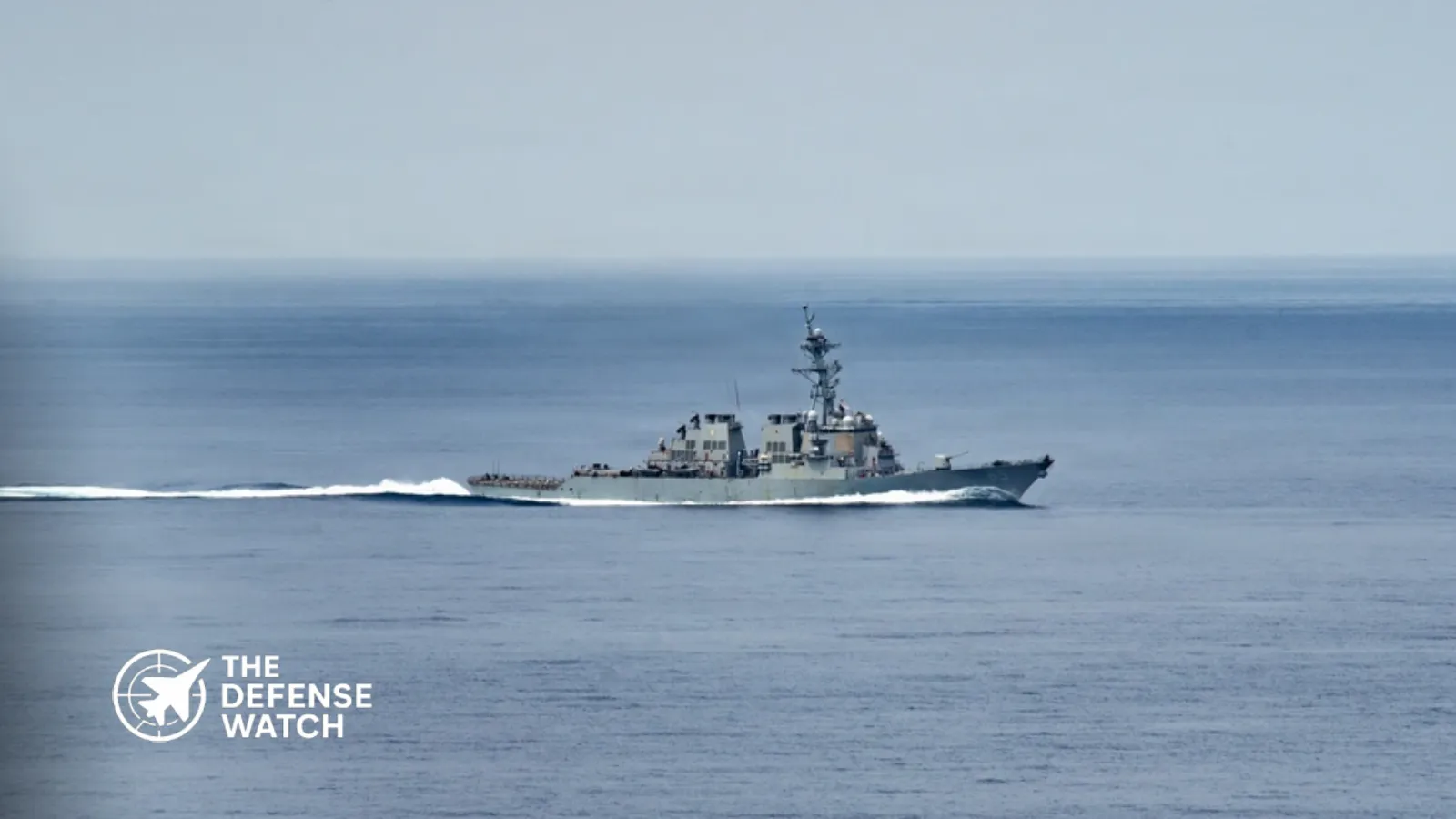
The U.S. Navy continues upgrading AEGIS-equipped destroyers and cruisers with improved combat system software, radar integration, and fire control components to maintain effectiveness against increasingly sophisticated missile threats.
Replacing aging electronics and supporting engineering updates helps ensure compatibility with evolving interceptors such as the Standard Missile family while reducing lifecycle maintenance risks across the fleet.
Strategic Importance for the Indo-Pacific
Including Australia and Japan in the contract reflects the growing emphasis on allied interoperability across the Indo-Pacific.
Both nations operate or are expanding AEGIS-equipped naval forces that contribute to regional air and missile defense networks. Procuring compatible fire control equipment through the Foreign Military Sales program simplifies logistics, training, maintenance, and future upgrades while strengthening coalition operations.
As regional security challenges continue to evolve, common AEGIS configurations improve the ability of allied navies to conduct integrated air defense and maritime security missions alongside U.S. forces.
Sole Source Procurement
The Department of Defense stated that the contract was not competitively awarded, citing 10 U.S. Code 3204(a)(1), which permits procurement from a single responsible source when no other supplier can satisfy government requirements.
The Naval Sea Systems Command (NAVSEA) in Washington, D.C., serves as the contracting activity under contract N00024-26-C-5340.
Broader Defense Modernization Context
The latest award highlights the Pentagon’s continued investment in sustaining proven combat systems alongside the development of next generation capabilities. While much public attention focuses on emerging technologies such as hypersonic defense, directed energy, and autonomous systems, maintaining existing fleet readiness remains equally important.
AEGIS-equipped destroyers continue to form the backbone of U.S. naval integrated air and missile defense operations worldwide. Incremental modernization of systems such as the MK 99 ensures these warships remain capable of countering increasingly complex airborne threats throughout the next decade.
Long term production contracts also provide stability across the defense industrial base, allowing suppliers to plan manufacturing, workforce requirements, and component procurement over several years while supporting allied modernization efforts.