










@2026 – All Right Reserved. TheDefenseWatch.com
- Home
- Catalog
- Compare
- AIM-120 AMRAAM vs. AIM-9X Sidewinder: Complete Air-to-Air Missile Comparison, Range, Speed, and Combat Roles
AIM-120 AMRAAM vs. AIM-9X Sidewinder: Complete Air-to-Air Missile Comparison, Range, Speed, and Combat Roles
AIM-120 AMRAAM vs. AIM-9X Sidewinder: High-Level Comparison
1. Executive Summary / Tactical Overview
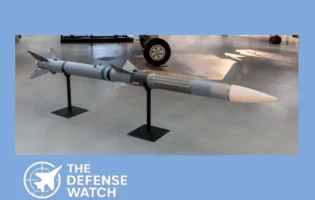
The AIM-120 AMRAAM vs AIM-9X Sidewinder complement each other rather than compete directly. The AIM-120 is designed for Beyond Visual Range (BVR) engagements, allowing fighters to destroy hostile aircraft long before visual contact. It uses active radar guidance and supports fire-and-forget operations.
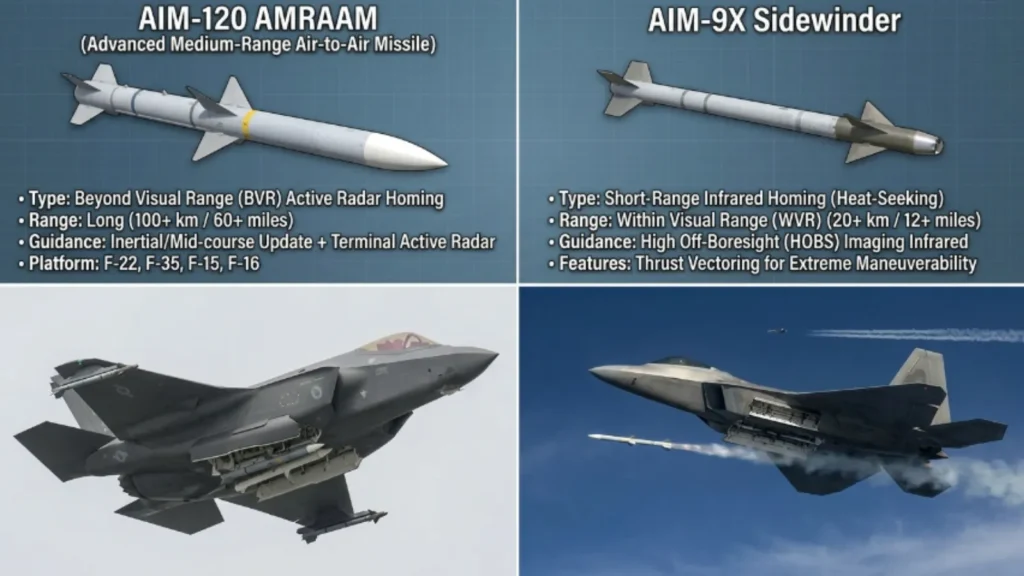
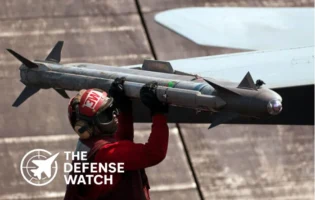
The AIM-9X Sidewinder is optimized for Within Visual Range (WVR) combat. Equipped with an advanced imaging infrared seeker and high off-boresight capability, it excels in close-range dogfights where rapid target acquisition and extreme maneuverability are critical.
2. Technical Specifications Table
| Metric | AIM-120D AMRAAM | AIM-9X Block II Sidewinder |
|---|---|---|
| Country of Origin | United States | United States |
| Manufacturer | RTX (Raytheon) | RTX (Raytheon) |
| Missile Type | Beyond Visual Range Air-to-Air Missile | Short Range Air-to-Air Missile |
| Primary Role | Long-range interception | Close-range dogfighting |
| Guidance System | Active Radar Homing + INS + Data Link | Imaging Infrared (IIR) Seeker |
| Range | Over 160 km (estimated) | Approximately 35 km |
| Maximum Speed | Around Mach 4 | Around Mach 2.5 |
| Length | 3.66 m | 3.02 m |
| Weight | Approximately 161 kg | Approximately 85 kg |
| Warhead | High Explosive Blast Fragmentation | High Explosive Fragmentation |
| Launch Platform | Fighters, some NASAMS systems | Fighters and helicopters |
| Fire-and-Forget | Yes | Yes |
| Data Link | Yes (Mid-course Updates) | Yes (Block II) |
| Helmet Cueing Support | Limited | Fully integrated with JHMCS |
| Operational Status | Active worldwide | Active worldwide |
3. Key Capability Pillars
Beyond Visual Range Combat
The AIM-120 AMRAAM gives modern fighters the ability to engage hostile aircraft before they become an immediate threat. Its active radar seeker receives mid-course updates from the launching aircraft before independently tracking the target during the final phase.
The AIM-9X is not intended for long-range engagements. Instead, it becomes the preferred weapon once aircraft merge into visual combat.
Winner: AIM-120 AMRAAM
Guidance and Target Acquisition
The AIM-120 relies on active radar guidance supported by inertial navigation and secure data links. This allows multiple missiles to be launched simultaneously against separate targets.
The AIM-9X employs an advanced imaging infrared seeker capable of locking onto targets from extreme angles. Combined with Helmet Mounted Cueing Systems, pilots can engage targets simply by looking at them.
Winner: AIM-9X Sidewinder
Maneuverability
Designed specifically for dogfighting, the AIM-9X features thrust vectoring that enables exceptional agility during high-G engagements. It can pursue highly maneuverable aircraft that older missiles would struggle to intercept.
The AIM-120 is maneuverable but prioritizes energy retention and long-range interception rather than extreme turning performance.
Winner: AIM-9X Sidewinder
Range and Engagement Envelope
The AIM-120D offers one of the longest engagement ranges among Western air-to-air missiles. It allows aircraft such as the F-35, F-22, F-15EX, and F/A-18E/F to attack opponents while remaining outside visual range.
The AIM-9X performs best within visual range, typically during the final stages of an air battle.
Winner: AIM-120 AMRAAM
Multi-Target Engagement
Modern air combat increasingly involves engaging several threats simultaneously.
The AIM-120 supports networked targeting and multiple simultaneous engagements, making it ideal for large-scale air superiority missions.
The AIM-9X is designed for single close-range engagements.
Winner: AIM-120 AMRAAM
Survivability Against Countermeasures
The AIM-120 employs advanced electronic counter-countermeasures (ECCM) to resist radar jamming.
The AIM-9X uses sophisticated infrared image processing to reject decoys and distinguish genuine aircraft heat signatures from flares.
Both missiles are highly resistant to modern countermeasures, although they defend against different threats.
Winner: Tie
Aircraft Compatibility
Both missiles equip nearly every modern U.S. fighter aircraft.
Common platforms include:
- F-35 Lightning II
- F-22 Raptor
- F-15EX Eagle II
- F/A-18E/F Super Hornet
- F-16 Fighting Falcon
- International allied fighters
The AIM-120 is also integrated into selected ground-based air defense systems such as NASAMS.
4. Strategic Verdict
The AIM-120 AMRAAM remains the cornerstone of Western Beyond Visual Range air combat. Its long range, active radar seeker, networked guidance, and multi-target capability make it indispensable for achieving air superiority before enemy aircraft enter visual range.
The AIM-9X Sidewinder dominates close-range engagements. Its imaging infrared seeker, thrust vectoring, and helmet-mounted cueing integration provide unmatched effectiveness in modern dogfights where rapid reaction and extreme agility determine survival.
Rather than replacing one another, these missiles form a complementary air combat pairing. Modern fighters routinely carry both weapons, using the AIM-120 to eliminate distant threats and the AIM-9X to prevail in close-range engagements if combat transitions into a dogfight.
Overall Winner by Mission
| Category | Winner |
|---|---|
| Beyond Visual Range Combat | AIM-120 AMRAAM |
| Close Range Dogfighting | AIM-9X Sidewinder |
| Maximum Range | AIM-120 AMRAAM |
| Maneuverability | AIM-9X Sidewinder |
| Multi-Target Capability | AIM-120 AMRAAM |
| Helmet Cueing Integration | AIM-9X Sidewinder |
| Air Superiority Missions | AIM-120 AMRAAM |
| Dogfight Performance | AIM-9X Sidewinder |
| Overall | Both missiles excel in different combat roles and are designed to work together on modern fighter aircraft. |


| |
| Price | |
| Our Rating | |
| Manufacturer | Raytheon Technologies Raytheon Technologies |
| Category | Missiles & Precision Weapons Missiles & Precision Weapons |
1. General Information
| Name / Designation | AIM-120 AMRAAM AIM-9X Sidewinder |
| Type / Role | Air-to-Air Missile, Beyond-Visual-Range (BVR) Short-Range Air-to-Air Missile |
| Country of Origin | United States United States |
| Manufacturer | Raytheon Technologies Raytheon Missiles & Defense |
| Service Entry / Year Introduced | 1991 2003–2005 |
| Operational Status | Active Active |
2. Performance & Range
| Range | Up to 160 km (AIM-120D variant) ~20–22 miles (32–35 km) |
| Speed | Mach 4+ Mach 2+ |
| Ceiling / Altitude Limit | Over 20,000 m Dependent on launch aircraft |
| Accuracy (CEP) | <5 meters Precision IIR guidance |
| Warhead Type | High-Explosive Fragmentation Annular Blast Fragmentation |
3. Guidance & Targeting
| Guidance System | Active Radar, Inertial Navigation Imaging Infrared |
| Targeting Mode | Fire-and-Forget Fire-and-Forget / LOAL (Block II) |
| Launch Platform Compatibility | F-15, F-16, F/A-18, F-22, F-35 F-35, F-22, F-15, F-16, F/A-18, etc. |
| Seeker Type | Active Radar Seeker Imaging Infrared (IIR) |
4. Physical Characteristics
| Length | 3.7 m ~3.0 m |
| Diameter | 0.18 m 0.127 m |
| Wingspan | 0.53 m 0.35 m |
| Launch Weight | 152 kg ~85–90 kg |
| Propulsion | Solid-fuel Rocket Motor Solid-fuel rocket motor |
5. Warhead & Payload
| Warhead Weight | 18 kg ~20–25 lbs |
| Explosive Type | High-Explosive Fragmentation Annular Blast Fragmentation |
| Detonation Mechanism | Proximity / Impact Fuse Active Optical Proximity Fuse / Impact |
| Payload Options | Conventional Conventional |
6. Operational Use & Capabilities
| Operational Range Type | Medium to Long Short |
| Deployment Platform | Air Air |
| Target Types | Aircraft, Drones, Cruise Missiles Aircraft, UAVs, cruise missiles |
| Combat Proven | Yes Yes |
| Users / Operators | United States, UK, Japan, NATO Allies United States, NATO allie |
|
Disclaimer Note
The information provided on TheDefenseWatch.com is for general informational purposes only. While we strive to ensure the accuracy, completeness, and timeliness of our content regarding defense and aerospace products, technologies, and specifications, we cannot guarantee that all information is 100% accurate or up-to-date due to the evolving nature of military technology and classified data.TheDefenseWatch.com does not warrant the reliability, suitability, or availability of the information for any specific purpose. Users are advised to consult official sources, such as manufacturers, government publications, or defense agencies, for precise and verified data before making decisions based on our content.We are not affiliated with any defense manufacturers, governments, or military organizations mentioned. Opinions, reviews, and ratings reflect expert analysis but are subjective and should not be considered endorsements. TheDefenseWatch.com is not responsible for any errors, omissions, or consequences arising from the use of this website’s content.External links are provided for convenience and do not imply endorsement. TheDefenseWatch.com reserves the right to update or modify content without prior notice. By using this website, you agree to our Privacy & Cookies Policy.

New Arrivals
Popular Comparisons
-
 Su-57 Fighter Jet vs J-20 Fighter Jet: Stealth and Air Combat Compared
View Comparison →
Su-57 Fighter Jet vs J-20 Fighter Jet: Stealth and Air Combat Compared
View Comparison → -
Mirage 2000 vs Tejas Mk1A: Legacy Combat Power vs Indigenous Modernization
View Comparison →
-
Rafale Fighter Jet vs F-22 Raptor: Which Air Dominance Fighter Has the Edge?
View Comparison →
-
Tejas Fighter Jet vs. Rafale Fighter Jet: India’s Indigenous Fighter Meets France’s Proven Multirole Combat Aircraft
View Comparison →
-
F-22 Raptor vs. F-35 Joint Strike Fighter: Which Fifth Generation Fighter Has the Edge?
View Comparison →
-
F-35A vs. F-22 Raptor: Which U.S. Stealth Fighter Dominates Modern Air Combat?
View Comparison →
-
AGM-114 Hellfire vs. AGM-179 JAGM: Which U.S. Precision Missile Is Better?
View Comparison →
-
Patriot (PAC-3) vs. THAAD: Complete Missile Defense System Comparison, Capabilities, Range, and Strategic Roles
View Comparison →
-
BGM-109 Tomahawk vs. AGM-158 JASSM: Which Long Range Precision Strike Missile Offers Greater Strategic Advantage?
View Comparison →
-
Patriot PAC-3 vs. Russian S-400 Triumf: Which Air Defense System Is More Capable?
View Comparison →
- Next Generation Jammer NGJ-MB: From ALQ-99 to Distributed Electronic Warfare

- India China Border Tech Race: How Both Sides Are Modernizing the LAC in 2026
- Finland Orders More Than 100 Patria TREMOS 120 mm Mortar Systems
- Lockheed Martin Secures A$1.32 Billion AIR6500 Contract to Expand Australia’s Integrated Air and Missile Defense
- Pakistan Warns Iran Over Houthi Attacks as Saudi Arabia Strikes Yemen
- Russia Unveils Dan-T Air-Launched Drone With 450-Km Strike Range
- Bangladesh Army Type 59 Tank Explodes During Live-Fire Exercise, Killing Two Soldiers
- Iranian Ballistic Missile Attack Damages US A-10 and F-15s at Jordan Base
- Lockheed Martin Secures $826 Million JASSM and LRASM Contract Modification
- Northrop Grumman Lumberjack Demonstrates Quantum Navigation in GPS-Denied Flight Test