(adsbygoogle = window.adsbygoogle || []).push({});Executive Summary:
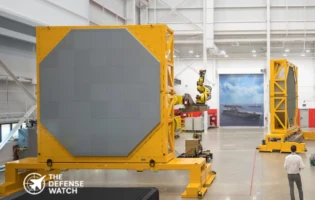
Lockheed Martin has delivered the first Integrated Combat System enabled baseline to the U.S. Navy, marking a major milestone in the Navy’s push toward a common combat architecture across the fleet. The new Aegis BL9.C3.0 package introduces containerized software infrastructure and establishes a six month update cycle designed to accelerate deployment of new capabilities.
U.S. Navy Advances Fleetwide Combat System Modernization
Lockheed Martin has delivered the first Integrated Combat System (ICS) enabled baseline to the U.S. Navy, a move that could significantly reshape how combat capabilities are updated and distributed across the surface fleet.
The delivery marks the first operational baseline produced through the Navy’s evolving Integrated Combat System framework, which aims to unify combat system software, infrastructure, and operational capabilities across multiple classes of warships.
According to Lockheed Martin, the new baseline establishes a recurring six month operating cadence for future updates and certifications. The approach is designed to reduce integration delays and accelerate deployment of new sensors, weapons, and software capabilities throughout the fleet.
The effort centers on the Aegis BL9.C3.0 package, the first baseline compiled from the Forge development environment, a software ecosystem intended to support continuous integration and rapid capability delivery for naval combat systems.
Chandra Marshall, vice president of Multi Domain Combat Systems at Lockheed Martin, said the milestone supports the Navy’s transition toward a common and fully integrated combat architecture.
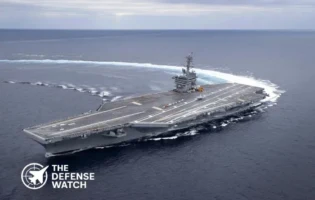
The company stated that the latest delivery also expands the existing Aegis integrated air and missile defense capability already fielded aboard U.S. Navy destroyers and cruisers.
What Makes The ICS Baseline Significant
The Integrated Combat System concept represents a broader shift in how the Navy develops and sustains warfighting software.
Historically, combat system upgrades have often required lengthy certification cycles and platform specific modifications. That process created uneven capability distribution across the fleet, with some ships receiving newer software or sensors years ahead of others.
The ICS model attempts to change that dynamic by creating a more standardized and modular architecture capable of supporting faster software integration.
A key element of the BL9.C3.0 package is Tactical Platform as a Service (Tactical PaaS), which establishes the foundation for containerized software deployment.
Containerization allows software applications to run independently from underlying hardware systems, improving portability and simplifying updates. Similar approaches are widely used in commercial cloud computing and are increasingly being adopted within modern military command and control networks.
(adsbygoogle = window.adsbygoogle || []).push({});For the Navy, the operational advantage could be substantial.
A more agile software environment allows combat systems to incorporate emerging capabilities faster, including missile defense algorithms, sensor fusion tools, electronic warfare updates, and AI assisted battle management applications.
The six month delivery cycle also aligns with broader Pentagon software modernization initiatives that emphasize continuous development rather than traditional multi year upgrade blocks.
Aegis Remains Central To U.S. Naval Air And Missile Defense
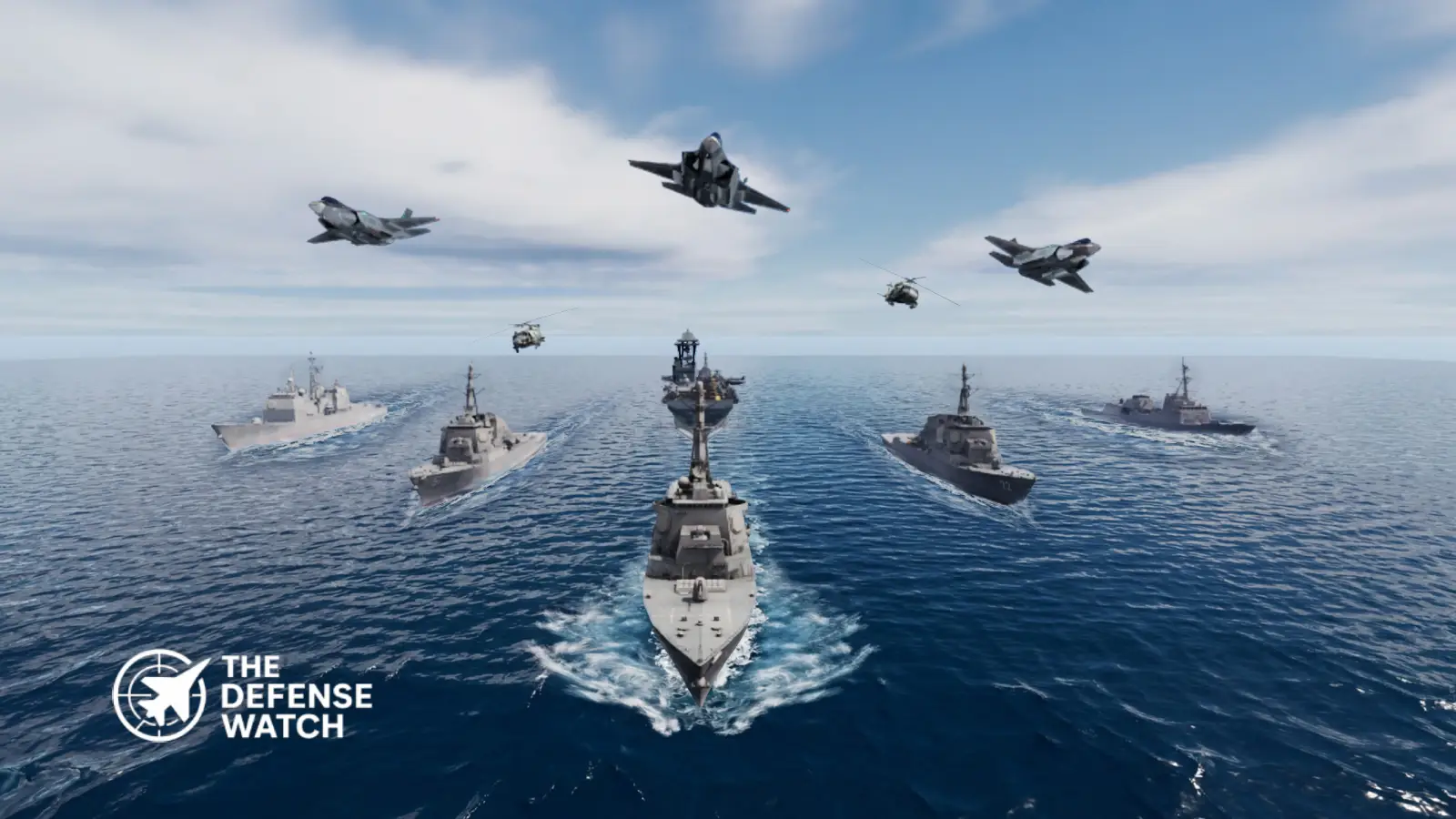
The Integrated Combat System baseline remains closely tied to the Aegis Combat System, one of the most important elements of the Navy’s air and missile defense architecture.
Developed originally during the Cold War, Aegis has evolved into a multi mission combat platform capable of ballistic missile defense, anti air warfare, anti surface warfare, and integrated fleet defense operations.
Today, Aegis systems are deployed aboard Arleigh Burke class destroyers, Ticonderoga class cruisers, and several allied naval platforms operated by countries including Japan, South Korea, Spain, Norway, and Australia.
The Navy’s long term modernization strategy increasingly depends on software driven upgrades rather than entirely new hardware platforms. That approach is intended to reduce costs while maintaining operational relevance against rapidly evolving threats.
The ICS-enabled baseline reflects that strategy by enabling future upgrades to be deployed more uniformly across surface combatants.
Industry analysts have noted that software speed is becoming as important as missile range or radar performance in modern naval warfare. Adversaries including China and Russia continue investing heavily in integrated anti ship missile networks, long range sensors, and electronic warfare systems.
In response, the U.S. Navy has emphasized distributed maritime operations and faster capability integration across the fleet.
(adsbygoogle = window.adsbygoogle || []).push({});Forge Development Environment Signals Broader Digital Shift
Another major aspect of the announcement is the use of the Forge development environment.
Forge serves as the Navy’s modern software development and integration framework, allowing government and industry teams to collaborate in a more continuous development pipeline.
The environment supports DevSecOps principles, combining software development, cybersecurity, testing, and deployment into a streamlined process.
The adoption of Forge indicates the Navy is moving further toward commercial style software practices, particularly for mission critical combat systems.
That transition mirrors broader Department of Defense efforts to shorten software acquisition timelines and improve adaptability during high intensity conflict scenarios.
By establishing a scalable and repeatable software pipeline, the Navy hopes to reduce the time required to field new operational capabilities while maintaining certification and security standards.
Strategic Implications For Future Naval Warfare
The delivery of the first ICS-enabled baseline may appear technical on the surface, but it carries wider strategic implications for the Navy’s future force structure.
(adsbygoogle = window.adsbygoogle || []).push({});Naval operations increasingly depend on networked combat systems capable of processing large volumes of sensor data in real time. Maintaining a common software architecture across multiple ship classes could improve interoperability, simplify logistics, and accelerate operational coordination during contested operations.
The ability to rapidly update software also becomes increasingly important as hypersonic weapons, unmanned systems, and electronic attack capabilities continue evolving.
A combat system architecture that supports continuous updates may provide operational flexibility without requiring extensive hardware redesigns.
(adsbygoogle = window.adsbygoogle || []).push({});The Navy has not disclosed which ships will first receive the BL9.C3.0 package operationally, but the announcement indicates the service is moving closer to fleetwide software commonality.
For Lockheed Martin, the milestone reinforces the company’s role as a primary integrator for Navy combat systems modernization programs.