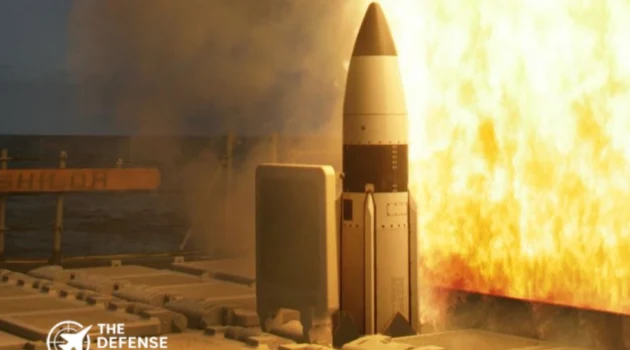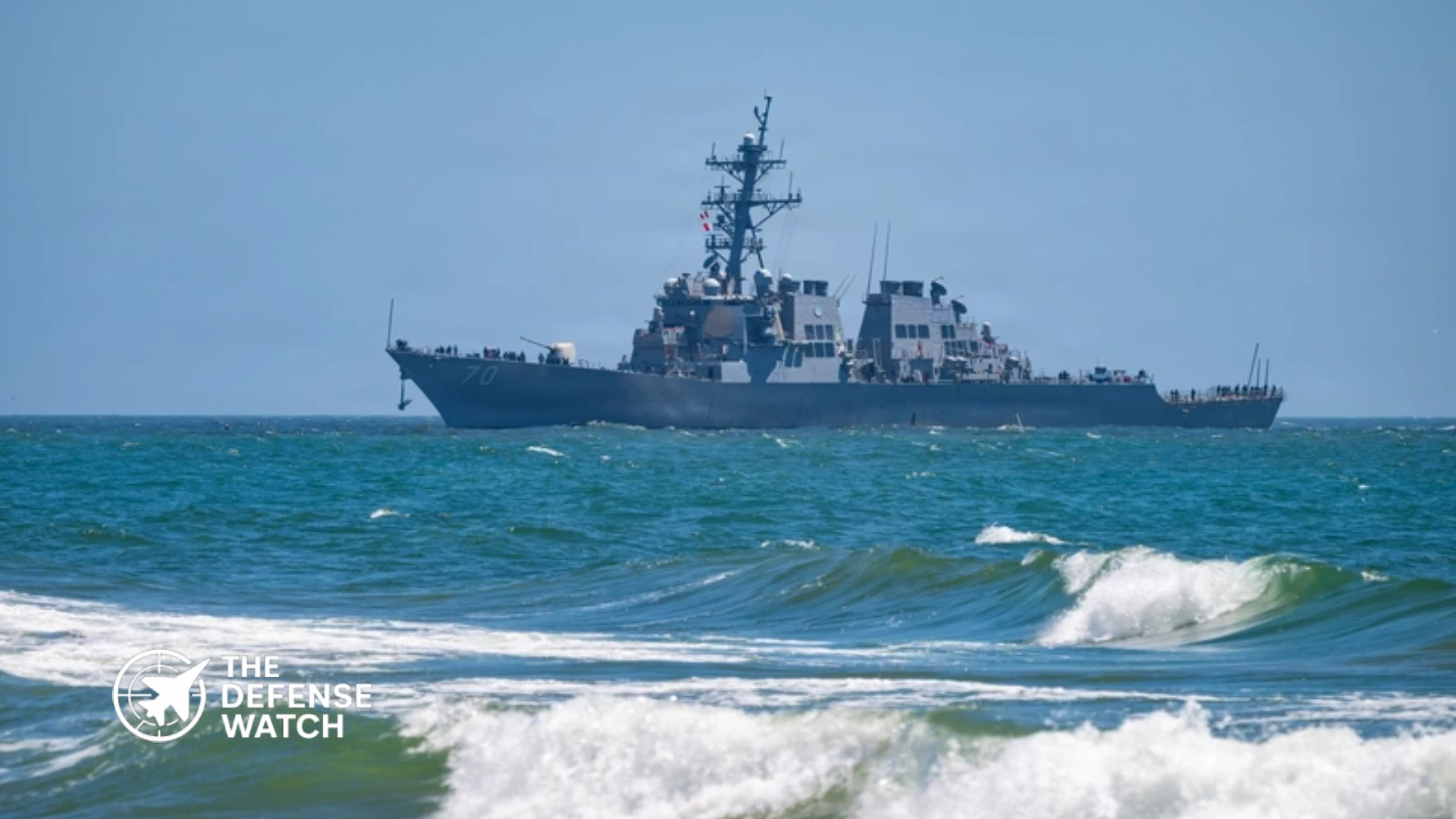
BAE Systems Land & Armaments L.P. has received a $169,216,659 firm-fixed-price contract modification to produce MK 41 Vertical Launching System canisters and ancillary equipment for the U.S. Navy and the governments of Australia, Japan and the Netherlands. The award was issued by Naval Sea Systems Command, Washington, D.C., under previously awarded contract N00024-24-C-5324.
The procurement allocates 53 percent of the purchase to U.S. requirements and the remaining 47 percent to Foreign Military Sales requirements for the three allied customers. Work will be performed 90 percent in Aberdeen, South Dakota, and 10 percent in Minneapolis, Minnesota, with completion scheduled for April 2031.
Takeaways
BAE Systems expands MK 41 Vertical Launching System canister production for four naval customers.
1. $169.2 Million Contract Modification
BAE Systems Land & Armaments has received a $169.2 million firm-fixed-price modification for additional MK 41 Vertical Launching System canisters and ancillary equipment.
2. Four Naval Customers
The award combines U.S. procurement with Foreign Military Sales requirements for Australia, Japan and the Netherlands, with the U.S. accounting for 53 percent of the purchase.
3. MK 41 Supports Multiple Missiles
The MK 41 VLS provides a common shipboard launch architecture for weapons including SM-2, SM-3, SM-6, Tomahawk, ESSM and Vertical Launch ASROC.
4. Production Runs Through April 2031
Work will be performed primarily in Aberdeen, South Dakota, with additional activity in Minneapolis, Minnesota, and is scheduled for completion in April 2031.
5. Nearly Half of Funding Comes From Allies
Foreign Military Sales funding represents 47 percent of the award, underscoring the MK 41 VLS role as a common missile-launching architecture across allied fleets.
MK 41 VLS Remains A Core Naval Weapons Architecture
The MK 41 is more than a missile launcher. It is a below-deck storage, handling and launch architecture that provides surface combatants with a common interface for multiple missile families. The U.S. Navy describes the system as a fixed vertical multi-missile storage and firing system that improves firing rate by eliminating the need to train a launcher toward an incoming or outgoing threat.
BAE Systems has served as the MK 41 mechanical design agent and canister designer and producer for more than three decades. The company’s MK 41 canisters provide sealed storage, transportation and launch containers, with individual canister configurations tailored to different missile types and interfaces.
The architecture is particularly important because the launcher can accommodate weapons serving different mission sets. Depending on configuration, MK 41 supports Standard Missile variants including SM-2, SM-3 and SM-6, Tomahawk, Evolved Sea Sparrow Missile and Vertical Launch ASROC. That common architecture allows a ship’s available launch cells to support air defense, ballistic missile defense, strike and anti-submarine missions without requiring separate launcher families for each weapon class.
That flexibility has become increasingly important as surface combatants face a wider range of threats, including aircraft, cruise missiles, ballistic missiles, unmanned systems and surface targets. The ability to configure a common vertical launch system around different missile loads also gives fleet planners greater flexibility when balancing magazine depth, air defense requirements and long-range strike capacity.
Contract Breakdown And Financial Allocation
$169.2 Million Firm-Fixed-Price Modification
The contract modification is valued at $169,216,659 and exercises options under the existing N00024-24-C-5324 contract.
A firm-fixed-price structure establishes a negotiated price for the contracted work rather than reimbursing the contractor for actual costs. This generally places greater cost and performance risk on the contractor if production costs exceed the agreed price, although the government remains exposed to risks associated with changes in requirements, contract scope and other circumstances covered by the agreement.
U.S. And Allied Procurement Shares
The award combines U.S. requirements with FMS purchases:
- United States: 53 percent
- Australia: 23 percent
- Japan: 13 percent
- Netherlands: 11 percent
The combined 47 percent FMS share is significant because it links U.S. and allied procurement through a common naval weapons architecture.
Australia, Japan and the Netherlands operate modern surface combatants built around advanced air defense and missile-launching capabilities. Continued MK 41 procurement therefore supports not only individual ship readiness but also greater weapons-system commonality among U.S. and allied maritime forces.
Funding Allocation
The announced funding is divided across multiple U.S. appropriations and FMS accounts:
- FY2025 Weapons Procurement, Navy: $43,003,506, or 25 percent
- FMS Australia: $38,206,496, or 23 percent
- FMS Japan: $21,191,242, or 13 percent
- FY2026 Defense-Wide Procurement: $20,531,146, or 12 percent
- FMS Netherlands: $18,687,960, or 11 percent
- FY2025 Defense-Wide Procurement: $17,442,096, or 10 percent
- FY2026 Weapons Procurement, Navy: $4,963,113, or 3 percent
- FY2024 Defense-Wide Procurement: $4,152,880, or 2 percent
- FY2026 Missile Procurement, Army: $1,038,220, or 1 percent
All listed funding is obligated at the time of award. Of that amount, $4,152,880 from FY2024 Defense-Wide Procurement funds will expire at the end of the current fiscal year.
U.S. Production Footprint
Production will be concentrated in South Dakota:
- Aberdeen, South Dakota: 90 percent
- Minneapolis, Minnesota: 10 percent
- Scheduled completion: April 2031
The Aberdeen facility is central to BAE Systems’ MK 41 canister production activity. The company’s published MK 41 material identifies Aberdeen as its dedicated canister production location, reinforcing the site’s role in sustaining this long-running naval weapons supply chain.
Industry Impact And Acquisition Insight
The modification extends an established production relationship rather than introducing a new launcher design. That matters for the Navy because sustaining an existing production line can reduce technical and integration risk compared with developing a new canister architecture.
The procurement also illustrates the industrial value of the MK 41’s international installed base. BAE Systems has previously received major U.S. Navy contracts covering MK 41 canister production, including a 2024 award for FY2024 through FY2028 requirements with options extending production into 2030.
The latest award further demonstrates how Foreign Military Sales can be integrated with U.S. procurement within a shared production program. Instead of maintaining completely separate supply chains, the four customers are drawing on the same industrial base for a common launcher architecture.
For the U.S. Navy, the arrangement supports continued availability of a critical component of its surface combatant weapons architecture. For Australia, Japan and the Netherlands, participation in the same production ecosystem reinforces interoperability with U.S. naval forces and helps sustain access to a mature missile-launching system.
The long completion timeline through April 2031 also reflects the continuing demand for MK 41 capacity as navies expand missile inventories and modernize surface fleets. The launcher itself is mature, but its importance continues to grow because new and upgraded missiles can exploit an established shipboard launch architecture.