Executive Summary:
The U.S. Navy has completed the first operational training cycle for the Optical Dazzling Interdictor, Navy (ODIN) laser weapon system at the Directed Energy Systems Integration Laboratory (DESIL) in California. Managed by Naval Surface Warfare Center Port Hueneme Division (NSWC PHD), the program introduces a new Laser Weapon System Operator Navy Enlisted Classification (NEC) for sailors operating the system aboard Arleigh Burke-class destroyers. This milestone supports the transition of directed-energy technology from prototyping to sustained fleet deployment against unmanned aerial systems
The U.S. Navy has reached a key milestone in its directed-energy weapons program by completing the inaugural operational training cycle for the ODIN laser system at Naval Base Ventura County Point Mugu, California. This development formalizes training and certification for sailors operating one of the service’s most widely deployed shipboard laser systems.
ODIN, or Optical Dazzling Interdictor, Navy, functions as a low-power infrared laser dazzler primarily designed for counter-unmanned aerial systems (C-UAS) and counter-intelligence, surveillance, and reconnaissance (C-ISR) missions. Rather than destroying targets kinetically, it saturates electro-optical and infrared sensors on drones, disrupting navigation and data collection at the speed of light.
Training Milestone at DESIL
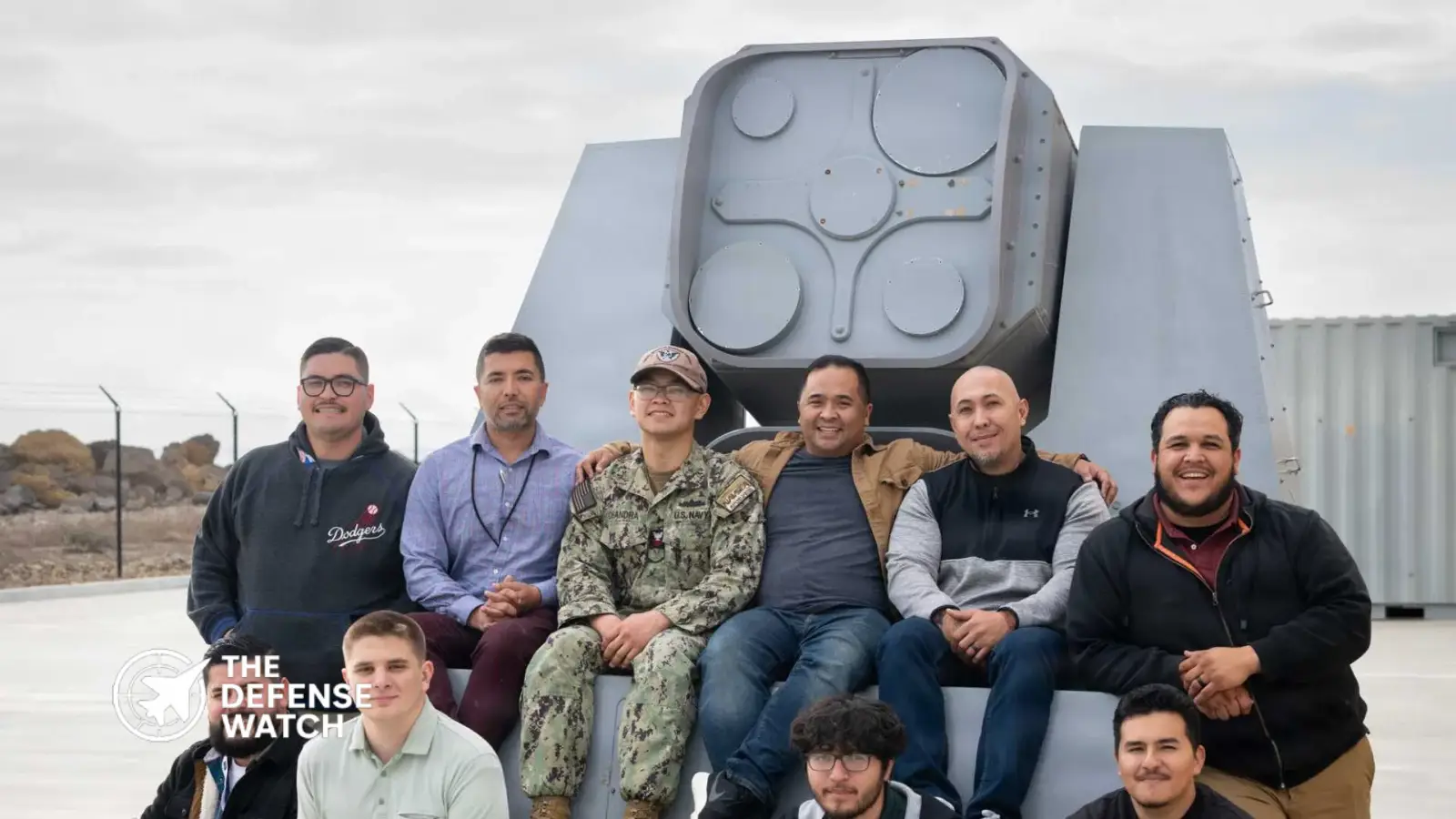
On May 12, 2026, the Navy announced completion of the first course at the Directed Energy Systems Integration Laboratory (DESIL). The facility, operated by NSWC PHD, now serves as the official schoolhouse for ODIN training. Sailors gain hands-on experience operating, maintaining, and troubleshooting the system in a realistic maritime environment.
DESIL, established in May 2020, features an 18,500-square-foot, three-story installation with direct line-of-sight to the Point Mugu Sea Range. It includes a permanently installed ODIN unit, sustainment workshops, operator consoles, and rooftop laser positions for engaging maritime, airborne, and land-based targets. This setup allows integrated training with live hardware rather than simulators alone.
The curriculum supports the newly created Laser Weapon System Operator Navy Enlisted Classification (NEC), introduced in February 2026. It addresses the growing need for specialized personnel as ODIN systems expand across the fleet.
ODIN System and Fleet Integration
ODIN entered service around 2020 and is currently installed on seven Arleigh Burke-class guided-missile destroyers, with an eighth unit at Point Mugu for testing and training. Developed rapidly from concept to deployment in about 30 months under the Naval Surface Warfare Center Dahlgren Division and Program Executive Office Integrated Warfare Systems, it responded to urgent fleet requirements for counter-ISR and C-UAS capabilities.
As a “soft-kill” system, ODIN complements layered ship defenses—including electronic warfare, close-in weapon systems (CIWS), and surface-to-air missiles—by offering an infinite magazine limited only by ship electrical power. This capability helps address the unfavorable cost exchange of using expensive missiles against low-cost drones.
Strategic Context and Analysis
The establishment of dedicated ODIN training reflects broader U.S. Navy efforts to mature directed-energy weapons amid rising drone threats in contested maritime environments, particularly in the Indo-Pacific and Middle East. Proliferating low-cost UAS from state and non-state actors create persistent challenges for traditional kinetic interceptors. ODIN provides a scalable, low-cost-per-shot response that preserves high-value munitions for higher-threat targets.
By formalizing operator NECs and centralizing training at DESIL, the Navy mitigates risks associated with ad-hoc deployment of prototype systems. This structured approach enhances reliability, safety, and tactical integration. It also supports future scaling to higher-power systems like HELIOS, which offer both dazzling and hard-kill options and greater combat system integration.
Challenges remain, including atmospheric effects on laser performance, rules of engagement for dazzling operations, and full integration with ship combat management systems. However, the DESIL facility’s unique combination of operational hardware, engineering support, and live range access positions the Navy to iterate quickly on tactics, techniques, and procedures.
This training pipeline signals a shift from experimental rapid prototyping toward programmatic sustainment, even as ODIN remains outside the formal Program of Record. Sustained investment in personnel and infrastructure will be critical for realizing the full potential of directed-energy weapons across the surface fleet.
Operational Impact
ODIN enhances ship self-defense in high-threat scenarios by providing immediate, silent, and precise effects against drone swarms or ISR platforms. Its deployment on destroyers operating in forward areas strengthens layered defense architectures without increasing logistical burdens for ammunition.
As the Navy continues modernizing its Arleigh Burke-class fleet and prepares for future combatants, experience gained through DESIL training will inform broader directed-energy adoption, contributing to maritime superiority in an era of unmanned systems proliferation.