General Dynamics Information Technology Inc. has received a $22.4 million modification from the U.S. Navy to provide engineering services for the MK 41 Vertical Launching System, extending work that supports inspection, testing, upgrades and delivery of launcher components.
According to the U.S. Department of Defense contract announcement, the cost-plus-fixed-fee modification is valued at $22,401,925 and exercises options under previously awarded contract N6339423C0009. Naval Surface Warfare Center, Port Hueneme Division, in California, is the contracting activity.
Takeaways
Key facts from the contract announcement
1. $22.4 Million MK 41 VLS Modification
General Dynamics Information Technology received a $22.4 million cost-plus-fixed-fee modification to exercise options for MK 41 Vertical Launching System engineering services.
2. Work Supports MK 41 VLS Sustainment
The work covers upgrading, inspecting, testing and delivering MK 41 VLS components at U.S. Navy locations in Virginia, Florida, California and Hawaii.
The work is scheduled to continue through October 2027, with the largest share performed in Chesapeake, Virginia.
Scope of the MK 41 VLS Contract
The modification covers engineering services to upgrade, inspect, test and deliver components of the MK 41 Vertical Launching System.
The announcement does not identify individual components or specific ships that will receive the work under this modification. It also does not disclose a quantity of components, individual delivery schedules or specific engineering changes.
The award is a modification to an existing contract rather than a new standalone contract. That distinction is important because the $22.4 million represents the value of this contract action, not a newly established total value for the entire MK 41 VLS engineering program.
The underlying contract was established for MK 41 VLS in-service engineering agent support. Earlier procurement records describe the broader requirement as including engineering activities associated with MK 41 launcher components and sustainment.
MK 41 Vertical Launching System Technical and Operational Context
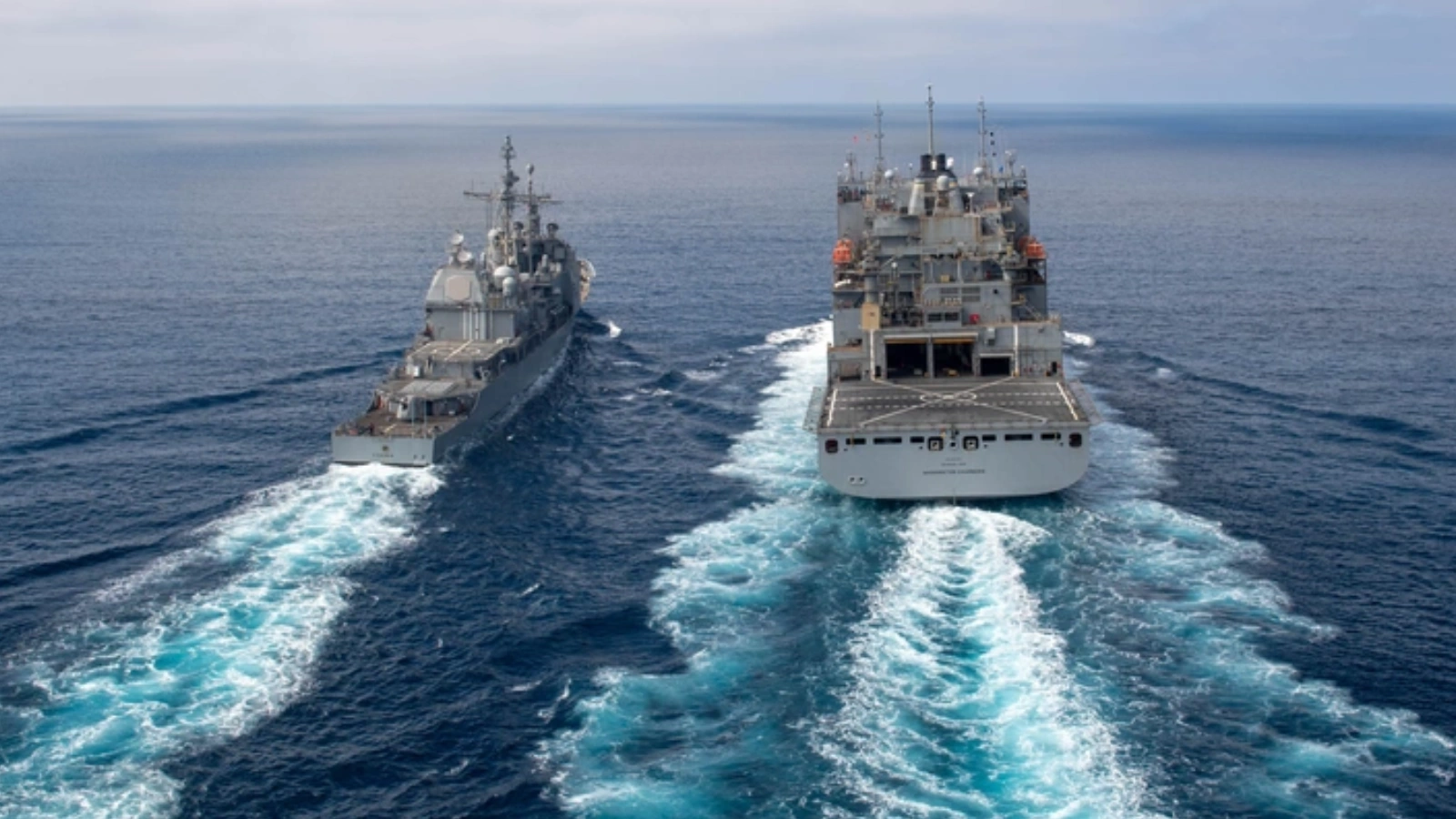
The MK 41 VLS is a fixed, vertical, multi-missile storage and launching system used aboard U.S. Navy surface combatants. The Navy identifies the system on Ticonderoga-class guided-missile cruisers and Arleigh Burke-class guided-missile destroyers, as well as allied naval platforms.
The launcher supports multiple mission areas, including anti-air warfare, anti-submarine warfare, ballistic missile defense and land attack. Depending on the ship, configuration and weapon integration, MK 41 can support weapons including Standard Missile variants, Tomahawk, Vertical Launch ASROC and Evolved SeaSparrow Missile.
The system is closely integrated with the Aegis Weapon System aboard major U.S. Navy surface combatants. The Navy describes the MK 41 launcher as part of the Aegis combat system aboard Arleigh Burke-class destroyers, where it operates alongside the ship’s combat system and sensors to support air defense, strike and other missions.
This makes the condition and availability of launcher equipment an important part of shipboard weapons readiness. Engineering support can cover activities needed to keep launcher equipment within required technical and operational standards, although the Navy announcement does not specify which individual engineering tasks will receive the largest share of this modification.
Operational Impact on U.S. Navy Surface Combatants
For the U.S. Navy, MK 41 VLS is more than a missile storage system. It provides the physical launch interface for a range of weapons carried by major surface combatants.
The system’s multi-mission design allows the same launcher architecture to support different weapons and mission sets. This is particularly relevant to Aegis-equipped destroyers, which combine air defense, surface warfare, anti-submarine warfare and strike capabilities in a single platform.
The Navy is also working on methods to improve the sustainment and reload cycle associated with VLS-equipped ships. In October 2024, Naval Sea Systems Command reported a successful at-sea demonstration of the Transferrable Reload At-sea Method, which loaded a missile canister into an MK 41 VLS aboard USS Chosin.
That demonstration is separate from the GDIT contract and should not be interpreted as part of the current modification. It does, however, illustrate the wider Navy focus on maintaining and improving the availability of VLS-equipped combatants.
Contract Breakdown: General Dynamics Information Technology Award Details
Contract Value
The modification is valued at $22,401,925.
The Navy will obligate $10,821,834 at the time of award from fiscal 2026 Shipbuilding and Conversion, Navy funds. The announcement states that these funds will not expire at the end of the current fiscal year.
The amount obligated at award is therefore lower than the modification’s stated value. The two figures should not be treated as interchangeable.
Contractor
General Dynamics Information Technology Inc., based in Falls Church, Virginia, is the contractor.
GDIT is performing the work under previously awarded contract N6339423C0009. Earlier records identify that contract as an in-service engineering agent support requirement for the MK 41 VLS.
Contract Type
The modification uses a cost-plus-fixed-fee contract structure.
Under this type of arrangement, allowable costs are reimbursed according to the contract terms, while the contractor receives a negotiated fixed fee. The structure differs from a firm-fixed-price award, where the government generally pays an established price for defined work.
Work Locations
The announced distribution of work is:
| Location | Share |
|---|---|
| Chesapeake, Virginia | 80% |
| Norfolk, Virginia | 5% |
| Mayport, Florida | 5% |
| San Diego, California | 5% |
| Pearl Harbor, Hawaii | 5% |
The geographic distribution indicates that most of the work will be conducted in Virginia, while smaller portions will be performed at Navy locations supporting fleet operations on both the Atlantic and Pacific sides.
The announcement does not identify the individual ships, installations or VLS components associated with each location.
Performance Period
Work is expected to be completed by October 2027.
Funding
The Navy will obligate $10,821,834 in fiscal 2026 Shipbuilding and Conversion, Navy funds at the time of award.
The announcement states that the funds will not expire at the end of the current fiscal year.
Options Or Follow-On Work
The current action exercises options under the previously awarded GDIT contract.
The underlying contract has received multiple option and modification actions supporting MK 41 VLS engineering. Procurement records show earlier modifications for similar engineering services, demonstrating that the requirement is being executed through recurring contract actions rather than a single one-time engineering effort.
The current announcement does not state whether additional options will be exercised after October 2027.
General Dynamics Defense Industrial Base and Acquisition Impact
The award continues a long-running engineering and sustainment requirement around a major U.S. Navy weapons-launch infrastructure.
The broader MK 41 requirement is significant because the system is installed across a large portion of the Navy’s guided-missile surface combatant force and is also used by allied navies. The Navy’s MK 41 fact file states that the system has been in U.S. Navy service since 1986 and has been acquired for U.S. and allied platforms.
From an acquisition perspective, recurring engineering contracts allow the Navy to maintain technical expertise and address equipment issues across an installed system rather than treating launcher support solely as a new-production requirement.
Earlier contract information for N6339423C0009 also describes activities such as latch rod adjustment, cell hatch refurbishment and deluge valve overhaul as part of the broader MK 41 in-service engineering requirement. Those activities belong to the underlying requirement and are not individually identified in the current $22.4 million announcement.
This distinction matters because the latest modification should not be interpreted as confirming that every task performed under the original contract will necessarily be performed under the current option.
Program Milestones and Next Steps
The immediate milestone is execution of the option work through October 2027.
The current award provides funding for engineering services covering MK 41 VLS component upgrades, inspections, testing and delivery. The announcement does not disclose a specific number of components, individual ships supported, test events or equipment deliveries associated with the $22.4 million action.
The Navy has separately continued work aimed at improving VLS sustainment and fleet availability. In May 2026, Naval Surface Warfare Center Port Hueneme Division reported development and testing of a tool intended to help sailors maintain MK 41 VLS cell hatch latch rods without damaging the cell mouth or compromising the hatch seal.
Taken together, these activities show that MK 41 VLS support encompasses both long-term engineering and practical fleet maintenance. The current GDIT modification specifically concerns engineering services and should not be conflated with separate VLS modernization or at-sea reloading initiatives.