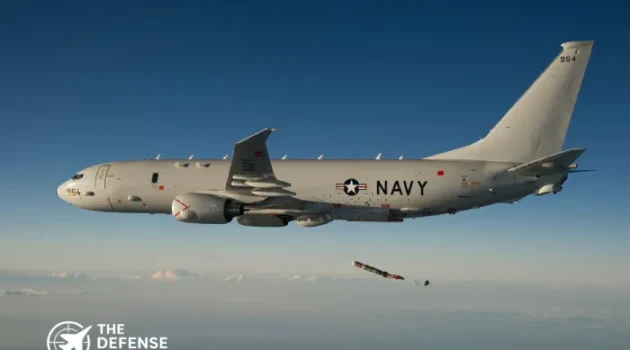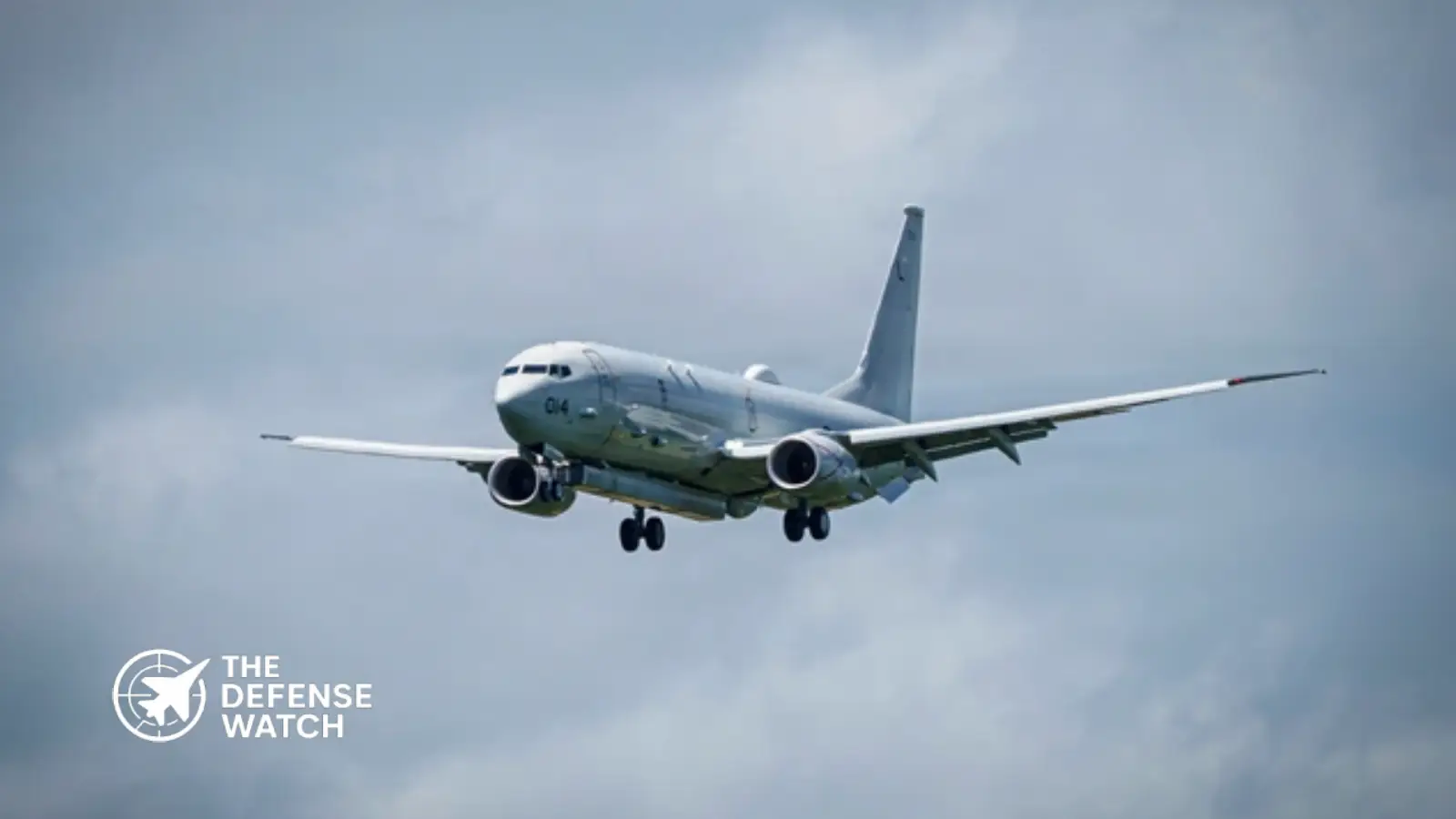
- Boeing has secured a $121.2 million U.S. Navy contract to modernize P-8A Poseidon maritime patrol aircraft operated by both the U.S. Navy and the Royal Australian Air Force.
- The award funds nine Increment 3 Block 2 retrofit A-kits, including six for U.S. Navy aircraft and three for Australian P-8A aircraft.
- The contract also includes installation of upgrade kits on three Navy aircraft and engineering work to address component obsolescence and supply chain shortages.
- Increment 3 Block 2 enhancements improve mission systems, sensor integration, data processing, and networked maritime warfare capabilities.
- Work will be performed primarily in Jacksonville, Florida, and is scheduled for completion by May 2029 under Naval Air Systems Command oversight.
The U.S. Department of Defense announced that The Boeing Company has been awarded a $121.2 million cost-plus-fixed-fee contract order to support continued modernization of the U.S. Navy’s P-8A Poseidon maritime patrol aircraft fleet while extending similar enhancements to aircraft operated by the Royal Australian Air Force (RAAF).
According to the Naval Air Systems Command (NAVAIR), the contract covers the procurement of nine retrofit A-kits equipped with Increment Three Block Two (I3B2) Engineering Change Proposal Six capabilities, aircraft installation work, and engineering efforts intended to mitigate manufacturing source shortages and obsolete components affecting the fleet’s long-term sustainment.
The contract was issued under an existing Boeing-Navy basic ordering agreement and was awarded without competition.
Deep Technical & Strategic Context Analysis
The P-8A Poseidon remains one of the most important maritime patrol and anti-submarine warfare (ASW) aircraft in service today. Derived from the commercial Boeing 737-800ERX airframe, the platform combines long-range surveillance capabilities with advanced sensors, networking systems, sonobuoy processing, anti-ship warfare capabilities, and submarine-hunting functions. The aircraft has become a cornerstone of Western maritime security architecture as naval competition intensifies across the Indo-Pacific, North Atlantic, Arctic, and other strategically significant maritime regions.
The Increment 3 Block 2 modernization effort represents one of the most significant capability enhancements introduced to the P-8A fleet in recent years. The upgrade package improves mission computing architecture, sensor integration, communications, and data-processing capacity, enabling crews to manage larger volumes of intelligence and targeting information while operating in increasingly complex multi-domain environments. These enhancements are particularly relevant as maritime patrol aircraft are expected to operate alongside naval task groups, submarines, unmanned systems, and fifth-generation combat aircraft within highly networked operational frameworks.
From a procurement perspective, the contract’s cost-plus-fixed-fee structure is notable. Under this arrangement, the government reimburses Boeing for allowable program costs while providing a predetermined fee. Such contracts are typically used when engineering risks or technical uncertainties make fixed-price arrangements impractical. In this case, the inclusion of non-recurring engineering work to address diminishing manufacturing sources and material shortages reflects ongoing challenges facing many legacy and long-life defense aviation programs as suppliers discontinue older components and electronics.
The inclusion of Australian aircraft further underscores the growing importance of allied interoperability. The RAAF operates one of the most capable P-8A fleets outside the United States, and maintaining a common configuration across allied operators simplifies logistics, software updates, training, and coalition maritime operations.
Contract Breakdown & Details
Scope of Work
The contract includes:
- Nine retrofit A-kits incorporating Increment 3 Block 2 Engineering Change Proposal Six capabilities.
- Six kits for U.S. Navy P-8A aircraft.
- Three kits for Royal Australian Air Force P-8A aircraft.
- Three aircraft retrofit installations involving:
- Installation of I3B2 retrofit A-kits.
- Integration of government-furnished B-kits on U.S. Navy aircraft.
- Non-recurring engineering activities designed to:
- Resolve diminishing manufacturing source issues.
- Address material shortages.
- Sustain long-term fleet readiness and modernization.
Contract Value
Item Amount Total Contract Value $121,195,041 U.S. Navy FY2026 Aircraft Procurement Funding $92,809,039 U.S. Navy FY2024 Aircraft Procurement Funding $8,272,791 Royal Australian Air Force Funding $20,113,211 Workshare Distribution
Work will be performed across multiple U.S. aerospace and integration facilities:
- Jacksonville, Florida: 80%
- St. Louis, Missouri: 11%
- Mesa, Arizona: 9%
Program Timeline
- Contract Type: Cost-Plus-Fixed-Fee Order
- Contract Number: N0001926F1095
- Parent Agreement: N0001926G1002
- Expected Completion: May 2029
- Contracting Authority: Naval Air Systems Command, Patuxent River, Maryland
Why This Upgrade Matters
The timing of the award aligns with growing demand for persistent maritime surveillance and anti-submarine warfare capabilities among U.S. allies and partners. Modern submarine fleets operated by potential adversaries continue to increase in capability and operational reach, placing greater emphasis on aircraft capable of detecting, tracking, and targeting underwater threats across vast ocean areas.
For the U.S. Navy, maintaining the relevance of the P-8A fleet is critical as the aircraft serves as a primary component of maritime domain awareness and undersea warfare operations. For Australia, the modernization effort supports broader Indo-Pacific security objectives and strengthens interoperability with U.S. naval and air forces.
By combining capability upgrades with engineering work aimed at overcoming supply chain and obsolescence challenges, the contract addresses both near-term operational requirements and the long-term sustainment needs of one of the world’s most important maritime patrol aircraft fleets.
- Nine retrofit A-kits incorporating Increment 3 Block 2 Engineering Change Proposal Six capabilities.