
- Home
- Defense Systems
- Bombers & Strategic Aircraft
- Avro Vulcan B.2
Avro Vulcan B.2
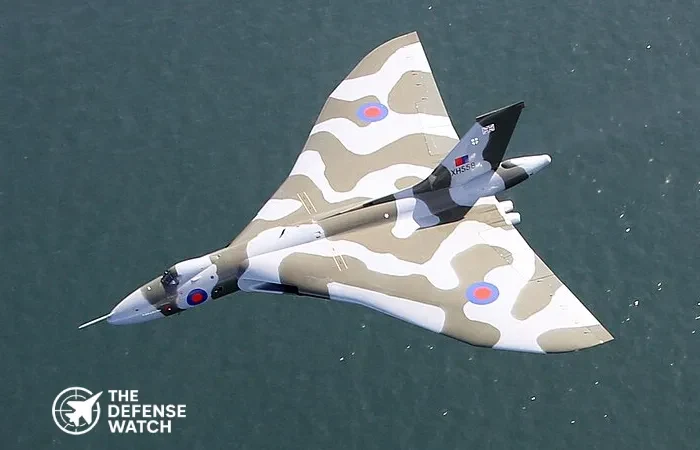
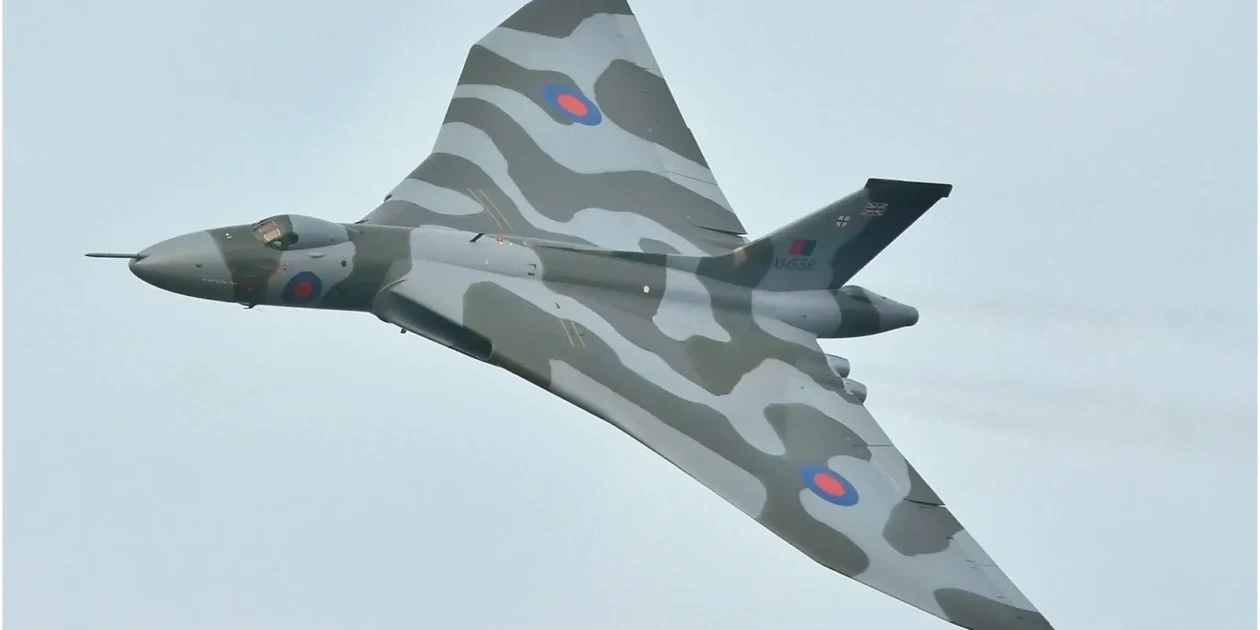
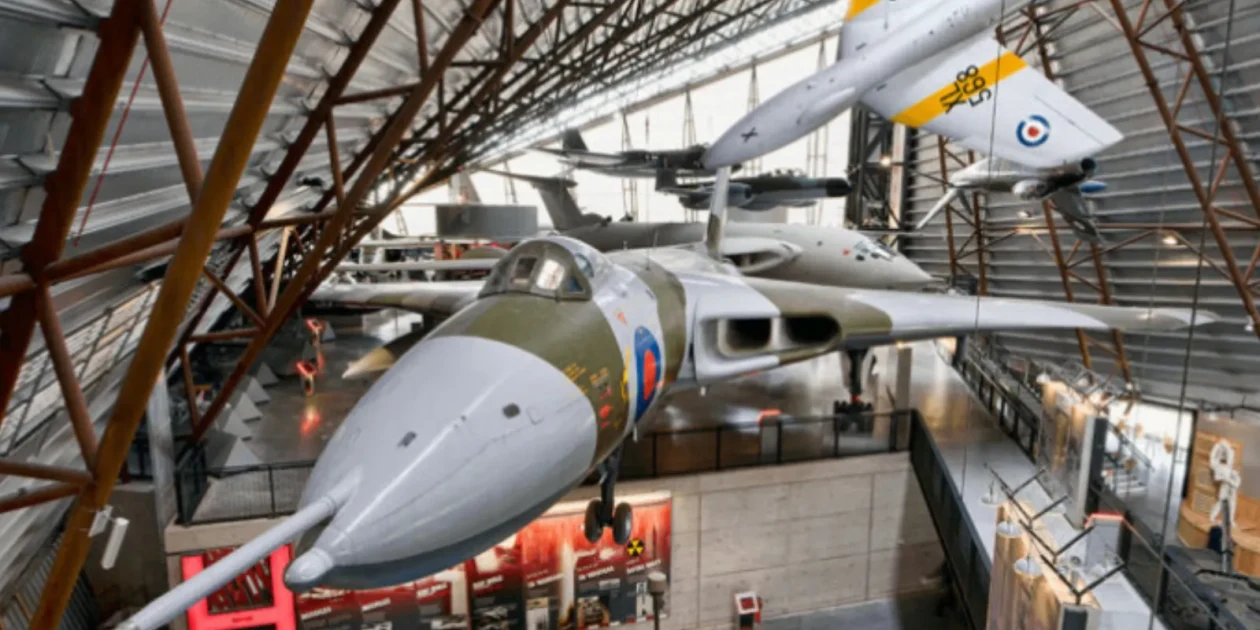
Defense Systems Full Specifications
1. General Information
| Name | Avro Vulcan B.2 |
| Manufacturer | A.V. Roe & Company (Avro) |
| Country of Origin | United Kingdom |
| Introduction / In Service Since | 1960 |
| Status | Retired |
| Category | Strategic Bomber |
| Crew | 5 |
| Unit Cost | Approx. US$35 to US$45 million (estimated inflation adjusted) |
2. Dimensions & Structure
| Length | 99 ft 11 in (30.45 m) |
| Wingspan | 111 ft (33.83 m) |
| Height | 26 ft 7 in (8.08 m) |
| Wing Area | 3,554 sq ft (330.2 m²) |
| Empty Weight | 82,000 lb (37,200 kg) |
| Maximum Takeoff Weight (MTOW) | 204,000 lb (92,500 kg) |
3. Performance
| Maximum Speed | Mach 0.96 |
| Range | 4,500 mi (7,400 km) |
| Combat Radius | Approx. 2,300 mi (3,700 km) |
| Service Ceiling | 55,000 ft (16,800 m) |
| Rate of Climb | Approx. 4,000 ft/min (20.3 m/s) |
4. Powerplant
| Engine Type | 4 × Rolls Royce Olympus 301 turbojets |
| Thrust (per engine) | 20,000 lbf (89 kN) |
| Total Thrust | 80,000 lbf (356 kN) |
5. Payload & Armament
| Internal Payload Capacity | Up to 21,000 lb (9,500 kg) |
| Weapons Bay | Internal bomb bay |
| Compatible Weapons | Free fall bombs, WE.177 nuclear bombs, Blue Steel stand off missile (earlier service), conventional bombs |
| Hardpoints | None |
6. Avionics & Systems
| Radar System | H2S Mk.9 navigation and bombing radar |
| Navigation | INS, Doppler radar, radio navigation |
| Electronic Warfare (EW) | Radar warning receivers, ECM suite, chaff dispensers |
| Stealth Features | None |
7. Operational History
| Primary Operator | Royal Air Force (RAF) |
| Conflict Usage | Cold War, Falklands War |
| Notable Missions | Black Buck bombing missions (1982) |
8. Additional Information
| Variants | Vulcan B.1, Vulcan B.1A, Vulcan B.2, K.2 Tanker |
| Successor / Future Replacement | Panavia Tornado GR.1 (strike role), later RAF strategic capabilities |
| Notable Features | Delta wing design, nuclear deterrent, long range operations |
| Estimated Operational Life | 1960 to 1984 (24 years in RAF bomber service) |
PROS
- Excellent long range strategic strike capability
- Large internal payload capacity
- Highly efficient delta wing design
- Proven nuclear and conventional bombing platform
- Successful long distance Black Buck combat missions
CONS
- No stealth capability
- High operating and maintenance costs
- Dependent on aerial refueling for extreme range missions
- Large radar signature
- Retired with obsolete avionics by modern standards
Avro Vulcan B.2 Strategic Bomber
The Avro Vulcan B.2 was one of the most recognizable strategic bombers of the Cold War and formed a key part of the United Kingdom’s nuclear deterrent for decades. Developed by A.V. Roe & Company (Avro), the Vulcan B.2 featured its distinctive delta wing design, providing excellent high-altitude performance and long-range strike capability. Initially designed to deliver Britain’s nuclear weapons, it later evolved into a conventional strike aircraft following changes in UK defense policy.
The Vulcan B.2 became internationally known during the 1982 Falklands War, when it conducted the historic Black Buck long-range bombing missions from Ascension Island to the Falkland Islands. These missions demonstrated exceptional aerial refueling coordination and highlighted the bomber’s endurance despite its aging design.
Manufacturer
The aircraft was designed and manufactured by A.V. Roe & Company (Avro) in the United Kingdom. Production of the B.2 variant began in the late 1950s, incorporating more powerful engines, an enlarged wing, advanced electronic countermeasures, and improved operational capability compared to the earlier Vulcan B.1.
Speed and Range
Powered by four Rolls Royce Olympus turbojet engines, the Vulcan B.2 reached a maximum speed of approximately Mach 0.96 (645 mph / 1,038 km/h). It offered a ferry range of around 4,500 miles (7,400 km) without aerial refueling, allowing strategic operations across Europe and beyond. During combat missions, in flight refueling significantly extended its operational reach.
Cost / Price
Exact historical procurement costs vary by production batch and accounting methods. In modern value estimates, a Vulcan B.2 would represent an acquisition cost of approximately US$35 to US$45 million per aircraft (inflation adjusted). Since the aircraft retired in 1984, it is no longer available for military procurement and survives only in museums and preservation organizations.
The Vulcan B.2 remains an iconic example of British aerospace engineering, remembered for its advanced aerodynamics, powerful engines, and significant contribution to NATO’s Cold War deterrence strategy.
Disclaimer Note
The information provided on TheDefenseWatch.com is for general informational purposes only. While we strive to ensure the accuracy, completeness, and timeliness of our content regarding defense and aerospace products, technologies, and specifications, we cannot guarantee that all information is 100% accurate or up-to-date due to the evolving nature of military technology and classified data.TheDefenseWatch.com does not warrant the reliability, suitability, or availability of the information for any specific purpose. Users are advised to consult official sources, such as manufacturers, government publications, or defense agencies, for precise and verified data before making decisions based on our content.We are not affiliated with any defense manufacturers, governments, or military organizations mentioned. Opinions, reviews, and ratings reflect expert analysis but are subjective and should not be considered endorsements. TheDefenseWatch.com is not responsible for any errors, omissions, or consequences arising from the use of this website’s content.External links are provided for convenience and do not imply endorsement. TheDefenseWatch.com reserves the right to update or modify content without prior notice. By using this website, you agree to our Privacy & Cookies Policy.
More Defense Systems from Avro Aircraft
New Arrivals

Popular Comparisons
-
 J-10C vs JF-17 Thunder: Which Fighter Is More Capable?
View Comparison →
J-10C vs JF-17 Thunder: Which Fighter Is More Capable?
View Comparison → -
Tejas vs Gripen: Key Differences and Capabilities
View Comparison →
-
Tejas vs MiG-21 Bison: How India Replaced Its Iconic Supersonic Fighter
View Comparison →
-
F-35 vs F-16: Stealth, Sensors and Combat Roles
View Comparison →
-
Tejas Fighter Jet vs F-16 Fighting Falcon: Capability Compared
View Comparison →
-
Rafale Fighter Jet vs F-16 Fighting Falcon : Which Fighter Has the Edge?
View Comparison →
-
Su-57 Fighter Jet vs J-20 Fighter Jet: Stealth and Air Combat Compared
View Comparison →
-
Mirage 2000 vs Tejas Mk1A: Legacy Combat Power vs Indigenous Modernization
View Comparison →
-
Rafale Fighter Jet vs F-22 Raptor: Which Air Dominance Fighter Has the Edge?
View Comparison →
-
Tejas Fighter Jet vs. Rafale Fighter Jet: India’s Indigenous Fighter Meets France’s Proven Multirole Combat Aircraft
View Comparison →


- Pratt & Whitney Begins $100 Million Polish Expansion for F-35 Engine Parts

- Northrop Grumman Wins $43.9 Million Contract for Trident II Rocket Motor Facilities
- Ukraine Drone Strikes Disrupt Russian Data Centers, Raising Questions About AI Infrastructure Security
- Lockheed Martin Wins $114.6 Million Contract to Redesign F-35 Navigation Systems
- Project Agincourt Pushes Pentagon to Speed Up Autonomous Weapons Fielding
- Northrop Grumman Factory Expansion Aims to Increase B-21 Raider Production
- France Orders Four More SAMP/T NG Air Defense Systems
- France and UAE Revive Rafale F5 Fighter Development Partnership
- P-800 Oniks Missile: Range, Speed and BrahMos Comparison
- Ukrainian Drone Unit Caused 70% of Simulated U.S. Brigade Casualties in Germany Exercise

Fighter Jets
-
 F-100 Super Sabre
-
North American F-86 Sabre
-
Northrop YF-23 Fighter
-
Rafale F5 Fighter
-
SU-57 Felon Stealth Fighter
-
Boeing F/A-XX Fighter
-
JF-17 Thunder Fighter Jet
-
F-47 Fighter Jet
-
MIG-31 Fighter Jet
-
J-10CE Fighter Jet
-
Chengdu J-10 Fighter Jet
-
Chengdu J-10C Fighter Jet
-
Gripen E Fighter Jet
-
Tejas Mk1A Fighter Jet
-
Tejas Mk‑2 Fighter Jet
-
F-16V Viper Block 70 Fighter Jet
-
F-15EX Eagle II Fighter
-
F-15E Strike Eagle Fighter
-
F/A-18E/F Super Hornet Fighter Jet
-
Saab Gripen F Fighter Jet
-
JAS 39E/F Gripen Fighter Jet
-
JAS 39 Gripen Fighter Jet
-
F-35A Lightning II Fighter Jet
-
F/A-18F Super Hornet







Recent Compares
-
J-10C vs JF-17 Thunder: Which Fighter Is More Capable?
View Comparison →
-
Tejas vs Gripen: Key Differences and Capabilities
View Comparison →
-
Tejas vs MiG-21 Bison: How India Replaced Its Iconic Supersonic Fighter
View Comparison →
-
F-35 vs F-16: Stealth, Sensors and Combat Roles
View Comparison →
-
Tejas Fighter Jet vs F-16 Fighting Falcon: Capability Compared
View Comparison →
Latest Defense Systems
10 Compares Defense Systems
-
J-10C vs JF-17 Thunder: Which Fighter Is More Capable?
View Comparison →
-
Tejas vs Gripen: Key Differences and Capabilities
View Comparison →
-
Tejas vs MiG-21 Bison: How India Replaced Its Iconic Supersonic Fighter
View Comparison →
-
F-35 vs F-16: Stealth, Sensors and Combat Roles
View Comparison →
-
Tejas Fighter Jet vs F-16 Fighting Falcon: Capability Compared
View Comparison →
-
Rafale Fighter Jet vs F-16 Fighting Falcon : Which Fighter Has the Edge?
View Comparison →
-
Su-57 Fighter Jet vs J-20 Fighter Jet: Stealth and Air Combat Compared
View Comparison →
-
Mirage 2000 vs Tejas Mk1A: Legacy Combat Power vs Indigenous Modernization
View Comparison →
-
Rafale Fighter Jet vs F-22 Raptor: Which Air Dominance Fighter Has the Edge?
View Comparison →
-
Tejas Fighter Jet vs. Rafale Fighter Jet: India’s Indigenous Fighter Meets France’s Proven Multirole Combat Aircraft
View Comparison →
- Pratt & Whitney Begins $100 Million Polish Expansion for F-35 Engine Parts
- Northrop Grumman Wins $43.9 Million Contract for Trident II Rocket Motor Facilities
- Ukraine Drone Strikes Disrupt Russian Data Centers, Raising Questions About AI Infrastructure Security
- Lockheed Martin Wins $114.6 Million Contract to Redesign F-35 Navigation Systems
- Project Agincourt Pushes Pentagon to Speed Up Autonomous Weapons Fielding