Executive Summary:
Airbus Helicopters has officially begun operational maritime surveillance missions with its U030 Flexrotor unmanned aerial system in the Baltic Sea under a European Maritime Safety Agency (EMSA) framework contract. The deployment marks the aircraft’s first operational service in Europe and strengthens regional maritime awareness by providing real time intelligence to national authorities across Estonia, Latvia, and Finland.
Airbus U030 Flexrotor Begins Operational Maritime Surveillance For EMSA
Airbus’ U030 Flexrotor has entered operational service in the Baltic Sea, supporting the European Maritime Safety Agency (EMSA) with long endurance maritime surveillance missions across Northern Europe. Airbus announced the start of operations following successful technical validation flights that confirmed the aircraft met both operational and regulatory requirements before entering service.
The deployment follows a €30 million framework contract awarded to Airbus Helicopters in December 2025 to provide Remotely Piloted Aircraft System (RPAS) services throughout the European Union. Operations are conducted together with French operator Extensee, which flies the aircraft while Airbus manages the overall program and mission coordination.
The first operational area includes Estonia, Latvia, and Finland, where the aircraft now supports national maritime authorities with persistent aerial surveillance over coastal waters and shipping routes.
What The U030 Flexrotor Brings To Maritime Surveillance
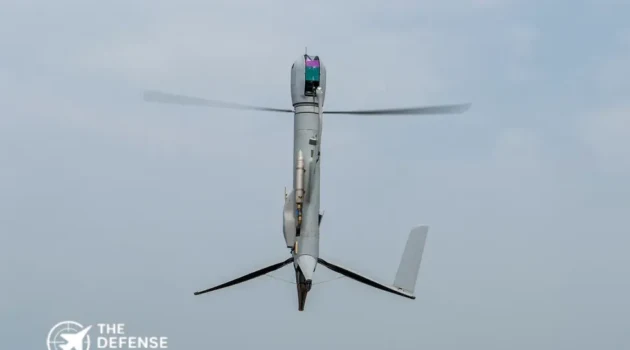
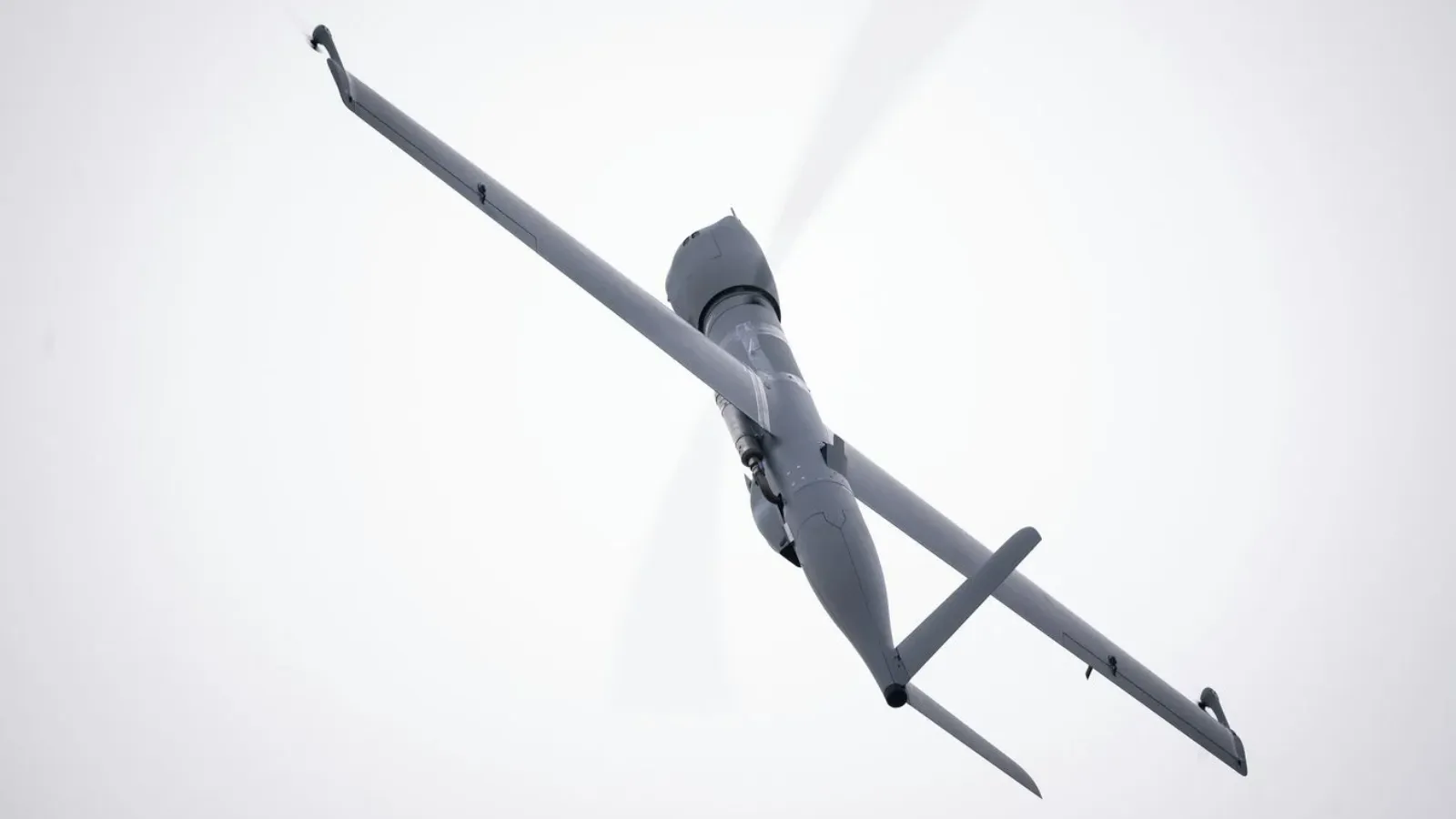
The U030 Flexrotor is a tactical Vertical Takeoff and Landing (VTOL) unmanned aircraft designed for long endurance Intelligence, Surveillance, Target Acquisition, and Reconnaissance (ISTAR) missions.
Unlike conventional fixed wing drones, the aircraft requires only a 3.7 × 3.7 meter launch area, allowing deployment from confined shore locations or ships without dedicated flight decks. According to Airbus, it can transition from transport configuration to flight in less than 30 minutes.
Key Capabilities
Capability Details Aircraft Type VTOL tactical unmanned aircraft Mission Endurance Up to 12 to 14 hours (approximately 10 hours in EMSA configuration) Primary Sensors Electro-optical, infrared, maritime radar Data Transmission Real time streaming to EMSA RPAS Data Centre Operating Area Estonia, Latvia, Finland Primary Missions Maritime surveillance, search and rescue, fisheries monitoring, environmental protection Specifications based on Airbus official data.
Supporting European Coast Guard Operations
The operational service is designed to enhance several civilian and security missions performed by European coast guard organizations.
Mission data collected through electro-optical, infrared, and radar payloads is transmitted directly to the EMSA RPAS Data Centre, allowing participating authorities to monitor flights in real time and integrate surveillance data into ongoing operations.
Primary mission areas include:
- Search and rescue
- Fisheries enforcement
- Environmental monitoring
- Detection of illegal maritime activities
- Coastal surveillance
- Maritime domain awareness
This shared information network allows multiple agencies to maintain a common operational picture without deploying manned aircraft for every surveillance task.
Why The Baltic Sea Matters
The Baltic Sea has become one of Europe’s most strategically important maritime regions.
The waterway supports major commercial shipping routes while hosting critical energy infrastructure, submarine communication cables, offshore wind farms, and increased NATO naval activity. Since 2022, regional governments have significantly expanded maritime monitoring following incidents involving undersea infrastructure and growing security concerns.
Persistent drone surveillance provides authorities with longer observation times than many conventional patrol aircraft while reducing operating costs and allowing faster responses to unusual maritime activity.
Although EMSA is a civilian agency, its surveillance capabilities contribute to broader maritime situational awareness that can also support national security agencies during emergencies.
Operational Significance Beyond Europe
From a defense technology perspective, this deployment represents an important milestone for Airbus.
The Baltic mission is the first operational European service for the U030 Flexrotor after several years of demonstrations. Successfully operating under a multinational surveillance framework provides Airbus with operational experience that may strengthen future opportunities in both government and defense markets.
For military planners, compact VTOL drones occupy a growing niche between small quadcopters and larger Medium Altitude Long Endurance (MALE) platforms.
Their ability to launch from ships, isolated coastal sites, or expeditionary bases makes them valuable for persistent intelligence collection without requiring complex airfield infrastructure.
As NATO members continue investing in distributed ISR capabilities, aircraft in this category could complement larger maritime patrol aircraft rather than replace them, extending surveillance coverage over coastal approaches while freeing high value assets for broader missions.
Airbus Continues Expanding Its UAS Portfolio
The U030 Flexrotor forms part of Airbus’ broader unmanned systems portfolio supporting military and government customers.
The platform is designed for multiple mission sets beyond maritime surveillance, including:
- Intelligence, Surveillance, Target Acquisition and Reconnaissance (ISTAR)
- Border security
- Communications relay
- Electronic warfare support
- Disaster response
- Humanitarian operations
- Environmental monitoring
Its expeditionary design and long endurance make it suitable for operations where persistent aerial coverage is required but traditional airfields are unavailable.
Outlook
The launch of operational U030 Flexrotor missions marks a significant step in Europe’s adoption of tactical unmanned aircraft for routine maritime surveillance.
While the current deployment focuses on the Baltic Sea, the EMSA framework allows Airbus to support multiple simultaneous operations across participating European countries, potentially expanding coverage as demand increases.
As governments place greater emphasis on persistent maritime domain awareness, systems capable of delivering long endurance, real time intelligence with a minimal logistical footprint are likely to become an increasingly important element of both civilian coast guard operations and broader security architectures.